

Revista Carole Lombard Photoplay
Carole Lombardo Photoplay Magazine June Edition by the renowned American illustrator F. Conde Christy (1882 – 1961) showcases the golden age of Hollywood and the glamour of early 20th-century cinema. Christy, a celebrated figure in the art world known for his vibrant, dynamic magazine covers and promotional illustrations, was instrumental in capturing the allure of film stars of his era. Esta pieza en particular, featured on the cover of Photoplay magazine, is a vibrant portrayal of actress Carole Lombard, one of the most beloved actresses of the time, exuding both grace and seduction through Christy’s masterful brushwork.
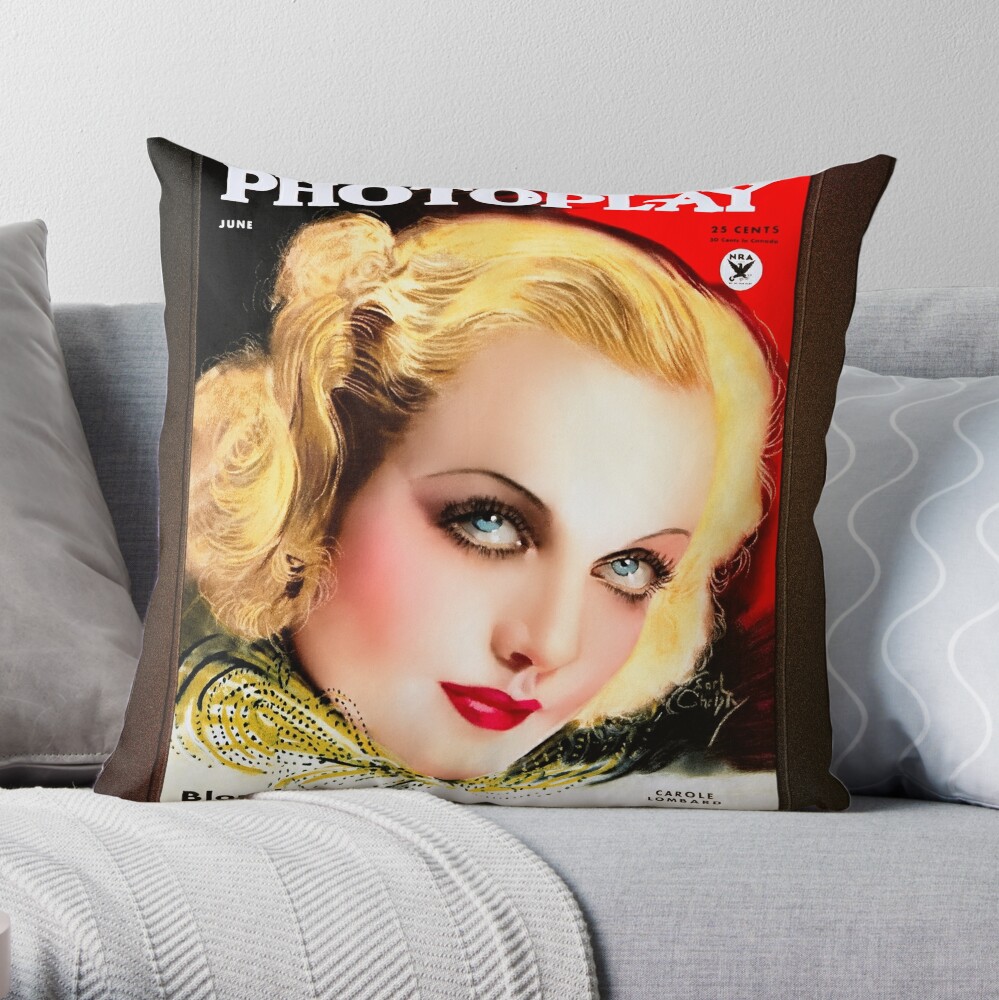
Tabla de contenido
El tema principal
Esta obra de arte, is a close-up portrait of Carole Lombard, painted in such vivid detail that her facial features appear to come alive. Lombard is depicted in a glamorous, slightly exaggerated manner, her platinum blonde hair styled in soft curls that frame her face, while her eyes gaze directly at the viewer, creating a compelling, almost ethereal connection. sus labios, painted in a bold, crimson hue, stand out against the pale complexion, adding an air of sophistication and elegance. The emphasis on her beautiful face and expressive eyes suggests an attempt to capture not just her physical features but her captivating screen presence.
Estilo, Técnica, and Medium
F. Earl Christy’s technique in this artwork is quintessentially Art Deco, with its fluid lines, bold color contrasts, and dynamic composition. The style was popular in the early 20th century, particularly in illustrations that accompanied film magazines, where glamour and idealized beauty were the focus. Christy utilized soft, flowing lines in Lombard’s hair and face, contrasting with the bolder, geometric patterns in the background. The color palette is rich, with shades of deep red, oro, y amarillo, creating a striking contrast between the subject and the background. This gives the artwork a sense of movement and depth, as though Lombard herself is emerging from the canvas.
Christy’s use of light and shadow is particularly effective in adding dimension to the piece. The soft illumination on Lombard’s face brings out the smooth, porcelain texture of her skin, while the darker, shaded areas around her eyes and beneath her cheekbones lend the portrait a three-dimensional feel. This careful attention to light is part of the artist’s ability to imbue his subjects with a life-like quality, emphasizing the beauty of the subject in a way that makes the viewer feel as though they are peering into the world of Hollywood glamour from the 1930s.
Objects and Composition
The composition of the piece is dominated by Carole Lombard’s face, which takes up the majority of the canvas. Behind her is a bold, sweeping background of fiery red that complements the tones in her hair and lips. The contrast of bright red against the pale, almost alabaster skin of Lombard creates a powerful visual effect. Surrounding her face is a dark shadowed area that highlights her hair’s platinum blonde curls, further intensifying the contrast and drawing the viewer’s eye to her captivating eyes and lips.
The magazine’s name, Photoplay, is prominently displayed at the top of the image in large, blanco, blocky letters. The typography is clean and sharp, typical of magazine covers during this time period, contributing to the retro, vintage feel of the illustration. The subtitle “Blondes Plus Curves Mean War” underneath the magazine title adds intrigue and emphasizes the playful, slightly provocative nature of the era’s media, which often sensationalized the allure and power of Hollywood starlets.
Another noteworthy feature is the inclusion of Christy’s signature at the bottom right corner of the image. This subtle yet important detail highlights the personal touch of the artist, reminding the viewer that this illustration is not merely an advertisement, but a carefully crafted work of art.
Tema y estado de ánimo
The theme of the artwork revolves around the glamorization of Hollywood stars, capturing the essence of the film industry during its heyday. Christy’s illustration reflects the prevailing attitude of the time toward actresses, who were often portrayed as larger-than-life figures, embodying both beauty and strength. El tema de la feminidad, belleza, and allure is amplified by the title, which suggests that the combination of blondes and curves is a powerful force—perhaps even dangerous or capable of inciting conflict. This was a time when Hollywood and its stars were idolized, and Christy captured that idolization perfectly in his portrayal of Lombard.
The mood of the piece is one of sophisticated allure. Lombard’s direct gaze and confident posture convey both strength and sensuality, making the viewer feel as though they are witnessing a moment of cinematic magic. Los ricos, vibrant colors and the bold use of shadow contribute to an intense, almost mysterious mood, while the luxurious portrayal of Lombard herself evokes glamour and exclusivity.
In its entirety, the image conveys a sense of romanticized beauty that was central to the golden age of Hollywood cinema. Christy’s portrayal of Carole Lombard does more than capture her appearance—it immortalizes her as a symbol of grace, fuerza, and allure that resonates beyond the screen.
Conclusión
En Carole Lombard Photoplay Magazine June Edition, F. Earl Christy created a timeless piece of artwork that not only celebrates the actress’s captivating beauty but also encapsulates the mood of Hollywood in the 1930s. Through his distinctive Art Deco style, Christy has brought Lombard to life, capturing the essence of a film star whose image dominated the silver screen. The illustration serves as a powerful reminder of a bygone era when magazine covers were works of art in themselves, designed to captivate and entertain audiences.
Background Info On The Magazine Cover
This June Edition of Photoplay Magazine features the Hollywood Starlet Carole Lombardo (one of her best comedy roles was in My Man Godfrey with Dick Powell) de la edad de oro de hollywood.
Su retrato está rodeado por una combinación arremolinada de rojo intenso y negro que pasa a franjas violetas en la parte inferior derecha..
Su cabello rubio dorado está bellamente acentuado por esta combinación de colores., que resalta sus ojos gris azulados y sus labios rojo fuego.
Debajo de su barbilla hay un flujo de bucles de oro amarillo con líneas negras sólidas y punteadas que crean una apariencia tipo lazo.; y al lado de su cabello está la firma del artista..
Debajo, sobre un fondo blanco, a la derecha está el nombre de la actriz y a la izquierda, las palabras Blondes Plus Curves Mean War..
La revista en la parte superior derecha, encima de su cabello., pero debajo del costo de la publicación tiene el Símbolo del Águila de la NRA.
La NRA o Administración Nacional de Recuperación, fue una agencia principal creada por el mejor presidente de esta nación franklin d. roosevelt (FDR 1882 – 1945) en 1933 (El único presidente elegido cuatro veces para la Casa Blanca).
El objetivo de la administración era eliminar “competicion despiadada” trayendo industria, mano de obra, y el gobierno juntos para crear códigos de “practicas justas” y fijar precios. Ref. ARN
Esta es una reproducción de maestros antiguos de arte digital remasterizada de una imagen de dominio público que está disponible como Esta es una elegante chica de glamour art deco vintage..
Biografía del artista derivada de Askart.com
Christy nació en 1882 Filadelfia, Pensilvania; y en 1899 en la vejez de 17 estaba pintando arte original para la compañía Boardwalk Atlantic City Picture.
Muchas de sus primeras obras de arte también fueron publicadas por el J. Hoover and Sons Calendar Company de Filadelfia; cuando él era 23 años de edad asistió a la Academia de Artes de Pensilvania desde 1905 a 1907.
Durante su carrera, Christy creó decenas de portadas de revistas., ilustraciones e impresiones de calendario para publicaciones como Dell Publishing Company, Estrellas modernas de la pantalla y la radio, Revista de Ainslee, Revista americana, Semanal ilustrado de Leslie, Revista Photoplay de McClure, y muchos otros.