

Cléopâtre c1725
“Cléopâtre c1725” est une œuvre d'art exquise peinte par le célèbre artiste rococo français François Lemoyne (1688 – 1737). Le tableau met en valeur la légendaire reine égyptienne, Cléopâtre, capturé dans un moment de grâce et d'équilibre, sur une toile de fond opulente qui reflète la maîtrise de l'artiste dans le mélange de l'émotion dramatique et de l'élégance sensuelle. À travers le prisme du pinceau méticuleux et de la composition captivante de Lemoyne, cette œuvre d'art fusionne le mythologique et l'historique dans une représentation époustouflante de la féminité, pouvoir, et la tragédie.
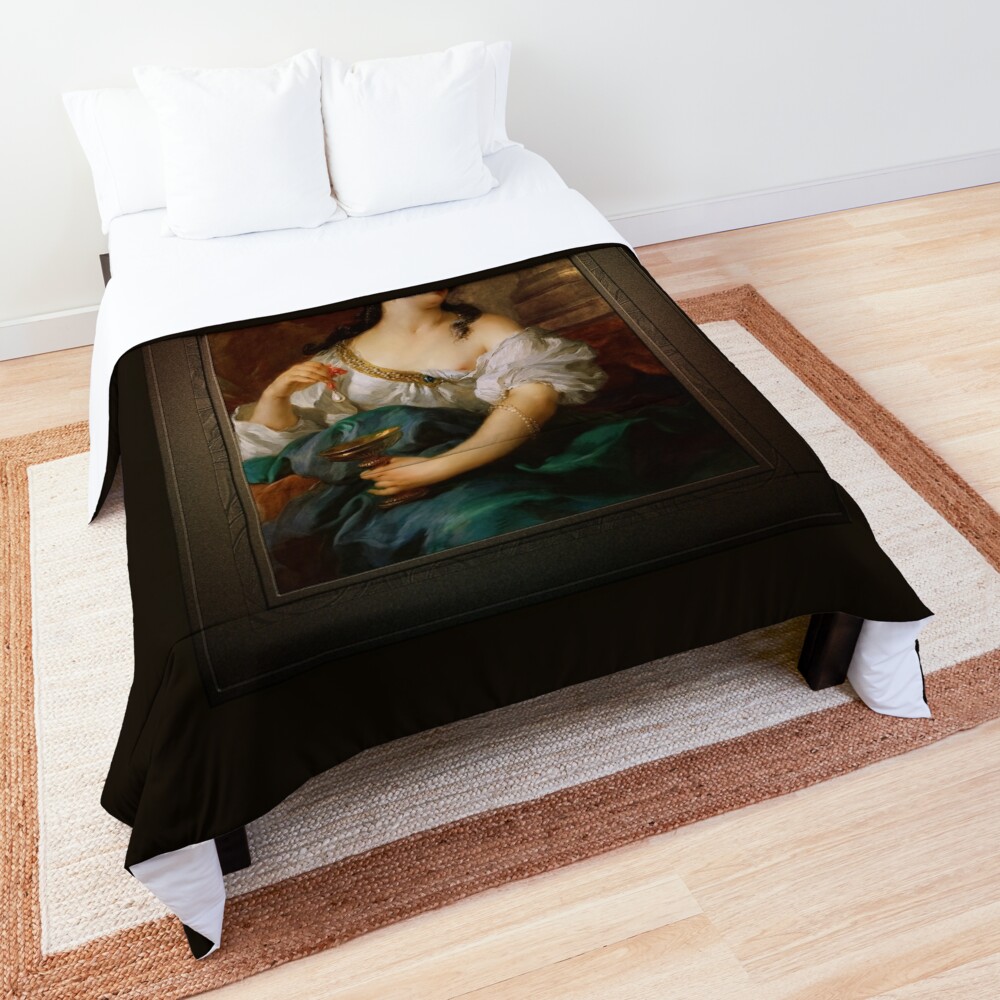
Table des matières
Le sujet principal: L'équilibre gracieux de Cléopâtre
Le personnage central du tableau est Cléopâtre, la reine d'Egypte, whose regal presence dominates the composition. Lemoyne’s interpretation of Cleopatra is that of a delicate, yet resolute figure. She is depicted in a seated position, slightly leaning back in an elegant posture, which highlights both her physical beauty and her stature as a monarch. The queen’s gaze is directed upward and to the side, conveying a sense of contemplation and inner turmoil, as though she is lost in thought about the immense weight of her responsibilities or the fateful choices she faces.
Her luxurious attire is a significant focal point of the painting. Cleopatra is dressed in an opulent gown made of white and iridescent fabrics, which subtly shimmer as the light plays across the folds of the cloth. The gown itself appears as though it has been carefully draped around her body, with the fabric cascading in soft, fluid lines, enhancing her graceful form. Her ensemble is further adorned with intricate gold jewelry, including a chain of beads and gemstones that rests on her neckline, drawing attention to her elegant features.
Objets et symbolisme: Les symboles de pouvoir de Cléopâtre
Cleopatra’s pose is complemented by two prominent objects in the painting that serve as potent symbols of her royal status. Dans sa main droite, she delicately holds a small cup, crafted from an ornate gold chalice. The chalice, rich in detail and texture, could symbolize Cleopatra’s influence over matters of state or perhaps the dire fate she faces, symbolizing both the pleasures and the burdens of power. Dans sa main gauche, she holds a small item, potentially a piece of jewelry or a symbolic artifact, ce qui pourrait être une référence à l’attrait bien documenté de Cléopâtre et à son rôle dans la diplomatie et les intrigues internationales.
Les deux objets sont finement rendus, mettant en valeur l’extraordinaire capacité de Lemoyne à capturer les moindres détails, de l'éclat délicat du métal aux surfaces réfléchissantes qui jouent avec la lumière. Ces éléments suggèrent la position sociale élevée de Cléopâtre et sont utilisés par Lemoyne pour souligner les couches complexes de son personnage., beauté, sagesse, et la tragédie convergent toutes dans son interaction équilibrée avec les objets.
Terrain et arrière-plan: Un cadre opulent
La toile de fond du tableau est un autre élément crucial pour définir l’ambiance et le ton de l’œuvre d’art.. Le paysage est indistinct et éthéré, mettant en vedette drapé, tissus doux et chauds, des tons terreux qui semblent envelopper Cléopâtre d'une manière presque onirique. Le tissu en arrière-plan, with its soft folds and rich texture, complements Cleopatra’s attire and adds a sense of continuity and harmony within the composition.
Although the setting is ambiguous in terms of specific location, it evokes the grandeur and decadence associated with Cleopatra’s reign, particularly the mythical representations of her court. The use of fabric and drapery in the background enhances the sense of luxury and elegance, evoking the lavishness of the royal courts of ancient Egypt, while also paying homage to the artistic style of the Rococo period. Le doux, warm tones of the background juxtapose Cleopatra’s more subdued and reserved mood, creating a striking contrast that emphasizes her poised and contemplative nature.
Le style: Raffinement rococo
François Lemoyne’s style is unmistakably Rococo, a movement known for its emphasis on ornate detail, delicate colors, and the celebration of beauty in all its forms. Dans “Cleopatra c1725,” Lemoyne channels these principles with a deep attention to texture and light. The use of light and shadow plays a pivotal role in the painting, highlighting Cleopatra’s soft features, her fine gown, and the rich surface of the golden chalice. The artist’s brushwork is refined and fluid, adding to the sense of softness and movement in the fabric and Cleopatra’s attire.
The Rococo style also embraces a focus on sensuality and elegance, both of which are beautifully realized in this portrait of Cleopatra. Sa douceur, rounded face, with its delicate features, et les textures luxueuses de sa robe et de ses bijoux témoignent d'un idéal féminin célébré au XVIIIe siècle.. aditionellement, le rendu doux des carnations, combiné avec les riches contrastes de l'arrière-plan et de la tenue vestimentaire, améliorer la sensation de profondeur de la peinture, créer une expérience visuelle qui attire l'œil du spectateur dans les détails subtils du sujet.
L'humeur: Royauté tragique et contemplation
L'ambiance de “Cléopâtre c1725” peut être décrit comme une contemplation tragique. Malgré la richesse et la grandeur entourant Cléopâtre, son expression est lointaine, presque mélancolique. La légère inclinaison de sa tête, la façon dont son regard semble aller au-delà du spectateur, suggère une femme perdue dans ses pensées, peut-être en contemplant son sort ou les manœuvres politiques qui ont défini son règne. Cette ambiance correspond au récit historique de Cléopâtre, qui était à la fois un dirigeant puissant et une figure tragique de l'histoire, surrounded by political intrigue and the complexities of her relationships with the Roman Empire.
Lemoyne’s portrayal of Cleopatra in this reflective state conveys a sense of vulnerability, which contrasts with the stereotypical image of Cleopatra as a domineering and seductive ruler. This nuanced portrayal adds depth to the artwork, inviting the viewer to ponder the internal struggles of a woman caught in a web of power, l'amour, and impending loss.
Conclusion
Dans “Cleopatra c1725,” François Lemoyne captures not only the physical beauty and grandeur of one of history’s most famous women but also the quiet, reflective nature of her character. Through delicate brushwork, textures détaillées, and an evocative setting, Lemoyne invites the viewer to experience the emotional and intellectual complexity of Cleopatra, while also offering a visual feast of Rococo elegance and opulence. The result is a painting that is both a tribute to royal beauty and a meditation on the timeless nature of power and tragedy.
Il s'agit d'une reproduction de maîtres anciens d'art numérique remasterisée d'une image du domaine public qui est disponible sous forme d'impression sur toile en ligne.