

Grand Gallery of the Louvre in Ruins c1796
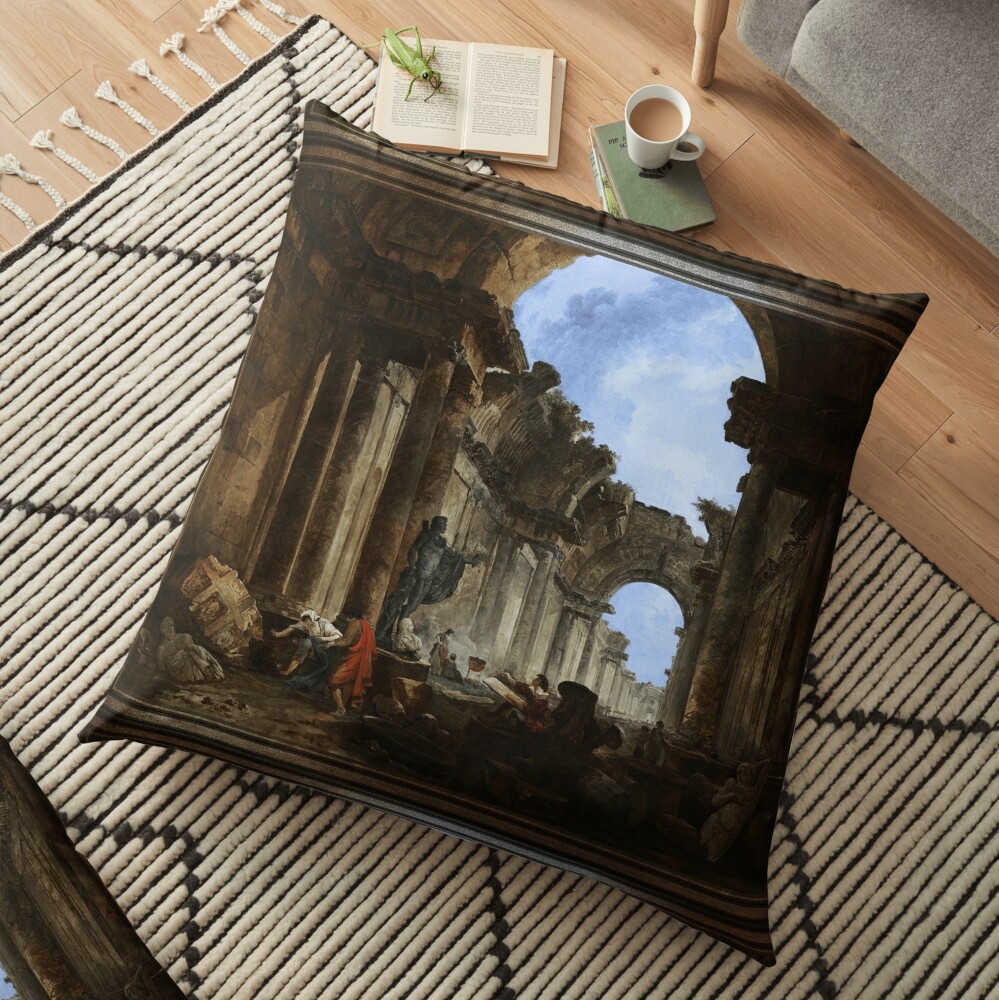
Hubert Robert'S “Imaginary View vun der Grand Gallery vum Louvre zu Ruinen,” gemoolt ca 1796, ass eng beandrockend an dramatesch Duerstellung vun der berühmter Louvre Galerie zu Paräis, als Ruin virgesinn. De Kënschtler, bekannt fir seng fantastesch Landschaften a Biller vun der architektonescher Grandeur, stellt eng evokativ an somber Visioun vum Louvre an engem Verfallszoustand vir, spillt um Thema vun der Zäit Kraaft fir ze kreéieren an ze zerstéieren.
Gebuer zu 1733 a passéiert fort 1808, Dem Robert seng Aarbecht huet dacks d'Juxtaposition vun der klassescher Schéinheet an der Inévitabilitéit vun der Ruin exploréiert, déi mat masterful Fäegkeet an dësem Stéck erfaasst ass. Duerch d'Benotzung vu Liicht, Schied, an eng suergfälteg strukturéiert Zesummesetzung, De Robert beandrockt dës imaginär Szen mat engem Sënn vun enger déiwer Melancholie, iwwerdeems bitt och eng Reflexioun iwwert de Passage vun der Geschicht.
Inhaltsverzeechnes
Den Haaptthema a Kompositioun
In the center of Robert’s canvas stands the magnificent but crumbling architecture of the Grand Gallery of the Louvre, an iconic symbol of Parisian culture and art. The gallery, once a space of grandeur and cultural significance, is now portrayed in ruins. The columns that once supported the structure are cracked and crumbling, and the arches appear weakened, as though they may collapse at any moment.
The absence of a roof is particularly striking, letting in vast expanses of blue sky that contrast sharply with the somber, weathered ruins below. The ruin’s grandeur is evident, but it has been overtaken by time’s erosion, giving the viewer a sense of abandonment and decay.
A group of figures populates the scene, scattered throughout the space. They are small in scale, almost dwarfed by the monumental ruins, and their actions add a layer of intrigue to the piece. Am Virdergrond, one figure appears to be assisting another, while two others sit on the ground amidst fallen columns and broken statues.
These figures seem to be the remnants of a once-vibrant cultural hub, now reduced to mere observers in the face of destruction. Their presence invites the viewer to contemplate the human aspect of decay, how history is shaped not only by the grand structures but also by the people who live within and around them.
Objeten a Materialien
The objects scattered throughout the ruins speak volumes about the once-immense cultural importance of the gallery. Broken marble sculptures lie at the feet of the figures, some with fragments of limbs and torsos, others completely shattered. These pieces, which would have once been prized works of art, now lie in disrepair, lost to the ravages of time and neglect. On the ground, shards of pottery and scattered debris further emphasize the ruinous state of the gallery.
The materials of the painting, Ueleg op Leinwand, allow Robert to capture an astonishing level of detail and texture. The decaying marble columns, with their chipped edges and weathered surfaces, seem almost tactile, as if one could reach out and feel the roughness of the stone.
D'Zuelen, ze, are depicted with meticulous care, their draped garments flowing gently in the breeze that sweeps through the open space. Their expressions, though somber, seem to reflect a sense of resignation rather than despair. The juxtaposition of the living, albeit defeated, figures against the unyielding stone ruins serves to underscore the transient nature of both life and art.
Terrain an Atmosphär
The terrain of the scene, though part of a grand gallery, is overrun with nature’s intrusion. Vegetation, including ivy and creeping vines, winds through the broken arches and columns, asserting nature’s inevitable reclaiming of manmade structures.
The floor is littered with rubble, large stone blocks, and shattered architectural elements that once formed the orderly, majestic design of the gallery. Despite the devastation, there is a beauty in the way nature and decay coexist in the scene. The ivy creeping through the cracks in the stone is not a sign of destruction but a reminder of the resilience of life, even in the face of human folly.
D'Atmosphär am Robert senger Molerei ass mat engem melancholesche Sënn vun Onvermeidbarkeet geprägt. Den oppenen Himmel, with its soft clouds and light, contrasts with the weight of the ruins, creating a feeling of duality. Op der enger Säit, d'Luucht proposéiert Hoffnung, a promise of renewal and rebirth, iwwerdeems d'Ruin selwer schwätzt vun der Zerbriechlechkeet vun mënschlech Leeschtung. The overall mood is contemplative, den Zuschauer drängen net nëmmen iwwer d'Geschicht vum Louvre als Symbol vu Kultur a Konscht ze reflektéieren, mee och iwwer déi universell Themen vum Zerfall, änneren, and time’s unrelenting progression.
Stil, Thema, a Stëmmung
De Stil vum Robert senger Molerei ass an der klassescher Traditioun verwuerzelt, mat präzis a bewosst Pinselen, déi e Gefill vu Realismus un der virgestallter Szen leet. Allerdéngs, his composition moves beyond mere representation, Elementer vum Sublime integréieren. D'Gréisst vun de Ruinen, géint e groussen an eidelen Himmel gesat, evokéiert Gefiller vun Awe a Melancholie. Et gëtt kee Versuch d'Vergaangenheet ze idealiséieren; éischter, De Robert erfaasst e Moment vu Ruin an Zerfall, erlaabt dem Betrachter den inévitabelen Ënnergang vun alle Saachen ze konfrontéieren.
D'Thema vum Bild dréint sech ëm de Passage vun der Zäit an d'Vergänglechkeet vum mënschleche Beméihung. De Robert presentéiert de Louvre, ee vun de bekanntste kulturellen Institutiounen an der Welt, als Monument zu deem wat eemol grouss war an elo a Ruinen ass.
D'Iddi vun der Zerstéierung ass zentral am Stéck, et gëtt awer och en impliziten Message vun der Erneierung. De Passage vun der Zäit, iwwerdeems destruktiv, erlaabt och nei Ufanks, wéi d'Natur lues a lues d'Ruine iwwerhëlt, an den Zyklus vum Liewen geet weider.
D'Stëmmung vum Bild ass eng vu Melancholie an Introspektioun. Den Zuschauer ass invitéiert fir iwwer d'vergänglech Natur vun der Existenz ze meditéieren, the fragility of human creations, an de Passage vun der Zäit. Et ass eng Erënnerung datt, despite the grandiosity of human accomplishments, all things are subject to decay. Trotzdem, an dësem Zerfall, et gëtt och Schéinheet - d'Schéinheet vun der Naturresistenz an d'Erënnerung un dat wat eemol war.
Grand Gallery of the Louvre in Ruins ass eng retouchéiert digital Konscht al Master Reproduktioun vun engem Public Domain Bild dat als verfügbar ass Leinwandprint online.
Kënschtler Bio
Ënnert Info Ofgeleet Vun Wikipedia.org
Den Hubert Robert gouf zu Paräis gebuer 1733. Säi Papp, Nicolas robert, war am Déngscht vum François-Joseph de Choiseul, marquis de Stainville e féierende Diplomat aus Loutrengen. De jonke Robert huet seng Studie mat de Jesuiten um Collège de Navarre ofgeschloss 1751 an den Atelier vum Sculpteur Michel-Ange Slodtz eragaangen, deen him Design a Perspektiv geléiert huet, awer hien encouragéiert huet sech op d'Molerei ze zéien.. An 1754 hien ass am Zuch vum Étienne-François de Choiseul op Roum fortgaang, Jong vu sengem Papp sengem Patron, dee franséischen Ambassadeur ernannt gouf a Staatssekretär fir Aussepolitik vum Louis XV. 1758.
Hien huet voll eelef Joer zu Roum verbruecht, eng bemierkenswäert Längt vun der Zäit; nodeems dem jonke Kënschtler seng offiziell Residenz op der Franséischer Akademie zu Roum ausgaang ass, hien huet sech selwer ënnerstëtzt vu Wierker, déi hie produzéiert huet fir besiche Kenner wéi den Abbé de Saint-Non, deen de Robert op Neapel am Abrëll geholl huet 1760 fir d'Ruine vu Pompeji ze besichen. Der Marquis de Marigny, Direkter vun de Bâtiments du Roi hält sech a senger Entwécklung a Korrespondenz mam Natoire um Laafenden, Direkter vun der Franséischer Akademie, déi d'Pensiounskräften opgeruff hunn ausserhalb vun Dieren ze skizzéieren, aus der Natur: De Robert brauch keen Drang; Zeechnungen aus senge Skizzenbicher dokumentéieren seng Reesen: Villa d'Este, Caprarola.
Vue op den Hafen vu Rippeta zu Roum, c. 1766, weist den antike Réimesche Pantheon nieft engem imaginären Hafen