

Пейзаж с лестницей и обелиском
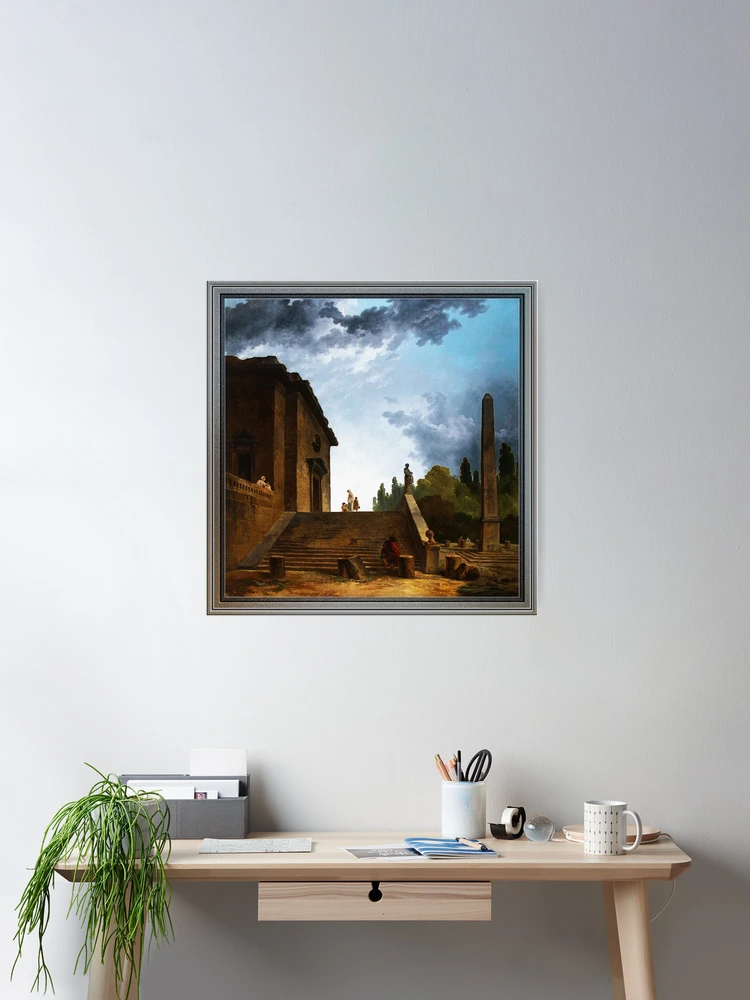
“Пейзаж с лестницей и обелиском” is a striking example of 18th-century French landscape painting, созданный Юбер Роберт вокруг 1770-1780. Known for his fascination with classical ruins and grand architectural settings, Роберт (1733 – 1808) captures a scene that exemplifies the romanticized aesthetic of the period. His work blends natural and man-made elements, illustrating a harmonious coexistence between the human-crafted structures and the vast, timeless landscape. This piece invites viewers to immerse themselves in a world where history, природа, and architecture converge.
Оглавление
Основная тема и композиция
The central focus of this artwork is the majestic set of stairs leading to a grand building or temple, complemented by the towering obelisk in the background. The stairs themselves are weathered and appear to be made of stone, their steps leading upward toward a stone structure. The presence of these stairs suggests an ancient or noble setting, possibly linked to historical or mythological references, characteristic of Robert’s romanticized depictions of classical ruins.
На переднем плане, two individuals are depicted—one seated and another standing on the stairs. They are seemingly inconsequential to the grandeur of the setting but still play a vital role in adding a human presence that contrasts with the monumental architecture. Their placement helps balance the scale of the composition, providing a sense of human proportion amid the towering structures.
The obelisk, an ancient Egyptian monument re-imagined within a classical European setting, stands as another focal point to the right side of the composition. This object symbolizes the ancient world, evoking the sense of a lost civilization while anchoring the piece in the romantic classical themes Robert was known for. The use of the obelisk reinforces the notion of timelessness, a central theme in much of Robert’s work, where classical ruins are idealized to evoke both nostalgia and contemplation of past civilizations.
Объекты и местность
The terrain surrounding the stairs and obelisk is lush and expansive. The ground appears to be cultivated or at least managed, with well-kept paths leading through the terrain. Справа, we see a few figures in the distance, seated or walking, giving the landscape a dynamic feel while reinforcing the setting’s tranquility. The backdrop of trees, with their expansive reach toward the sky, provides a striking contrast against the harsh lines of the stone architecture. The viewer’s eye is naturally drawn toward the horizon, where the trees begin to thin out, leading to a space dominated by clouds and a slightly darker sky.
The juxtaposition of human-made elements—such as the staircase, the obelisk, and the figures—and nature highlights the tension between civilization and the natural world. Robert’s careful rendering of the foliage, combined with the crisp outlines of the architectural elements, underscores the precision of his technique. This harmony between nature and architecture is a key characteristic of the Rococo and Neoclassical periods, where the human desire for understanding and order is reflected through such meticulously designed structures amid nature’s free-flowing form.
Стиль и техника
Robert’s style in this work is distinctly Rococo with elements of Neoclassicism, blending the ornate with the classical. His use of light, тень, and texture creates a sense of depth and dimension, inviting the viewer to step into the landscape. The clouds in the sky seem to swirl in dramatic motion, contrasting with the stillness of the stone objects below. This use of light and dark not only adds to the mood but also enhances the sense of timelessness that pervades the entire scene.
The application of light is masterful, with shadows creeping along the stone steps, highlighting the weathered texture of the structure. The obelisk, тоже, is illuminated with soft, diffuse light, giving it an almost ethereal quality. Цифры, small in comparison to the surrounding objects, are subtly shaded, further emphasizing their secondary role within the larger composition.
Robert’s technique, while focused on naturalistic detail, maintains an idealized interpretation of the ruins. The rocks and stone are not simply representations of decay but are infused with a sense of romantic nostalgia for an era gone by. The stones seem to have a timeless quality, making them not just relics of the past, but symbols of enduring beauty.
Настроение и тема
Настроение картины – спокойное созерцание.. Настройка, with its peaceful yet awe-inspiring structures, invites viewers to reflect on the past, течение времени, and the impermanence of human creations. The natural landscape, in its lushness and vividness, contrasts with the stone architecture, suggesting the ephemeral nature of human achievement against the vast, enduring power of nature.
The classical ruins, while not overtly ancient in this depiction, invoke the grandeur of civilizations long past, evoking a sense of nostalgia and reverence for the lost civilizations of Rome and Egypt. The obelisk, with its Egyptian origins, stands as a reminder of these ancient powers. By choosing to depict such ruins, Robert not only preserves the legacy of these ancient structures but also elevates them, presenting them as objects of beauty rather than mere remnants of past civilizations.
The inclusion of figures adds a human touch to the scene, but their small scale and passive actions suggest that humanity, while significant, is but a fleeting moment in the timeline of history. The vast sky, dotted with dark clouds and illuminated by bursts of light, further amplifies the theme of nature’s dominance over time and human endeavors.
Заключение
“Пейзаж с лестницей и обелиском” is a masterful example of Hubert Robert’s ability to merge the beauty of nature with the elegance of classical architecture. The scene captures a moment where the monumental and the natural coexist, creating a serene yet thought-provoking atmosphere. Robert’s meticulous attention to detail, his skillful use of light and shadow, and his celebration of classical ruins all serve to reinforce the timeless theme of nature’s dominance and the fleeting nature of human achievement. This work invites the viewer not only to admire its technical brilliance but to reflect on the deeper themes of history, время, and memory.
Landscape with a Stairs and Obelisk is a retouched digital art old masters reproduction of a public domain image that is available as a рулонная печать на холсте.
Биография художника
Ниже информация получена из Wikipedia.org
Юбер Робер родился в Париже в 1733. Его отец, Николя Роберт, был на службе у Франсуа-Жозефа де Шуазеля, маркиз де Стенвиль, ведущий дипломат из Лотарингии. Молодой Роберт закончил учебу у иезуитов в Коллеж де Наварра в г. 1751 и вошел в ателье скульптора Мишель-Анж Слодца, который научил его дизайну и перспективе, но побудил его обратиться к живописи.. В 1754 он уехал в Рим на поезде Этьен-Франсуа де Шуазель, сын работодателя своего отца, который был назначен послом Франции и станет государственным секретарем по иностранным делам при Людовике XV в 1758.
Он провел в Риме целых одиннадцать лет., замечательный отрезок времени; после того, как официальная резиденция молодого художника во Французской академии в Риме закончилась, он поддерживал себя работами, которые создавал для приезжих знатоков, таких как аббат де Сен-Нон, кто отвез Роберта в Неаполь в апреле 1760 посетить руины Помпеи. Маркиз де Мариньи, директор Bâtiments du Roi следил за его развитием в переписке с Natoire, директор Французской академии, который призывал пенсионеров рисовать на природе, от природы: Роберт не нуждался в уговорах; рисунки из его альбомов документируют его путешествия: Вилла д'Эсте, Капрарола.
Вид на порт Риппета в Риме, c. 1766, показывает древнеримский пантеон рядом с воображаемым портом
Контраст между руинами Древнего Рима и жизнью его времени вызвал у него живой интерес.. Некоторое время работал в студии Паннини., чье влияние можно увидеть в Воображаемом виде разрушенной галереи Лувр. (иллюстрация). Роберт проводил время в компании молодых художников в кругу Пиранези., чьи причуды романтически заросших руин так сильно повлияли на него, что он получил прозвище Робер де руины. Альбомы эскизов и рисунков, которые он собрал в Риме, снабдили его мотивами, которые он воплощал в картинах на протяжении всей своей карьеры..