

Marie Antoinette Queen Of France In Hunting Attire
Artwork Title, Creation Date, Artist, and Historical Context
“Marie Antoinette Queen of France in Hunting Attire (1755-1793) c1788 by Swedish Painter Adolf Ulrik Wertmüller (1751-1811)” depicts an iconic moment of France’s queen in the late 18th century, a period marked by political upheaval and the rising tension of the French Revolution. This artwork was completed by Adolf Ulrik Wertmüller, a Swedish painter known for his portraits, and it captures a moment in time during Marie Antoinette’s reign. The painting, created in 1788, illustrates the queen in a moment of serenity, as she is adorned in hunting attire, presenting an image of both elegance and power.
Born in 1751, Wertmüller became famous for his portraits of European royalty, and this piece is one of his most celebrated works. The painting is a prime example of the Rococo period’s focus on ornate beauty and delicate brushwork, while also incorporating elements of the neoclassical style. It reflects the late Rococo era, a time when aristocracy in Europe was heavily focused on opulence and luxury, and when the stark contrasts of the impending French Revolution were becoming evident.
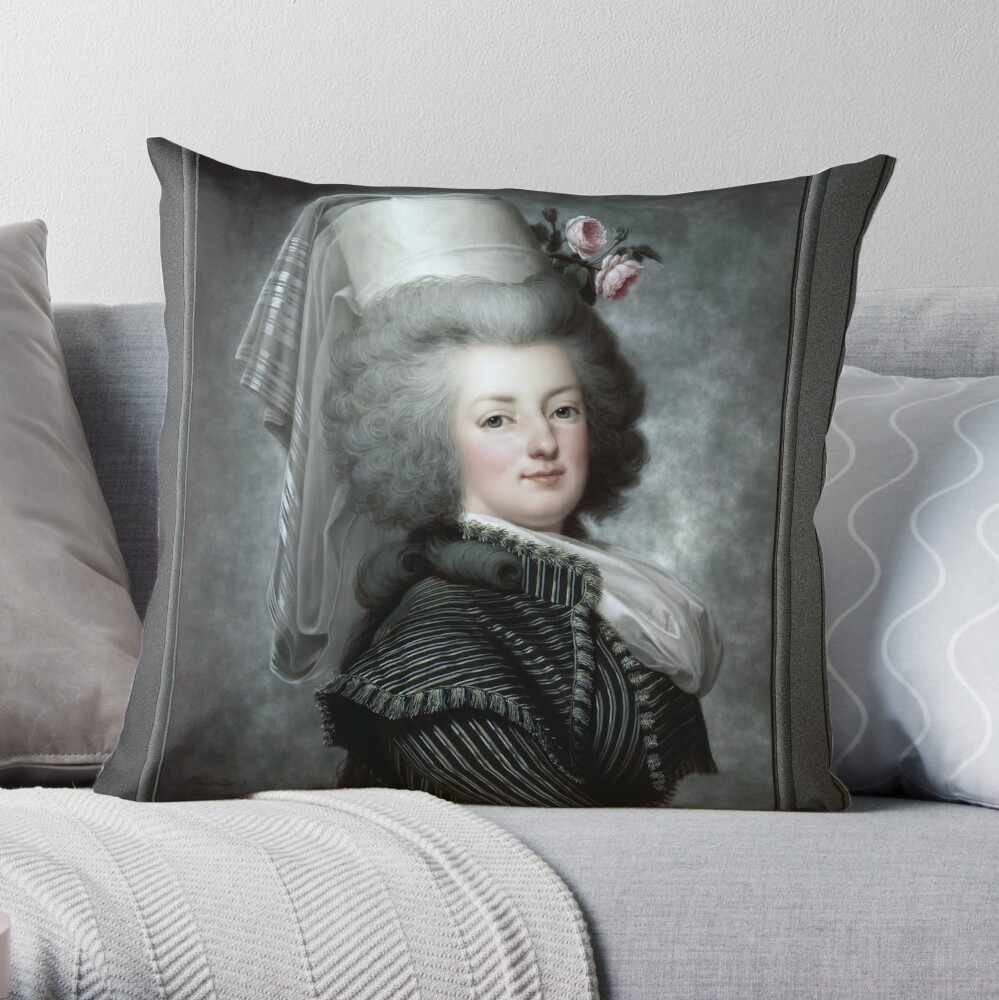
Table of Contents
The Main Subject and Mood of the Artwork
The central subject of the portrait is Marie Antoinette, the Queen of France, who is depicted with regal composure and sophistication. The queen is dressed in elaborate hunting attire that serves to reinforce her status as a member of the royal elite, while simultaneously aligning her with the traditionally masculine world of hunting. This juxtaposition of feminine grace and masculine activity adds a layer of complexity to her portrayal, as it suggests both power and vulnerability.
Her expression is calm yet assertive, radiating an air of quiet confidence. Despite the elaborate nature of her clothing, which includes layers of intricate fabrics and lavish accessories, her posture remains poised and dignified. This serene expression contrasts sharply with the tumultuous events surrounding her reign, such as the impending financial crisis, popular unrest, and the Revolution that would soon unfold.
The overall mood of the painting is one of serene nobility, with an emphasis on Marie Antoinette’s elevated position within French society. The soft lighting and delicate rendering of the queen’s features create an atmosphere of timeless beauty, although there is an undercurrent of fragility as one considers the context of the period in which the portrait was made.
The Queen’s Attire and Symbolism
Marie Antoinette’s hunting attire is a significant aspect of this painting, as it serves as a symbol of both the queen’s personal interests and her role within the French court. During this period, hunting was often considered an aristocratic pastime, linked to both leisure and the exertion of power. The hunting garb is made of luxurious materials, such as richly woven fabrics and delicate lace, reflecting the queen’s elite status and wealth. The royal emblematic feathers and floral motifs in her attire also emphasize her position within the court and the French monarchy.
The inclusion of floral accents, particularly roses, evokes an element of nature and beauty, contrasting with the formality of her royal position. These floral elements can be interpreted as a subtle nod to femininity and the queen’s personal connection to the more natural world, which was a theme often explored in Rococo portraiture. However, there is also a contrast between these delicate elements and the bold, structured nature of her attire, highlighting the tension between Marie Antoinette’s personal identity and the public persona expected of her as queen.
The Background and Composition
The background of the painting, though not heavily detailed, serves to accentuate the royal subject. The soft, muted hues of the backdrop, grays and subtle greens, draw attention to the queen herself, allowing her figure to stand in sharp contrast to the environment. The lack of any significant architectural or scenic detail places the emphasis entirely on the queen and her attire, suggesting that she is above the everyday concerns of the world outside her court.
The composition is meticulously balanced, with Marie Antoinette positioned slightly off-center, allowing the viewer to take in both her elegant figure and the intricate details of her dress. The positioning of her figure also emphasizes her profile, with her face gently angled toward the viewer. This composition adds a sense of nobility and gravitas to the portrait, while her regal attire and facial expression evoke both grace and authority.
Artistic Style and Techniques
Wertmüller’s style is evident in the careful rendering of textures and the soft handling of light. His ability to depict the delicate details of fabric, lace, and feathers is a testament to his technical skill as a portraitist. The use of light is also significant in this work, as it subtly illuminates the queen’s face and attire, highlighting the intricate details and the smooth textures of her garments. The smooth gradation of light across her face contributes to the soft, almost ethereal quality of the portrait.
The soft, yet intricate brushstrokes employed by Wertmüller create a sense of depth and texture in the portrayal of Marie Antoinette, while the background remains more simplified, allowing the queen’s features to stand out. The painting’s use of shadows is minimal but effective, further enhancing the sense of dimensionality and realism.
Wertmüller’s mastery in conveying the texture of the fabrics and the softness of Marie Antoinette’s features demonstrates his adherence to the neoclassical and Rococo stylistic conventions of the time. The meticulous attention to detail and the soft color palette serve to elevate the subject, aligning with the ideals of beauty and nobility that were celebrated by the court.
Conclusion
“Marie Antoinette Queen of France in Hunting Attire (1755-1793) c1788” by Adolf Ulrik Wertmüller is a striking example of portraiture from the late 18th century, capturing the queen at a moment of serene nobility. Through his detailed rendering of Marie Antoinette’s attire and serene expression, Wertmüller not only immortalizes the queen’s elegance but also subtly alludes to the tensions of the period. The portrait serves as a reflection of both the grandeur of the French monarchy and the fragility of the queen’s position in the face of impending revolution.
This painting stands as a testament to Wertmüller’s skill as a portrait artist, as well as to the complex layers of symbolism that can be embedded within a royal portrait. The queen’s delicate attire, serene yet assertive demeanor, and the soft lighting all contribute to a depiction of a woman caught between the beauty of the royal court and the pressures of a society on the brink of monumental change.
This is a remastered digital art old masters reproduction of a public domain image that is available as a rolled canvas print online.