

Portrait Of A Young Woman (Portrait d’une Jeune Femme)
“Portrait Of A Young Woman” (Portrait d’une Jeune Femme) is a masterful oil painting created by the renowned French artist Angelo Asti in the late 19th century. Born in 1847 and passing away in 1903, Asti was known for his graceful and expressive portraits, many of which captured the elegance and poise of the subjects, often set in atmospheric backdrops that conveyed a sense of sophistication. This particular portrait, dated within his career, showcases his exceptional ability to blend realism with an almost dreamlike quality, rendering the young woman with delicate details that bring the viewer’s attention to both the subject and the rich composition around her.
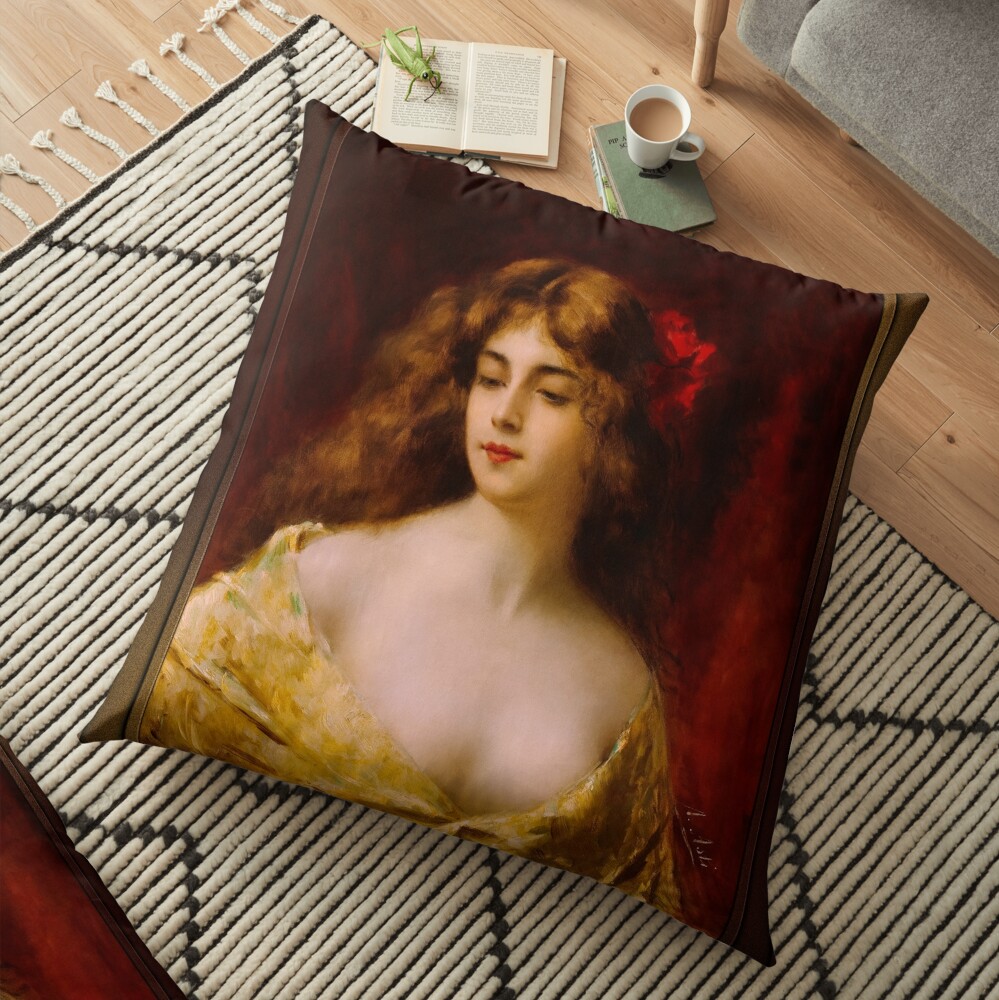
Table of Contents
Main Subject and Mood
The central figure of the painting is a young woman, poised and serene, exuding a sense of calmness and grace. Her face, with its soft, rounded features, is the focal point, drawing the viewer’s gaze immediately. The artist has used gentle shading around her delicate features, highlighting her porcelain-like complexion. She gazes downward with a slight tilt of her head, and her soft, dark eyes seem to convey both introspection and quiet confidence. Her lips, painted with a subtle red hue, are parted just enough to suggest a poised but introspective expression.
The mood of the painting is one of tranquility and modest beauty, which is heightened by the soft, almost ethereal light that seems to envelop the subject. There is an inherent warmth in the painting, which comes not only from the light but also from the rich textures of her clothing and the overall warmth of the color palette used by Asti.
The young woman’s loose, wavy hair, colored in a chestnut hue, is arranged loosely, falling over her shoulders with natural movement. A red rose, delicately tucked into the right side of her hair, adds a note of sensuality and femininity to the piece, though it is understated enough to maintain the overall refined and dignified mood. This detail is both an aesthetic choice and a symbolic one, possibly alluding to the classical idea of beauty and the fleeting nature of youth, much like the symbolism associated with flowers in art.
Clothing and Materials
The subject of the portrait is adorned in a luxurious yellow garment that drapes gracefully over her shoulders. The fabric seems rich and opulent, possibly indicative of fine silk or satin, and it adds a layer of warmth to the piece through its golden tones. The flowing fabric is gently illuminated by the light source from above, creating soft folds that enhance the texture and movement within the painting. The delicate handling of the fabric demonstrates Asti’s skill in capturing the nuances of light and texture, transforming the material into something almost tangible.
The colors chosen for the clothing contrast beautifully with the darker tones of the background. The yellow attire creates a visual bridge to the darker shades that dominate the backdrop, while still standing out with its richness. The entire composition, with the subject’s warm dress and calm facial expression, gives a sense of harmony between the figure and the atmosphere created by the artist.
Asti’s technique in rendering the fabric of the woman’s dress is refined and full of subtle detail. The drapery, despite being soft, is clearly defined, each fold skillfully created to reflect the light that falls upon it, enhancing the fluidity and natural form of the material.
Background and Setting
The background of “Portrait of A Young Woman” is painted in warm, deep reds and browns, creating an intimate, enclosed environment that places the subject in a timeless space. There are no discernible elements that could suggest an external or specific location, which keeps the focus entirely on the subject. The lack of any specific setting allows the figure of the young woman to stand in solitude, almost suspended in time, which makes the painting feel both intimate and private.
The rich red tones of the background contrast with the warm yellow of the woman’s gown, offering a subtle but powerful visual dialogue. The deep, warm hues evoke a sense of passion and quiet contemplation, possibly hinting at a deeper narrative beneath the serene surface of the woman’s expression.
Style and Technique
Angelo Asti’s artistic style, as evident in this painting, is rooted in the academic tradition of the 19th century, with influences from the French realism movement. His use of fine details, particularly in the depiction of the subject’s face and clothing, demonstrates a mastery of technique that is characteristic of the period. The painting is highly refined, and the smoothness of the skin tones is juxtaposed with the expressive texture of the fabrics and the background. The brushwork, though finely executed, is also quite fluid in the folds of the dress and the texture of the hair, creating a balanced effect between realism and subtle romanticism.
The play of light and shadow in the painting is another element that highlights Asti’s technical prowess. The soft glow surrounding the subject contrasts beautifully with the darker, almost velvety shades of the background. This lighting effect elevates the subject, making her appear almost radiant, with a divine or ethereal quality. Such treatment of light adds to the serene mood of the painting, almost as if the young woman exists in a world apart from earthly concerns.
Conclusion
In “Portrait of A Young Woman,” Angelo Asti successfully captures not only the outward beauty of the subject but also her inner grace and quiet elegance. The combination of intricate detail in the face, the flowing, opulent gown, and the warm, enveloping background create a sense of timeless beauty. The painting, with its subdued yet rich color palette, speaks to the artist’s refined technique and his deep understanding of the emotional and aesthetic dimensions of portraiture. This piece stands as a testament to Asti’s skill in conveying both the personality and the beauty of the subject, blending realism with romantic idealization, and offering a glimpse into the quiet power of feminine grace.
This is a remastered digital art old masters reproduction of a public domain image that is available as a canvas print online.