

Ritratto di Hortense Mancini Duchesse de Mazzarino, come Afrodite
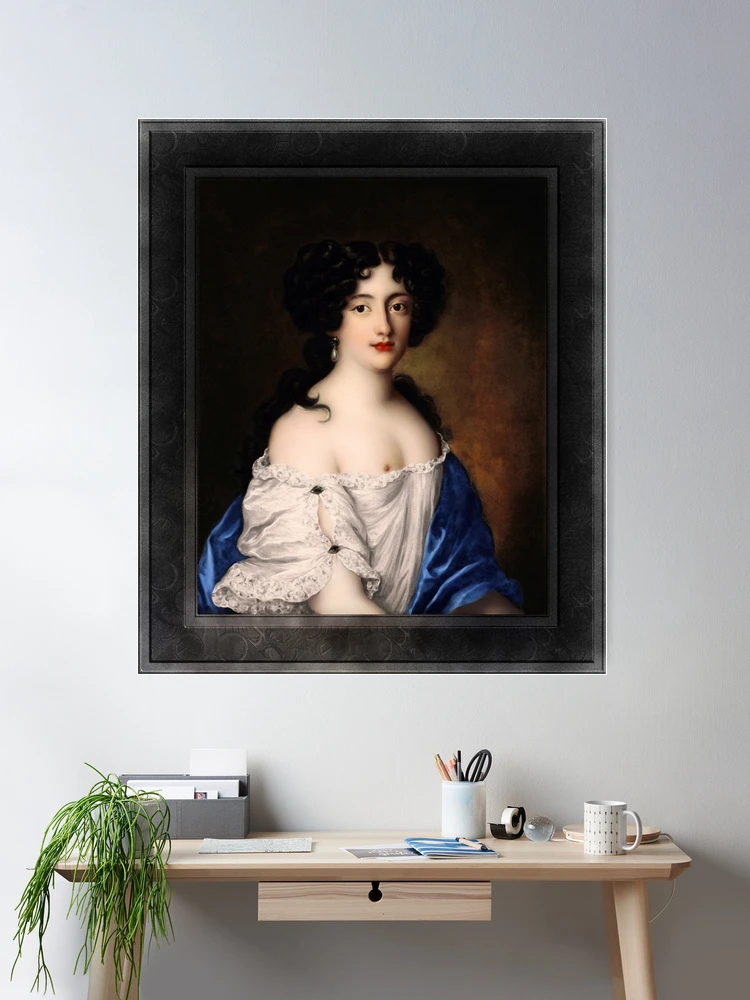
Jacob Ferdinand Voet‘s (1639 – 1689) “Ritratto di Ortensia Mancini (1646 – 1699), Duchessa di Mazzarino, come Afrodite,” creato intorno 1675, presents a striking and graceful depiction of Hortense Mancini, one of the most celebrated women of her time. Born into the illustrious Mancini family, she was the niece of Cardinal Mazarin, and her life was marked by intrigue, wealth, e bellezza. Voet’s painting exemplifies the opulence of the late 17th century, particularly the French court’s fascination with classical mythology, combining both her aristocratic status and mythological grandeur. Hortense Mancini is portrayed as Aphrodite, La dea dell'amore, bellezza, and desire, a figure whose essence permeates the entire composition.
Sommario
Soggetto e composizione
The central figure of the painting, Hortense Mancini, is the epitome of refined elegance. She is depicted with soft yet assertive poise, her gaze meeting the viewer with a sense of subtle confidence. Voet carefully captures her beauty, infusing the painting with a sense of nobility and mythological grandeur. Hortense’s classical features, including a high forehead, full lips, and well-shaped eyes, are meticulously rendered, adding an ethereal quality to the portrait.
Il suo abbigliamento, a striking combination of rich fabrics, is an immediate visual focus. Il sciolto, partially draped gown, made from a shimmering white material, is held together by delicate clasps, creating an illusion of effortless luxury. The gown’s neckline is open and flowing, its folds evoking the natural movement of fabric, which draws attention to the softness of the skin and the graceful contours of her body. The deep blue robe, draped over her shoulders and cascading down her back, contrasts beautifully with the white dress. It serves to highlight the goddess-like radiance that Hortense exudes, enhancing her role as Aphrodite.
Aphrodite is often depicted with flowing, voluminous hair, and here, Voet adheres to this tradition. Hortense’s hair, dark and luxuriant, is styled in soft waves, flowing over her shoulders and further emphasizing her divine femininity. Her curls, meticulously painted, frame her face in a way that enhances the sensuality and softness of her expression.
To further emphasize her connection with the classical goddess, Voet includes subtle elements of the mythological world. A delicate pearl earring is visible in her ear, symbolizing both her wealth and divine status, while her hands rest gently on her gown, one hand slightly raised as though inviting the viewer into her world of beauty. These small yet significant details further elevate Hortense from a mere aristocratic subject to a symbolic embodiment of love and beauty.
Lo sfondo e l'ambientazione
The background of the portrait remains intentionally subdued, with deep, dark hues that allow the figure of Hortense to emerge almost from the shadows. I ricchi, velvety tones of the backdrop are characteristic of many Flemish and Baroque portraits of the time. The lack of a clear, detailed setting allows the viewer to focus entirely on the figure of Hortense and her symbolic role as Aphrodite. The subtle interplay of light and shadow helps create a sense of depth, with light subtly illuminating the folds of her gown and her radiant face, enhancing her almost otherworldly presence.
While the background remains neutral, the overall composition evokes the idealized and mythological, much like the romanticized depictions of classical goddesses. Voet, much like other artists of his time, understood that portraits of aristocratic women were often not just representations of physical beauty but also reflections of their power, status, and symbolic roles in society.
Stile artistico e tecnica
Voet’s style reflects the Baroque tradition, with a focus on opulence, dettaglio intricato, e intensità emotiva. His rendering of texture, particularly in the depiction of fabrics, capelli, and skin, is masterful. The play of light on the different surfaces—glossy pearls, velvety fabric, and soft flesh—demonstrates his exceptional skill in capturing realism while still maintaining an idealized, almost dreamlike quality in the subject’s presentation.
L'uso del morbido, blended brushstrokes creates a seamless transition between light and shadow, contributing to the overall sense of harmony in the composition. Voet’s technique is refined and meticulous, particularly evident in the way he captures the luminous quality of Hortense’s complexion, which contrasts beautifully with the darker hues of the background. The detail in her gown, especially the delicate folds, highlights the artist’s attention to the tactile quality of fabric, an important element in portraits from the Baroque period, where the representation of wealth was a key factor in symbolizing nobility.
Umore e tema
The mood of the portrait is one of quiet dignity, a delicate blend of sensuality and power. Hortense’s pose and expression suggest both vulnerability and control, inviting the viewer into a world where beauty transcends the ordinary. By casting her as Aphrodite, Voet elevates her image from that of an aristocratic woman to a figure of mythological significance. The themes of love, bellezza, and divine grace are interwoven throughout the painting, as Voet uses classical references to elevate the subject beyond her earthly role.
The portrait also suggests the complex and often contradictory nature of Hortense’s life. While she was celebrated for her beauty and status, her life was also marked by personal and political struggles. As Aphrodite, she becomes an idealized symbol of love and beauty, but this idealization also creates a distance from the complexities of her reality. The contrast between the idealized image and her actual life serves to deepen the emotional resonance of the painting, as it highlights the tension between appearance and reality that is often present in aristocratic portraiture.
Conclusione
Jacob Ferdinand Voet’s “Portrait of Hortense Mancini as Aphrodite” is a stunning work that combines meticulous technical skill with deep symbolic meaning. Through the lens of classical mythology, Voet transforms Hortense into a timeless figure of beauty and love, elevating her to a status beyond the earthly realm. The rich textures, the dramatic use of light and shadow, and the serene yet powerful expression on Hortense’s face all contribute to a portrait that speaks to both her personal elegance and her mythological significance. It remains an exemplary piece of 17th-century portraiture, combining the baroque fascination with mythological symbolism with the personal grandeur of an aristocratic subject.
Retroscena dell'opera d'arte
Questo è un bellissimo ritratto di Hortense Mancini (francese) or Ortensia Mancini (Italiano), la nipote del cardinale italiano Mazzarino (1602 – 1661), diplomatico, politico, e primo ministro di Francia presso i re di Francia Luigi XIII e Luigi XIV da 1642 fino alla sua morte in 1661.
Era l'amante di Carlo II, Re d'Inghilterra, Scozia, e Irlanda; ed era la quarta delle cinque famose sorelle Mancini, che insieme a due delle loro cugine Martinozzi, erano conosciute alla corte del re Luigi XIV di Francia come le Mazarinettes.
In questo ritratto si suppone rappresenti la dea greca Afrodite, la Dea associata all'amore,piacere, passione, bellezza e procreazione.
Questa è una riproduzione ritoccata di arte digitale dei vecchi maestri di un'immagine di pubblico dominio.
Biografia dell'artista per gentile concessione Wikipedia.org
Pochi dettagli sui primi anni di vita di Voet, la formazione e la carriera sono state preservate. Voet è nato ad Anversa come figlio del pittore Elias Voet. Era uno dei quindici figli; il fratello maggiore Carlo si trasferì ad Amsterdam e vi si sposò 1661 una figlia della ricca Joan Coymans e Sophia Trip. Giacobbe lasciò la sua nativa Anversa e si recò a Roma, dove risiedeva 1663 per 1680.
Voet divenne un membro dei Bentvueghel, associazione di artisti prevalentemente olandesi e fiamminghi attiva a Roma. Voet ha disegnato un'immagine a carboncino di tutti i membri dei Bentvueghel sul muro bianco di una locanda a Roma che era un popolare luogo di incontro di questo gruppo. Il quadro era talmente apprezzato da essere risparmiato ogni volta che le pareti venivano ridipinte.
A Roma l’abilità di Voet come ritrattista era molto richiesta presso la corte papale e l’aristocrazia romana, comprese le importanti famiglie Colonna e Odescalchi. Era patrocinato da Christina, Regina di Svezia, che allora risiedeva a Roma. Ha dipinto il suo ritratto così come quello della sua amica, Cardinale Azzolino. Anche inglesi e altri europei in visita a Roma durante il loro Grand Tour commissionarono ritratti a Voet.
Nel 1671 – 1672 Voet ricevette dal cardinale Chigi l'incarico di dipingere ritratti di giovani donne che erano di spicco nella società romana. Ha creato una prima serie di 37 ritratti delle donne più incantevoli di Roma (‘Galleria delle Belle’) fra 1672 e 1678 per la sala da pranzo del cardinale Chigi nel suo palazzo di Ariccia (sui colli albani fuori Roma). Successivamente copiò e ampliò anche la serie per altre famiglie nobili romane e italiane. Ciò diede inizio a una furia per i ritratti di giovani donne a Roma e all'estero.