

D'Accolade c1901
“D'Unerkennung,” gemoolt an 1901 vum britesche Kënschtler Edmund Blair Leighton (1852-1922), ass e bemierkenswäert Stéck dat e Moment portraitéiert deen an der mëttelalterlecher ridderlecher Traditioun an der Zeremonie geprägt ass. D'Konschtwierk erfaasst d'Grandeur an d'Feierlechkeet vun der Ritterschaft, e wesentlechen a symbolesche Ritual am Liewen vun de Ritter an der mëttelalterlecher Period. D'Bild taucht den Zuschauer an eng Welt vu galante Ritter, Adel Dammen, an opulent mëttelalterlech Astellungen. Duerch Leighton Expert Notzung vun historesch Genauegkeet, Liicht, an Detail, dëst Bild erzielt net nëmmen eng Geschicht, mee transportéiert de Publikum op eng Éierezäit, Tender, a Courage.
Inhaltsverzeechnes
Haaptwiel a Zesummesetzung
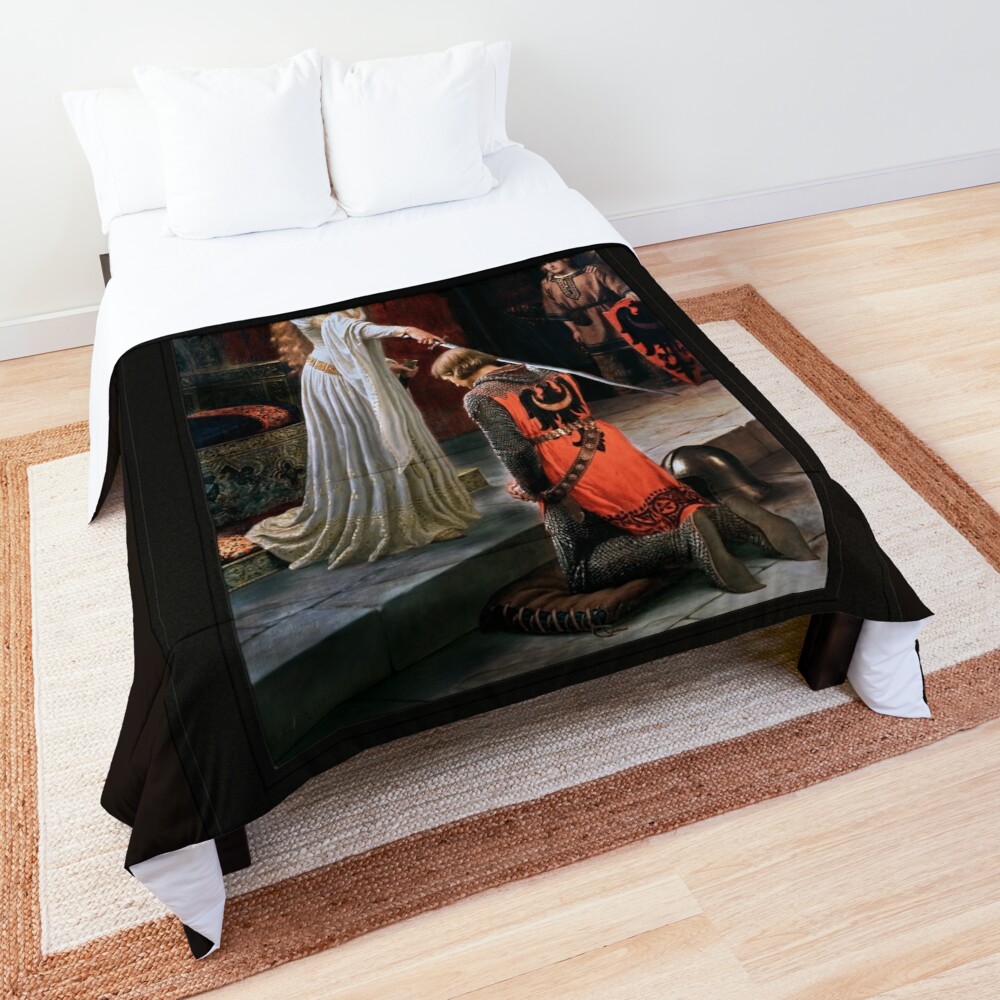
The central figure in the painting is the knight who kneels before the regal figure of a woman, a queen or noble lady, who is poised with a sword, ready to bestow the accolade. Her graceful figure is a vision of elegance and strength. She is dressed in a flowing white gown with intricate gold embroidery, a design that reflects the high status she holds. Hir gëllen Hoer, loose and cascading, contributes to her ethereal appearance. She is crowned, signifying her authority and noble heritage, making her a figure of power as well as beauty.
The knight, dressed in a suit of chainmail with a red and black heraldic tabard, bends on one knee in reverence, awaiting the honor to be granted. His posture and the solemn expression on his face communicate both humility and respect for the momentous occasion. The sword he holds in his right hand is symbolic of the knightly vow, while his left arm rests on the ground, demonstrating his total submission to the ceremony.
Behind the knight, several onlookers, including men and young boys, bear witness to the event. They are dressed in medieval attire with detailed patterns on their robes and armor, indicating their rank and allegiance. Some of them carry shields decorated with heraldic symbols, while others observe the exchange with intense focus, underscoring the gravity of the occasion.
The interplay between the knight, d'Madame, and the onlookers creates a dynamic composition that guides the viewer’s eye across the scene, emphasizing the importance of this traditional knighthood ritual.
De Kader
The painting is set within a grand, stone-walled hall, typical of a medieval castle or palace. The architecture is highly detailed, with Gothic arches, tall windows, and a rich color palette of deep reds and browns. A red and gold patterned tapestry drapes the back of the throne, adding warmth and opulence to the space. This regal setting helps to elevate the significance of the ceremony, marking it as a moment for those in the highest echelons of society.
The throne, placed to the left, is lavishly adorned with intricate carvings of mythical creatures and detailed floral motifs. The nobility of the lady is reflected not only in her attire but in the sheer grandeur of her surroundings. The dark stone walls, punctuated by the soft light streaming through the windows, contrast sharply with the bright whites and golds of the knight and the lady, allowing these figures to stand out as the focal point of the piece.
On the floor beneath them lies a luxurious carpet, rich in color and design, further indicating the wealth and privilege of the characters involved in the scene.
Styl an Technik
Edmund Blair Leighton’s painting is executed in the academic realism style, a technique that was highly popular during the late 19th and early 20th centuries. Leighton was known for his ability to blend historical accuracy with a romanticized view of the past. An “D'Unerkennung,” he demonstrates his mastery of fine details, from the textures of the knight’s armor to the intricate lacework on the lady’s gown. D'Luucht, particularly the way it falls on the figures, is soft yet precise, lending an air of reverence to the moment.
The rich color palette enhances the mood of the painting, with warm reds, gëllen, and browns adding a sense of royalty, while the white of the lady’s gown symbolizes purity and divine authority. The combination of these elements creates a contrast between the noble lady’s elegance and the knight’s stoic humility.
Thema a Stëmmung
The central theme of the painting revolves around the concept of knighthood and the role of women in shaping the nobility. The act of knighthood, performed by a woman rather than a male monarch, suggests that women, ze, held power in this era, not only in matters of domestic life but also in ceremonial acts of great importance. This highlights a romanticized, idealized version of medieval society, where honor, Pflicht, and virtue governed the actions of both men and women.
The mood of the artwork is one of solemnity and reverence. The knight’s humble posture and the lady’s dignified bearing create an atmosphere of mutual respect. The onlookers’ expressions further contribute to the sense of awe and importance of the ceremony.
There is a timeless quality to the scene, as the act of knighthood transcends the boundaries of the medieval period, evoking feelings of chivalry, honor, and sacrifice that are still revered in modern times.
Materialien an Technik
Leighton’s meticulous attention to detail is evident in the textures throughout the painting. The roughness of the stone walls contrasts with the softness of the fabrics worn by the figures, and the chainmail of the knight is rendered with such precision that one can almost feel its weight. Déi reflektiv Flächen vum Schwert a Rüstung ginn mat delikate Pinselstécker gemaach, wat et erlaabt d'Liicht op eng realistesch Manéier ofspillen.
D'Bild ass räich u symboleschen Elementer: d'Schwäert vun der Dame gehal, der heraldescher Symboler op der Ritter Rüstung a Schëlder, an d'Goldbroderien um Kleed vun der Dame déngen all fir d'Themen vu ridderlechen Idealer ze verstäerken, Loyalitéit, an Pflicht.
Conclusioun
“D'Unerkennung” vum Edmund Blair Leighton ass e Wierk dat net nëmmen d'Grandeur vum mëttelalterleche Ritter weist, mee och den Afloss vun Adel Fraen an där Ära. Duerch säi realistesche Stil a romantiséierter Geschichtssiicht, Leighton erfaasst e Moment an der Zäit wou Éier an Pflicht wichteg waren. Dëst Bild invitéiert de Betrachter op d'Idealer vun der Ridderlechkeet an d'Rollen ze reflektéieren déi béid Männer a Frae gespillt hunn fir dës Idealer z'erhalen.. Et bleift en dauerhaft Beispill vum Leighton senger artistescher Fäegkeet a senger Fäegkeet historesch Momenter mat Emotioun an Déift an d'Liewen ze bréngen.
Artwork Backsory
Dëst Bild weist d'Eleanor vun Aquitaine (1122 – 1204) Kinnigin vu Frankräich aus 1137 an 1152 a Fra vum Kinnek Louis VII; an d'Kinnigin vun England aus 1154 an 1189 als Fra vum Kinnek Henry II an Herzogin vun Aquitaine an hirem eegene Recht aus 1137 bis zu hirem Doud an 1204.
De Mann op de Knéien mam Helm nieft him, ass hire Jong Richard de Lionheart (1157 – 1199), Kinnek vun England aus 1189 zu sengem Doud an 1199; datt si duerch eng Zeremonie ass, Ritter ze ginn, dat enthält de flaach Enn vum Schwert op d'Schëllere vum Kandidat dee fir sou eng Éier gewielt gëtt..
Op der Säit vun der Zeremonie kënne mir e Fändeldréier gesinn, e Jong, deen e Schëld hält, dee säi Squire ka sinn (Amour-Träger vun engem Ritter), hannert dem Jong e Bridder (Mönch); an dann véier aner Leit d'Evenement kucken.
Dëst ass eng remastered digital Konscht al Master Reproduktioun vun engem Public Domain Bild dat als verfügbar ass Leinwandprint online.
Kënschtler Bio
Informatioun Ënnen Ofgeleet Vun Wikipedia.org
Den Edmund gouf mam Caroline Leighton gebuer (née Boosey) a Kënschtler Charles Blair Leighton (1823 – 1855) September zu London England 21, 1852; a gouf op der University College School gebilt, déi hien am Alter vun 15 fir en Téi Händler ze schaffen.
Well hien en Intérêt fir Konscht hat an et wollt studéieren; hien huet sech op South Kensington ageschriwwen an huet owes ugefaang Lektioun ze huelen; a vun do besicht Heatherley d'Schoul zu Newman Street, London.
Wéi hien war 21 Joer ass hien an d'Royal Academy of Arts gaang, déi gegrënnt gouf an 1768; a géif spéider seng éischt Konschtkommissioun kréien fir Monochrom Illustratiounen fir Cassell's Magazine a säi Book of British Ballads ze maachen.
Hien huet seng éischt Molerei mam Titel ausgestallt: E Feeler am Titel an 1874 an der Royal Academy, déi him verdéngt 200 Pond; a géif seng Wierker jäerlech fir déi nächst Ausstellung 40 Joer op der Royal Academy bis 1920.
Den Edmund war e Kënschtler, dee vill Opmierksamkeet op Detailer bezuelt huet an héich fäerdeg dekorativ historesch Konschtwierker produzéiert huet, déi romantiséiert Szene vu Ridderlechkeet a Fraen a mëttelalterleche Kleedung huet, dat hat grouss populär Appel.