

The Awakening of Psyche: A Study in Intimacy and Transformation
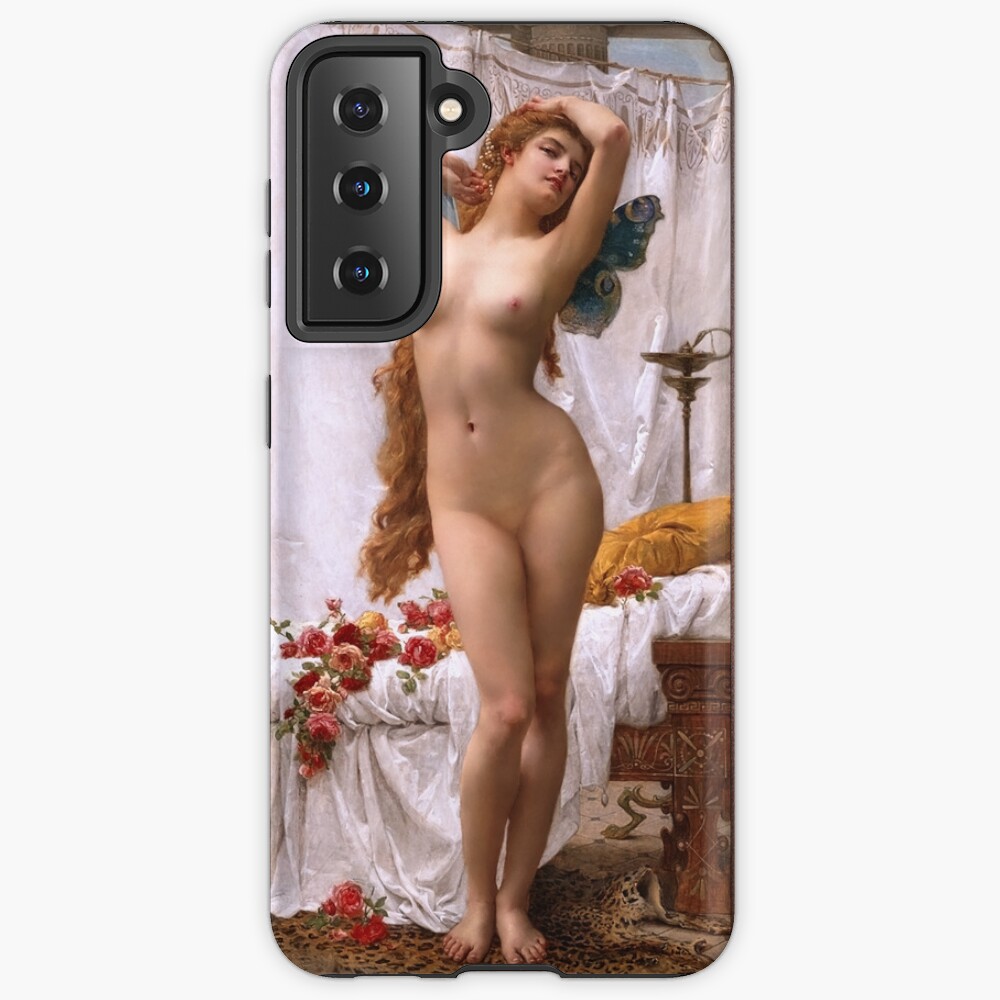
The Awakening of Psyche (Le Réveil de Psyché) c1904 by Guillaume Seignac (1870 – 1924), is a captivating work that exemplifies the Belle Époque’s fascination with classical mythology and intimate portraiture. This large-scale canvas transports viewers to a private chamber, where the mythological figure of Psyche comes into consciousness, marking a pivotal moment in her journey toward enlightenment and union with Amor (Cupid). Seignac’s masterful use of light, color, and composition creates an atmosphere of quiet contemplation and burgeoning awareness.

Table of Contents
Compositional Harmony and Spatial Depth
The painting’s composition is carefully structured to draw the eye towards Psyche as the central figure. She occupies a prominent position within the frame, standing gracefully amidst draped fabrics and scattered blossoms. The arrangement isn’t rigidly symmetrical; rather, it possesses a naturalistic flow that enhances the sense of immediacy.
A large bed dominates the background, partially obscured by flowing white curtains which create a soft backdrop against which Psyche’s form is subtly highlighted. These textiles aren’t merely decorative elements; they contribute to the overall feeling of enclosure and privacy, emphasizing the intimate nature of the scene. The floor, strewn with petals and foliage, further grounds the figure within her surroundings. A small table in the lower right corner holds a lamp and other objects, adding depth and detail to the setting.
Psyche’s Figure: Beauty and Vulnerability
Seignac’s depiction of Psyche is remarkable for its naturalism and delicate beauty. The artist renders her form with meticulous attention to anatomical accuracy, while simultaneously imbuing it with an ethereal quality. Her pose—one hand raised towards her face, the other gently supporting herself—suggests a moment of awakening, a gradual return from slumber.
Her expression is serene yet inquisitive; she appears both vulnerable and poised on the cusp of understanding. The artist’s treatment of skin tones is particularly noteworthy, capturing the subtle nuances of light and shadow that define her form. Her long, flowing auburn hair cascades down her shoulders, adding to the overall impression of grace and femininity.
Symbolic Elements: Butterflies and Blossoms
The painting is rich in symbolic elements drawn from the myth of Psyche and Amor. The most prominent are the butterflies fluttering around Psyche’s head. In classical iconography, butterflies often represent the soul or transformation—a fitting symbol for Psyche’s journey toward spiritual enlightenment. Their presence underscores the idea that she is emerging into a new state of being.
The scattered roses and other blossoms strewn across the floor further reinforce this theme of rebirth and renewal. Roses, in particular, are frequently associated with love and beauty, hinting at the eventual union between Psyche and Amor. The lamp on the table provides a soft, warm light that illuminates Psyche’s face, symbolizing knowledge and illumination.
Light and Color: Creating Atmosphere
Seignac’s skillful use of light and color is crucial to the painting’s overall effect. He employs a technique known as chiaroscuro, using dramatic contrasts between light and shadow to create depth and highlight key elements. The soft, diffused light emanating from the lamp casts gentle shadows across Psyche’s body, emphasizing her form while maintaining a sense of intimacy. The color palette is predominantly warm, dominated by shades of pink, cream, and gold, which contributes to the painting’s overall feeling of warmth and tranquility. The subtle variations in tone create a sense of realism and enhance the visual appeal of the scene.
Artistic Influences and Context
“The Awakening of Psyche” reflects the artistic trends prevalent during the Belle Époque, a period characterized by a renewed interest in classical mythology and a celebration of beauty. Seignac’s work shares affinities with the academic painting tradition, evident in his meticulous attention to detail and his emphasis on anatomical accuracy. However, he also demonstrates a sensitivity to the emerging Symbolist movement, which sought to evoke emotions and ideas through symbolic imagery rather than literal representation. The painting’s focus on an intimate moment of personal transformation aligns with the Symbolists’ exploration of psychological themes.
A Timeless Exploration of Transformation
Ultimately, “The Awakening of Psyche” is more than just a beautiful depiction of a mythological scene; it is a profound meditation on the human condition, on the challenges and rewards of self-discovery and spiritual growth. Seignac’s masterful technique and evocative imagery combine to create a work that continues to resonate with viewers today, inviting them to contemplate the timeless themes of beauty, transformation, and the pursuit of enlightenment. The painting stands as a testament to Seignac’s artistic skill and his ability to capture the essence of human experience in a single, unforgettable image.
Artist Bio From Wikipedia.org
Guillaume was born in Rennes in 1870, and died in Paris in 1924. He started training at the Académie Julian in Paris, where he spent 1889 through 1895. He had many teachers there, including Gabriel Ferrier, William-Adolphe Bouguereau, and Tony Robert-Fleury.
In addition to his training in the academic style, much of Seignac’s work displayed classical themes and style, for example, his use of diaphanous drapery covering a woman’s body is reminiscent of classical style, in particular the sculptor Phidias.
In 1897, Guillaume Seignac regularly exhibited at the Salon and won several honors, including in 1900 honorable mention and in 1903 a Third Class medal.
The Awakening of Psyche is a retouched digital art old masters reproduction of a public domain image that is available for sale online as a rolled canvas print.