

The Castle of Muiden in Winter, c. 1658
Jan Abrahamsz. Beerstraaten’s The Castle of Muiden in Winter, painted in c. 1658, invites viewers into a masterfully rendered Dutch winter landscape. Beerstraaten (1622 – 1666), known for his skill in portraying winter scenes, particularly from the northern Netherlands, captures a historical moment in the cold tranquility of a Dutch winter. This painting is a remarkable example of 17th-century Dutch winter landscape painting, showcasing the harmonious fusion of nature, human activity, and architectural grandeur.
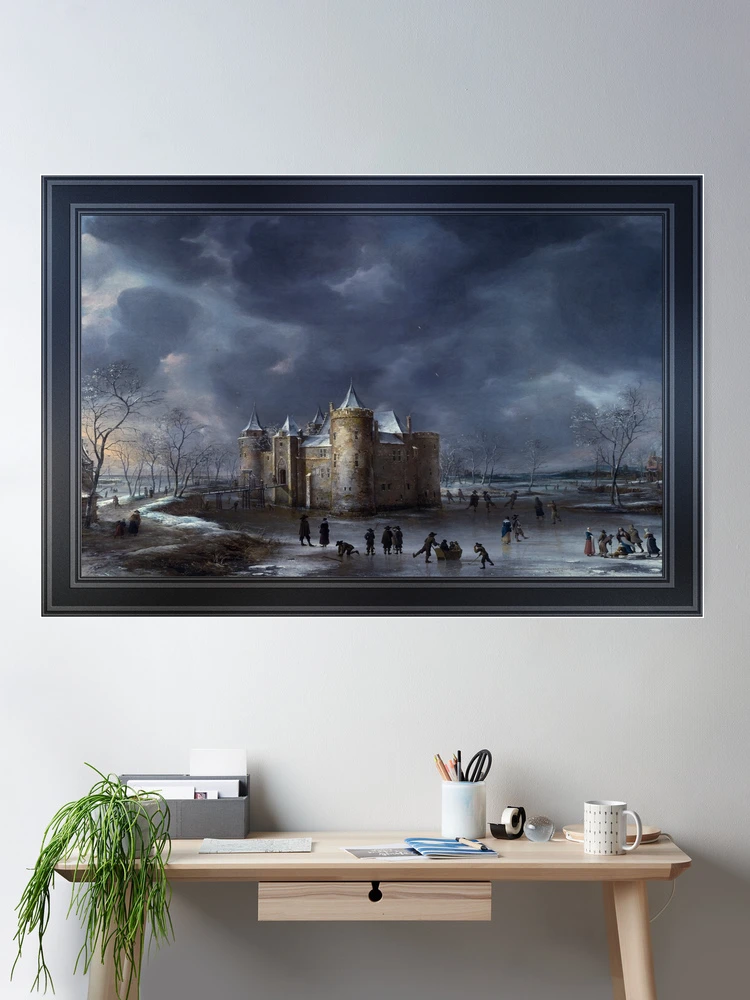
Table of Contents
The Setting: Muiden Castle on a Frozen Landscape
The scene centers on Muiden Castle, situated along the frozen banks of a waterway, likely the IJmeer, in what is now the modern-day Netherlands. The castle, depicted with precision and care, stands tall against the expansive winter sky, its turrets and walls covered with a light dusting of snow. The artist’s use of perspective and detail gives the building a towering, almost imposing presence. Yet, this stark, fortified structure contrasts with the peaceful activity occurring at its base.
In the foreground, the landscape is covered in snow and ice, and scattered trees with skeletal branches stand like silent sentinels in the cold. The terrain around the castle includes the frozen expanse of the water, now turned into an ice rink where groups of people are seen skating, some in large, warm coats, others bundled with hats and scarves, engaged in the festive pleasures of winter. There is a sense of communal joy in the depiction of the people, captured in various poses: some glide gracefully over the ice, while others pause to converse or walk along the edge. The presence of children, skating or playing with their dogs, adds an element of innocence and warmth to the scene.
The People: Life and Activity Amidst the Cold
The figures, rendered in fine detail, demonstrate the artist’s ability to capture not only the spirit of the season but also the distinct attire of the period. Most figures are dressed in typical 17th-century Dutch winter clothing: thick woolen coats, fur-lined collars, hats, and boots. The focus on the people’s expressions and movement suggests a lively atmosphere amidst the snow, evoking a sense of warmth despite the biting cold. In the background, small groups of people can be seen either walking or skating toward the castle, while some others sit on the edges of the ice, enjoying the scene.
Among the figures, a dog stands beside a man, and others can be seen walking along the snowy path, perhaps leaving or entering the castle grounds. The animals in the scene reinforce the connection between human life and the natural world. The placement of these figures gives the painting an inviting and dynamic quality, suggesting the community’s engagement with the environment as well as their resilience in the harsh winter months.
The Sky and Weather: A Brooding Atmosphere
The sky, painted with a mix of cold grays and muted blues, suggests an approaching storm or the chill of late afternoon. Dark clouds swirl above the castle, their heavy presence giving the scene a sense of foreboding, as though the storm is merely moments away. Despite the ominous sky, the sunlight still reflects off the snow and ice in gentle, golden tones, casting a serene glow across the landscape. This contrast between light and dark plays a significant role in enhancing the mood of the painting, where the natural beauty of the scene is framed by the harshness of winter weather.
The atmosphere created by the painter is both dramatic and peaceful, capturing the cold winter day while allowing the viewer to feel the warmth of human activity. The light that filters through the dark clouds contrasts with the ice-covered terrain, reinforcing the peaceful yet bitterly cold mood that pervades the scene.
Materials and Technique: The Dutch Master’s Precision
Beerstraaten’s technique in oil painting is showcased in the fine detailing of both the architecture and the figures. The use of light and shadow is carefully considered, as the snowy ground is cast in soft shadows, while the icy water reflects the cool sky. Beerstraaten’s understanding of texture is evident, particularly in the rendering of the snow, which appears soft and powdery in some areas while crisp and compact in others. The intricacy with which the details of the trees and castle are portrayed enhances the overall realism of the painting, while the artist’s brushwork in the figures conveys movement and vitality.
The painting’s meticulous rendering of ice, snow, and architecture reflects Beerstraaten’s expertise in capturing the natural world, a defining feature of his style. The precision with which the shadows and reflections on the ice are painted adds depth and realism, creating an immersive experience for the viewer.
Style and Theme: A Reflection of Dutch Winter Culture
This painting is deeply rooted in the traditions of Dutch landscape painting from the Golden Age, a period when artists took a keen interest in depicting the natural world in all its nuances. Winter landscapes, in particular, became a prominent theme, as the Dutch climate made winter scenes both common and culturally significant. This theme often celebrated the resilience of life during the harshest seasons and the ways in which people adapted to and enjoyed the cold.
Beerstraaten’s use of space, perspective, and his detailed rendering of the cold, while balancing the joy of winter activities, reflects the Dutch reverence for the outdoors, and their ability to embrace the challenges posed by the season. The painting’s mood, where the threat of winter is tempered by the warmth of human interaction, mirrors the Dutch spirit of resilience and enjoyment in the face of adversity.
Conclusion: A Moment Frozen in Time
In The Castle of Muiden in Winter, Beerstraaten has successfully combined the natural beauty of the winter landscape with the vibrancy of human life. The painting speaks to the enduring Dutch love for the outdoors and their ability to embrace the challenges of the season with grace. The play of light, shadow, and texture, combined with the lively depiction of people skating and walking along the frozen landscape, gives the artwork a timeless quality. It is a beautiful representation of a particular moment in history, capturing the grandeur of the castle, the simplicity of the human figures, and the natural beauty of a cold, winter day.
This is a retouched digital art old masters reproduction of a public domain image.
Artist Bio Courtesy Wikipedia.org
Jan Abrahamsz Beerstraaten (bapt. 1 March 1622 in Amsterdam – buried in July 1666 in Amsterdam?) was a Dutch painter of marine art and landscapes, particularly of events of the First Anglo-Dutch War and Dutch-Swedish War.
There is some confusion about the identity of four landscape painters named Beerstraaten; Johannes, this Jan Abrahamsz, Abraham, and Anthonie. Jan Abrahamsz, painter, married in Amsterdam on 30 August 1642. From this marriage eleven children were born, and when he married a second time in 1665, a daughter was born. Currently, The RKD records Johannes as the same person, and Abraham Beerstraaten is considered to be his oldest son.
Anthonie Beerstraaten was related to this painter. The RKD has registered two paintings signed Anthonie van Beerstraten: one is a view of a southern seaport from 1664 (currently location Enkhuizen) and the other a view of a church in Aarlanderveen in the former city hall of Alphen aan den Rijn. Based on these two paintings C. Hofstede de Groot an early Dutch art historian, classified paintings signed A. Beerstraaten as by Anthonie if they were a poorer grade than ones already attributed to Abraham.