

De Verloscht vum Indianer Kent
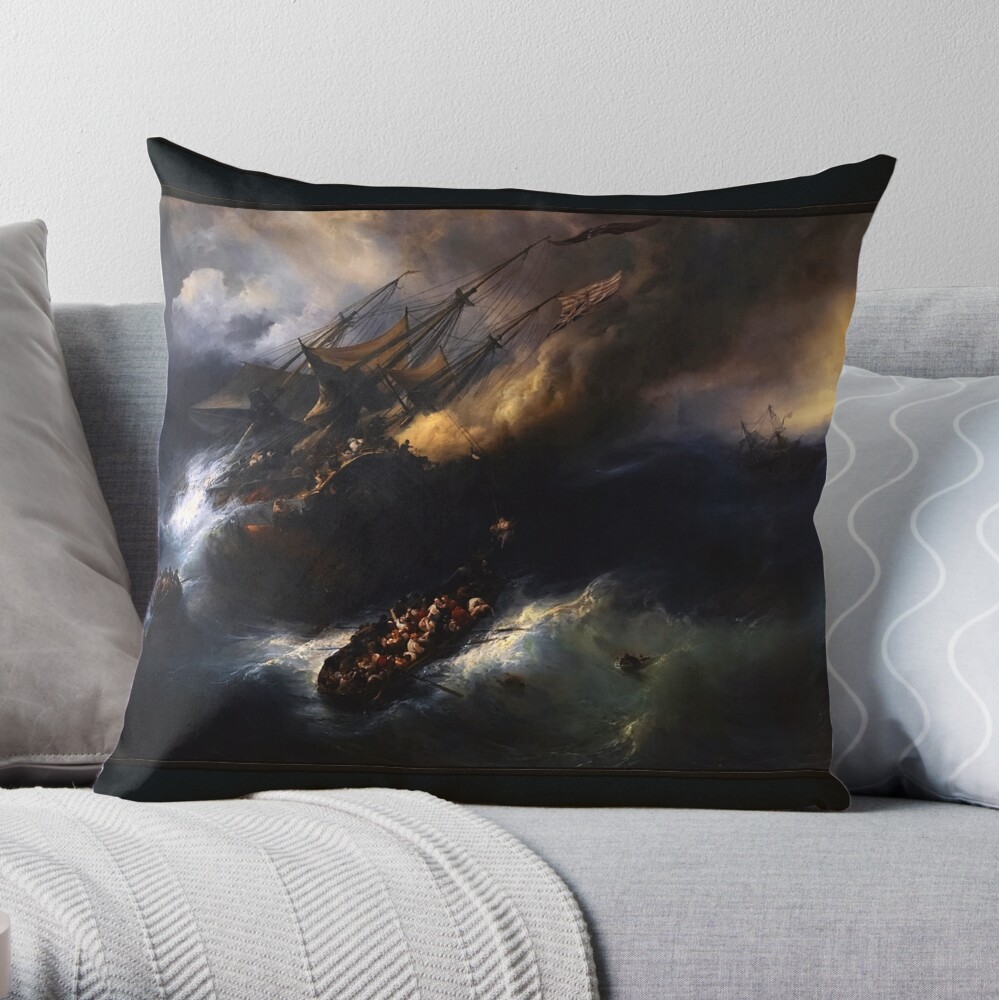
“De Verloscht vum Indianer Kent,” gemoolt an 1857 vum franséische Kënschtler Jean Antoine Théodore Gudin (1802-1880), ass eng Meeschterleeschtung vun der maritime Katastroph, den dramatesche Moment vum leschte Kampf vun engem Schëff géint d'Froheet vun der Natur erfaasst. D'Molerei ass en aussergewéinlecht Beispill vum Gudin seng Fäegkeet fir déi haart Realitéite vum Marineliewen z'erwächen, souwuel d'Grandeur an d'Tragedie vum Mier encapsuléieren. Bekannt fir seng maritime Wierker, Dem Gudin seng Biller hunn dacks déi iwwerwältegend Kraaft vum Ozean an den intensiven mënschlechen Drama duergestallt, deen sech drop entwéckelt huet, an dëst Stéck ass keng Ausnahm. “De Verloscht vum Indianer Kent” steet als Testament zum emotionalen Gewiicht a liewege Realismus, dee charakteristesch fir seng spéider Wierker war.
Inhaltsverzeechnes
Main Sujet an Thema
Am Mëttelpunkt vum Bild steet den veruerteelten Indianer Kent, e Schëff vun der britescher Ostindiengesellschaft, dat säi Schicksal während enger stormerlecher Rees an der Mëtt vum 19.. D'Schëff d'grouss Hull, mat gewellte Seegelen dekoréiert, kämpft géint déi gewalteg Wellen, geféierlech wéi op der Grenz vun ënnerzegoen. D'Turbulenzen vum Ozean an de stiermeschen Himmel iwwer schaaft e Gefill vun enger bevirsteeter Katastroph.
Den Indiaman Kent ass mat sengen Segel ausgerullt duergestallt, leet sech geféierlech wéi et mat den iwwerwältegend Kräfte vun der Natur konfrontéiert ass. De prekäre Zoustand vum Schëff gëtt betount duerch d'Wellen, déi géint seng Säit ofbriechen an d'gekippte Haltung vum Schëff, wéi wann et zu all Moment zerbriechen kéint. De Kampf ass palpabel, eng Atmosphär vu Spannung ze kreéieren, Onsécherheet, an onendlech Doom.
D'Ëmgéigend Szen vermëttelt e Gefill vu Futilitéit wéi mënschlech Efforte fir ze iwwerliewen am Géigesaz zum onverännerlechen, onstoppbar Kraaft vun der natierlecher Welt. D'Wellen, däischter a virausgesot, schéngen zouzemaachen, an den Himmel uewen ass mat tumultuous Wolleken gemoolt, suggeréiert datt de Stuerm nach laang net eriwwer ass. Dat rëselt Mier an de chaoteschen Himmel reflektéieren d'Hoffnungslosegkeet an d'Verzweiflung vun de Séifuerer u Bord vum Schëff wéi se géint d'Elementer kämpfen.
Objeten an Terrain
De Virdergrond vum Bild gëtt dominéiert vum tumultuous Ozean, seng Wellen a verschiddenen Nuancen vu blo ageholl, Gréng, a Wäissen. D'Wellen dréinen a briechen, eng dynamesch Textur ze kreéieren déi de Bewegungssënn verstäerkt. Déi grouss Gréisst a Kraaft vun de Wellen Zwerg d'Schëff, ënnersträicht déi fragil Relatioun tëscht mënschlech gemaachte Strukturen an déi grouss, onkontrolléierbar natierlech Welt. De wäisse Schaum vun de Wellen kontrastéiert schaarf géint déi däischter Téin vum Mier, illustréiert déi gewalteg Turbulenzen vum Waasser.
Op der Säit vum Bild, den Zuschauer kann e méi klengt Boot gesinn dat vläicht probéiert déi u Bord vum getraffene Indien Kent ze flüchten oder ze retten. Dëst Boot, vu verschiddene Séifuerer bemannt, stellt säin eegene Kampf géint d'Wellen. Et ass e schrecklecht Symbol vu mënschlecher Ausdauer an Hoffnung, obwuel am Kontext vum gréissere Stuerm, et schéngt hoffnungslos kleng a vulnérabel. D'Crewmemberen u Bord vum Boot gi mat detailléierte Ausdréck vu Konzentratioun an Angscht gemaach, verkierpert d'Verzweiflung vun deenen déi probéieren d'Katastroph ze iwwerliewen.
Den Himmel uewen, mat donkel gefëllt, dréiende Wolleken, adds to the overwhelming sense of chaos. The use of light and shadow in the sky suggests the presence of a fierce storm, with the occasional streak of sunlight breaking through the clouds, offering little comfort to the figures below. The landscape beyond the ship is obscured by the storm, suggesting that the vastness of the ocean extends infinitely in all directions, leaving the survivors isolated in a world defined only by the elements.
Material an artistesch Techniken
Gudin’s technique is evident in the vivid textures and dramatic contrasts that dominate the scene. The artist uses thick, expressive brushstrokes to convey the fury of the sea and the wind, with the turbulent water rendered in bold, sweeping motions that create a sense of fluidity and movement. Déi billowing Seegelen vum Schëff si mat komplizéierten Detail gemoolt, hir Kanten krullen wéi de Wand kämpft fir se auserneen ze räissen. D'Textur vum Waasser kontrastéiert mat der glatter, kontrolléiert Rendering vum Schëff, seng Schwachstelle vis-à-vis vun der Kraaft vun der Natur ënnersträichen.
Den Himmel ass mat engem déif gemoolt, bal anerweltlech Intensitéit, mat den donkelen Wolleken, déi op eng Manéier dréinen, déi souwuel d'Gewalt vum Stuerm an d'Inévitabilitéit vun der Zerstéierung vum Schëff suggeréiert. D'Liicht, déi heiansdo den Himmel duerchbréngt, déngt als dramateschen Kontrast zu der allgemenger Däischtert vun der Szen, der emotionaler Spannung vun der Zesummesetzung bäidroen. Gudin d'Benotzung vu Faarf - vun der Däischtert, Stëmmung Blues a Gréng vum Mier bis déi waarm gëllen Téin vun der Sonn duerch d'Wolleken briechen - dréit zum emotionalen Gewiicht vum Bild bäi. Dëse staarke Kontrast beliicht d'Verzweiflung an d'Hoffnung, déi an der Szen zesumme existéieren.
Stil, Stëmmung, an Atmosphär
“De Verloscht vum Indianer Kent” ass e prime Beispill vum romantesche Stil, déi sech duerch e Schwéierpunkt op déi sublimesch an déi dramatesch Aspekter vun der Natur charakteriséiert. An dëser Molerei, d'Thema vum mënschleche Kampf géint d'Naturkräfte steet am Mëttelpunkt, wéi d'Schicksal vum Schëff op der Barmhäerzegkeet vum Stuerm läit. Gudin erfaasst déi emotional Intensitéit vun der Szen, konzentréieren op den Terror an Hëlleflosegkeet vun der Crew u Bord vum Schëff. Déi chaotesch Bewegung vun de Wellen an der Däischtert, stiermeschen Himmel schaaft eng Stëmmung vu Spannungen a Besuergnëss, den Zuschauer an den trageschen Moment zéien.
D'Stëmmung vum Bild ass eng vun onendlechen Doom, wéi de verzweifelte Kampf vum Schëff fir iwwerschwemmt ze bleiwen, schéngt nëtzlos géint den onermiddlechen Ugrëff vum Stuerm. Et gëtt e Gefill vun Hëlleflosegkeet an de Gesiichter vun de Séifuerer, deenen hir Versuche fir d'Schëff ze kontrolléieren nëtzlos sinn vis-à-vis vun der Roserei vun der Natur. Trotzdem, d'Bild vermëttelt och e Gefill vun Awe a Respekt fir d'Muecht vum Mier, wéi d'Kräfte vun der Natur mat iwwerwältegend Intensitéit duergestallt ginn.
Conclusioun
Jean Antoine Théodore Gudin “De Verloscht vum Indianer Kent” ass eng zwéngend Porträtéierung vun der maritimes Tragedie, mat bemierkenswäert Opmierksamkeet op Detailer an engem déiwe Verständnis vun der natierlecher Welt gemaach. Déi dramatesch Kompositioun, intensiv emotional Gewiicht, a lieweg Rendering vum stiermesche Mier maachen dëst Bild e mächtegt Testament vun der Kraaft vun der Natur an der Schwachstelle vun der Mënschheet vis-à-vis. Dem Gudin seng Fäegkeet souwuel d'Majestéit wéi den Terror vum Mier z'erfaassen, zesumme mat der mënschlecher Erfahrung géint et ze kämpfen, ass wat dëst Stéck sou evokativ an dauerhaft mécht.
Geschicht hannert dem Event
Informatiounen ofgeleet vun Royal Muséeën Greenwhich
Den East Indiaman Kent war am Besëtz vum Stewart Marjoribanks an ass an de Service mat der East India Company an 1820. Den Indiener Kent huet sech gedroen 700 Leit, haaptsächlech solder aus dem 31. Regiment an hir Famillen, an et war vum Henry Cobb commandéiert; a war op enger Rees a Bengal, Bombay a China.
The Loss Of The Indiaman Kent fänkt un 1825, op Februar 19, d'Schëff aus dem Downs op engem drëtte Rees op Bengal an duerno China; während dem 27. an 28. Februar koum et zu engem Stuerm, an am Mäerz 1, an der Bucht vu Biskaje ass d'Schëff zoufälleg gebrannt.
Et gouf gemellt datt et Leit waren déi probéiert hunn Alkohol an hirem Halt mat engem plakege Liicht ze klauen (Match, Käerz…) an der Däischtert ze gesinn, wat fir d'Feier verantwortlech war.
Efforte goufe gemaach fir d'Feier auszeschléissen andeems d'ënnescht Häfen ofgeschnidden hunn fir d'Holz ze iwwerschwemmen, mä wéinst der Angscht virum ënnerzegoen vum Schëff hunn d'Häfen missen zougemaach ginn.
E Séifuerer gouf an d'Luucht geschéckt, viraussiichtlech op d'Kräien-Nascht; an huet en anert Schëff an der Géigend gemellt. Sou gouf e komplexe Rettungseffort ënnerholl fir Passagéier a Crew duerch d'Bierg Mier op de Brig "Cambrian" ze transportéieren, Kapitän vum Captain Cooke, dee fir Vera Cruz mat senge Passagéier vu Cornish Miner gebonnen war.
Och wann d'Majoritéit vun de Passagéier et vum Schëff gemaach huet; e puer hunn awer net déi zwee Deeg iwwerlieft / dräi Nuecht Rees zu Falmouth; déi meescht vun den Doudegen sinn Kanner.
The Loss Of The Indiaman Kent ass eng remastered digital Konscht al Meeschterreproduktioun vun engem Public Domain Bild dat verfügbar ass online ze kafen als eng Canvas Print.
Dës digital Konscht Kreatioun, wéi mat all de Konschtwierker, déi op der Xzendor7 Websäit fonnt kënne ginn, ass online a verschiddene Materialformater ze kafen, dorënner Canvas Prints, acryl Prints, Metallofdréck, Holzdrécker, cadréiert Printen, Plakater, a wéi gewalzt Canvas Printen a ville Gréissten vun 12 Zoll zu 72 Zoll ofhängeg vun der Gréisst vum aktuellen Konschtwierk an dem Print-on-Demande Buttek vun deem Dir gewielt hutt d'Konscht ze kafen.
D'Konschtwierk ass och op eng breet Palette vu Männer- a Fraekleedung verfügbar, Becher, totes, Schal, Notizbicher an Zäitschrëften a vill Heemdekoratiounsprodukter.
Kënschtler Bio
Info drënner ofgeleet vun Wikipedia.org
Den Théodore gouf zu Paräis Frankräich gebuer an hien a säi ale Brudder Jean-Louis (1799 – 1823), goufe vu senger Mamm opgewuess, déi Witfra war.
Och wann hien an enger Marineschoul a Frankräich ageschriwwen war, hien huet seng Studien opginn an ass op eng Rees an New York City an den USA gemaach, wou hie sech mat de Bonapartisten vermëscht huet (Persoun déi entweder aktiv matgemaach huet oder sech fir konservativ asetzt, monarchist) am Exil.
An 1819 De Gudin huet decidéiert d'US Navy matzemaachen a gouf Deel vun der Crew vum Manchester Packet, a 250 tonn britt (e Segelschëff mat zwee quadrateschen masten).
Den Émile Vernon war e Student an der Fine Arts School zu Tours, wou hien den éischte Präis fir Zeechnen gewonnen huet 1822 hien ass zréck op Paräis an inspiréiert vu sengem Brudder, dee Student vum franséische Moler Horace Vernet ginn ass (1789 – 1863); decidéiert eng Carrière an der Konscht ze maachen, a konnt eng Plaz an de Studioe vun der franséischer Molerin Anne-Louis Girodet iwwerhuelen (1767 – 1824).
Datselwecht Joer huet hien säin Debut am Salon gemaach; awer d'nächst Joer an 1823 Saache géifen eng tragesch Wendung huelen, wéi hien a säi Brudder an engem Schëffswrack op der Seine a Frankräich involvéiert waren, wou säi Brudder erdronk ass. Dëst Evenement hätt e groussen Impakt op hien fir de Rescht vu sengem Liewen.
An 1824 hien huet e Bild vu Schëffer ausgestallt, déi hien op Besuch an den USA am Salon geholl haten an d'Ënnerstëtzung vum zukünftege Kinnek Louis Philippe I. (1773 – 1850).
An 1828 Hie gouf vum Kinnek Charles X (1754 – 1836) eng Duerstellung vum Ensign Hippolyte Bisson ze molen (1796 – 1827) WHO, d'Joer virdrun, hat säi Schëff opgeblosen anstatt et de Piraten ofzeginn.
Kuerz nodeems hien seng Kommissioun ofgeschloss huet, Gudin ass mat sengem Frënd franséische Marine Offizéier Abel Aubert du Petit-Thouars gaangen, un der algerescher Expeditioun deelzehuelen (1830 – 1903), wou hien vill Skizze vu senger Aventure gemaach huet.
Nom Retour vun der Algerescher Expeditioun, hie krut den Titel vun “Navy Moler” um Haff vum Louis Philippe; an iwwer déi nächst puer Joer Molerei Reesen an Italien gemaach, Schwäiz a Russland.
Hie gouf dunn vum Kinnek zum Baron gemaach, a krut den Optrag nonzeg Biller iwwer franséisch Marinegeschicht fir de Palais vu Versailles ze produzéieren; eng monumental Aufgab, déi anscheinend seng Gesondheet ënnergruewen huet.
An 1841 Hie gouf zum Offizéier an der Legion of Honor ernannt an no enger Ausstellung zu Berlin am 1845 hien krut de Cross Pour le Mérite.