

A Fairy Is Made Of Most Beautiful Things
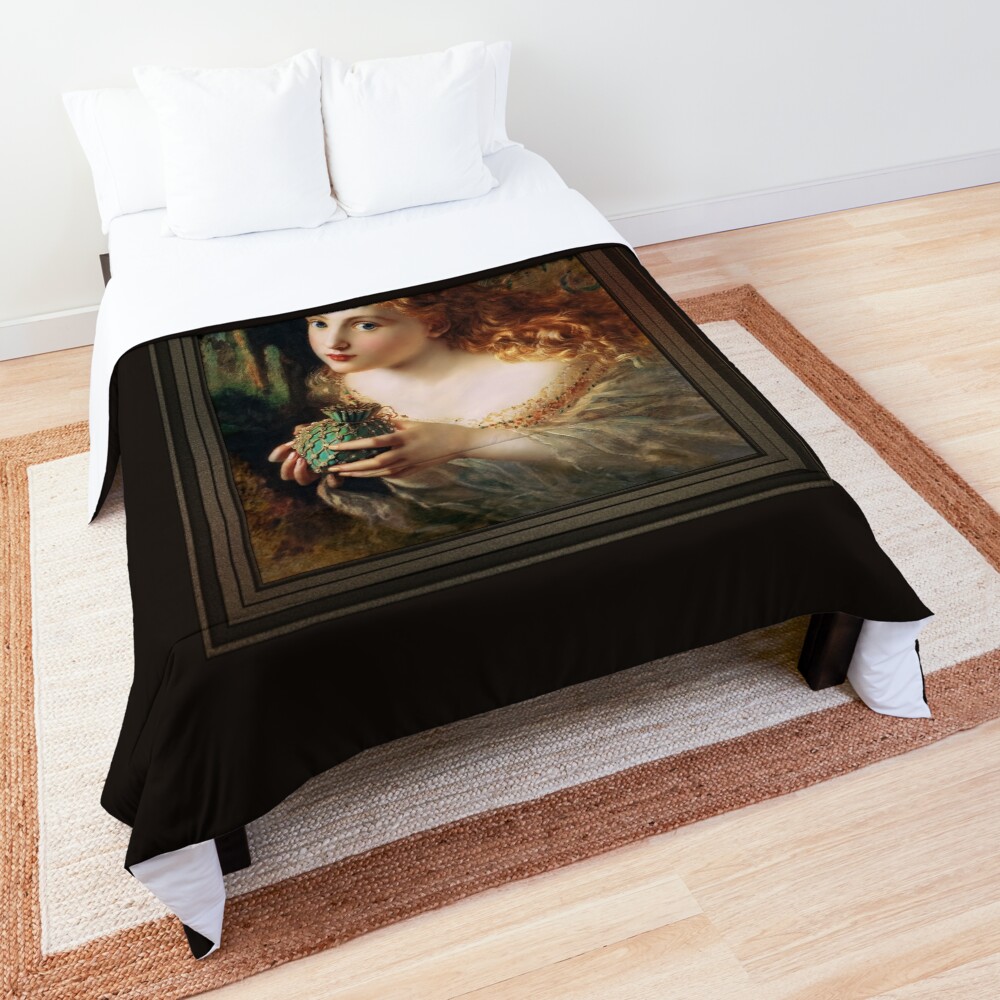
Sophie Gengembre Anderson’s (1823 – 1903) pentrado A Fairy Is Made of Most Beautiful Things captures the delicate, ethereal beauty of an enchanting fairy, seamlessly blending the artist’s penchant for mythological themes with her trademark Romantic style. The artwork evokes a deep sense of wonder, where the boundary between the magical and the real is ever so thin. With its dreamlike quality and intricate detailing, Anderson creates a scene that pulls viewers into an almost mythical world.
The subject of the painting is a young fairy, her delicate features and expressive eyes captivating the viewer. The fairy, set in a lush natural environment, is positioned in a graceful, gentle pose, holding a small object in her hands. The fairy’s golden locks cascade down her shoulders, framing her soft, youthful face. She is adorned with a crown made of colorful butterflies, a motif that suggests the lightness and freedom associated with both the insect and the fairy realm. Ŝiaj flugiloj, though delicate and finely detailed, have a subtle translucence, hinting at the airy nature of her existence. These elements combine to create a fairy whose innocence and grace are strikingly portrayed.
Enhavtabelo
The Setting and Surrounding Details
The setting of the artwork is equally as significant as the subject, blending the fairy’s delicate form with a rich, lush background. A shadowy, dark terrain envelops the scene, with hints of foliage and rocks. The depth of the natural world is contrasted with the fairy’s glowing presence, enhancing her almost otherworldly appearance. Anderson has masterfully rendered the fairy’s surroundings, ensuring the environment complements the mystical quality of her character.
The fairy is positioned against a rock or stone formation, which could symbolize a threshold between the earthly and the ethereal. This connection is emphasized by the fairy’s tender grasp on a small, intricately designed object she holds—likely a precious artifact that suggests both beauty and fragility. It is draped in elaborate patterns, beads, and fine detailing, which suggests that it is an object of importance, perhaps a talisman or magical item that further connects her to her world.
The Artistic Style and Technique
Sophie Gengembre Anderson estis konata pro sia eskvizita atento al detaloj, kaj A Fairy Is Made of Most Beautiful Things estas ĉefa ekzemplo de ŝia majstrado. Ŝia Romantika stilo estas ŝajna en la moleco de la portretado de la figuro, same kiel la emfazon de idealigita beleco. La realismo, per kiu ŝi pentras la harojn de la feino, vizaĝaj trajtoj, kaj malsimpla kostumo parolas pri la teknika lerteco de la artisto. La elekto de Anderson de koloro plue plibonigas la sonĝecan kvaliton de la pentraĵo. La mildaj paŝtelnuancoj de la vesto de la feino miksiĝas perfekte kun la viglaj papilioj, kiuj ornamas ŝian kronon., kreante ĝeneralan senton de harmonio kaj ekvilibro.
La mola, preskaŭ hela kvalito de la haŭto kaj delikataj kulminaĵoj sur la vizaĝo de la feino donas al ŝi anĝelan aŭron.. The artist’s delicate brushwork brings out the soft glow of the fairy’s complexion and emphasizes the fragile, ethereal nature of her character. Anderson’s meticulous technique in portraying textures—such as the intricate folds in the fairy’s clothing and the shimmering, iridescent wings—highlights her skill in rendering both the material and immaterial elements of her subject.
The Themes and Mood
The overall mood of the painting is one of reverence and admiration for beauty and innocence. The fairy’s youthful gaze, combined with her serene expression, evokes a sense of purity and delicate grace. This portrayal is in keeping with the Romantic movement, which often idealized the natural world, the supernatural, and the innocence of childhood. The painting invites viewers to imagine a world of fantasy, where such mythical beings live in harmony with nature, untouched by the harsh realities of the human world.
The use of butterflies, symbols of transformation and freedom, also speaks to themes of metamorphosis and the fleeting beauty of life. These creatures are often associated with spiritual growth and liberation, adding a layer of depth to the fairy’s character. The fairy’s interaction with these butterflies—both adorning her crown and fluttering around her—suggests that she is a part of a greater, interconnected world.
While the overall tone of the painting is gentle and whimsical, there is an undercurrent of mystery, particularly in the object the fairy holds in her hands. This item, intricately beaded and carefully held, povus reprezenti gravan restaĵon aŭ ŝlosilon al magia mondo, aldonante elementon de intrigo al la alie paca sceno.
The Materials and Techniques
La artisto uzis oleajn pentraĵojn sur kanvaso por atingi la molajn sed viglajn nuancojn A Fairy Is Made of Most Beautiful Things. La uzo de Anderson de oleaj farboj permesas la likvaĵon, preskaŭ diafana efiko de la flugiloj de la feino, same kiel la milda miksado de tonoj en ŝiaj vizaĝo kaj vestaĵoj. La bonaj detaloj, kiel ekzemple la papiliaj kronoj kaj la teksturo de la objekto, kiun la feino tenas, estas kompetente faritaj por provizi realan sed fantazian elementon al la komponado.
La kapablo de Anderson miksi lumon kaj ombron efike plibonigas la tridimensiecon de ŝiaj figuroj, permesante al la spektanto senti kvazaŭ ili rigardas en tridimensian mondon. The light sources seem to emanate softly from the fairy herself, enhancing her otherworldly, almost divine quality.
Konkludo
En A Fairy Is Made of Most Beautiful Things, Sophie Gengembre Anderson brings to life a mystical and enchanting world, where the natural and supernatural intertwine. Through her meticulous technique and thoughtful use of symbolism, Anderson invites the viewer into a world of pure beauty, Senkulpeco, kaj mistero. The fairy, with her butterfly crown, delicate wings, and ethereal presence, serves as both a symbol of innocence and a reminder of the fragile yet beautiful nature of existence. The rich, detailed landscape and the fairy’s interaction with her surroundings further solidify the fantastical theme of the painting, making it a captivating work that continues to resonate with viewers.
Feino Estas Farita El Plej Belaj Aĵoj nekonataj de Francdevena Brita Pentristo Sophie Gengembre Anderson (1823 – 1903); kiu specialiĝis pri novklasika kaj itala ĝenropentraĵo de virinoj kaj infanoj, ĝenerale en kamparaj medioj.
Prenu la Belan Vizaĝon de Virino, kaj Milde Suspendante, Kun Papilioj, Floroj, kaj Juveloj Ĉeestantaj, Tiel Via Feino estas Farita el Plej Belaj Aĵoj
Ĉi tio estas retuŝita cifereca arto malnova majstra reproduktaĵo de publika domajna bildo kiu estas vendebla kiel an interreta arta presaĵo.