

妖精は最も美しいものでできている
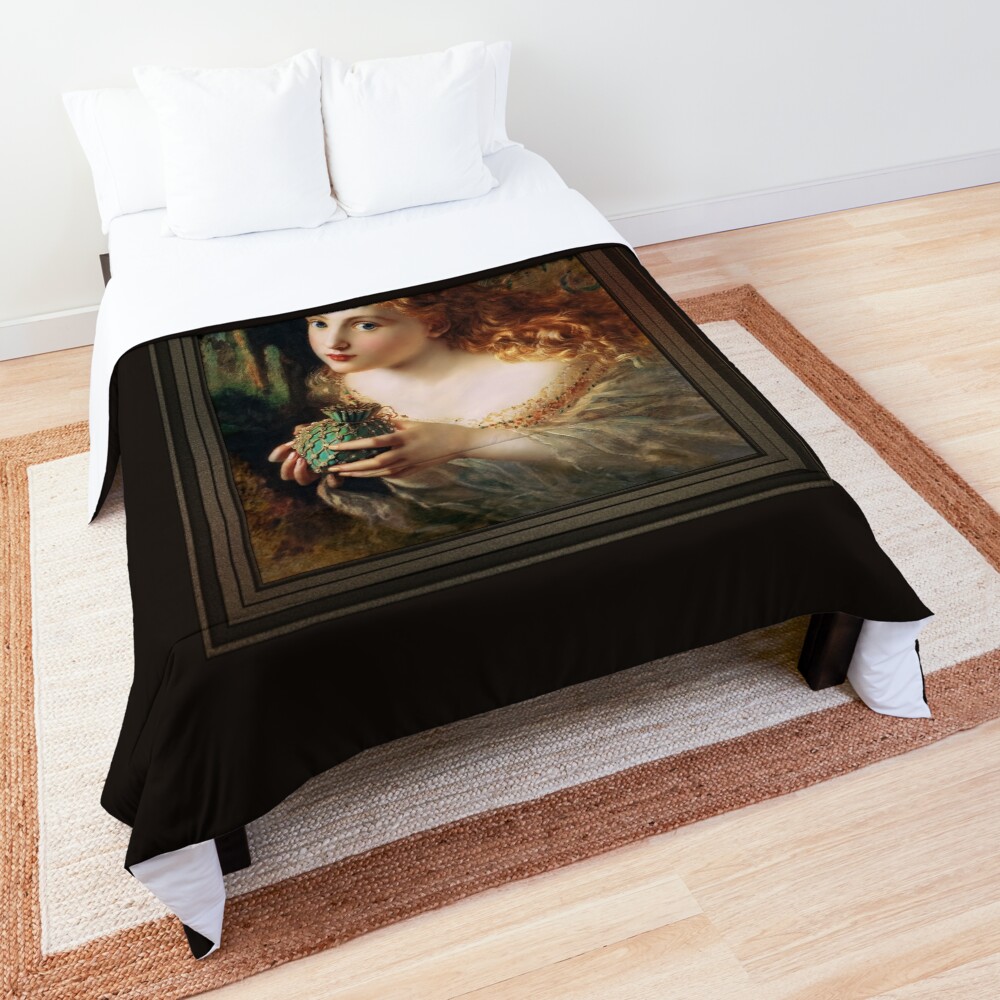
Sophie Gengembre Anderson’s (1823 – 1903) ペインティング A Fairy Is Made of Most Beautiful Things captures the delicate, ethereal beauty of an enchanting fairy, seamlessly blending the artist’s penchant for mythological themes with her trademark Romantic style. The artwork evokes a deep sense of wonder, where the boundary between the magical and the real is ever so thin. With its dreamlike quality and intricate detailing, Anderson creates a scene that pulls viewers into an almost mythical world.
The subject of the painting is a young fairy, her delicate features and expressive eyes captivating the viewer. 妖精, set in a lush natural environment, is positioned in a graceful, gentle pose, holding a small object in her hands. The fairy’s golden locks cascade down her shoulders, framing her soft, 若々しい顔. She is adorned with a crown made of colorful butterflies, a motif that suggests the lightness and freedom associated with both the insect and the fairy realm. Her wings, though delicate and finely detailed, have a subtle translucence, hinting at the airy nature of her existence. These elements combine to create a fairy whose innocence and grace are strikingly portrayed.
目次
The Setting and Surrounding Details
The setting of the artwork is equally as significant as the subject, blending the fairy’s delicate form with a rich, lush background. A shadowy, dark terrain envelops the scene, with hints of foliage and rocks. The depth of the natural world is contrasted with the fairy’s glowing presence, 彼女のほとんど別世界のような外観を強化する. アンダーソンは妖精の周囲を見事に表現しました, 環境が彼女の性格の神秘的な性質を補完するようにする.
妖精は岩や石の層に向かって配置されています, それは地上とこの世の境界線を象徴している可能性があります. このつながりは、妖精が小さなものを優しく握ることによって強調されます。, 彼女が手にしている複雑なデザインの物体は、おそらく美しさと壊れやすさの両方を示唆する貴重な工芸品です。. 精緻な模様が施されています, ビーズ, そして細かいディテール, それは重要なオブジェクトであることを示唆しています, おそらく彼女を彼女の世界とさらに結び付けるお守りまたは魔法のアイテム.
芸術的なスタイルとテクニック
ソフィー・ゲンゲンブレ・アンダーソンは、細部への細やかな配慮で知られていました, そして A Fairy Is Made of Most Beautiful Things 彼女の熟練の典型的な例です. Her Romantic style is apparent in the softness of the figure’s portrayal, as well as the emphasis on idealized beauty. The realism with which she paints the fairy’s hair, facial features, and intricate costume speaks to the artist’s technical prowess. Anderson’s choice of color further enhances the dreamlike quality of the painting. The soft pastel shades of the fairy’s attire blend seamlessly with the vibrant butterflies that adorn her crown, creating an overall sense of harmony and balance.
ソフト, almost luminous quality of the skin and delicate highlights on the fairy’s face give her an angelic aura. The artist’s delicate brushwork brings out the soft glow of the fairy’s complexion and emphasizes the fragile, ethereal nature of her character. Anderson’s meticulous technique in portraying textures—such as the intricate folds in the fairy’s clothing and the shimmering, iridescent wings—highlights her skill in rendering both the material and immaterial elements of her subject.
The Themes and Mood
The overall mood of the painting is one of reverence and admiration for beauty and innocence. The fairy’s youthful gaze, combined with her serene expression, evokes a sense of purity and delicate grace. This portrayal is in keeping with the Romantic movement, which often idealized the natural world, the supernatural, and the innocence of childhood. The painting invites viewers to imagine a world of fantasy, where such mythical beings live in harmony with nature, untouched by the harsh realities of the human world.
The use of butterflies, symbols of transformation and freedom, also speaks to themes of metamorphosis and the fleeting beauty of life. These creatures are often associated with spiritual growth and liberation, adding a layer of depth to the fairy’s character. The fairy’s interaction with these butterflies—both adorning her crown and fluttering around her—suggests that she is a part of a greater, interconnected world.
While the overall tone of the painting is gentle and whimsical, there is an undercurrent of mystery, particularly in the object the fairy holds in her hands. This item, intricately beaded and carefully held, could represent an important relic or key to a magical world, adding an element of intrigue to the otherwise peaceful scene.
材料と技術
アーティストはキャンバスに油絵の具を使用して、柔らかくも鮮やかな色合いを実現しました。 A Fairy Is Made of Most Beautiful Things. アンダーソンは油絵の具を使用することで流体を可能にします, 妖精の羽のほぼ半透明の効果, 彼女の顔と衣服の色調が柔らかくブレンドされています。. 細かい部分, 蝶の冠や妖精が持つ物の質感など, 本物そっくりでありながら幻想的な要素を構成に提供するために、巧みにレンダリングされています。.
光と影をブレンドするアンダーソンの能力は、彼女のフィギュアの立体感を効果的に高めています。, まるで三次元の世界を覗いているかのような感覚を味わえます。. 光源は妖精自身から柔らかに放射されているようです, 彼女を別世界のように強化する, ほとんど神の品質.
結論
に A Fairy Is Made of Most Beautiful Things, ソフィー・ゲンゲンブレ・アンダーソンが神秘的で魅惑的な世界に命を吹き込む, where the natural and supernatural intertwine. Through her meticulous technique and thoughtful use of symbolism, Anderson invites the viewer into a world of pure beauty, イノセンス, そして謎. 妖精, with her butterfly crown, delicate wings, とエーテルの存在, serves as both a symbol of innocence and a reminder of the fragile yet beautiful nature of existence. 金持ち, detailed landscape and the fairy’s interaction with her surroundings further solidify the fantastical theme of the painting, making it a captivating work that continues to resonate with viewers.
フランス生まれのイギリス人画家、ソフィー・ジャンジャンブル・アンダーソンによる妖精は最も美しいもので作られています。 (1823 – 1903); 女性と子供たちの新古典主義とイタリアの風俗画を専門とする人, 一般的に田舎の設定で.
Take the Fair Face of Woman, and Gently Suspending, With Butterflies, フラワーズ, and Jewels Attending, Thus Your Fairy is Made of Most Beautiful Things
This is a retouched digital art old masters reproduction of a public domain image that is available for sale as an online art print.