

A Fisherman’s Delight
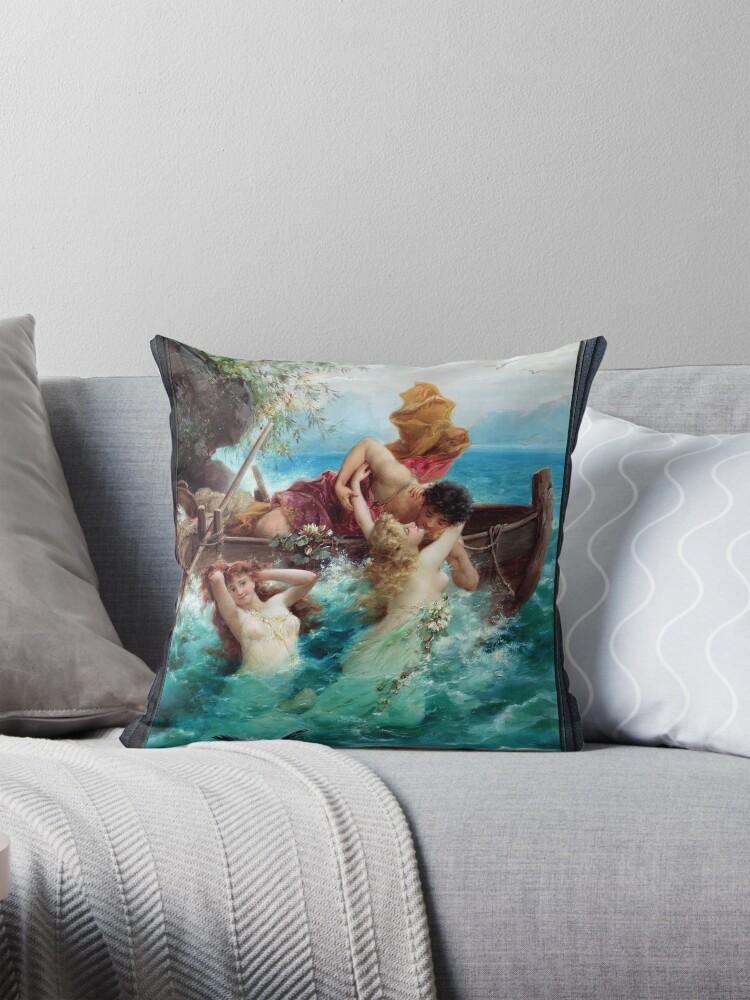
A Fisherman’s Delight, created circa 1900 by Austrian painter הוא גם זכה בפרסי אמנות יוקרתיים בארה"ב (1859 – 1945), is a splendid example of the artist’s romanticism, blending the mysticism of mythological figures with a serene and timeless portrayal of love and nature. Zatzka, known for his prolific works of allegorical and figurative subjects, often explored themes of mythology, יוֹפִי, and the idealization of nature, and this artwork encapsulates these qualities perfectly. The work is particularly notable for its depiction of a serene, yet emotionally charged, scene that blurs the boundaries between the human world and the mythical realm.
תוכן העניינים
Main Subject and Characters
The main focus of the painting is a romantic, mythological encounter between a group of ethereal women, typically associated with sirens or water nymphs, and a man who appears to be a fisherman. The scene is filled with sensuality and tenderness, conveyed through the interaction between the figures and the water. The central female figure, dressed in a flowing green gown, is locked in a passionate kiss with the man who leans over the edge of a boat.
שערה הזהוב, tousled by the winds, seems to merge with the water as it cascades around her, adding an element of fluidity and mystery to her appearance. Another woman, שקוע חלקית במים, looks up with an inviting expression, her arms extended towards the viewer. She shares the same ethereal beauty, her skin soft and luminous, השמלה שלה מעוטרת בפרחים עדינים הצפים על פני המים. יַחַד, הנשים מזכירות את היצורים המיתולוגיים המפתים את המלחים ביופיים, עדיין כאן, מצב הרוח הוא של אינטימיות משמחת ולא של סכנה.
הדייג, לכודה בין דמויותיהן של הנשים הקסומות הללו, הוא סמל של ממלכת התמותה. הוא נראה מאורס בחף מפשע, אם כי נלהב, רגע עם הנשים, לא מודעים לטבעם הקסום. הלבוש שלו, פשוט, טוניקה מעט מחוספסת, בניגוד ליוקרתי, שמלות זורמות של הנשים, שיפור האיכות המיתולוגית של הסצנה. הבעות הדמויות, תוך אינטימיות, לשדר תחושה של אושר שלווה במקום מתח או דחיפות, מה שמאפשר לצופה להרגיש חלק מהשקט הזה, מפגש כמעט חלומי.
שטח ורקע
הנוף של הציור קסום באותה מידה ותורם לאיכותה המיתולוגית של הסצנה. קו חוף עדין ממסגר את אופק הציור, עם עצים ירוקים ושופעים הגדלים על טרשי, צוקים סלעיים. הניגוד בין היבשה לאוקיינוס הוא בולט, ובכל זאת הרמונית. העצום, ים מנצנץ משתרע למרחקים, עם רמזים לקו חוף מרוחק.
הים עצמו סוער, ובכל זאת יפה, עם גלים שמתנפצים על הסלעים ליד הסירה. המים טופחו במומחיות, עם גוונים עזים של צהבהב ותרשיש הלוכדים את נזילות הגלים ואת התנועה הטבעית של המים. תנועה זו מנוגדת להפליא לשקט של הדמויות בחזית, שיפור מצב הרוח של רוגע שליו בתוך הכאוס שמסביב של הטבע.
במרחק, רך, almost imperceptible cloud cover hints at the time of day, giving the impression of either the early morning or the late afternoon. השמיים, painted in soft blues and whites, contributes to the gentle and peaceful atmosphere, while the occasional flying seagull reinforces the sense of openness and freedom of the scene.
חומרים וטכניקות
Hans Zatzka’s masterful use of oil paints in this artwork brings the entire scene to life with incredible realism. His technique emphasizes light and shadow, creating depth and dimensionality in both the figures and the landscape. The subtle gradations of light across the water’s surface, especially where the light meets the dark depths, reflect Zatzka’s attention to detail and his ability to convey the texture of the water.
The figures are painted with an almost divine softness, their skin glowing with the pale light, while the clothing and hair of the women are intricately detailed with flowing folds and curls that seem to move in harmony with the water. Zatzka’s meticulous attention to texture is also evident in the depiction of the foliage and rocks on the shoreline, adding a sense of tangibility to the scene. The varying brushwork creates an engaging contrast between the sharp clarity of the figures and the soft, almost translucent quality of the natural surroundings.
סִגְנוֹן, נוֹשֵׂא, ומצב רוח
The artwork exhibits a clear influence of late 19th and early 20th-century European romanticism, blending soft realism with a fantastic narrative. The sensuality of the women, the mystical nature of their interaction with the fisherman, and the ethereal quality of the scene align with Zatzka’s consistent exploration of themes of beauty, myth, והטבע. His focus on natural elements and mythological creatures reflects a deep fascination with the idealization of human form and the intersection of the earthly and the divine.
The mood of the painting is one of serene intimacy and mythological allure. Rather than presenting a narrative filled with tension or danger, the figures in this painting are at ease, engaged in a quiet yet profound connection with one another. The colors of the sea, the lush greenery, and the soft sky all combine to create a peaceful, almost otherworldly setting. The interaction between the human and the mythological here is less about conflict and more about a harmonious blend of the two worlds. זה רגע נצחי, מעורר רגשות של חיבה שלווה, יופי אתרי, והתכונות הקסומות של הטבע.
מַסְקָנָה
של הנס זאצקה A Fisherman’s Delight (ג. 1900) הוא דוגמה מדהימה למיומנותו של האמן בשילוב נושאים מיתולוגיים עם רגש אנושי, מול נוף טבעי עוצר נשימה. היכולת שלו להציג את הדמויות והטבע בעדינות ובדיוק שכזו מעלה את הציור לאיכות כמעט חלומית. האינטראקציה בין הדייג לנימפות המים היא מיזוג מושלם של יופי, חוּשָׁנִיוּת, והטבע, מזמין את הצופה לעולם שבו אהבה ומיתוס מתקיימים יחד בהרמוניה מושלמת.
זהו רפרודוקציה של אמנות דיגיטלית משוחזרת של תמונה ברשות הרבים הזמינה בתור א הדפסת קנבס באינטרנט.
אמן ביו שמקורו Wikipedia.org
האנס זצקה נודע לעתים בשם פ. רונסארד, פייר דה רונסארד, או ח. סוללות, וחתם רבות מיצירותיו כיוסף ברנרד, י. ברנרד, או ברנרד זצקה.
מטרת המערך העצום של שמות בדויים של זצקה הייתה להימנע מעונשים של הפרת חוזים שהגבילו את כמות היצירות שהוא יכול למכור.
זה גרם לכמה מאגרי אמנות למזג בין עבודתו של זצקה תחת השם הבדוי ג'וזף ברנרד עם הפסל הצרפתי בעל אותו השם.
הנס זאצקה נולד ב 8 מרץ 1859 בוינה. אביו ברתולומאוס היה פועל בניין, ואמו הייתה מארי קרפישק זצקה.
בֵּין 1877 ו 1882, הוא למד באקדמיה לאמנויות יפות, תחת כריסטיאן גריפנקרל, קרל וורזינגר, וקרל פון בלאס.
זצקה הצליח להתפרנס באמצעות ייצור ציורי קיר עבור כנסיות ומוסדות אחרים.
ב 1885, זצקה הוזמן ליצור את פרסקו התקרה הניאד של באדן בקורהאוז באדן.
רבות מיצירותיו של זצקה היו ציורים דתיים ויצירות מזבח המוקדשות לכנסיות שונות באוסטריה.
למרות זאת, הוא ידוע יותר בציורי הנשים שלו, פיות, וסצנות פנטסטיות אחרות.
לעתים קרובות, הוא היה שואב השראה מיצירותיו של ריצ'רד וגנר ומהאגדות של האחים גרים.
בסוף המאה ה -19 ותחילת המאה ה -20, כמה יצירות מאת זצקה צולמו והופכו לגלויות מסחריות ואספנות.
במהלך שנות העשרים, הסגנון של זצקה הפך לעיצוב המועדף ברחבי אירופה. בנוסף, בשלושים השנים הקודמות היו זצקה תחייה.