

La delizia di un pescatore
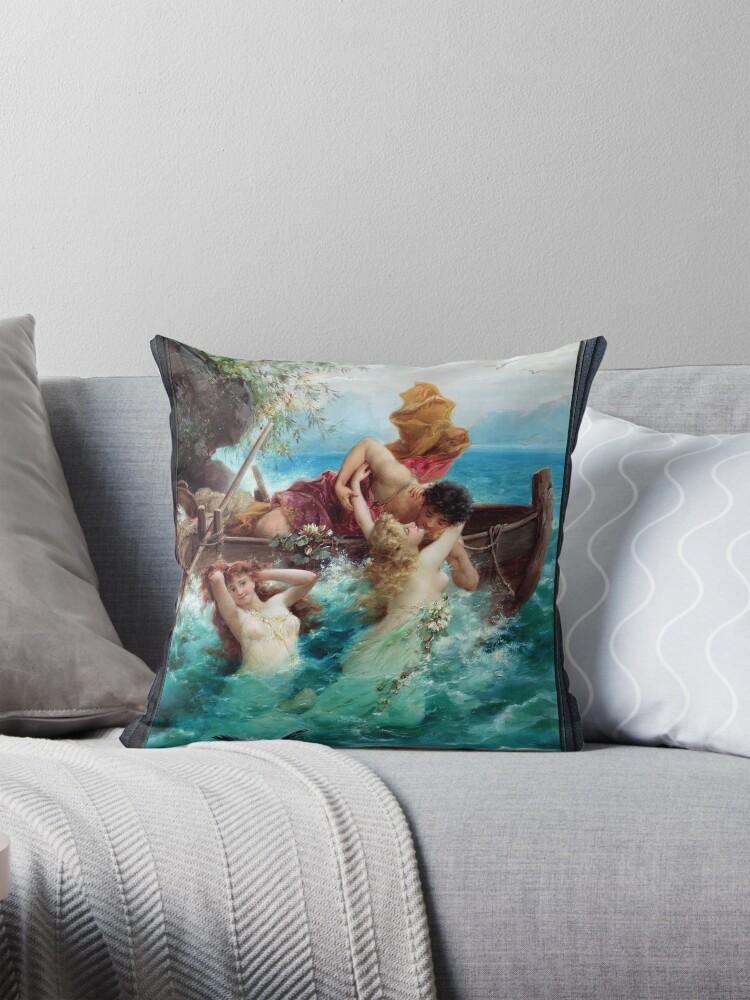
La delizia di un pescatore, creato circa 1900 del pittore austriaco Hans Zatzka (1859 – 1945), è uno splendido esempio del romanticismo dell’artista, fondendo il misticismo delle figure mitologiche con una rappresentazione serena e senza tempo dell'amore e della natura. Zatzka, noto per le sue prolifiche opere di soggetti allegorici e figurativi, temi spesso esplorati della mitologia, bellezza, e l'idealizzazione della natura, e quest'opera d'arte racchiude perfettamente queste qualità. L'opera è particolarmente degna di nota per la sua rappresentazione di un sereno, eppure emotivamente carico, scena che confonde i confini tra il mondo umano e il regno mitico.
Sommario
Soggetto principale e personaggi
L'obiettivo principale del dipinto è un romantico, mythological encounter between a group of ethereal women, typically associated with sirens or water nymphs, and a man who appears to be a fisherman. The scene is filled with sensuality and tenderness, conveyed through the interaction between the figures and the water. The central female figure, dressed in a flowing green gown, is locked in a passionate kiss with the man who leans over the edge of a boat.
Her golden hair, tousled by the winds, seems to merge with the water as it cascades around her, adding an element of fluidity and mystery to her appearance. Another woman, parzialmente immerso nell'acqua, looks up with an inviting expression, her arms extended towards the viewer. She shares the same ethereal beauty, her skin soft and luminous, il suo abito ornato di fiori delicati che galleggiano sulla superficie dell'acqua. Insieme, le donne evocano le creature mitologiche che tentano i marinai con la loro bellezza, ancora qui, l'atmosfera è di gioiosa intimità piuttosto che di pericolo.
Il pescatore, intrappolati tra le figure di queste donne incantevoli, è un simbolo del regno mortale. Sembra fidanzato con un'innocente, anche se appassionato, momento con le donne, ignari della loro natura magica. Il suo abbigliamento, un semplice, tunica un po' robusta, contrasta con il lussuoso, abiti fluenti delle donne, esaltando la qualità mitica della scena. Le espressioni delle figure, mentre intimo, trasmettere un senso di serena beatitudine piuttosto che di tensione o urgenza, permettendo allo spettatore di sentirsi parte di questo tranquillo, incontro quasi onirico.
Terreno e sfondo
The painting’s landscape is equally enchanting and contributes to the scene’s mythical quality. A gentle coastline frames the painting’s horizon, with lush green trees growing on rugged, rocky cliffs. The contrast between the land and the ocean is stark, yet harmonious. The vast, shimmering sea extends into the distance, with hints of a distant shoreline.
The sea itself is turbulent, yet beautiful, with waves crashing against the rocks near the boat. The water has been expertly rendered, with vibrant shades of teal and aquamarine capturing the fluidity of the waves and the natural motion of the water. This movement contrasts beautifully with the stillness of the figures in the foreground, enhancing the mood of peaceful calm amidst the surrounding chaos of nature.
In lontananza, a soft, almost imperceptible cloud cover hints at the time of day, giving the impression of either the early morning or the late afternoon. Il cielo, painted in soft blues and whites, contributes to the gentle and peaceful atmosphere, while the occasional flying seagull reinforces the sense of openness and freedom of the scene.
Materiali e Tecniche
Hans Zatzka’s masterful use of oil paints in this artwork brings the entire scene to life with incredible realism. His technique emphasizes light and shadow, creating depth and dimensionality in both the figures and the landscape. The subtle gradations of light across the water’s surface, especially where the light meets the dark depths, reflect Zatzka’s attention to detail and his ability to convey the texture of the water.
Le figure sono dipinte con una morbidezza quasi divina, la loro pelle risplendeva di una luce pallida, mentre gli abiti e i capelli delle donne sono finemente dettagliati con pieghe e riccioli fluenti che sembrano muoversi in armonia con l'acqua. La meticolosa attenzione di Zatzka alla trama è evidente anche nella rappresentazione del fogliame e delle rocce sulla costa, aggiungendo un senso di tangibilità alla scena. La pennellata variabile crea un contrasto accattivante tra la nitida chiarezza delle figure e quella morbida, qualità quasi traslucida dell'ambiente naturale.
Stile, Tema, e umore
L'opera d'arte mostra una chiara influenza del romanticismo europeo della fine del XIX e dell'inizio del XX secolo, fondendo un morbido realismo con una narrativa fantastica. La sensualità delle donne, la natura mistica della loro interazione con il pescatore, and the ethereal quality of the scene align with Zatzka’s consistent exploration of themes of beauty, myth, e natura. His focus on natural elements and mythological creatures reflects a deep fascination with the idealization of human form and the intersection of the earthly and the divine.
The mood of the painting is one of serene intimacy and mythological allure. Rather than presenting a narrative filled with tension or danger, the figures in this painting are at ease, engaged in a quiet yet profound connection with one another. The colors of the sea, the lush greenery, and the soft sky all combine to create a peaceful, almost otherworldly setting. The interaction between the human and the mythological here is less about conflict and more about a harmonious blend of the two worlds. It is a timeless moment, evoking feelings of peaceful affection, bellezza eterea, and the magical qualities of nature.
Conclusione
Hans Zatzka La delizia di un pescatore (Una delizia da sogno. 1900) is a stunning example of the artist’s skill in blending mythological themes with human emotion, set against a breathtaking natural landscape. His ability to render both figures and nature with such delicacy and precision elevates the painting to an almost dreamlike quality. The interaction between the fisherman and the water nymphs is a perfect fusion of beauty, sensualità, e natura, inviting the viewer into a world where love and myth coexist in perfect harmony.
Questa è una riproduzione di arte digitale ritoccata di vecchi maestri di un'immagine di pubblico dominio disponibile come a ha dipinto le pinup per la commedia di Errol Flynn Never Say Goodbye.
Biografia dell'artista derivata da Wikipedia.org
Hans Zatzka a volte era conosciuto come P. Ronsard, Pierre de Ronsard, o H. batterie, e firmò molte delle sue opere come Joseph Bernard, J. Bernardo, o Bernard Zatzka.
Lo scopo della vasta gamma di pseudonimi di Zatzka era evitare sanzioni in caso di violazione dei contratti che limitavano la quantità di opere d'arte che poteva vendere.
Ciò ha portato alcuni database artistici a fondere il lavoro di Zatzka sotto lo pseudonimo di Joseph Bernard con lo scultore francese con lo stesso nome.
Hans Zatzka è nato il 8 marzo 1859 in Vienna. Suo padre Bartholomaüs era un operaio edile, e sua madre era Marie Karpischek Zatzka.
Tra 1877 e 1882, ha studiato all'Academie des Beaux-Arts, sotto Christian Griepenkerl, Carl Wurzinger, e Karl von Blaas.
Zatzka è stato in grado di guadagnarsi da vivere attraverso la produzione di affreschi per chiese e altre istituzioni.
Nel 1885, Zatzka è stato incaricato di creare l'affresco del soffitto La Naiade di Baden al Kurhaus Baden.
Molte delle opere di Zatzka erano dipinti religiosi e pale d'altare dedicate a varie chiese in Austria.
tuttavia, è più conosciuto per i suoi dipinti di donne, fate, e altre scene fantastiche.
Spesso, trarrebbe ispirazione dalle opere di Richard Wagner e dalle fiabe dei fratelli Grimm.
Tra la fine del XIX e l'inizio del XX secolo, diversi pezzi di Zatzka sono stati fotografati e trasformati in cartoline commerciali e da collezione.
Durante gli anni '20, Lo stile di Zatzka è diventato l'arredamento preferito in tutta Europa. Inoltre, i trent'anni precedenti hanno segnato una rinascita per Zatzka.