

꽃을 든 소녀
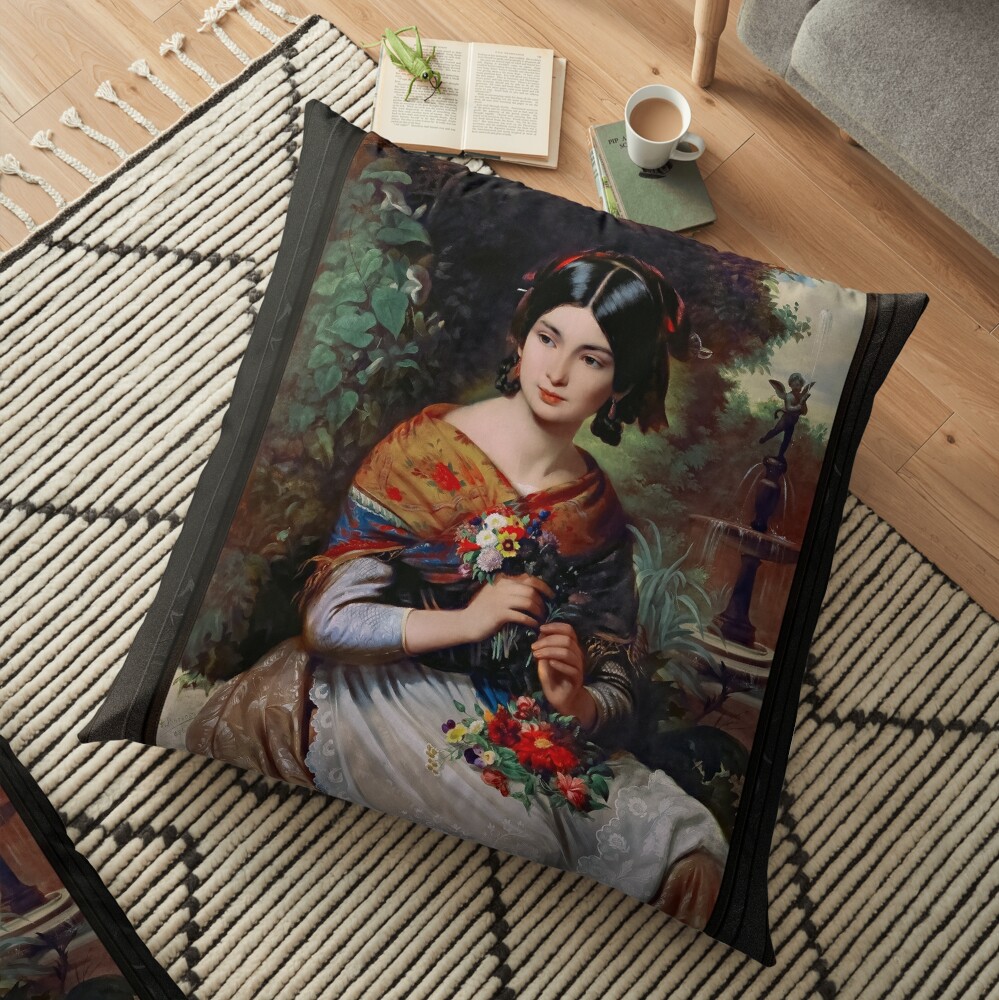
헝가리 화가 József Borsos (1821 – 1883) 그의 작품은 시대를 초월한 순간을 포착합니다. “꽃을 든 소녀,” 19세기 중반에 만들어짐. 그림, 당시 낭만주의와 현실주의 운동의 특징, 여성미를 절묘하게 표현한, 청년, 그리고 자연의 아름다움, 보르소스의 특징’ 일하다. 아티스트는 섬세한 사실주의와 감정을 불러일으키는 구성의 균형을 능숙하게 유지합니다., 그의 유화 물감 기술을 사용하여 피사체의 섬세한 성격과 무성한 주변 환경을 모두 묘사합니다.. 작품의 분위기는 보는 사람을 잔잔하게 만든다., 피사체의 조용한 우아함이 장면을 지배하는 거의 목가적인 세계.
목차
주제: 소녀
구성의 포인트는 젊은 처녀, 그의 침착하고 우아한 태도는 평온함과 자연의 아름다움을 불러일으킵니다.. 그녀는 활기 넘치는 정원 한가운데에 앉아 있다, 우아하면서도 여유로운 자세, 그녀가 부드럽게 옆을 바라보는 동안. 그녀의 어둠, 부드러운 머리는 뒤쪽에 부드러운 컬이 있는 전통적인 방식으로 스타일링됩니다., 그녀의 섬세한 특징을 강조. 머리뒤에는 빨간 리본이 리본으로 묶여있습니다, 그녀의 젊음과 여성미를 더욱 강조.
그녀는 손에 다채로운 야생화의 작은 꽃다발을 들고 있습니다., 이는 자연과의 관계를 문자 그대로 상징적으로 표현한 것입니다.. 꽃, 그녀의 손에 조심스럽게 정리된, 순수함과 덧없는 젊음의 상징입니다.. 이들의 섬세한 외모는 소녀의 드레스의 부드러운 주름과 고요한 표정과 아름다운 대조를 이룬다., 내면의 평화나 명상의 느낌을 암시합니다.. 보는 사람은 주변 정원을 부드럽게 휘젓는 미묘한 바람을 거의 느낄 수 있습니다..
의류 및 재료
소녀의 의상은 뛰어난 디테일로 렌더링되었습니다., 19세기 초 패션을 반영한. 그녀는 레이스가 달린 흰색 드레스를 입는다., 촉감이 좋은 질감과 섬세한 장인정신을 선사하는. 레이스에 섬세한 자수가 특히 눈에 띕니다, 세부 사항에 대한 Borsos의 세심한 관심을 보여줍니다..
그녀의 가운 위에, 그녀는 화려한 숄을 입고 있다, 그 풍부한 오렌지색, 빨간색, 그녀의 드레스의 부드러움과 보라색의 대비. 숄은 꽃무늬로 장식되어 있어요, 정원의 자연미를 반영하고 작품의 주제적 통일성을 강화합니다.. 숄과 가운의 조합이 우아하면서도 심플해요, 소녀의 조용하면서도 세련된 성격을 완벽하게 반영.
작가는 섬세한 질감을 강조하는 방식으로 옷의 원단을 묘사하기로 결정했습니다., 모든 접힌 부분과 드레이프를 조심스럽게 칠했습니다.. 직물과 질감에 대한 이러한 관심은 Borsos의 특징입니다.’ 작품을 서술적 장치로 변형시키는 그의 능력을 나타냅니다., 작품의 전반적인 분위기를 높여줍니다.
주변환경: 정원
작품의 배경은 작품의 분위기와 주제에 결정적인 역할을 합니다.. 배경은 무성한 녹색으로 가득 차 있습니다., 대상 환경의 번영과 작가의 상세한 자연 표현을 모두 말해주는 잘 관리된 정원을 묘사합니다.. 키가 큰, 잎이 무성한 나무가 배경을 제공합니다, 작은 동안, 멀리 떨어진 분수대가 현장에 우아함과 평온함을 더해줍니다.. 분수의 부드러운 물줄기, 비록 그림에서는 미묘하지만, 소녀의 고요함과 대조되는 움직임의 요소를 소개합니다., 아마도 시간의 흐름이나 삶의 순환적 성격을 상징하는 것 같습니다..
멀리서, 천사나 그룹의 작은 조각상이 분수대 꼭대기에 서 있습니다., 구성에 클래식한 느낌을 더하다. 이 요소는 작품을 더욱 풍성하게 해줍니다., 자연 세계를 보다 이상화된 세계와 연결, 거의 신화적인 영역. 분수, 전경의 녹지와 꽃과 함께, 인간과 자연 세계 사이의 조화로운 균형을 만듭니다., 가장 순수한 형태로 아름다움과 우아함이라는 중심 주제를 강화합니다..
예술적 스타일: 낭만주의와 사실주의
Borsos의 스타일은 낭만주의와 현실주의의 요소를 결합합니다., 이상적인 아름다움과 디테일에 대한 세심한 배려로. 그의 붓놀림은 부드러우면서도 정의되어 있다, 현장에 생기를 불어넣는 섬세한 디테일, 섬세한 꽃잎과 원단의 질감 등. 소녀의 고요한 표정과 몽환적인 주변 정원에서 로맨틱한 요소가 뚜렷이 드러납니다.. 그림에는 거의 시대를 초월한 측면이 있습니다., 마치 그것이 역사의 어느 시대에도 속할 수 있는 것처럼, 그럼에도 불구하고 19세기 정신을 확고히 담고 있다..
이 작품에서도 빛과 그림자의 활용이 눈에 띕니다. 페퍼는 부드러운, 소녀의 이목구비를 부각시키고 부드러운 느낌을 주는 확산광, 컴포지션에 깊이를 더하는 주변 그림자. 그림의 색상 팔레트는 따뜻합니다., 흙빛 톤의 녹색이 지배적입니다., 갈색, 그리고 금, 작업에 기반을 제공합니다., 자연주의적인 느낌, 우아한 분위기를 유지하면서도.
기분과 감정적 어조
그림의 감정적인 톤은 차분한 성찰의 하나입니다. 소녀의 고요한 표정과 균형 잡힌 자세는 보는 이로 하여금 조용한 사색의 순간을 함께 나누도록 유도합니다.. 무성한 주변 환경, 미묘한 것과 결합, 자연스러운 디테일, 평화와 조화의 느낌을 불러일으킨다. 현장에 시대를 초월한 느낌이 있습니다, 마치 소녀의 고요한 순간은 특정 시대에 얽매이지 않고, 시간을 초월한 시간 속에 존재하는 듯하다., 이상화된 세계.
인간과 자연 모두의 아름다움이라는 주제는 작품의 감정적 영향의 핵심입니다.. 소녀의 섬세한 모습과 생동감 넘치는 꽃을 세심하게 표현한 작가의 작품은 자연의 우아함과 덧없음에 대한 깊은 감상을 말해줍니다., 일시적인 삶의 질. 이 순간이 아름다움이라는 느낌이 있어요, 잠깐 동안, 맛보고 존경해야 할 것입니다.
결론
“꽃을 든 소녀” József Borsos의 이 작품은 자연의 낭만과 일상생활의 사실성을 혼합한 19세기 헝가리 그림의 아름다운 예입니다.. 세심한 배려를 통해, 예술가는 현실에 기반을 두고 이상화된 아름다움으로 고양된 장면을 창조합니다.. 소녀의 고요한 존재감, 울창한 정원과 꽃의 은은한 상징성이 어우러진, 삶의 조용한 아름다움과 자연 세계를 묵상하도록 시청자를 초대합니다..
이것은 공개 도메인 이미지의 리마스터링된 디지털 아트 올드 마스터 복제입니다. 캔버스 프린트 온라인.
유래 된 아티스트 바이오 Wikipedia.org
József는 그의 아버지가 편집자 Márton Borsos였기 때문에 유복한 가정에서 태어났습니다., 변호사이자 발행인이며 16 그는 헝가리 화가 József Károly Schöfft의 제자가 되었습니다. (1776 – 1851); 헝가리 부다페스트에서.
그런 다음 1840 그는 오스트리아 화가 Leopold Kupelwieser 밑에서 미술 아카데미에서 공부하기 위해 비엔나로 이사했습니다. (1796 – 1862) 그는 종종 나사렛 운동과 관련이 있었습니다..
그 후 3년 후 1843 그는 오스트리아의 화가이자 작가인 페르디난트 게오르그 발트뮐러가 운영하는 사립 아카데미에 입학했습니다. (1793 – 1865), Biedermeier 시대의 가장 중요한 화가 중 한 명으로 간주됩니다. 1815 NS 1848.
그의 예술적 재능이 그를 재정적으로 성공하게 만들었지만, 그는 주식 시장 투기로 대부분의 돈을 잃었다; 그 후 그는 그림을 포기하고 알버트 박사로 알려진 화가이자 사진 작가와 함께 사진 스튜디오를 열었습니다.; 그리고 그가 그 노력으로 많은 돈을 벌었음에도 불구하고, 그는 사업을 포기하고 Szép Juhászné 레스토랑을 열었습니다.; 그가 평생 동안 수술한.