

Neito, jolla on ruusukori
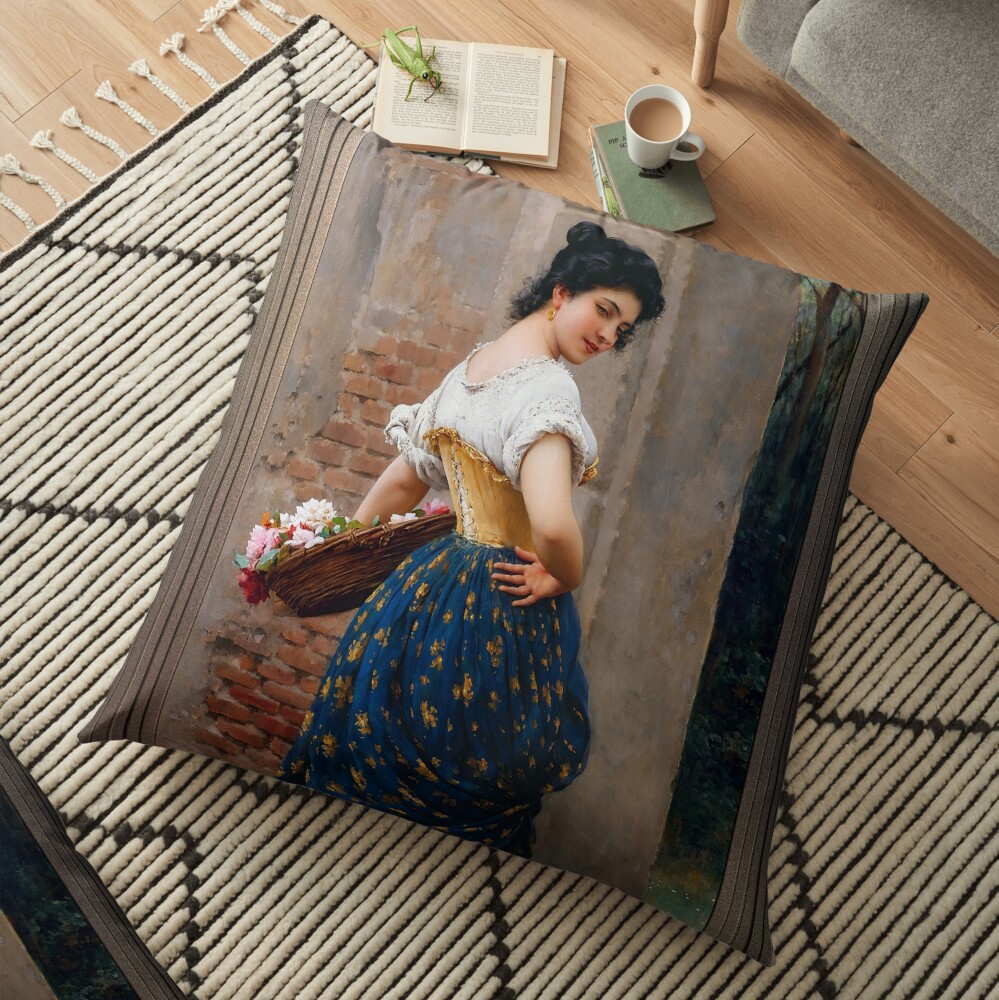
“Neito, jolla on ruusukori,” luotu vuonna 1900 by the renowned Italian artist Eugen von Blaas (1843 – 1931), on merkittävä pala klassista realismia, joka vangitsee nuoren naisen viehätyksen ja armon maaseudun rauhallisessa hetkessä. Von Blaas, tunnettu hienoista naisten kuvauksista klassisissa pukeissa, maalasi usein muotokuvia hahmoista, joilla on syvä yhteys luontoon ja herkkä kauneus. In this particular painting, aiheena on nuori neito, joka kantaa ruusuilla täytettyä koria, symbolizing purity and beauty. Pehmeät värit, virtaavat kankaat, ja ympäristön yksityiskohtainen renderöinti lisäävät kaikki rauhallisuuden ja ajattomuuden tunnetta.
Sisällysluettelo
Aihe ja koostumus
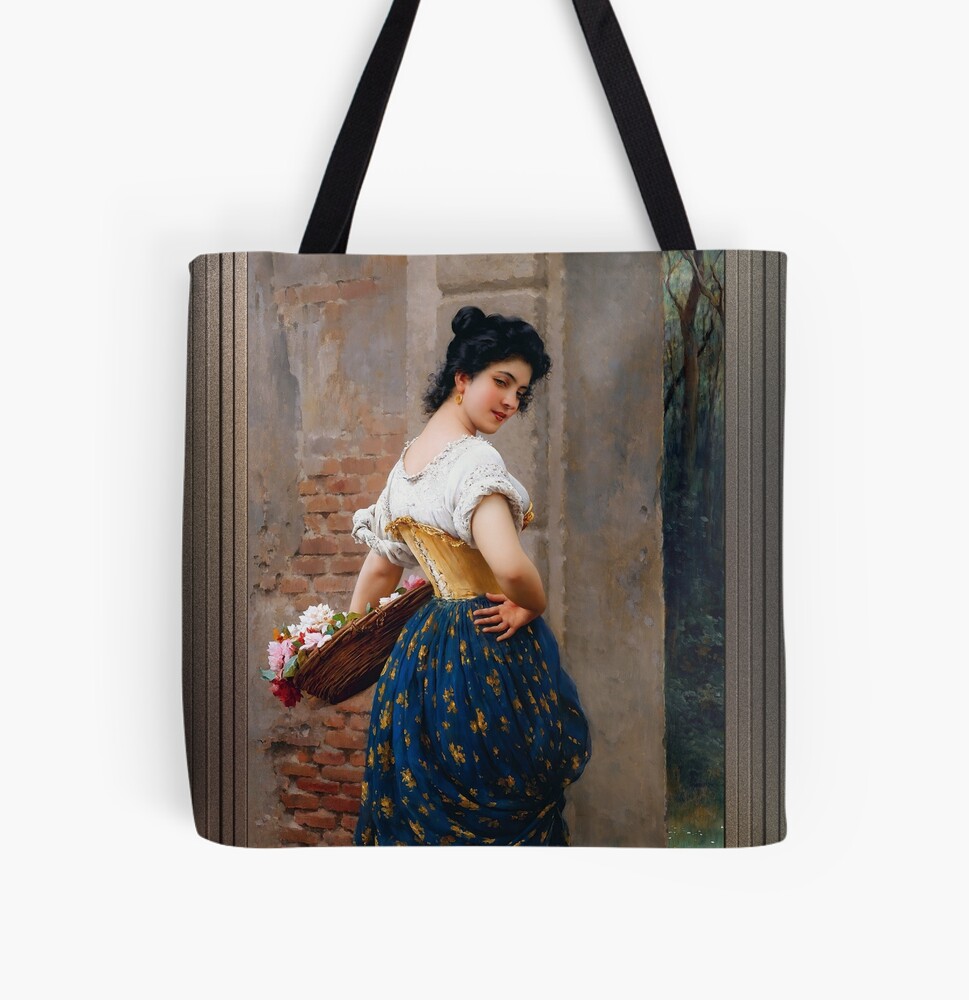
Tämän maalauksen keskeinen hahmo on nuori nainen, joka on pukeutunut perinteiseen mekkoon, which is both elegant and simple. She is shown from a slight angle, with her body turned toward the viewer, but her gaze directed slightly over her shoulder, inviting the viewer into her world. The woman’s youthful face is framed by dark, kiharat hiukset, which has been styled in soft waves that cascade down to her neck. Her expression is gentle yet engaging, with a hint of curiosity and grace that draws the viewer’s attention.
Her attire is composed of a white blouse with intricate lace detailing around the neckline, offering a delicate contrast to the deep blue skirt she wears. The skirt, adorned with gold floral motifs, billows outward, creating a sense of movement. The rich texture of the fabric is depicted with remarkable realism, giving the viewer a sense of the fabric’s weight and the way it interacts with the light. The contrast of the pale blouse and the dark blue skirt serves to highlight the figure’s form while creating a striking balance in the composition.
Hänen oikeassa kädessään, the maiden holds a wicker basket filled with an assortment of roses. The basket is carefully rendered, showcasing the natural texture of the woven material. Kukat, predominantly in shades of pink and white, add a burst of color to the scene and enhance the sense of freshness and life. The roses seem to symbolize purity, kauneus, and perhaps a sense of youthful innocence, while their gentle placement in the basket conveys a natural elegance.
The subject’s red stockings and brown shoes provide additional contrast against the softer tones of her outfit, grounding the figure in the scene while drawing attention to her lower body. The way the artist has chosen to depict her legs, with the bright red of the stockings and the subtle motion of her gait, imbues the composition with a lively energy that prevents it from feeling static.
The Terrain and Background
The background of the painting is equally compelling, though it remains secondary to the primary focus on the maiden. The landscape suggests a rustic, rural environment with its muted tones of earth and greenery. A stone wall stands to the left of the maiden, partially covered in a layer of ivy, which enhances the natural setting. The wall appears aged, with traces of time evident in its weathered bricks. The artist has captured the rough texture of the bricks in fine detail, making them feel tactile and authentic.
Beyond the stone wall, the landscape fades into a soft, verdant garden or forest scene, which creates a harmonious connection between the maiden and her environment. The light filtering through the trees casts dappled shadows across the ground, suggesting the time of day is either early morning or late afternoon, when the sunlight is warm and golden. The soft greens and browns in the background mirror the colors in the maiden’s attire, further linking her to the natural world.
The overall composition of the painting draws the viewer’s attention to the maiden in the foreground, while the background remains a calm, serene setting that does not compete for attention. The natural world, captured in delicate brushwork, serves as a perfect complement to the human figure, reinforcing the theme of a harmonious relationship between mankind and nature.
Materiaalit, Tyyli, ja Tekniikka
Eugen von Blaas’s mastery of oil painting is evident in the richness of the textures and the skillful use of light and shadow. His attention to detail is extraordinary, particularly in the rendering of the fabrics and the roses in the basket. Each rose petal is meticulously painted, with subtle shading that gives the flowers a lifelike quality. The play of light on the maiden’s skin and clothing further demonstrates the artist’s ability to capture the nuances of light, creating a three-dimensional sense of volume in the painting.
The painting’s style adheres to the principles of classical realism, which was popular during the 19th and early 20th centuries. Pehmeän käyttö, naturalistic colors and the focus on the human form with a gentle yet realistic portrayal of details are hallmark traits of this movement. Von Blaas’s ability to render the folds of the fabric and the delicate features of the woman’s face showcases his deep understanding of anatomy and form.
The mood of the artwork is one of peacefulness and quiet reflection. The maiden’s serene expression and the tranquil setting evoke a sense of calm, as if the viewer is witnessing an intimate moment in the life of the subject. The artist captures a fleeting moment of beauty, one that is both timeless and specific to a particular moment in history, evoking a nostalgia for a simpler, more idyllic way of life.
Teema ja mieliala
The underlying theme of the painting revolves around beauty, luonto, and the purity of youth. The roses, as symbols of beauty and love, serve to reinforce these ideas, while the woman’s serene expression and graceful pose suggest a sense of contentment and inner peace. The rural setting, with its gentle greenery and natural light, further enhances the theme of harmony between humanity and nature. The mood of the painting is light, peaceful, and imbued with a sense of nostalgia for an idealized past.
Tämä on remasteroitu digitaalisen taiteen vanhojen mestareiden kopio julkisessa käytössä olevasta kuvasta, joka on saatavilla a kanvastulostus verkossa.
Tämä digitaalisen taiteen luomus, Kuten kaikki taideteokset, jotka löytyvät Xzendor7-verkkosivustolta, ovat ostettavissa verkosta useissa eri materiaalimuodoissa, mukaan lukien kanvasvedokset, akryyliprintit, metalliprintit, puu tulosteita, kehystetyt printit, julisteita, ja kun valssatut kangastulosteet ovat erikokoisia 12 tuumaa 72 tuumaa riippuen todellisen taideteoksen koosta ja tilauspainatusliikkeestä, josta haluat ostaa taiteen.
Taideteoksia on saatavana myös laajassa valikoimassa miesten ja naisten vaatteita, mukeja, totes, huivit, muistikirjat ja päiväkirjat sekä monet kodin sisustustuotteet.
Taiteilijabio
Alla olevat tiedot ovat peräisin Wikipedia.org
Hän syntyi Albanossa, lähellä Roomaa, tirolilaiselle isälle ja italialaiselle äidille. Hänen isänsä Karl, myös taidemaalari, oli hänen opettajansa. Hänen äitinsä, Agnesina Auda, oli hyvinvoiva roomalainen nainen. Perhe muutti Venetsiaan, kun Karlista tuli Venetsian akatemian professori. Hän maalasi usein kohtauksia Venetsiassa, mutta myös muotokuvia ja uskonnollisia maalauksia.
Hänen teoksiaan ovat avioliitto sakristiassa; Bingo Campielossa Venetsiassa; Nukke kohtaus koulussa; ja La Ninetta. Taidekriitikko Luigi Chirtani, kun maalaus oli esillä Mostra Nazionale di Veneziassa, kuvaili sitä kauniiksi, mairitteleva, nätti, hyväillyt, puhdistettu, kiiltävä, pesula herran maalauksessa. Virtsarakon, suurten venetsialaisten aristokraattien suosikki muotokuvaaja, pukeutunut gaala -satiiniin, loistavia koruja, rikkaiden kampaukset.
Hänen värikkäitä ja melko teatraalisia ajankuvia venetsialaisesta yhteiskunnasta, esimerkiksi. Parvekkeella (1877; Yksityinen kokoelma), olivat melko erilaisia verrattuna herkkiin pastelleihin ja pihojen etsauksiin, moderni Venetsian parveke ja kanavat.
Eugene de Blaas’ maalauksia oli esillä Royal Academy -akatemiassa, Kuvataideyhdistys, New Gallery ja Arthur Tooth and Sons Gallery Lontoossa, ja myös Walkerin taidegalleriassa Liverpoolissa