

A Maiden With A Basket Of Roses
“A Maiden With A Basket Of Roses,” creato in 1900 by the renowned Italian artist Eugen von Blaas (1843 – 1931), is a remarkable piece of classical realism that captures the charm and grace of a young woman in a peaceful moment of rural life. Von Blaas, known for his exquisite depictions of women in classical attire, often painted portraits of figures with a deep connection to nature and delicate beauty. In this particular painting, the subject is a young maiden carrying a basket filled with roses, symbolizing purity and beauty. The soft colors, flowing fabrics, and the detailed rendering of the surroundings all contribute to a sense of tranquility and timelessness.
Sommario
Il soggetto e la composizione
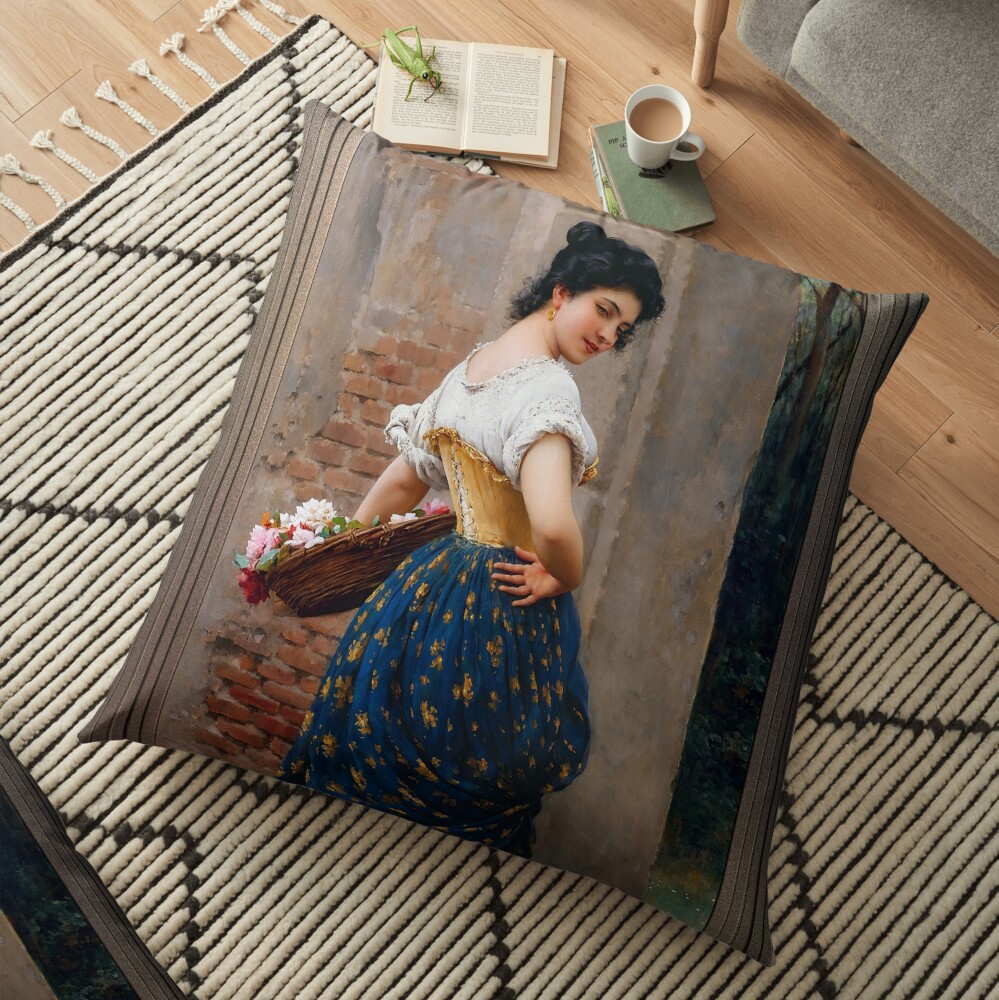
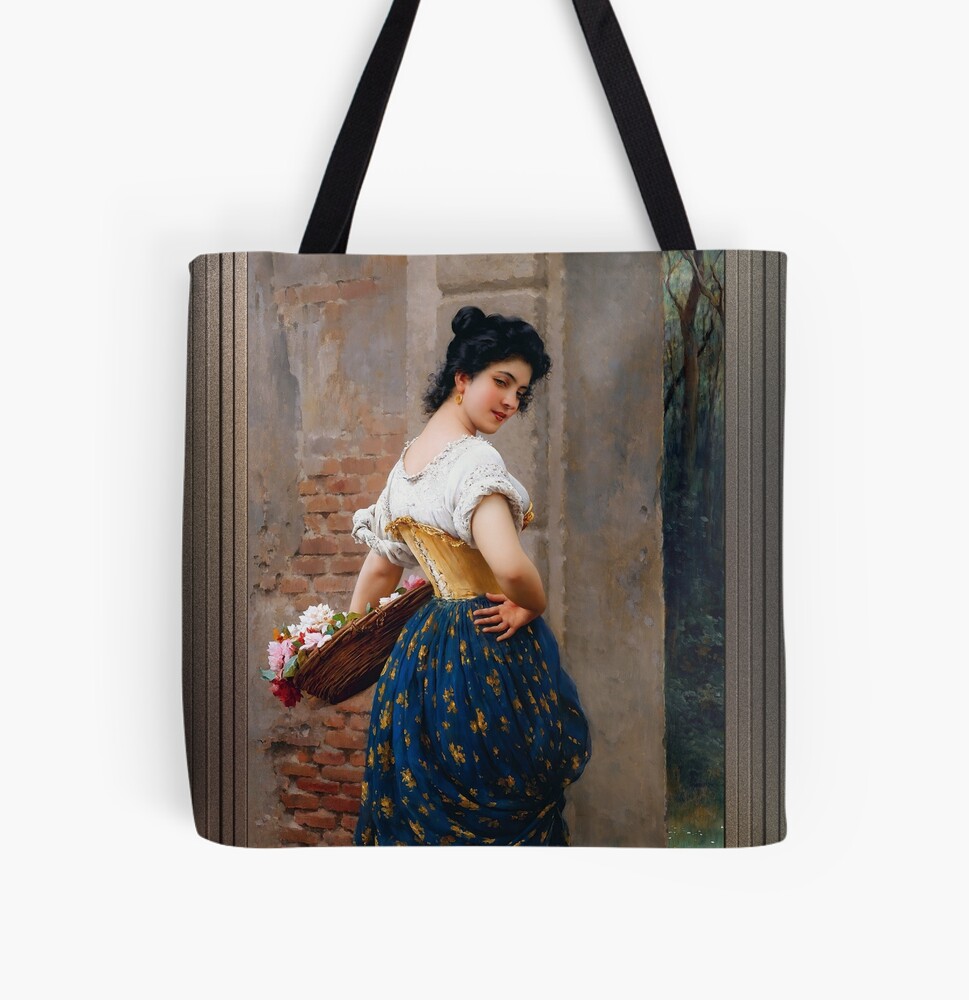
The central figure of this painting is a young woman dressed in a traditional gown, which is both elegant and simple. She is shown from a slight angle, with her body turned toward the viewer, but her gaze directed slightly over her shoulder, inviting the viewer into her world. The woman’s youthful face is framed by dark, curly hair, which has been styled in soft waves that cascade down to her neck. Her expression is gentle yet engaging, with a hint of curiosity and grace that draws the viewer’s attention.
Her attire is composed of a white blouse with intricate lace detailing around the neckline, offering a delicate contrast to the deep blue skirt she wears. The skirt, adorned with gold floral motifs, billows outward, creating a sense of movement. The rich texture of the fabric is depicted with remarkable realism, giving the viewer a sense of the fabric’s weight and the way it interacts with the light. The contrast of the pale blouse and the dark blue skirt serves to highlight the figure’s form while creating a striking balance in the composition.
Nella sua mano destra, the maiden holds a wicker basket filled with an assortment of roses. The basket is carefully rendered, showcasing the natural texture of the woven material. I fiori, predominantly in shades of pink and white, add a burst of color to the scene and enhance the sense of freshness and life. The roses seem to symbolize purity, bellezza, and perhaps a sense of youthful innocence, while their gentle placement in the basket conveys a natural elegance.
The subject’s red stockings and brown shoes provide additional contrast against the softer tones of her outfit, grounding the figure in the scene while drawing attention to her lower body. The way the artist has chosen to depict her legs, with the bright red of the stockings and the subtle motion of her gait, imbues the composition with a lively energy that prevents it from feeling static.
Il terreno e lo sfondo
The background of the painting is equally compelling, though it remains secondary to the primary focus on the maiden. The landscape suggests a rustic, rural environment with its muted tones of earth and greenery. A stone wall stands to the left of the maiden, partially covered in a layer of ivy, which enhances the natural setting. The wall appears aged, with traces of time evident in its weathered bricks. The artist has captured the rough texture of the bricks in fine detail, making them feel tactile and authentic.
Beyond the stone wall, the landscape fades into a soft, verdant garden or forest scene, which creates a harmonious connection between the maiden and her environment. The light filtering through the trees casts dappled shadows across the ground, suggesting the time of day is either early morning or late afternoon, when the sunlight is warm and golden. The soft greens and browns in the background mirror the colors in the maiden’s attire, further linking her to the natural world.
The overall composition of the painting draws the viewer’s attention to the maiden in the foreground, while the background remains a calm, serene setting that does not compete for attention. The natural world, captured in delicate brushwork, serves as a perfect complement to the human figure, reinforcing the theme of a harmonious relationship between mankind and nature.
Materiali, Stile, e tecnica
Eugen von Blaas’s mastery of oil painting is evident in the richness of the textures and the skillful use of light and shadow. His attention to detail is extraordinary, particularly in the rendering of the fabrics and the roses in the basket. Each rose petal is meticulously painted, with subtle shading that gives the flowers a lifelike quality. The play of light on the maiden’s skin and clothing further demonstrates the artist’s ability to capture the nuances of light, creating a three-dimensional sense of volume in the painting.
The painting’s style adheres to the principles of classical realism, which was popular during the 19th and early 20th centuries. L'uso del morbido, naturalistic colors and the focus on the human form with a gentle yet realistic portrayal of details are hallmark traits of this movement. Von Blaas’s ability to render the folds of the fabric and the delicate features of the woman’s face showcases his deep understanding of anatomy and form.
The mood of the artwork is one of peacefulness and quiet reflection. The maiden’s serene expression and the tranquil setting evoke a sense of calm, as if the viewer is witnessing an intimate moment in the life of the subject. The artist captures a fleeting moment of beauty, one that is both timeless and specific to a particular moment in history, evoking a nostalgia for a simpler, more idyllic way of life.
Tema e umore
The underlying theme of the painting revolves around beauty, natura, and the purity of youth. The roses, as symbols of beauty and love, serve to reinforce these ideas, while the woman’s serene expression and graceful pose suggest a sense of contentment and inner peace. The rural setting, with its gentle greenery and natural light, further enhances the theme of harmony between humanity and nature. The mood of the painting is light, peaceful, and imbued with a sense of nostalgia for an idealized past.
Questa è una riproduzione di vecchi maestri di arte digitale rimasterizzata di un'immagine di pubblico dominio disponibile come file a ha dipinto le pinup per la commedia di Errol Flynn Never Say Goodbye.
Questa creazione di arte digitale, come tutte le opere d'arte che si possono trovare sul sito Web di Xzendor7 è disponibile per l'acquisto online in una varietà di formati di materiali, comprese le stampe su tela, stampe acriliche, stampe in metallo, stampe su legno, stampe incorniciate, manifesti, e come stampe su tela arrotolata in una varietà di formati da 12 pollici a 72 pollici a seconda delle dimensioni dell'opera d'arte effettiva e del negozio di stampa su richiesta da cui scegli di acquistare l'arte.
L'opera d'arte è disponibile anche su un'ampia gamma di abbigliamento da uomo e da donna, tazze, borse, sciarpe, quaderni e diari e tanti prodotti per l'arredamento della casa.
Biografia dell'artista
Informazioni di seguito derivate da Wikipedia.org
Nacque ad Albano, vicino a Roma, a padre tirolese e madre italiana. Suo padre Karl, anche un pittore, era il suo maestro. Sua madre, Agnesina Auda, era una donna romana benestante. La famiglia si trasferì a Venezia quando Karl divenne professore all'Accademia di Venezia. Dipinse spesso scene a Venezia, ma anche ritratti e quadri religiosi.
Among his works are La forma nuziale in sacrestia; La tombola in Campielo a Venezia; Una scena di burattini in una scuola; e La Ninetta. The art critic Luigi Chirtani, when the painting was displayed at the Mostra Nazionale di Venezia, l'ha descritto come Bellissimo, lusinghiero, bella, accarezzato, puliti, lucidato, lavandaia in un dipinto di Mr. Vescia, il ritrattista preferito dei grandi aristocratici veneziani, vestito di raso di gala, gioielli splendenti, acconciature da ricchi.
Le sue immagini d'epoca colorate e piuttosto teatrali della società veneziana, per esempio. Sul balcone (1877; Collezione privata), erano ben diverse rispetto ai delicati pastelli e alle acqueforti dei cortili, balcone e canali della Venezia moderna.
Eugene de Blaas’ dipinti sono stati esposti alla Royal Academy, Società di belle arti, Nuova Galleria e Arthur Tooth and Sons Gallery a Londra, e anche alla Walker Art Gallery di Liverpool