

Arglwyddes Pompeaidd c 1904
Teitl y gwaith celf “Arglwyddes Pompeaidd c 1904” gan yr arlunydd Prydeinig John William Godward (1861 – 1922) yn enghraifft gyfareddol o'r arddull neoglasurol a oedd yn gyffredin ar ddiwedd y 19eg ganrif a dechrau'r 20fed ganrif. Roedd Godward yn enwog am ei bortreadau o ferched mewn gwisg glasurol, gosod yn aml o fewn moethus, lleoliadau Rhufeinig neu Roegaidd hynafol. Y darn arbennig hwn, paentio o gwmpas 1904, yn crynhoi ei sylw manwl i fanylion a'i fedr i ddal ceinder y ffurf ddynol. Mae’n enghraifft o ymroddiad yr artist i hynafiaeth glasurol, gyda'i destunau yn cael eu portreadu'n aml mewn hwyliau tawel a mewnweledol.
Tabl Cynnwys
Testun y Gwaith Celf
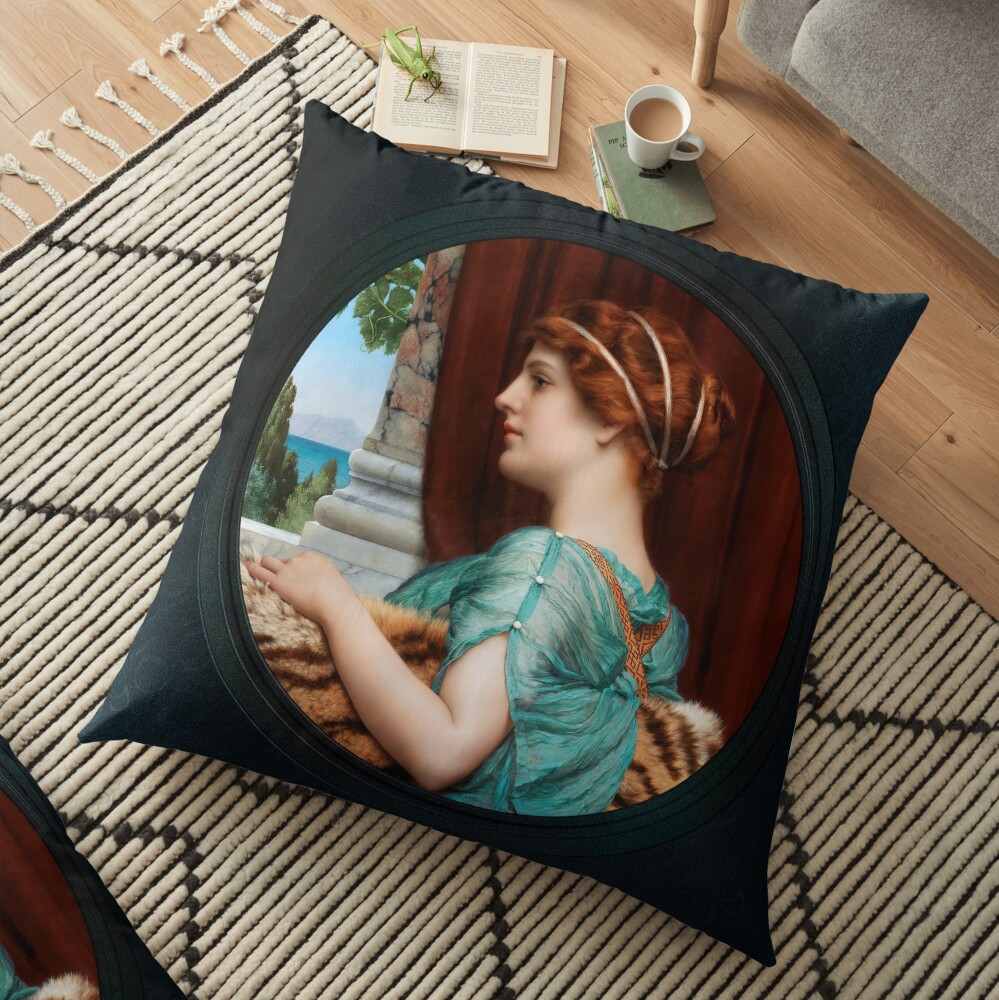
Yn “Arglwyddes Pompeaidd c 1904,” the main subject is a young woman dressed in an opulent, gŵn llifo. Her attire is distinctly ancient Roman or Pompeian in style, reminiscent of the classical draped garments seen in the frescoes and sculptures from Pompeii. The woman’s posture is elegant and contemplative, as she gazes into the distance with a slight turn of her head. This pose exudes a sense of grace, while her expression remains calm and serene. The soft waves of her auburn hair are intricately styled, adorned with delicate headbands that emphasize the classical aesthetic of the time.
Her gaze is directed towards the natural beauty that lies outside the frame of the painting, suggesting a moment of quiet reflection. The painting’s composition draws attention to the delicate interplay between the figure’s posture and the surrounding environment. The softness of her features is contrasted against the sharp and detailed depiction of the materials in her attire, the textures of the background, and the natural elements in the landscape.
Y Lleoliad a'r Dirwedd
The setting of the painting features an outdoor terrace with a view of a lush, serene landscape. The woman is placed against a grand column made of marble, which serves to frame her figure while simultaneously grounding her within the classical world of ancient Rome. The background reveals an idyllic view of a coastal scene, where the sea meets the horizon under a clear, soft blue sky. Verdant trees and a tranquil landscape suggest a peaceful, secluded place, contributing to the overall sense of calm and elegance that pervades the work.
The architectural elements of the setting further emphasize the classical influence, with Roman-style columns and arches that evoke the grandeur of ancient structures. These elements are skillfully rendered, with Godward’s attention to detail in the textures of the stone, chwarae'r golau a'r cysgod, and the intricate detailing on the column itself. The warm tones of the stone, combined with the cool colors of the sky and the distant sea, create a harmonious atmosphere that enhances the timeless beauty of the figure.
Naws a Themâu'r Paentiad
Mae naws “Arglwyddes Pompeaidd c 1904” is one of tranquil elegance and quiet introspection. The woman’s serene expression, coupled with her elegant posture, conveys a sense of peace and grace. There is no urgency or tension in her demeanor; yn hytrach, the painting invites the viewer to appreciate the moment and the beauty of the scene. Y meddal, natural light illuminating her face and gown enhances this peaceful mood, with subtle gradients that highlight her delicate features.
The themes of classical beauty, tranquility, and the idealized femininity of ancient Rome are central to the painting. Godward often portrayed women as the epitome of grace and purity, and this painting is no exception. The subject is not just a woman in classical attire; she represents an ideal of feminine beauty that transcends time and place. Her thoughtful expression and poised stance suggest a woman who is at peace with herself and her surroundings, embodying the refined elegance of a bygone era.
The landscape also plays a vital role in setting the tone of the painting. The natural elements—lush greenery, clear skies, and calm seas—serve as a backdrop that complements the subject’s calm demeanor. The connection between the figure and the natural world creates a sense of harmony and balance, reinforcing the classical theme of unity between humanity and nature.
Deunyddiau a Thechnegau
John William Godward’s use of oil paints is evident in the depth and richness of the colors throughout the painting. His technique is highly detailed, with a particular emphasis on texture and realism. The woman’s gown is rendered in exquisite detail, with each fold and drape carefully painted to capture the movement of the fabric. The translucency of the fabric adds a sense of lightness to the figure, contrasting with the solidity of the stone column and the softness of the natural landscape.
Godward’s brushwork is smooth and controlled, allowing him to create delicate textures such as the soft sheen of the woman’s hair, the smoothness of her skin, and the intricate patterns on her gown. The realism with which he captures light and shadow is particularly striking, as it adds dimension and depth to the figure and the surrounding environment. The artist’s skillful use of light also enhances the sense of realism, with highlights on the woman’s face and gown giving the impression of sunlight filtering through the space.
Nghasgliad
Arglwyddes Pompeaidd c 1904 by John William Godward is a quintessential example of the neoclassical style, showcasing the artist’s mastery in portraying idealized femininity, classical attire, and serene landscapes. The painting exudes a sense of tranquility and grace, capturing a moment of timeless beauty in the ancient world.
The careful rendering of the figure, her attire, and the surrounding environment reveals Godward’s technical skill and his deep appreciation for the classical world. This artwork not only reflects the artist’s personal style but also his reverence for the classical ideals that inspired much of his work. Trwy'r paentiad hwn, Godward immortalizes the elegance and beauty of the ancient world, inviting viewers to step into a space where time stands still.
A Pompeian Lady is a remastered digital art old masters reproduction of a public domain image that is available as a cynfas, wood, acrylic and metal print online.
Y greadigaeth gelfyddyd ddigidol hon, fel gyda'r holl waith celf sydd i'w gael ar wefan Xzendor7 ar gael i'w brynu ar-lein mewn amrywiaeth o fformatau deunydd gan gynnwys printiau cynfas, printiau acrylig, printiau metel, printiau pren, printiau wedi'u fframio, posteri, ac fel printiau cynfas wedi'u rholio mewn amrywiaeth o feintiau o 12 modfedd i 72 modfeddi yn dibynnu ar faint y gwaith celf gwirioneddol a'r siop argraffu ar alw y byddwch yn dewis prynu'r celf ohoni.
Mae’r gwaith celf hefyd ar gael ar ystod eang o ddillad dynion a merched, mygiau, totes, sgarffiau, llyfrau nodiadau a chyfnodolion a llawer o gynhyrchion addurno cartref.
Bio artist
Gwybodaeth Isod O Wikipedia.org
John William Godward oedd yr hynaf o bump o blant, ac fe'i enwyd ar ôl ei dad John a'i dad-cu William.
Arddangosodd yn yr Academi Frenhinol o 1887. Pan symudodd i'r Eidal gydag un o'i fodelau yn 1912, torrodd ei deulu bob cysylltiad ag ef a thorri ei ddelwedd o luniau teulu hyd yn oed. Dychwelodd Godward i Loegr yn 1921, bu farw yn 1922, ac wedi'i gladdu ym Mynwent Brompton, Gorllewin Llundain.
Un o'i baentiadau mwyaf adnabyddus yw Dolce Far Niente (1904), a brynwyd ar gyfer casgliad Andrew Lloyd Webber yn 1995. Fel yn achos sawl llun arall, Paentiodd Godward fwy nag un fersiwn; Yn yr achos hwn, yn gynharach (ac yn llai adnabyddus) 1897 fersiwn gyda pellach 1906 fersiwn.
Cyflawnodd hunanladdiad yn oed 61 a dywedir iddo ysgrifennu yn ei nodyn hunanladdiad hynny “nid yw'r byd yn ddigon mawr ar gyfer [y ddau] fy hun a Picasso”.
Ei deulu sydd wedi ymddieithrio, a oedd wedi anghymeradwyo ei fod yn dod yn arlunydd, yn cywilyddio o'i hunanladdiad a llosgi ei bapurau. Dim ond un ffotograff o Godward y gwyddys ei fod yn goroesi.
Roedd Godward yn Neo-Clasurydd Fictoraidd, ac felly, mewn theori, un o ddilynwyr Frederic Leighton. Fodd bynnag, mae'n gysylltiedig yn agosach â Syr Lawrence Alma-Tadema o ran arddull, y rhannodd ef â phenchant ar gyfer rendro pensaernïaeth Glasurol - yn benodol, nodweddion tirwedd statig wedi'u hadeiladu o farmor.
Mae'r mwyafrif helaeth o ddelweddau sy'n bodoli gan Godward yn cynnwys menywod mewn gwisg glasurol yn erbyn nodweddion tirwedd; er bod rhai ffigurau lled-noethlymun a hollol noethlymun wedi'u cynnwys yn ei oeuvre, enghraifft nodedig yw “Yn Y Tepidarium c1913”.
Teitl a rennir gyda phaentiad dadleuol alma-tasgema o'r un pwnc sy'n byw yn y “Oriel Gelf Lady Lever”. Mae'r teitlau yn adlewyrchu ffynhonnell ysbrydoliaeth Godward; a oedd yn wareiddiad clasurol, yn fwyaf nodedig Rhufain Hynafol; Pwnc yn rhwymo Duwward yn agos i Alma-Tadema yn artistig.
O ystyried bod ysgolheictod clasurol yn fwy eang ymhlith y gynulleidfa bosibl am ei luniau yn ystod ei oes nag yn yr oes sydd ohoni, Roedd ymchwil fanwl o fanylion yn bwysig er mwyn cyrraedd safle fel arlunydd yn y genre hwn.
Roedd Alma-Tadema yn archeolegydd yn ogystal ag arlunydd, a fynychodd safleoedd hanesyddol a chasglu arteffactau a ddefnyddiodd yn ddiweddarach yn ei luniau: Godward, hefyd, astudio manylion fel pensaernïaeth a gwisg, er mwyn sicrhau bod ei weithiau'n dwyn y stamp dilysrwydd.
Yn ychwanegol, Godward yn ofalus ac yn ofalus iawn wedi rhoi nodweddion pwysig eraill yn ei luniau, crwyn anifeiliaid y mae'r paentiadau ohonynt “Gorffwys Diwrnod hanner dydd C1910” a “Encil Cŵl C1910” yn cynnwys enghreifftiau o ddehongliad o'r fath yn ogystal â blodau gwyllt “Nerissa C1906” a “Blodau Haf C1903”.
Mae ymddangosiad menywod hardd mewn peri a astudiwyd mewn cymaint o gynfasau Godward yn achosi i lawer o newydd-ddyfodiaid ei weithiau ei gategoreiddio ar gam fel cyn-raphaelite, yn enwedig gan fod ei balet yn aml yn un bywiog o liwgar. Y dewis o bwnc (gwareiddiad hynafol yn erbyn, er enghraifft, Chwedl Arthuraidd) yn fwy cywir y neo-glasurwr Fictoraidd.
Yn yr un modd â nifer o beintwyr sy'n gyfoes ag ef, Roedd Godward yn ‘Breuddwydiwr Fictoraidd Uchel’, cynhyrchu delweddau o fyd delfrydol a rhamantus sydd, yn achos Godward ac Alma-Tadema, daeth i gael ei feirniadu fel golwg fyd-eang ar Fictoriaid mewn togas.
Godward “sefydlodd enw da yn gyflym am ei luniau o ferched ifanc mewn lleoliad clasurol a'i allu i gyfleu â sensitifrwydd a meistrolaeth dechnegol naws gweadau cyferbyniol cnawd, marmor, ffwr a ffabrigau.
Mae'n debyg bod Godward’s Penchant am greu gweithiau celf a osodwyd yn y cyfnod clasurol wedi dod o’r cyfnod amser y cafodd ei eni ynddo; gan mai hwn oedd yr adfywiad clasurol ar raddfa lawn olaf mewn paentiadau gorllewinol, a ffynnodd yn Lloegr o'r 1860au hyd at y 1890au.