

A Pompeian Lady c1904
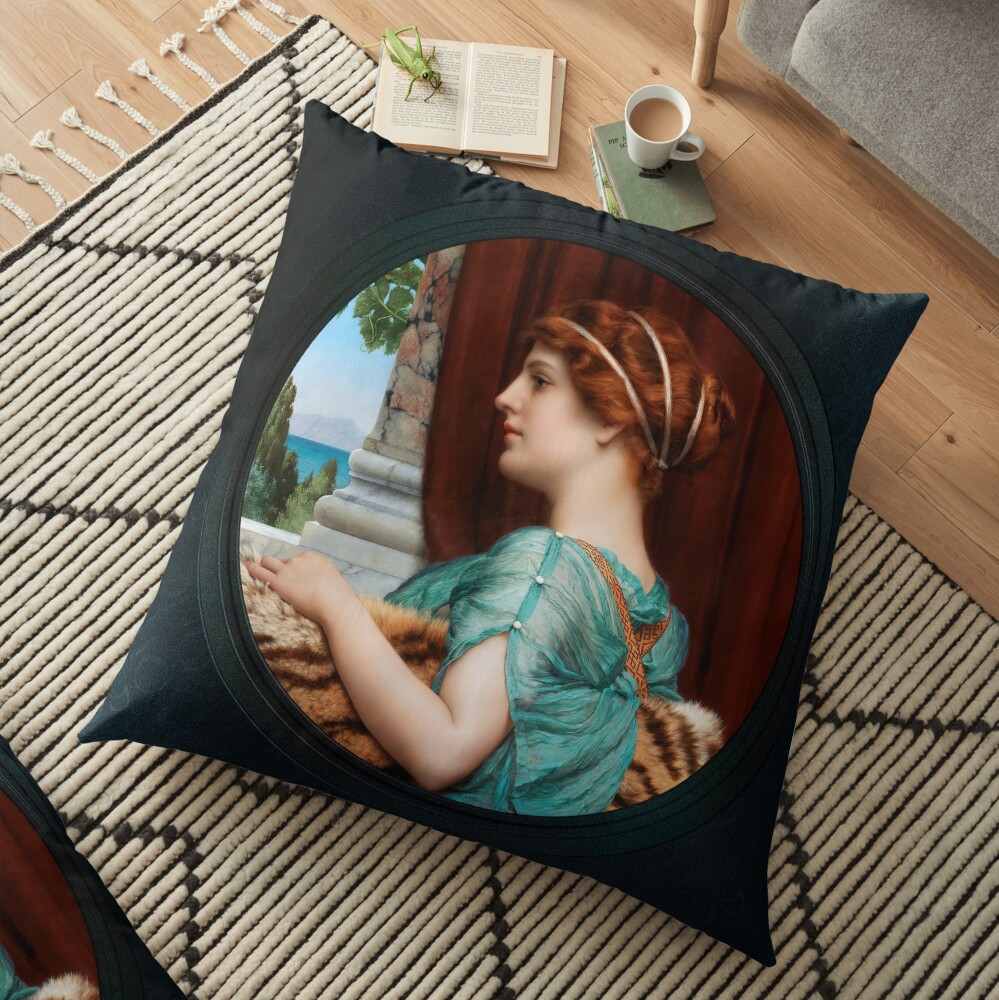
L'opera intitolata “A Pompeian Lady c1904” by the British painter John William Godward (1861 – 1922) is a captivating example of the neoclassical style that was prevalent during the late 19th and early 20th centuries. Godward was renowned for his portraits of women in classical attire, often placed within luxurious, ancient Roman or Greek settings. Questo pezzo particolare, dipinto in giro 1904, encapsulates his meticulous attention to detail and his skill in capturing the elegance of the human form. It exemplifies the artist’s dedication to classical antiquity, with his subjects often portrayed in serene and introspective moods.
Sommario
The Subject of the Artwork
Nel “A Pompeian Lady c1904,” the main subject is a young woman dressed in an opulent, abito fluente. Her attire is distinctly ancient Roman or Pompeian in style, reminiscent of the classical draped garments seen in the frescoes and sculptures from Pompeii. The woman’s posture is elegant and contemplative, as she gazes into the distance with a slight turn of her head. This pose exudes a sense of grace, while her expression remains calm and serene. The soft waves of her auburn hair are intricately styled, adorned with delicate headbands that emphasize the classical aesthetic of the time.
Her gaze is directed towards the natural beauty that lies outside the frame of the painting, suggesting a moment of quiet reflection. The painting’s composition draws attention to the delicate interplay between the figure’s posture and the surrounding environment. The softness of her features is contrasted against the sharp and detailed depiction of the materials in her attire, the textures of the background, and the natural elements in the landscape.
L'ambientazione e il paesaggio
The setting of the painting features an outdoor terrace with a view of a lush, serene landscape. The woman is placed against a grand column made of marble, which serves to frame her figure while simultaneously grounding her within the classical world of ancient Rome. The background reveals an idyllic view of a coastal scene, where the sea meets the horizon under a clear, soft blue sky. Verdant trees and a tranquil landscape suggest a peaceful, secluded place, contributing to the overall sense of calm and elegance that pervades the work.
The architectural elements of the setting further emphasize the classical influence, with Roman-style columns and arches that evoke the grandeur of ancient structures. These elements are skillfully rendered, with Godward’s attention to detail in the textures of the stone, il gioco di luce e ombra, and the intricate detailing on the column itself. The warm tones of the stone, combined with the cool colors of the sky and the distant sea, create a harmonious atmosphere that enhances the timeless beauty of the figure.
The Mood and Themes of the Painting
L'umore di “A Pompeian Lady c1904” is one of tranquil elegance and quiet introspection. The woman’s serene expression, coupled with her elegant posture, conveys a sense of peace and grace. There is no urgency or tension in her demeanor; Piuttosto, the painting invites the viewer to appreciate the moment and the beauty of the scene. Il morbido, natural light illuminating her face and gown enhances this peaceful mood, with subtle gradients that highlight her delicate features.
The themes of classical beauty, tranquillità, and the idealized femininity of ancient Rome are central to the painting. Godward often portrayed women as the epitome of grace and purity, E questo dipinto non fa eccezione. The subject is not just a woman in classical attire; she represents an ideal of feminine beauty that transcends time and place. Her thoughtful expression and poised stance suggest a woman who is at peace with herself and her surroundings, embodying the refined elegance of a bygone era.
The landscape also plays a vital role in setting the tone of the painting. The natural elements—lush greenery, clear skies, and calm seas—serve as a backdrop that complements the subject’s calm demeanor. The connection between the figure and the natural world creates a sense of harmony and balance, reinforcing the classical theme of unity between humanity and nature.
Materiali e Tecniche
John William Godward’s use of oil paints is evident in the depth and richness of the colors throughout the painting. His technique is highly detailed, with a particular emphasis on texture and realism. The woman’s gown is rendered in exquisite detail, with each fold and drape carefully painted to capture the movement of the fabric. The translucency of the fabric adds a sense of lightness to the figure, contrasting with the solidity of the stone column and the softness of the natural landscape.
Godward’s brushwork is smooth and controlled, allowing him to create delicate textures such as the soft sheen of the woman’s hair, the smoothness of her skin, and the intricate patterns on her gown. The realism with which he captures light and shadow is particularly striking, as it adds dimension and depth to the figure and the surrounding environment. The artist’s skillful use of light also enhances the sense of realism, with highlights on the woman’s face and gown giving the impression of sunlight filtering through the space.
Conclusione
A Pompeian Lady c1904 by John William Godward is a quintessential example of the neoclassical style, showcasing the artist’s mastery in portraying idealized femininity, Abbigliamento classico, and serene landscapes. The painting exudes a sense of tranquility and grace, capturing a moment of timeless beauty in the ancient world.
The careful rendering of the figure, il suo abbigliamento, and the surrounding environment reveals Godward’s technical skill and his deep appreciation for the classical world. This artwork not only reflects the artist’s personal style but also his reverence for the classical ideals that inspired much of his work. Attraverso questo dipinto, Godward immortalizes the elegance and beauty of the ancient world, inviting viewers to step into a space where time stands still.
A Pompeian Lady is a remastered digital art old masters reproduction of a public domain image that is available as a tela, Di legno, stampa su acrilico e metallo online.
Questa creazione di arte digitale, come tutte le opere d'arte che si possono trovare sul sito Web di Xzendor7 è disponibile per l'acquisto online in una varietà di formati di materiali, comprese le stampe su tela, stampe acriliche, stampe in metallo, stampe su legno, stampe incorniciate, manifesti, e come stampe su tela arrotolata in una varietà di formati da 12 pollici a 72 pollici a seconda delle dimensioni dell'opera d'arte effettiva e del negozio di stampa su richiesta da cui scegli di acquistare l'arte.
L'opera d'arte è disponibile anche su un'ampia gamma di abbigliamento da uomo e da donna, tazze, borse, sciarpe, quaderni e diari e tanti prodotti per l'arredamento della casa.
Biografia dell'artista
Informazioni sotto da Wikipedia.org
John William Godward era il maggiore di cinque figli, e prende il nome da suo padre John e dal nonno William.
Ha esposto alla Royal Academy da 1887. Quando si è trasferito in Italia con uno dei suoi modelli 1912, la sua famiglia ha interrotto ogni contatto con lui e ha persino tagliato la sua immagine dalle foto di famiglia. Godward tornò in Inghilterra nel 1921, morto nel 1922, ed è sepolto nel cimitero di Brompton, Londra ovest.
Uno dei suoi dipinti più noti è Dolce far niente (1904), che è stato acquistato per la collezione di Andrew Lloyd Webber in 1995. Come nel caso di molti altri dipinti, Godward ha dipinto più di una versione; in questo caso, un precedente (e meno noto) 1897 versione con un ulteriore 1906 versione.
Si è suicidato all'età di 61 e si dice che abbia scritto nella sua nota di suicidio che “il mondo non è abbastanza grande per [Entrambi] io e un Picasso”.
La sua famiglia separata, che aveva disapprovato che diventasse un artista, si vergognarono del suo suicidio e bruciarono le sue carte. Si sa che solo una fotografia di Godward è sopravvissuta.
Godward era un neoclassico vittoriano, e quindi, in teoria, un seguace di Frederic Leighton. tuttavia, è più strettamente legato stilisticamente a Sir Lawrence Alma-Tadema, con il quale ha condiviso un debole per la resa dell'architettura classica – in particolare, elementi statici del paesaggio costruiti in marmo.
La stragrande maggioranza delle immagini esistenti di Godward mostra donne in abiti classici in posa contro le caratteristiche del paesaggio; sebbene ci siano alcune figure seminude e completamente nude incluse nella sua opera, un esempio notevole essendo “Nel Tepidarium c1913”.
Un titolo condiviso con un controverso dipinto di Alma-Tadema dello stesso soggetto che risiede nel “Galleria d'arte Lady Lever”. I titoli riflettono la fonte di ispirazione di Godward; che era la civiltà classica, in particolare quello dell'antica Roma; un soggetto che lega strettamente Godward ad Alma-Tadema artisticamente.
Dato che la borsa di studio classica era più diffusa tra il potenziale pubblico dei suoi dipinti durante la sua vita che ai giorni nostri, la meticolosa ricerca dei dettagli era importante per raggiungere una posizione di artista in questo genere.
Alma-Tadema era un archeologo oltre che un pittore, che ha frequentato siti storici e raccolto manufatti che ha poi utilizzato nei suoi dipinti: verso Dio, pure, ha studiato dettagli come l'architettura e l'abbigliamento, per garantire che le sue opere portassero il timbro di autenticità.
Inoltre, Godward ha reso scrupolosamente e meticolosamente altre caratteristiche importanti nei suoi dipinti, pelli di animali di cui le vernici “Mezzogiorno di riposo c1910” e “Un fantastico ritiro c1910” contiene esempi di tali consegne così come fiori di campo “Nerissa c1906” e “Fiori estivi c1903”.
L'apparizione di belle donne in pose studiate in così tante tele di Godward induce molti nuovi arrivati alle sue opere a classificarlo erroneamente come preraffaellita, soprattutto perché la sua tavolozza è spesso vivacemente colorata. La scelta del soggetto (civiltà antica contro, Per esempio, Leggenda arturiana) è più propriamente quella del neoclassicista vittoriano.
In comune con numerosi pittori a lui contemporanei, Godward era un "alto sognatore vittoriano", producendo immagini di un mondo idealizzato e romanzato che, nel caso sia di Godward che di Alma-Tadema, finì per essere criticato come una visione del mondo dei vittoriani in toga.
verso Dio “rapidamente stabilito una reputazione per i suoi dipinti di giovani donne in un ambiente classico e la sua capacità di trasmettere con sensibilità e maestria tecnica la sensazione di trame contrastanti di carne, marmo, pellicce e tessuti.
La propensione di Godward per la creazione di opere d'arte ambientate nel periodo classico probabilmente proveniva dal periodo in cui era nato; poiché è stato l'ultimo revival classico su vasta scala nei dipinti occidentali, che fiorì in Inghilterra dal 1860 fino al 1890.