

A Pompeian Lady c1904
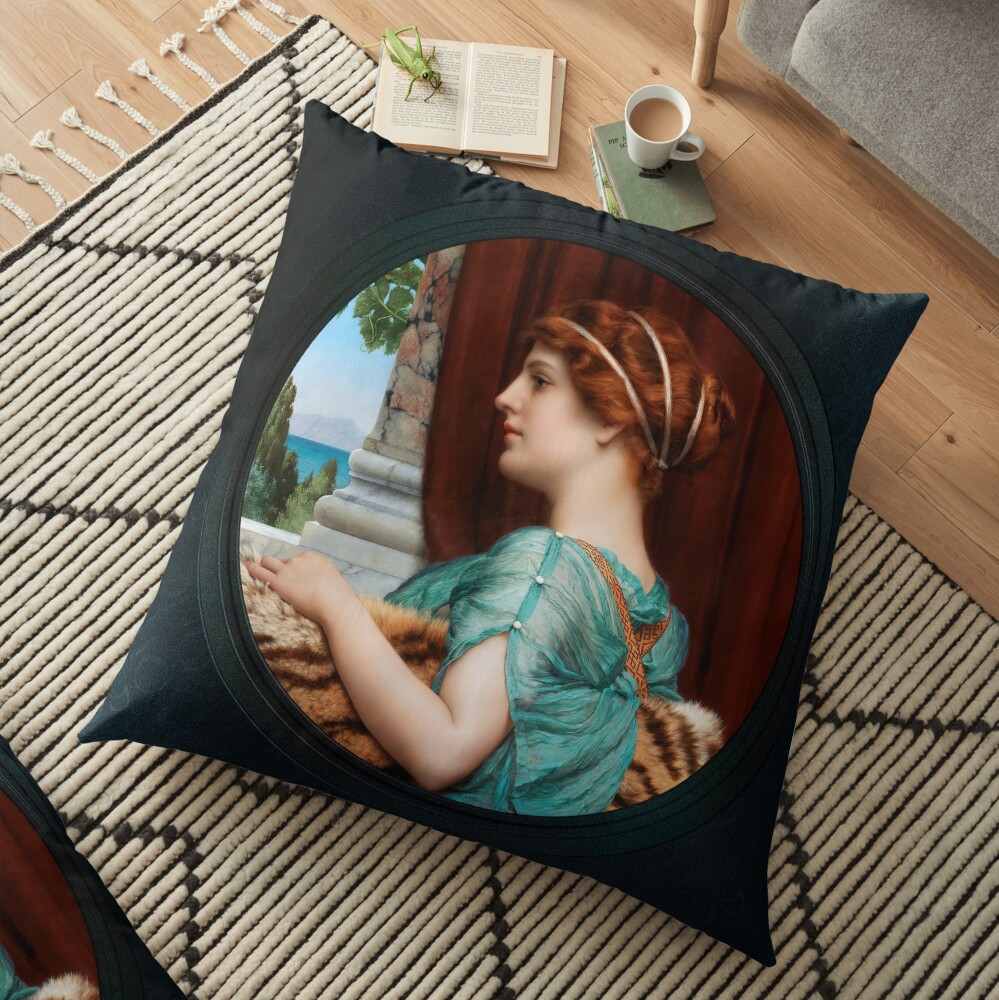
タイトルのアートワーク “A Pompeian Lady c1904” by the British painter ジョンウィリアムゴッドワード (1861 – 1922) is a captivating example of the neoclassical style that was prevalent during the late 19th and early 20th centuries. Godward was renowned for his portraits of women in classical attire, often placed within luxurious, ancient Roman or Greek settings. この特定の作品, 周りに描かれています 1904, encapsulates his meticulous attention to detail and his skill in capturing the elegance of the human form. It exemplifies the artist’s dedication to classical antiquity, with his subjects often portrayed in serene and introspective moods.
目次
The Subject of the Artwork
に “A Pompeian Lady c1904,” the main subject is a young woman dressed in an opulent, 流れるガウン. Her attire is distinctly ancient Roman or Pompeian in style, reminiscent of the classical draped garments seen in the frescoes and sculptures from Pompeii. The woman’s posture is elegant and contemplative, as she gazes into the distance with a slight turn of her head. This pose exudes a sense of grace, while her expression remains calm and serene. The soft waves of her auburn hair are intricately styled, adorned with delicate headbands that emphasize the classical aesthetic of the time.
Her gaze is directed towards the natural beauty that lies outside the frame of the painting, suggesting a moment of quiet reflection. The painting’s composition draws attention to the delicate interplay between the figure’s posture and the surrounding environment. The softness of her features is contrasted against the sharp and detailed depiction of the materials in her attire, the textures of the background, and the natural elements in the landscape.
The Setting and Landscape
The setting of the painting features an outdoor terrace with a view of a lush, serene landscape. The woman is placed against a grand column made of marble, which serves to frame her figure while simultaneously grounding her within the classical world of ancient Rome. The background reveals an idyllic view of a coastal scene, where the sea meets the horizon under a clear, soft blue sky. Verdant trees and a tranquil landscape suggest a peaceful, secluded place, contributing to the overall sense of calm and elegance that pervades the work.
The architectural elements of the setting further emphasize the classical influence, with Roman-style columns and arches that evoke the grandeur of ancient structures. These elements are skillfully rendered, with Godward’s attention to detail in the textures of the stone, 光と影の遊び, and the intricate detailing on the column itself. The warm tones of the stone, combined with the cool colors of the sky and the distant sea, create a harmonious atmosphere that enhances the timeless beauty of the figure.
The Mood and Themes of the Painting
の気分 “A Pompeian Lady c1904” is one of tranquil elegance and quiet introspection. The woman’s serene expression, coupled with her elegant posture, conveys a sense of peace and grace. There is no urgency or tension in her demeanor; それよりも, the painting invites the viewer to appreciate the moment and the beauty of the scene. ソフト, natural light illuminating her face and gown enhances this peaceful mood, with subtle gradients that highlight her delicate features.
The themes of classical beauty, 静けさ, and the idealized femininity of ancient Rome are central to the painting. Godward often portrayed women as the epitome of grace and purity, そして、この絵は例外ではありません. The subject is not just a woman in classical attire; she represents an ideal of feminine beauty that transcends time and place. Her thoughtful expression and poised stance suggest a woman who is at peace with herself and her surroundings, embodying the refined elegance of a bygone era.
The landscape also plays a vital role in setting the tone of the painting. The natural elements—lush greenery, clear skies, and calm seas—serve as a backdrop that complements the subject’s calm demeanor. The connection between the figure and the natural world creates a sense of harmony and balance, reinforcing the classical theme of unity between humanity and nature.
材料とテクニック
John William Godward’s use of oil paints is evident in the depth and richness of the colors throughout the painting. His technique is highly detailed, with a particular emphasis on texture and realism. The woman’s gown is rendered in exquisite detail, with each fold and drape carefully painted to capture the movement of the fabric. The translucency of the fabric adds a sense of lightness to the figure, contrasting with the solidity of the stone column and the softness of the natural landscape.
Godward’s brushwork is smooth and controlled, allowing him to create delicate textures such as the soft sheen of the woman’s hair, 彼女の肌の滑らかさ, and the intricate patterns on her gown. The realism with which he captures light and shadow is particularly striking, as it adds dimension and depth to the figure and the surrounding environment. The artist’s skillful use of light also enhances the sense of realism, with highlights on the woman’s face and gown giving the impression of sunlight filtering through the space.
結論
A Pompeian Lady c1904 by John William Godward is a quintessential example of the neoclassical style, showcasing the artist’s mastery in portraying idealized femininity, classical attire, and serene landscapes. The painting exudes a sense of tranquility and grace, capturing a moment of timeless beauty in the ancient world.
The careful rendering of the figure, her attire, and the surrounding environment reveals Godward’s technical skill and his deep appreciation for the classical world. This artwork not only reflects the artist’s personal style but also his reverence for the classical ideals that inspired much of his work. この絵を通して, Godward immortalizes the elegance and beauty of the ancient world, inviting viewers to step into a space where time stands still.
A Pompeian Lady is a remastered digital art old masters reproduction of a public domain image that is available as a キャンバス, 木材, アクリルとメタルのオンラインプリント.
このデジタルアート作品は、, Xzendor7 Web サイトにあるすべてのアートワークと同様に、キャンバス プリントを含むさまざまな素材形式でオンラインで購入できます。, アクリルプリント, メタルプリント, 木版, 額入りプリント, ポスター, ロール状のキャンバス プリントとしてさまざまなサイズでご利用いただけます。 12 インチから 72 インチは、実際のアートワークのサイズと、アートを購入するために選択したオンデマンド プリント ショップによって異なります。.
このアートワークは、幅広いメンズおよびウィメンズのアパレルでも利用可能です, マグカップ, トートバッグ, スカーフ, ノートや日記帳、その他多くの室内装飾品.
アーティスト略歴
以下の情報から Wikipedia.org
ジョン・ウィリアム・ゴッドワードは5人兄弟の長男でした, 父のジョンと祖父のウィリアムにちなんで名付けられました.
彼はからロイヤルアカデミーに出展しました 1887. 彼がモデルの1人と一緒にイタリアに引っ越したとき 1912, 彼の家族は彼とのすべての接触を断ち切り、家族の写真から彼のイメージを切り取りました. ゴッドワードはイギリスに戻った 1921, で死亡しました 1922, そしてブロンプトン墓地に埋葬されている, 西ロンドン.
彼の最も有名な絵画の1つはドルチェファーニエンテです (1904), アンドルーロイドウェバーのコレクションのために購入されました 1995. 他のいくつかの絵画の場合のように, ゴッドワードは複数のバージョンを描いた; この場合, 以前 (あまり知られていない) 1897 さらにバージョン 1906 バージョン.
彼は何歳で自殺した 61 そして彼の遺書に次のように書いたと言われています “世界は十分な大きさではありません [両方] 私とピカソ”.
彼の疎遠な家族, 彼がアーティストになることを認めなかった人, 彼の自殺を恥じて、彼の書類を燃やした. ゴッドワードの写真は1枚だけ生き残ることが知られています.
ゴッドワードはビクトリア朝の新古典主義者でした, したがって, 理論的には, フレデリック・レイトンの信者. しかしながら, 彼は、ローレンス・アルマ・タデマ卿とスタイル的に密接に関連しています。, 彼は古典主義建築のレンダリングの傾向を共有しました–特に, 大理石で作られた静的な景観の特徴.
ゴッドワードの現存する画像の大部分には、風景を背景にポーズをとる古典的なドレスを着た女性が描かれています。; 彼の作品にはセミヌードやフルヌードの人物も含まれていますが、, 注目すべき例は “テピダリウムにて c1913”.
物議を醸している同じ主題を描いたアルマ・タデマの絵画と共通のタイトル。 “レディ レバー アート ギャラリー”. タイトルはゴッドワードのインスピレーションの源を反映しています; それは古典文明でした, 最も注目すべきは古代ローマのもの; ゴッドワードとアルマ・タデマを芸術的に密接に結びつけている主題.
彼の生涯においては、現代よりも古典的な学問が彼の絵画の潜在的な聴衆の間でより広く普及していたことを考えると、, このジャンルでアーティストとしての地位を確立するには、細部までの入念なリサーチが重要でした.
アルマ・タデマは考古学者であると同時に画家でもあった, 史跡を訪れ、後に絵画に使用した工芸品を収集した人: ゴッドワード, それも, 建築や服装などの細部を研究しました, 彼の作品が本物であることを保証するために.
加えて, ゴッドワードは、絵画の他の重要な特徴を丹念に、細心の注意を払って描写しました。, 絵に描かれている動物の皮 “正午の休息 c1910” そして “クールな隠れ家 c1910” 野生の花だけでなく、そのような演出の例も含まれています “Nerissa c1906” そして “夏の花 c1903”.
ゴッドワードのキャンバスの多くに研究されたポーズをとった美しい女性が登場するため、彼の作品に初めて触れる多くの人がゴッドワードをラファエル前派と誤って分類する原因となっています。, 特に彼のパレットは鮮やかなカラフルなものが多いので、. 主題の選択 (古代文明対, 例えば, アーサー王伝説) より適切には、ビクトリア朝の新古典主義者です。.
彼と同時代の多くの画家に共通すること, ゴッドワードは「ヴィクトリア朝の夢想家」だった, 理想化され、ロマンチック化された世界のイメージを生み出します。, ゴッドワードとアルマ・タデマの両方の場合, トーガにおけるヴィクトリア朝の世界観として批判されるようになった.
ゴッドワード “古典的な雰囲気の中で若い女性を描いた絵画と、対照的な肉の質感の感覚を感性と熟練した技術で伝える能力で、すぐに評判を確立しました。, 大理石, 毛皮と布地.
ゴッドワードが古典時代を舞台にした芸術作品を制作する傾向は、おそらく彼が生まれた時代に由来していると考えられます。; それは西洋絵画における最後の本格的な古典的復活だったからです。, 1860 年代から 1890 年代までイギリスで栄えた.