

A Pompeian Lady c1904
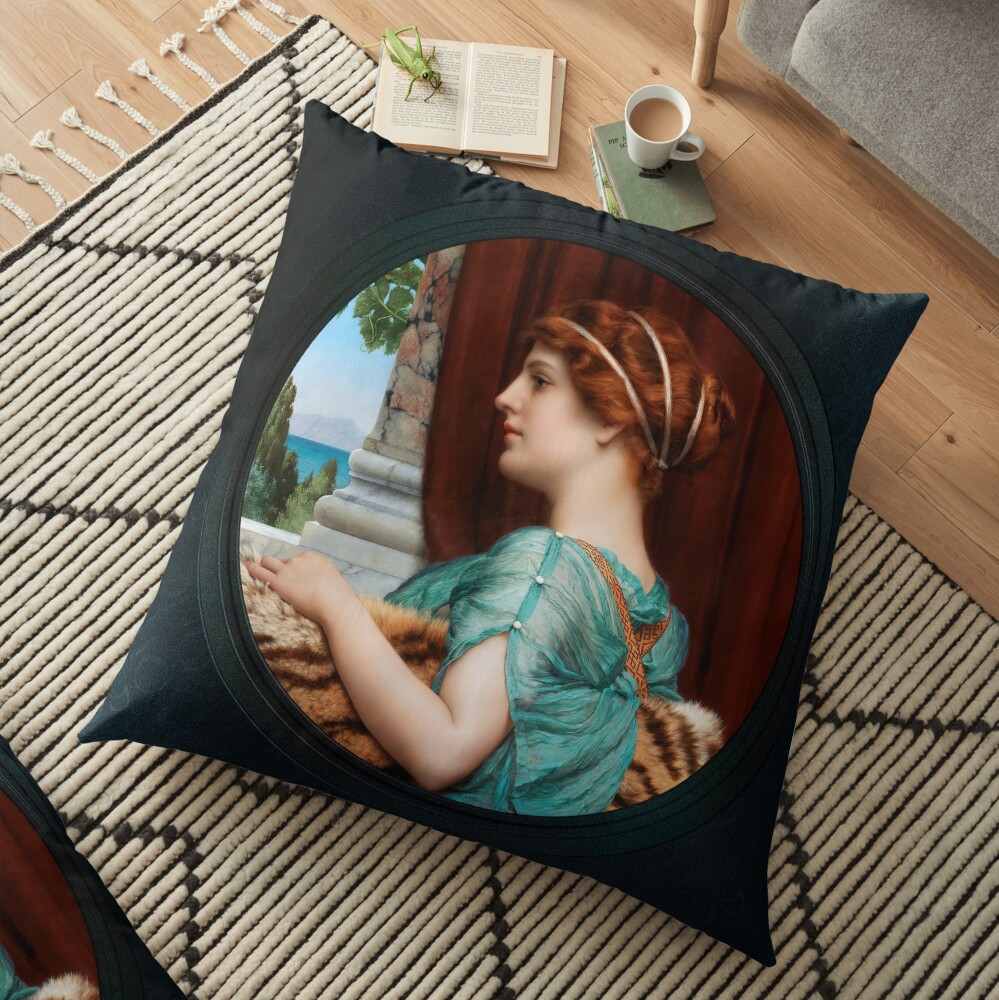
Konstverk med titeln “A Pompeian Lady c1904” by the British painter John William Godward (1861 – 1922) is a captivating example of the neoclassical style that was prevalent during the late 19th and early 20th centuries. Godward was renowned for his portraits of women in classical attire, often placed within luxurious, ancient Roman or Greek settings. Denna speciella bit, målade runt 1904, encapsulates his meticulous attention to detail and his skill in capturing the elegance of the human form. It exemplifies the artist’s dedication to classical antiquity, with his subjects often portrayed in serene and introspective moods.
Innehållsförteckning
Ämnet för konstverket
I “A Pompeian Lady c1904,” the main subject is a young woman dressed in an opulent, flödande klänning. Her attire is distinctly ancient Roman or Pompeian in style, reminiscent of the classical draped garments seen in the frescoes and sculptures from Pompeii. The woman’s posture is elegant and contemplative, as she gazes into the distance with a slight turn of her head. This pose exudes a sense of grace, while her expression remains calm and serene. The soft waves of her auburn hair are intricately styled, adorned with delicate headbands that emphasize the classical aesthetic of the time.
Her gaze is directed towards the natural beauty that lies outside the frame of the painting, suggesting a moment of quiet reflection. The painting’s composition draws attention to the delicate interplay between the figure’s posture and the surrounding environment. The softness of her features is contrasted against the sharp and detailed depiction of the materials in her attire, the textures of the background, and the natural elements in the landscape.
The Setting and Landscape
The setting of the painting features an outdoor terrace with a view of a lush, serene landscape. The woman is placed against a grand column made of marble, which serves to frame her figure while simultaneously grounding her within the classical world of ancient Rome. The background reveals an idyllic view of a coastal scene, where the sea meets the horizon under a clear, soft blue sky. Verdant trees and a tranquil landscape suggest a peaceful, secluded place, contributing to the overall sense of calm and elegance that pervades the work.
The architectural elements of the setting further emphasize the classical influence, with Roman-style columns and arches that evoke the grandeur of ancient structures. These elements are skillfully rendered, with Godward’s attention to detail in the textures of the stone, spelet mellan ljus och skugga, and the intricate detailing on the column itself. The warm tones of the stone, combined with the cool colors of the sky and the distant sea, create a harmonious atmosphere that enhances the timeless beauty of the figure.
The Mood and Themes of the Painting
Stämningen av “A Pompeian Lady c1904” is one of tranquil elegance and quiet introspection. The woman’s serene expression, coupled with her elegant posture, conveys a sense of peace and grace. There is no urgency or tension in her demeanor; snarare, the painting invites the viewer to appreciate the moment and the beauty of the scene. Den mjuka, natural light illuminating her face and gown enhances this peaceful mood, with subtle gradients that highlight her delicate features.
The themes of classical beauty, lugn, and the idealized femininity of ancient Rome are central to the painting. Godward often portrayed women as the epitome of grace and purity, och denna målning är inget undantag. The subject is not just a woman in classical attire; she represents an ideal of feminine beauty that transcends time and place. Her thoughtful expression and poised stance suggest a woman who is at peace with herself and her surroundings, embodying the refined elegance of a bygone era.
The landscape also plays a vital role in setting the tone of the painting. The natural elements—lush greenery, clear skies, and calm seas—serve as a backdrop that complements the subject’s calm demeanor. The connection between the figure and the natural world creates a sense of harmony and balance, reinforcing the classical theme of unity between humanity and nature.
Material och tekniker
John William Godward’s use of oil paints is evident in the depth and richness of the colors throughout the painting. His technique is highly detailed, with a particular emphasis on texture and realism. The woman’s gown is rendered in exquisite detail, with each fold and drape carefully painted to capture the movement of the fabric. The translucency of the fabric adds a sense of lightness to the figure, contrasting with the solidity of the stone column and the softness of the natural landscape.
Godward’s brushwork is smooth and controlled, allowing him to create delicate textures such as the soft sheen of the woman’s hair, mjukheten i hennes hud, and the intricate patterns on her gown. The realism with which he captures light and shadow is particularly striking, as it adds dimension and depth to the figure and the surrounding environment. The artist’s skillful use of light also enhances the sense of realism, with highlights on the woman’s face and gown giving the impression of sunlight filtering through the space.
Slutsats
A Pompeian Lady c1904 by John William Godward is a quintessential example of the neoclassical style, showcasing the artist’s mastery in portraying idealized femininity, classical attire, and serene landscapes. The painting exudes a sense of tranquility and grace, capturing a moment of timeless beauty in the ancient world.
The careful rendering of the figure, hennes klädsel, and the surrounding environment reveals Godward’s technical skill and his deep appreciation for the classical world. This artwork not only reflects the artist’s personal style but also his reverence for the classical ideals that inspired much of his work. Genom denna målning, Godward immortalizes the elegance and beauty of the ancient world, inviting viewers to step into a space where time stands still.
A Pompeian Lady is a remastered digital art old masters reproduction of a public domain image that is available as a duk, trä, acrylic and metal print online.
Detta digitala konstskapande, som med alla konstverk som kan hittas på Xzendor7-webbplatsen finns att köpa online i en mängd olika materialformat inklusive canvastavlor, akryltryck, metalltryck, trätryck, inramade tryck, affischer, och som rullade canvastryck i en mängd olika storlekar från 12 tum till 72 tum beroende på storleken på det faktiska konstverket och den print on demand-butik du väljer att köpa konsten från.
Konstverket är också tillgängligt på ett brett utbud av herr- och damkläder, muggar, väskor, halsdukar, anteckningsböcker och tidskrifter och många heminredningsprodukter.
Konstnärsbio
Info nedan från Wikipedia.org
John William Godward var den äldsta av fem barn, och namngavs efter hans far John och farfar William.
Han ställde ut på Royal Academy från 1887. När han flyttade till Italien med en av sina modeller i 1912, hans familj avbröt all kontakt med honom och klippte till och med hans bild från familjebilder. Godward återvände till England i 1921, dog i 1922, och är begravd på Brompton Cemetery, Västra London.
En av hans mest kända målningar är Dolce far Niente (1904), som köptes för samlingen av Andrew Lloyd Webber i 1995. Som i fallet med flera andra målningar, Godward målade mer än en version; I detta fall, en tidigare (och mindre kända) 1897 version med ytterligare en 1906 version.
Han begick självmord vid en ålder av 61 och sägs ha skrivit i sitt självmordsbrev det “världen är inte tillräckligt stor för [både] mig själv och en Picasso”.
Hans främmande familj, som hade ogillat att han skulle bli konstnär, skämdes över sitt självmord och brände hans papper. Endast ett fotografi av Godward är känt för att överleva.
Godward var en viktoriansk nyklassicist, och därför, i teorin, en anhängare av Frederic Leighton. i alla fall, han är närmare allierad stilistiskt med Sir Lawrence Alma-Tadema, med vilken han delade en förkärlek för återgivning av klassisk arkitektur - i synnerhet, statiska landskapsdrag konstruerade av marmor.
De allra flesta av Godwards nuvarande bilder visar kvinnor i klassisk klädsel som ställs mot landskapsdrag; även om det finns några halvnakna och helt nakna figurer som ingår i hans verk, ett anmärkningsvärt exempel “I The Tepidarium c1913”.
En titel som delas med en kontroversiell Alma-Tadema-målning av samma ämne som finns i “Lady Lever Art Gallery”. Titlarna speglar Godwards inspirationskälla; som var klassisk civilisation, framför allt det antika Rom; ett ämne som knyter Godward nära till Alma-Tadema konstnärligt.
Med tanke på att det klassiska stipendiet var mer utbrett bland den potentiella publiken för hans målningar under hans livstid än i dag, noggrann detaljforskning var viktig för att nå en ställning som artist i denna genre.
Alma-Tadema var såväl arkeolog som målare, som besökte historiska platser och samlade artefakter som han senare använde i sina målningar: Godward, för, studerade detaljer som arkitektur och klädsel, för att säkerställa att hans verk bär äkthetsstämpeln.
Dessutom, Godward återgav mödosamt och minutiöst andra viktiga drag i sina målningar, djurskinn varav målningarna “Middagsvila c1910” och “En cool reträtt c1910” innehåller exempel på sådan återgivning såväl som vildblommor “Nerissa c1906” och “Sommarblommor c1903”.
Framträdandet av vackra kvinnor i studerade poser i så många av Godwards dukar får många nykomlingar till hans verk att felaktigt kategorisera honom som prerafaelit, särskilt eftersom hans palett ofta är en levande färgstark. Val av ämne (forntida civilisation kontra, till exempel, Arthurisk legend) är mer korrekt den för den viktorianska nyklassicisten.
Gemensamt med många målare samtida med honom, Godward var en "hög viktoriansk drömmare", producera bilder av en idealiserad och romantiserad värld som, i fallet med både Godward och Alma-Tadema, kom att kritiseras som en världsbild av viktorianer i togas.
Godward “etablerade snabbt ett rykte för sina målningar av unga kvinnor i en klassisk miljö och hans förmåga att med känslighet och teknisk behärskning förmedla känslan av kontrasterande strukturer av kött, marmor, päls och tyger.
Godwards förkärlek för att skapa konstverk som utspelar sig i den klassiska perioden kom förmodligen från den tidsperiod då han föddes; eftersom det var den sista fullskaliga klassiska väckelsen i västerländska målningar, som blomstrade i England från 1860-talet fram till 1890-talet.