

A Quartet In Concert by Jean Raoux
A Moment of Refined Leisure: Examining Jean Raoux’s “A Quartet In Concert”
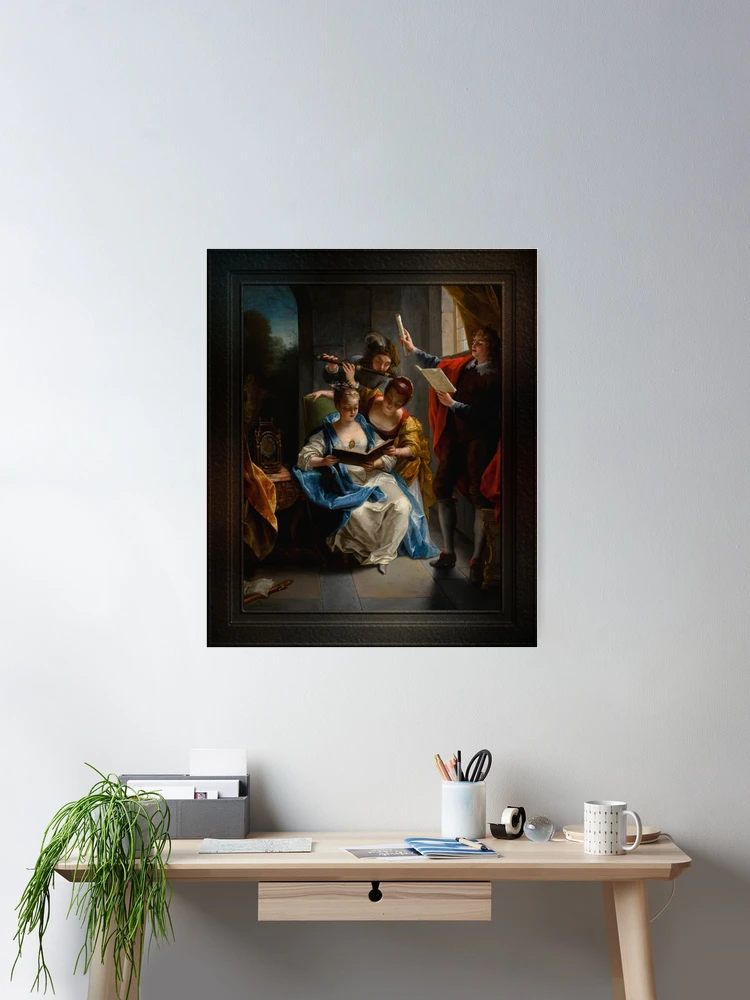
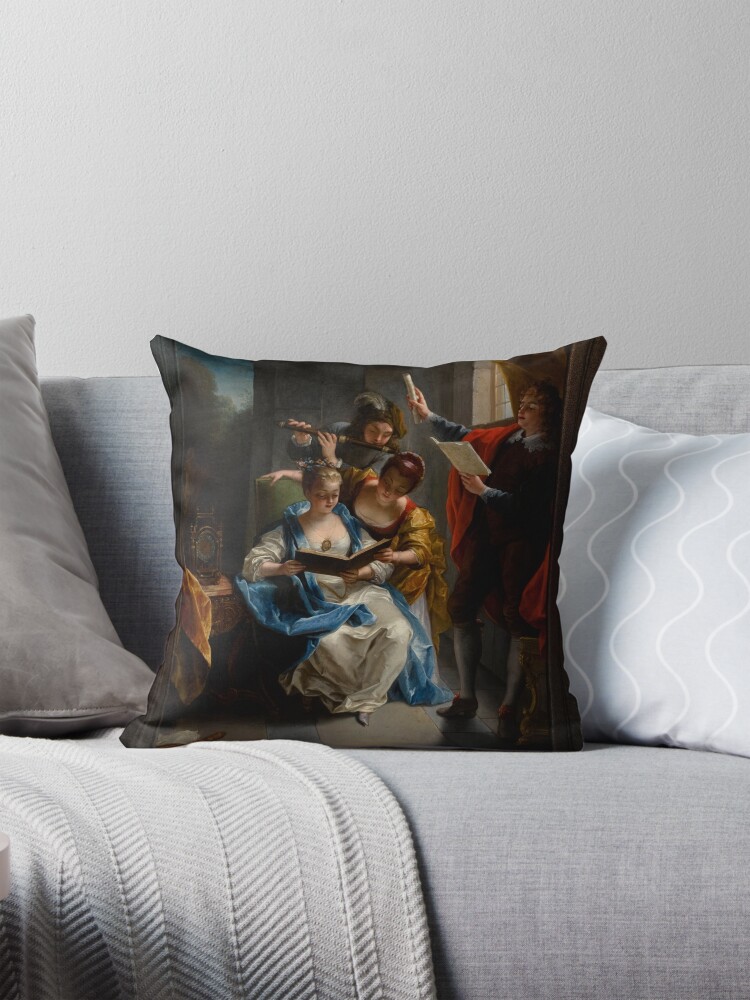
Jean Raoux‘s “A Quartet in Concert,” painted during the early 18th century, offers a glimpse into the refined leisure activities enjoyed by the French aristocracy. The artwork depicts a quartet – two women and two men – engaged in an intimate musical performance within a stately interior setting. Raoux’s skillful rendering of fabrics, ymadroddion, and architectural details creates a scene of elegant charm and understated sophistication.
Tabl Cynnwys
Cyfansoddiadol & Spatial Arrangement
The composition is carefully structured to emphasize the intimacy of the gathering. The two women are centrally positioned, seated on an ornate chair and engrossed in reading sheet music while being serenaded by the musicians flanking them. The men, one playing a flute and the other singing, stand attentively beside the women, their postures conveying respect and attentiveness. A window behind the scene provides soft natural light that illuminates the figures and highlights the rich textures of their clothing. The placement of objects within the room—a clock, a table with scattered papers, and draped fabrics—adds depth and visual interest to the composition.
Palet Lliw & Lighting Effects
Y palet lliw i mewn “A Quartet In Concert” is dominated by warm, muted tones – golds, hufenau, and soft blues – which evoke a sense of elegance and refinement. The women’s gowns are rendered in luxurious fabrics with intricate details, highlighted by the interplay of light and shadow. Raoux masterfully uses chiaroscuro—the contrast between light and dark—to create depth and volume within the scene. Soft natural light filters through the window, casting gentle shadows that accentuate the figures’ features and enhance the overall sense of tranquility.
The Musical Performance: Symbolaeth & Cyd-destun
The musical performance itself is central to understanding the artwork’s significance. Music was a highly valued form of entertainment and social interaction among the French aristocracy during the 18th century. It represented refinement, education, a soffistigeiddrwydd diwylliannol. The quartet’s intimate setting suggests a private gathering amongst close friends or family members, fostering an atmosphere of relaxed elegance. The sheet music held by the singers indicates that they are performing a composed piece, further emphasizing the formality and artistry of the occasion.
Character Portraits: Expressions & Gwisg
Each character in “A Quartet In Concert” is rendered with distinct personality and grace. Elodie de Valois, seated reading, possesses an air of quiet contemplation and refined intelligence. Her blue gown, adorned with delicate lace details, reflects her social standing and impeccable taste. The other woman displays a similar sense of elegance, while the musicians are portrayed as attentive and skilled performers. Their attire—the man playing the flute in a silver-grey wig and the singer in a red coat—is characteristic of the fashion trends of the period.
Dylanwadau Artistig & Etifeddiaeth
Jean Raoux was a prominent French painter known for his genre scenes depicting aristocratic life, pastoral landscapes, and mythological subjects. His work reflects the influence of classical art and the Rococo style, characterized by its elegance, harddaf, and attention to detail. “A Quartet In Concert” yn enghreifftio'r rhinweddau hyn; it’s a testament to Raoux’s skill as an observer of human behavior and his ability to capture the essence of 18th-century French society. His legacy lies in his contribution to the development of genre painting and his portrayal of aristocratic life with both realism and charm.
Manylion Technegol & Defnyddiau
Gwneir y gwaith celf gyda phaent olew ar gynfas, gan ganiatáu ar gyfer dirlawnder lliw cyfoethog a graddiadau tôn cynnil. Raoux’s technique involves meticulous attention to detail, particularly evident in the rendering of fabrics, gemwaith, and architectural elements. Close examination reveals a mastery of brushwork; it’s smooth and controlled, contributing to the overall sense of elegance and refinement. Mae'n ymddangos bod y cynfas ei hun wedi'i baratoi'n dda, providing a suitable surface for the artist’s skillful application of paint.
Bio artist yn deillio o Wikipedia.org
After the usual course of training Jean Raoux became a member of the Academy in 1717 as an historical painter.
His reputation had been previously established by the acclaimed decorations executed during his three years in Italy on the palace of Giustiniani Solini in Venice, and by some easel paintings, Pedair Oes Dyn (Oriel Genedlaethol), a gomisiynwyd gan grand grand Vendôme.
I'r dosbarth olaf hwn o bwnc ymroddodd Raoux ei hun, gwrthod paentio portreadau ac eithrio mewn cymeriad.
Mae'r rhestr o'i weithiau'n gyfres hir o setiau o'r Tymhorau, o'r Oriau, o'r Elfennau, neu o'r golygfeydd hynny o ddifyrrwch a dewrder yn ei gynrychiolaeth y rhagorwyd yn fawr arno gan ei wrthwynebydd iau Watteau.
Wedi ei arhosiad yn Lloegr (1720) roedd yn byw llawer yn y Deml, lle addurnodd sawl ystafell. Bu farw ym Mharis yn 1734. His best pupils were Chevalier and Montdidier. His works were much engraved by Poilly, Moyreau, Dupuis,ac eraill.
Y greadigaeth gelfyddyd ddigidol hon, fel gyda'r holl waith celf sydd i'w gael ar wefan Xzendor7 ar gael i'w brynu ar-lein mewn amrywiaeth o fformatau deunydd gan gynnwys printiau cynfas, printiau acrylig, printiau metel, printiau pren, printiau wedi'u fframio, posteri, ac fel printiau cynfas wedi'u rholio mewn amrywiaeth o feintiau o 12 modfedd i 72 modfeddi yn dibynnu ar faint y gwaith celf gwirioneddol a'r siop argraffu ar alw y byddwch yn dewis prynu'r celf ohoni.
Mae’r gwaith celf hefyd ar gael ar ystod eang o ddillad dynion a merched, mygiau, totes, sgarffiau, llyfrau nodiadau a chyfnodolion a llawer o gynhyrchion addurno cartref.