

A Quartet In Concert by Jean Raoux
A Moment of Refined Leisure: Examining Jean Raoux’s “A Quartet In Concert”
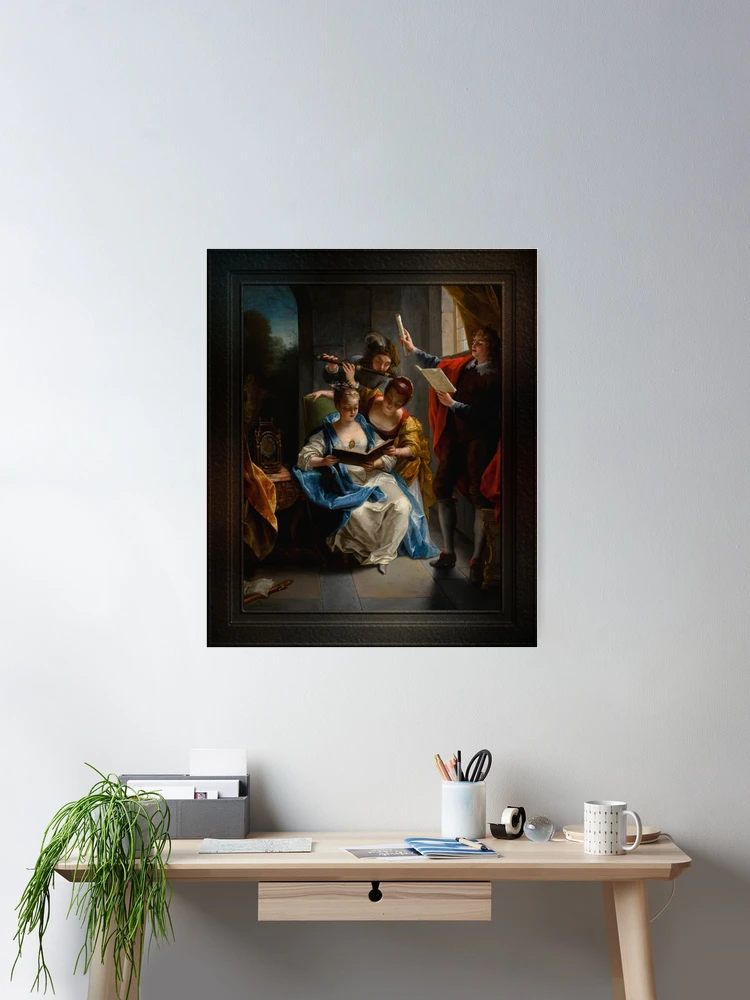
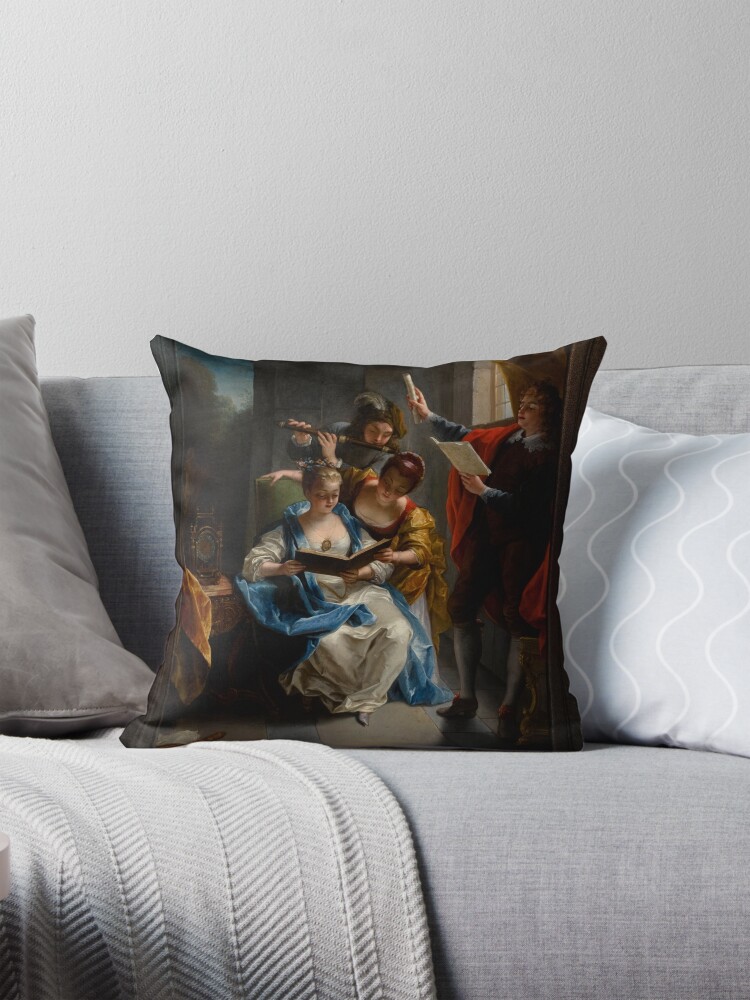
Jean Raoux'S “A Quartet in Concert,” painted during the early 18th century, offers a glimpse into the refined leisure activities enjoyed by the French aristocracy. The artwork depicts a quartet – two women and two men – engaged in an intimate musical performance within a stately interior setting. Raoux’s skillful rendering of fabrics, expressions, and architectural details creates a scene of elegant charm and understated sophistication.
Clàr-innse
Structar co-dhùnaidh & Spatial Arrangement
The composition is carefully structured to emphasize the intimacy of the gathering. The two women are centrally positioned, seated on an ornate chair and engrossed in reading sheet music while being serenaded by the musicians flanking them. The men, one playing a flute and the other singing, stand attentively beside the women, their postures conveying respect and attentiveness. A window behind the scene provides soft natural light that illuminates the figures and highlights the rich textures of their clothing. The placement of objects within the room—a clock, a table with scattered papers, and draped fabrics—adds depth and visual interest to the composition.
Palet dath & Buaidhean Solais
The color palette in “A Quartet In Concert” is dominated by warm, muted tones – golds, creams, and soft blues – which evoke a sense of elegance and refinement. The women’s gowns are rendered in luxurious fabrics with intricate details, highlighted by the interplay of light and shadow. Raoux masterfully uses chiaroscuro—the contrast between light and dark—to create depth and volume within the scene. Soft natural light filters through the window, casting gentle shadows that accentuate the figures’ features and enhance the overall sense of tranquility.
The Musical Performance: Samhlachadh & Co-theacs
The musical performance itself is central to understanding the artwork’s significance. Music was a highly valued form of entertainment and social interaction among the French aristocracy during the 18th century. It represented refinement, education, and cultural sophistication. The quartet’s intimate setting suggests a private gathering amongst close friends or family members, fostering an atmosphere of relaxed elegance. The sheet music held by the singers indicates that they are performing a composed piece, further emphasizing the formality and artistry of the occasion.
Character Portraits: Expressions & Èideadh
Each character in “A Quartet In Concert” is rendered with distinct personality and grace. Elodie de Valois, seated reading, possesses an air of quiet contemplation and refined intelligence. Her blue gown, adorned with delicate lace details, reflects her social standing and impeccable taste. The other woman displays a similar sense of elegance, while the musicians are portrayed as attentive and skilled performers. Their attire—the man playing the flute in a silver-grey wig and the singer in a red coat—is characteristic of the fashion trends of the period.
Buaidh ealain & Dìleab
Jean Raoux was a prominent French painter known for his genre scenes depicting aristocratic life, pastoral landscapes, and mythological subjects. His work reflects the influence of classical art and the Rococo style, characterized by its elegance, gràs, agus aire gu mion-fhiosrachadh. “A Quartet In Concert” mar eisimpleir de na feartan sin; it’s a testament to Raoux’s skill as an observer of human behavior and his ability to capture the essence of 18th-century French society. His legacy lies in his contribution to the development of genre painting and his portrayal of aristocratic life with both realism and charm.
Technical Details & Stuthan
The artwork is executed with oil paints on canvas, allowing for rich color saturation and subtle gradations of tone. Raoux’s technique involves meticulous attention to detail, particularly evident in the rendering of fabrics, seudaireachd, and architectural elements. Close examination reveals a mastery of brushwork; it’s smooth and controlled, contributing to the overall sense of elegance and refinement. The canvas itself appears well-prepared, providing a suitable surface for the artist’s skillful application of paint.
Neach-ealain bi a thàinig bho Wikipedia.org
Às deidh an cùrsa trèanaidh àbhaisteach, thàinig Jean Raoux gu bhith na bhall den Acadamaidh ann an 1717 mar pheantair eachdraidheil.
Bha a chliù air a bhith air a stèidheachadh roimhe seo leis na sgeadachaidhean cliùiteach a chaidh a chuir gu bàs rè na trì bliadhna aige san Eadailt air lùchairt Giustiniani Solini ann am Venice, agus le cuid de dhealbhan easel, Ceithir Aoisean an Duine (Gailearaidh Nàiseanta), air a choimiseanadh leis an grand prior of Vendôme.
Don chlas mu dheireadh seo de chuspair thug Raoux e fhèin seachad, diùltadh dealbhan a pheantadh ach a-mhàin ann an caractar.
Tha an liosta de na h-obraichean aige na shreath fhada de sheata de na Ràithean, nan Uairean, de na h-Eileamaidean, no de na seallaidhean èibhinn agus gaisgeil sin anns an riochdachadh air an deach a thoirt thairis gu mòr leis a ’cho-fharpaiseach as òige aige Watteau.
Às deidh dha fuireach ann an Sasainn (1720) bha e a ’fuireach mòran san Teampall, far an do sgeadachadh e grunn sheòmraichean. Chaochail e ann am Paris ann an 1734. B ’e na sgoilearan ab’ fheàrr aige Chevalier agus Montdidier. Chaidh na h-obraichean aige a ghràbhaladh gu mòr le Poilly, Moyreau, Dupuis,agus feadhainn eile.
An cruthachadh ealain didseatach seo, mar a tha leis a h-uile obair-ealain a gheibhear air làrach-lìn Xzendor7 ri fhaighinn airson a cheannach air-loidhne ann an grunn chruthan stuth a’ gabhail a-steach clò-bhualaidhean canabhas, dealbhan acrylic, clò-bhualaidhean meatailt, clò-bhualaidhean fiodha, lèileagan frèam, postairean, agus mar clò-bhualaidhean canabhas rollaichte ann an caochladh mheudan bho 12 òirlich gu 72 òirlich a rèir meud an fhìor obair-ealain agus a’ bhùth clò-bhualaidh air iarrtas a thaghas tu airson an ealain a cheannach.
Tha an obair-ealain cuideachd ri fhaighinn air raon farsaing de dh’ aodach fireannaich is boireannaich, mugaichean, toitean, sgarfaichean, leabhraichean notaichean agus irisean agus mòran stuthan sgeadachaidh dachaigh.