

A Quartet In Concert by Jean Raoux
A Moment of Refined Leisure: Examining Jean Raoux’s “A Quartet In Concert”
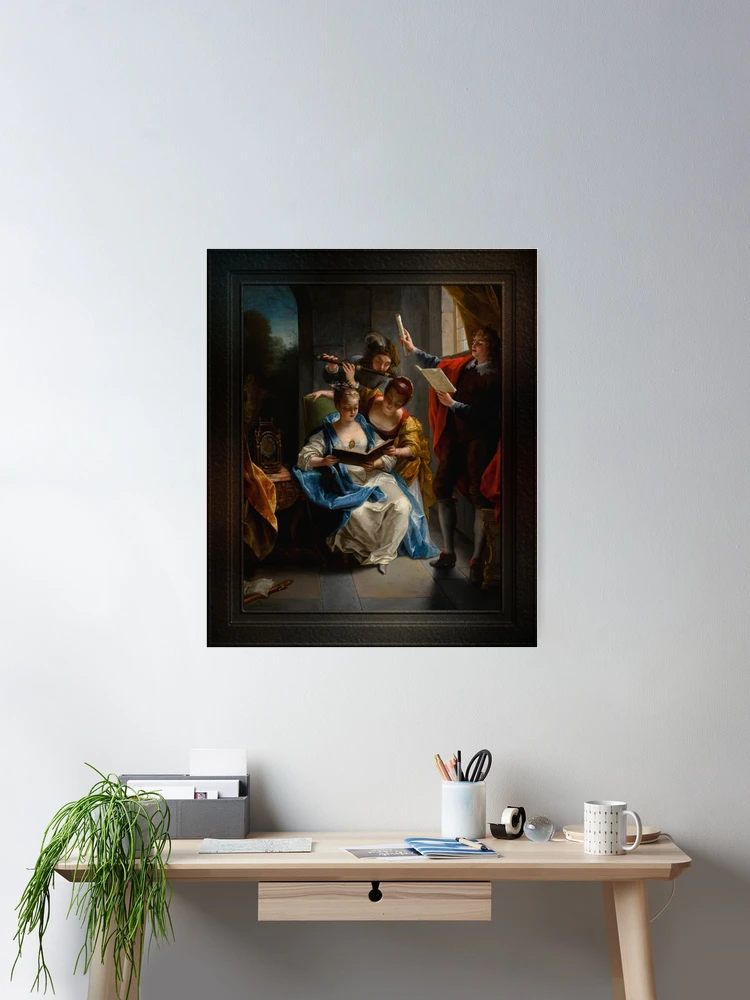
Jean Raoux‘s “A Quartet in Concert,” painted during the early 18th century, offers a glimpse into the refined leisure activities enjoyed by the French aristocracy. The artwork depicts a quartet – two women and two men – engaged in an intimate musical performance within a stately interior setting. Raoux’s skillful rendering of fabrics, expressions, and architectural details creates a scene of elegant charm and understated sophistication.
Sommario
Struttura compositiva & Disposizione spaziale
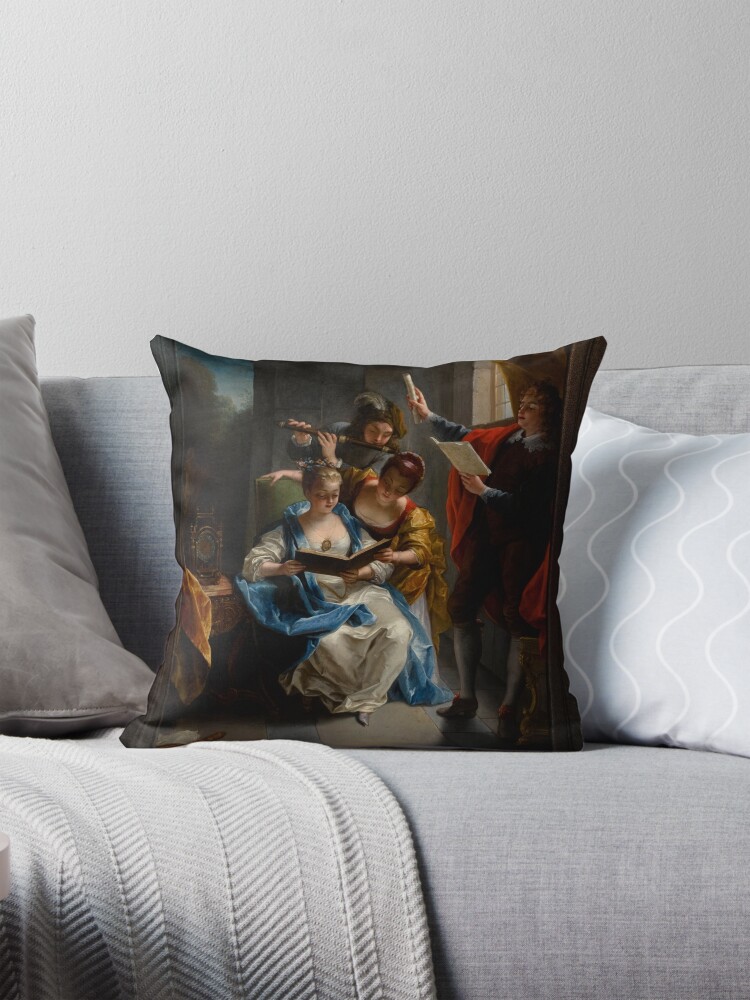
The composition is carefully structured to emphasize the intimacy of the gathering. The two women are centrally positioned, seated on an ornate chair and engrossed in reading sheet music while being serenaded by the musicians flanking them. The men, one playing a flute and the other singing, stand attentively beside the women, their postures conveying respect and attentiveness. A window behind the scene provides soft natural light that illuminates the figures and highlights the rich textures of their clothing. The placement of objects within the room—a clock, a table with scattered papers, and draped fabrics—adds depth and visual interest to the composition.
Tavolozza dei colori & Effetti di luce
The color palette in “A Quartet In Concert” is dominated by warm, muted tones – golds, creme, and soft blues – which evoke a sense of elegance and refinement. The women’s gowns are rendered in luxurious fabrics with intricate details, highlighted by the interplay of light and shadow. Raoux masterfully uses chiaroscuro—the contrast between light and dark—to create depth and volume within the scene. Soft natural light filters through the window, casting gentle shadows that accentuate the figures’ features and enhance the overall sense of tranquility.
The Musical Performance: Simbolismo & Contesto
The musical performance itself is central to understanding the artwork’s significance. Music was a highly valued form of entertainment and social interaction among the French aristocracy during the 18th century. It represented refinement, education, and cultural sophistication. The quartet’s intimate setting suggests a private gathering amongst close friends or family members, fostering an atmosphere of relaxed elegance. The sheet music held by the singers indicates that they are performing a composed piece, further emphasizing the formality and artistry of the occasion.
Character Portraits: Expressions & Abbigliamento
Each character in “A Quartet In Concert” is rendered with distinct personality and grace. Elodie de Valois, seated reading, possesses an air of quiet contemplation and refined intelligence. Her blue gown, adorned with delicate lace details, reflects her social standing and impeccable taste. The other woman displays a similar sense of elegance, while the musicians are portrayed as attentive and skilled performers. Their attire—the man playing the flute in a silver-grey wig and the singer in a red coat—is characteristic of the fashion trends of the period.
Influenze artistiche & Eredità
Jean Raoux was a prominent French painter known for his genre scenes depicting aristocratic life, pastoral landscapes, and mythological subjects. His work reflects the influence of classical art and the Rococo style, characterized by its elegance, adornare, and attention to detail. “A Quartet In Concert” esemplifica queste qualità; it’s a testament to Raoux’s skill as an observer of human behavior and his ability to capture the essence of 18th-century French society. His legacy lies in his contribution to the development of genre painting and his portrayal of aristocratic life with both realism and charm.
Dettagli tecnici & Materiali
The artwork is executed with oil paints on canvas, allowing for rich color saturation and subtle gradations of tone. Raoux’s technique involves meticulous attention to detail, particularly evident in the rendering of fabrics, gioielli, and architectural elements. Close examination reveals a mastery of brushwork; it’s smooth and controlled, contributing to the overall sense of elegance and refinement. The canvas itself appears well-prepared, providing a suitable surface for the artist’s skillful application of paint.
Biografia dell'artista derivata da Wikipedia.org
Dopo il consueto corso di formazione Jean Raoux è diventato membro dell'Accademia in 1717 come pittore storico.
La sua fama era stata precedentemente stabilita dalle acclamate decorazioni eseguite durante i suoi tre anni in Italia sul palazzo dei Giustiniani Solini a Venezia, e da alcuni dipinti da cavalletto, le quattro età dell'uomo (galleria Nazionale), commissionato dal Gran Priore di Vendôme.
A quest'ultima classe di soggetti Raoux si dedicò, rifiutando di dipingere ritratti se non nel carattere.
L'elenco delle sue opere è una lunga serie di scenografie delle Stagioni, delle Ore, degli Elementi, o di quelle scene di divertimento e galanteria nella cui rappresentazione fu incommensurabilmente superato dal suo rivale più giovane Watteau.
Dopo il suo soggiorno in Inghilterra (1720) visse molto nel Tempio, dove ha decorato diverse stanze. Morì a Parigi nel 1734. I suoi migliori allievi furono Chevalier e Montdidier. Le sue opere furono molto incise da Poilly, Moyreau, Dupuis,e altri.
Questa creazione di arte digitale, come tutte le opere d'arte che si possono trovare sul sito Web di Xzendor7 è disponibile per l'acquisto online in una varietà di formati di materiali, comprese le stampe su tela, stampe acriliche, stampe in metallo, stampe su legno, stampe incorniciate, manifesti, e come stampe su tela arrotolata in una varietà di dimensioni da 12 pollici a 72 pollici a seconda delle dimensioni dell'opera d'arte effettiva e del negozio di stampa su richiesta da cui scegli di acquistare l'arte.
L'opera d'arte è disponibile anche su un'ampia gamma di abbigliamento da uomo e da donna, tazze, borse, sciarpe, quaderni e diari e tanti prodotti per l'arredamento della casa.