

Bòidhchead annasach
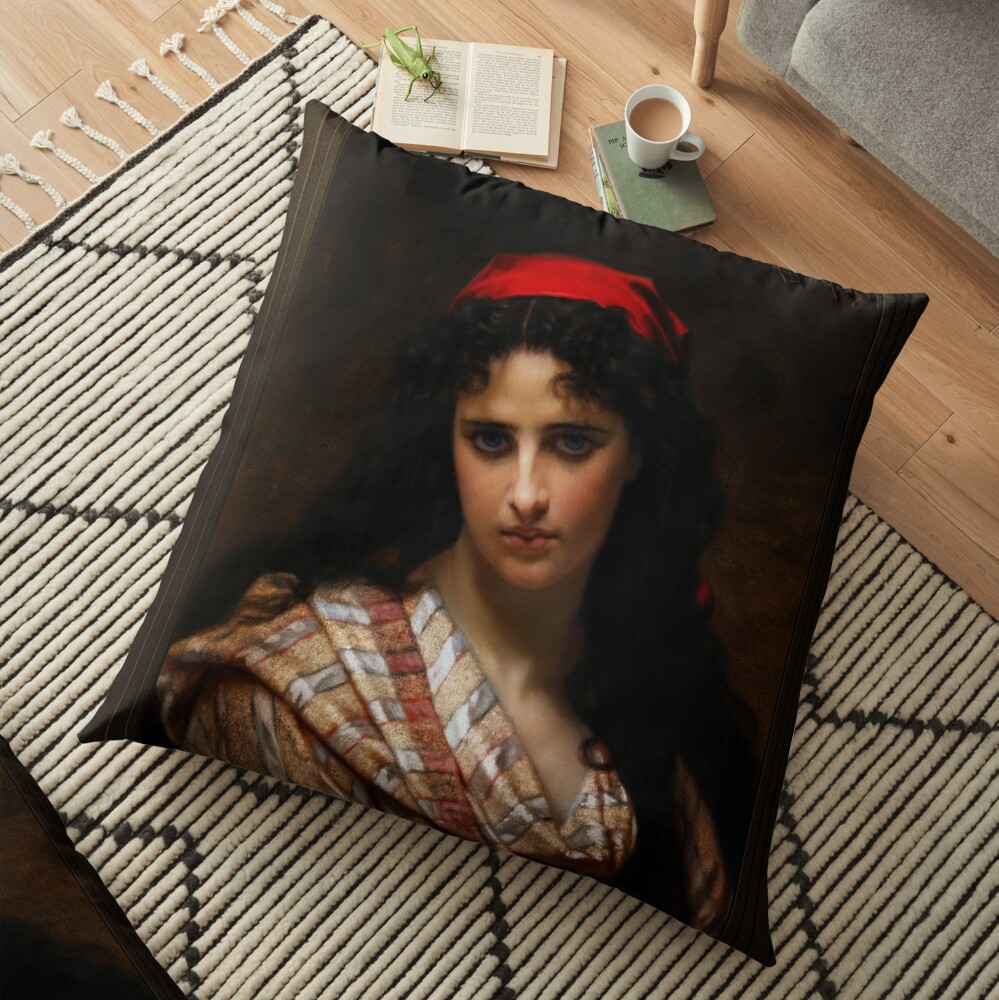
Hugues Merle (1823 – 1881), 1871 sàr-obair, Bòidhchead annasach, tha e domhainn agus brosnachail dealbh riochdachadh bòidhchead boireann agus introspection. Tha an dealbh ola seo a’ toirt a-steach sgil Merle ann a bhith a’ sealltainn doimhneachd saidhgeòlach agus an aire aige gu mion-fhiosrachadh, follaiseach anns an dealbh somalta ach inntinneach den bhoireannach òg a tha mar mheadhan fòcas a’ phìos. Merle, peantair acadaimigeach Frangach ainmeil, gu tric a’ ceangal a chuid obrach ri cuspairean maise, faireachdainn, agus faireachdainn tòcail, agus tha an dealbh seo mar eisgeachd.
Clàr-innse
Am Prìomh Chuspair: Dealbh de Introspection
Ann am meadhan a Bòidhchead annasach tha i na boireannach òg le coltas iongantach, an abairt aice a 'toirt seachad melancholy sàmhach air a mheasgachadh le èadhar dìomhaireachd. A pale, delicate complexion is offset by her rich, dark curls, a tha a’ sgaoileadh ann an tonnan bog timcheall a guailnean. An domhainn, penetrating gaze of her azure eyes draws the viewer in, suggesting a narrative untold but deeply felt. Her pose is one of solemnity; tha a ceann beagan air adhart, and her downcast eyes evoke an introspective mood, as though lost in thought or grappling with unspoken emotions.
The subject wears a vibrant red headscarf tied loosely around her head, a striking element that adds warmth to the otherwise subdued palette and contrasts with her dark hair. The bold crimson hue may symbolize passion or strength, but its simplicity also suggests her humble or modest origins. A h-èideadh, a striped shawl of muted earthy tones, drapes across her shoulders, softening her figure and providing a textural balance to the painting. The choice of fabric, with its subtle folds and delicate stripes, reflects Merle’s meticulous attention to texture and material.
Rudan, Stuthan, agus Teicneolas
The painting is devoid of overtly distracting objects or background details, ensuring the viewer’s focus remains on the subject. This minimalist approach amplifies the intimacy of the portrait, allowing every aspect of the young woman to be examined without interference. The simplicity of the composition also enhances the universality of the theme, making her expression and form timeless.
Merle’s use of oil as the medium is masterful. The smooth blending of colors, especially in the gradients of her skin tone, showcases his command over chiaroscuro, a technique that employs stark contrasts of light and shadow to add depth and dimension. An cùl-raon, rendered in dark, tònaichean talmhaidh, provides a muted contrast to the luminosity of the subject’s face, further emphasizing her as the painting’s focal point. The restrained palette allows Merle to achieve a harmonious balance, evoking a naturalistic yet elevated depiction of the human form.
The textures of the shawl and the scarf are painted with delicate precision, the stripes rendered in soft, uneven lines that mimic the organic imperfections of woven fabric. Each brushstroke captures the interplay of light and shadow on the folds of the fabric, imbuing it with a tactile quality that enhances the realism of the work.
Eileamaidean cuspaireil agus samhlaidheachd
The painting embodies themes of beauty, introspection, agus faireachdainn, hallmark traits of Hugues Merle’s oeuvre. An tiotal, Bòidhchead annasach, reflects the artist’s reverence for the subject’s individuality and the timeless allure she represents. Her understated elegance and the somber tone of her expression suggest a deeper narrative, possibly hinting at themes of longing, call, or contemplation.
While Merle’s work is often compared to that of William-Adolphe Bouguereau, this piece stands apart for its nuanced emotional depth. The absence of an idealized, overtly decorative background places the focus solely on the subject’s humanity. The muted tones and the interplay of light and shadow create a mood that is both contemplative and melancholic, inviting the viewer to project their own interpretation onto her enigmatic expression.
The red scarf, while striking, is not overly ornate, suggesting an element of simplicity and modesty. Its boldness contrasts with her subdued attire and somber demeanor, perhaps hinting at the complexity of her character, a juxtaposition of outer vibrancy and inner turmoil.
Stoidhle agus Co-theacsa Ealain
Hugues Merle was associated with the academic style prevalent in mid-19th-century France, a chuir cuideam air mionaideachd teignigeach, bòidhchead air leth freagarrach, and a focus on classical themes. Bòidhchead annasach reflects this academic tradition while also delving into a more personal and emotive realm, demonstrating Merle’s ability to convey psychological nuance alongside technical mastery.
The painting’s intimate scale and restrained composition align it with portraiture traditions that aim to reveal the essence of the individual. Merle’s contemporaries often celebrated similar themes of feminine beauty and emotional introspection, but his works, including this piece, stand out for their subtlety and sensitivity. The lack of theatricality in Bòidhchead annasach underscores its quiet power, drawing the viewer into a meditative engagement with the subject.
Am faireachdainn agus an àile
Faireachdainn de Bòidhchead annasach is introspective and somber, yet it possesses an underlying warmth that prevents it from feeling cold or detached. The interplay of light on the subject’s face and the subdued tones of the background create an atmosphere of gentle intimacy, as though the viewer has stumbled upon a private moment of reflection.
This emotional resonance is heightened by the soft focus of the painting, which lends it a dreamlike quality. The viewer is left with a sense of quiet admiration for the subject’s beauty and the emotions she seems to carry. Her enigmatic expression, neither fully joyful nor sorrowful, mirrors the complexities of the human experience, making the painting deeply relatable and timeless.
Co-dhùnadh
Hugues Merle Bòidhchead annasach is a masterful exploration of feminine grace, doimhneachd faireachail, and technical precision. Tro bhith cleachdadh an t-solais, inneach, agus co-sgrìobhadh, Merle captures the essence of his subject with an almost reverent sensitivity. The painting’s simplicity belies its emotional complexity, inviting viewers to ponder the inner world of the young woman portrayed. This work is a testament to Merle’s skill as a portraitist and his ability to evoke profound emotion through his art.
Is e seo ath-riochdachadh seann mhaighstirean ealain didseatach ath-leasaichte de ìomhaigh raon poblach a tha ri fhaighinn mar a clò-bhualadh canabhas air-loidhne.
Neach-ealain bi a thàinig bho Wikipedia.org agus Rehs.com
Rugadh Hugues Merle ann an 1822 ann an La Sône, An Fhraing agus timcheall air aois 21 ràinig Paris, An Fhraing far an do rinn e sgrùdadh air peantadh fo Pheantair Eachdraidh is Dealbh na Frainge Léon Cogniet (1794 – 1880).
Ged nach eil mòran fiosrachaidh mu bheatha thràth Hugues thathas a’ gabhail ris gun d’ fhuair e ìre de dh’ fhoghlam ealain mus do ràinig e Paris ann an 1843; oir thòisich e air taisbeanadh aig Salon Paris ann an 1847 leis a’ phìos aige Portrait of the author and in 1848 sheall e am pìos Légende des Willis.
Mar a chaidh ùine air adhart dh’ fhàs cliù Hugues mar dhealbhadair gu mòr anns na 1850n; agus mar pheantair soirbheachail agus follaiseach bha e comasach dha fìor leannanan ealain a thàladh a bha a’ coimhead ris na cruinneachaidhean ealain aca a thogail.
B’ e aon den luchd-cruinneachaidh ealain tràth sin an 4mh Marcas Hertford, Richard Seymour-Conway (1800-1870); a cheannaich an tagradh salon aige Leughadh a’ Bhìobaill a-steach 1859.
Anns na 1860an, Bha liosta luchd-cleachdaidh mòr de luchd-cruinneachaidh a’ toirt a-steach chan e a-mhàin daoine fa leth bhon mhòr-thìr Eòrpach, ach cuideachd luchd-cruinneachaidh Ameireaganach, leithid Uilleam Walters à Baltimore a bharrantaich The Scarlet Letter.