

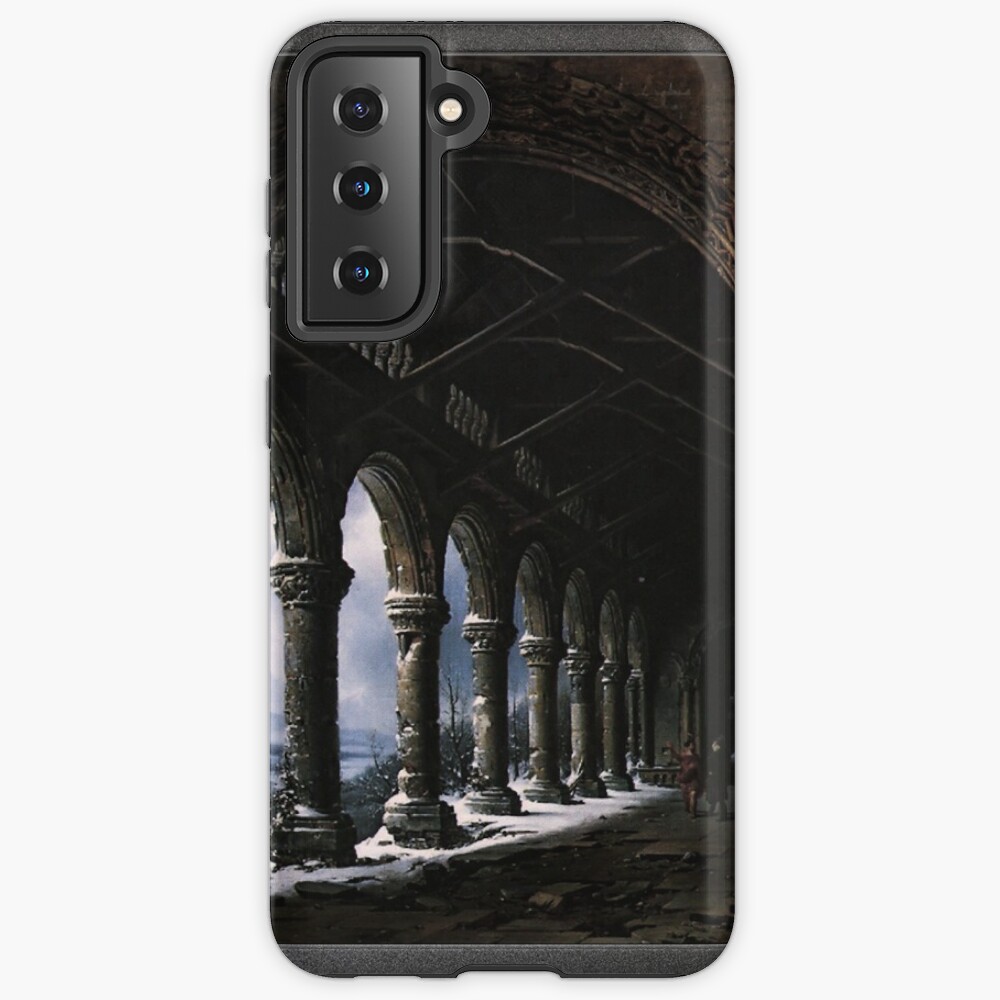
A Ruined Gothic Colonnade
The Effect of Fog and Snow Seen through A Ruined Gothic Colonnade c1826 by French Painter Louis Daguerre (1787 – 1851), anerkendt for sin opfindelse af fotograferingsprocessen Daguerreotype og anses for at være en af fotografens fædre; han var også en dygtig maler og udvikler af Diorama -teatret.
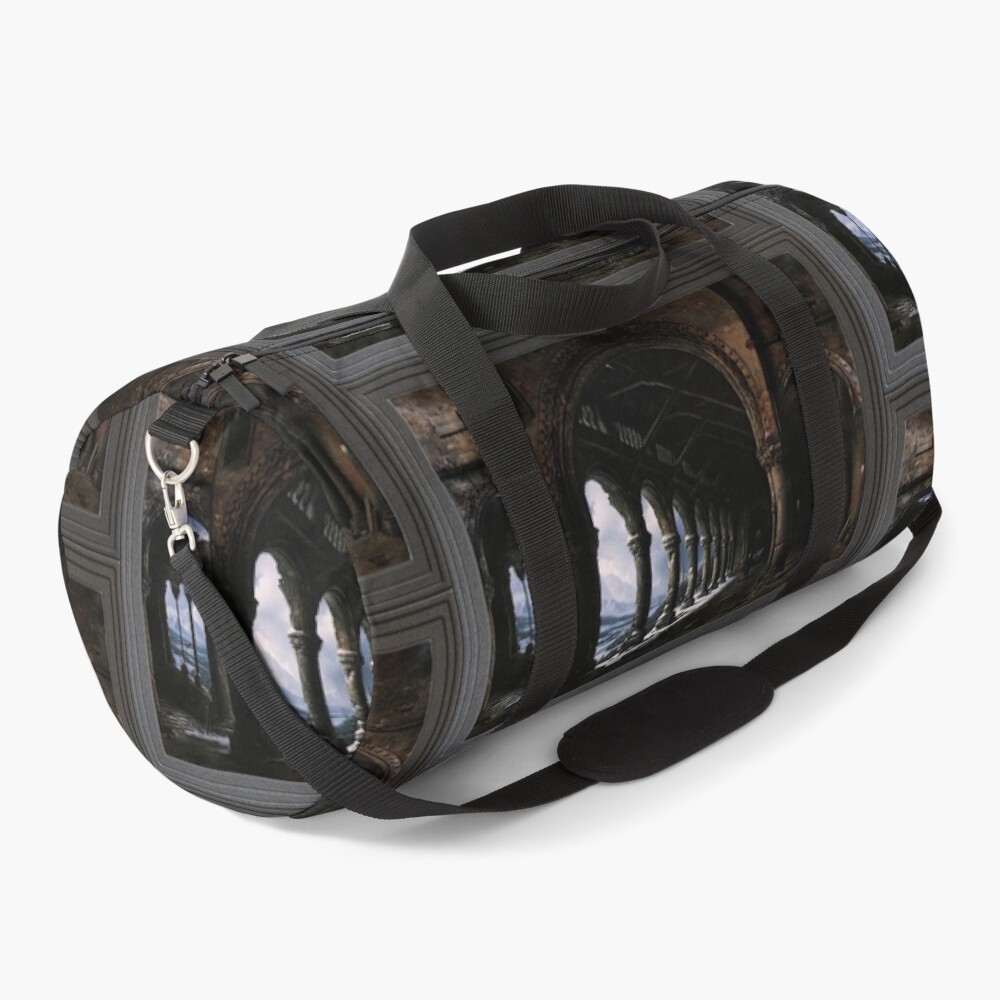
En ødelagt gotisk søjlegang er et stærkt fængslende billede af en lang glemt tid ødelagt gotisk struktur med udsigt over en snedækket bjergkæde, da to mænd går ned ad den lange ensomme nedslidte korridor i den gamle gotiske bygning, med sine smukke søjler og buer.
A Ruined Gothic Colonnade is a retouched digital art old masters reproduction of a public domain image that is available as a rullet print online.
Oplysninger nedenfor stammer fra Wikipedia.org
Louis-Jacques-Mandé Daguerre was born on the 18th of November in 1787 in Cormeilles-en-Parisis, Val d'Oise, Frankrig; and is better known as Louis Daguerre, who was a French artist and photographer, anerkendt for sin opfindelse af fotograferingens daguerreotypeproces.
He is known as one of the fathers of photography, and even though he is most famous for his contributions to photography, han var også en dygtig maler og udvikler af dioramateatret.

Han kom i lære i arkitektur, teaterdesign, and panoramic painting under the first French Panorama Painter Pierre Prévost (1764 – 1823).
He was exceedingly well adept at his skill of theatrical illusion, and he became a celebrated designer for the theater, which later led to him inventing the diorama, which opened in Paris in July 1822.
I 1829, Daguerre partnered with French Inventor Nicéphore Niépce (1765 – 1833), who had produced the world’s first heliograph in 1822 and the oldest surviving camera photograph in 1826 eller 1827.
Though Niépce died suddenly in 1833, Daguerre continued experimenting with the photographic process, and evolved the method that would eventually be known as the daguerreotype.
After efforts to interest private investors proved fruitless, Daguerre went public with his invention in 1839; and at a joint meeting of the French Academy of Sciences and the Académie des Beaux Arts on 7 January of that year, the invention was announced and described in general terms, but all specific details were withheld.
Under assurances of strict confidentiality, Daguerre explained and demonstrated the process only to the Academy’s perpetual secretary François Arago, who proved to be an invaluable advocate.
Members of the Academy and other select individuals were allowed to examine specimens of Daguerre’s work at his studio, which won him enthusiastic praise; with the process being though of as nearly miraculous, which led to the news of the daguerreotype spreading quickly.
Then the French Government made arrangements to acquire the rights to Daguerre’s invention in exchange for a lifetime pension for himself and the 19 year old sone of Niépce’s son Isidore.
Then on August 19, 1939 the French Government presented his invention as a free gift to the world, with complete instruction on how to create photographs; later that year Daguerre was elected to the National Academy of Design as an Honorary Academician.
Daguerre døde, fra et hjerteanfald, on July 10, 1851 i Bry-sur-Marne, 12 km (7 mig) fra Paris; and a monument was erected that marks his grave, and his name is also one of 72 other to be inscribed on the Eiffel tower.