

A Ruined Gothic Colonnade
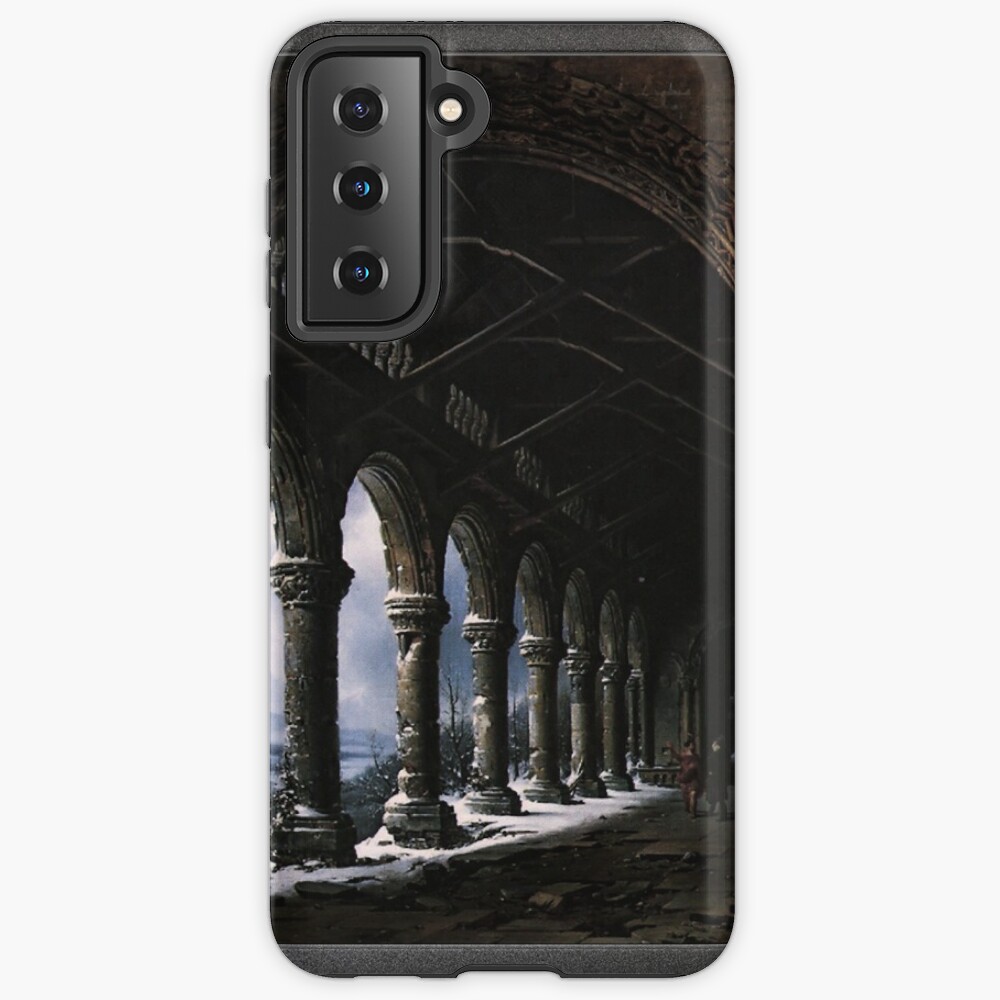
The Effect of Fog and Snow Seen through A Ruined Gothic Colonnade c1826 by French Painter Louis Daguerre (1787 – 1851), recognized for his invention of the Daguerreotype process of photography and considered to be one of the fathers of photography; he was also an accomplished painter and developer of the Diorama theatre.
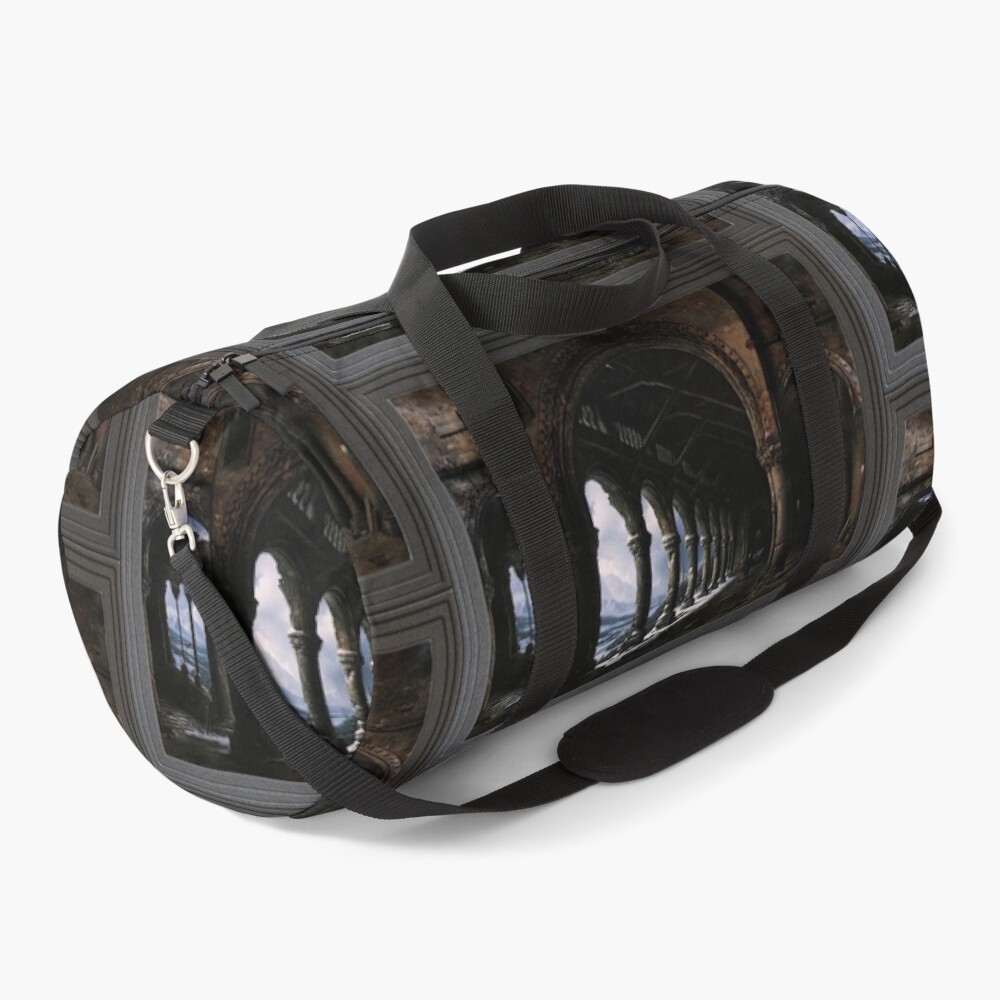
A Ruined Gothic Colonnade is a powerful captivating image of a long forgot ruined gothic structure that overlooks a snow capped mountain range as two men walk down the long lonely dilapidated corridor of the ancient gothic building, with its beautiful columns and arches.
A Ruined Gothic Colonnade ass eng retouched digital Konscht al Master Reproduktioun vun engem Public Domain Bild dat als verfügbar ass gerullt online online.
Informatioun Ënnen Ofgeleet Vun Wikipedia.org
De Louis-Jacques-Mandé Daguerre gouf den 18. November gebuer 1787 zu Cormeilles-en-Parisis, Val-d'Oise, Skulpturen; an ass besser bekannt als Louis Daguerre, deen e franséische Kënschtler a Fotograf war, unerkannt fir seng Erfindung vum Daguerreotypprozess vun der Fotografie.
Hien ass bekannt als ee vun de Pappe vun der Fotografie, an och wann hien am meeschte bekannt ass fir seng Contributiounen zur Fotografie, Hie war och en erfollegräiche Moler an Entwéckler vum Diorama Theater.

Hie gouf an der Architektur geléiert, Theater Design, a Panoramamolerei ënner dem éischte franséische Panoramamoler Pierre Prévost (1764 – 1823).
He was exceedingly well adept at his skill of theatrical illusion, and he became a celebrated designer for the theater, which later led to him inventing the diorama, which opened in Paris in July 1822.
An 1829, Daguerre partnered with French Inventor Nicéphore Niépce (1765 – 1833), who had produced the world’s first heliograph in 1822 and the oldest surviving camera photograph in 1826 oder 1827.
Though Niépce died suddenly in 1833, Daguerre continued experimenting with the photographic process, and evolved the method that would eventually be known as the daguerreotype.
After efforts to interest private investors proved fruitless, Daguerre went public with his invention in 1839; and at a joint meeting of the French Academy of Sciences and the Académie des Beaux Arts on 7 January of that year, the invention was announced and described in general terms, but all specific details were withheld.
Under assurances of strict confidentiality, Daguerre explained and demonstrated the process only to the Academy’s perpetual secretary François Arago, who proved to be an invaluable advocate.
Members of the Academy and other select individuals were allowed to examine specimens of Daguerre’s work at his studio, which won him enthusiastic praise; with the process being though of as nearly miraculous, which led to the news of the daguerreotype spreading quickly.
Then the French Government made arrangements to acquire the rights to Daguerre’s invention in exchange for a lifetime pension for himself and the 19 Joer ale Jong vum Niépce säi Jong Isidore.
Dann am August 19, 1939 d'franséisch Regierung huet seng Erfindung als gratis Geschenk der Welt presentéiert, mat kompletten Instruktioune fir Fotoen ze kreéieren; spéider dat Joer Daguerre war op d'National Academy of Design als Éierenhal Academician gewielt.
Daguerre gestuerwen, vun engem Häerzinfarkt, op Juli 10, 1851 und Bry-sur-Marne, 12 km (7 mi) vu Paräis; an e Monument gouf opgeriicht dat säi Graf markéiert, a säin Numm ass och ee vun 72 aner op den Eiffeltuerm ageschriwwen.