

Rhosyn Sengl: Archwiliad o Vintage Pin-up Art
Cyflwyniad i'r Gwaith Celf
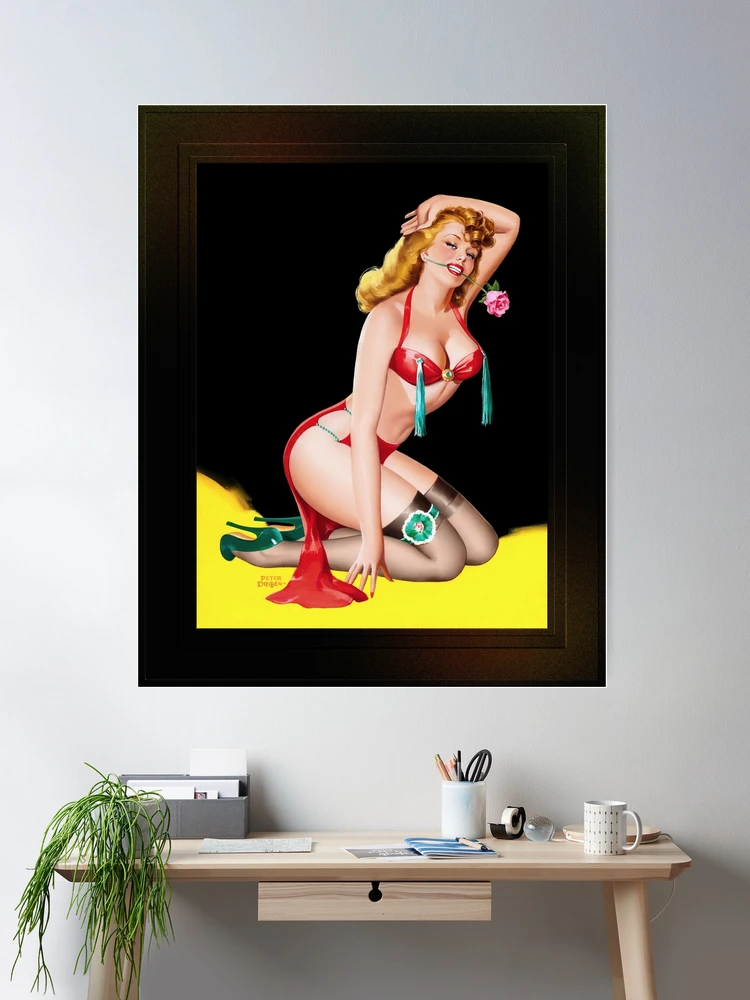
Peter Driben‘s “Rhosyn Sengl” yn ddarn cyfareddol o gelf Americanaidd o ganol yr 20fed ganrif sy'n disgyn yn sgwâr o fewn genre celf pin-yp, arddull a gyrhaeddodd ei anterth yn ystod y 1940au a'r 1950au. Driben (1903 – 1968), yn adnabyddus am ei ddarluniau eiconig o ferched, yn aml yn darlunio merched yn ddeniadol, ystumiau chwareus, gan grynhoi ysbryd agweddau mwy diofal a bywiog yr oes. Mae'r gwaith celf hwn yn cynnwys un o'i ddarluniau sultry nod masnach, canolbwyntio ar fenyw ifanc hardd wedi'i gwisgo mewn gwisg goch drawiadol, ychwanegwyd at ei hostum flirtatious ymhellach trwy gynnwys un rhosyn a ddaliwyd yn dyner rhwng ei gwefusau.
Tabl Cynnwys
Prif Bwnc: Y Ferch Pin-up
Ffocws canolog y paentiad yw'r fenyw drawiadol gyda melyn, gwallt hudolus wedi'i steilio mewn tonnau meddal. Mae hi wedi'i lleoli'n ddeniadol mewn ystum penlinio, ei chorff ar ongl ychydig i'r ochr, gydag un goes wedi'i phlygu wrth y pen-glin i bwysleisio ei chromliniau. Mae ei mynegiant chwareus - wedi'i amlygu gan wên gynnil a'r rhosyn yn ei cheg - yn cyfleu ymdeimlad o hyder a swyn. Gwisg coch llachar y fenyw, top dadlennol tebyg i bicini a sgert gyfatebol, yn cyferbynnu'n hyfryd â'i chroen gwelw, gan bwysleisio ei ffigwr ymhellach. Mae rhuban turquoise wedi'i glymu o amgylch neckline y brig, ychwanegu ychydig o liw a diddordeb gweledol i'r olygfa.
Mae ystum cyffredinol y model yn herfeiddiad chwareus, ag un llaw y tu ôl i'w phen, fel pe i dynnu sylw at ei chromliniau a'i synwyrusrwydd cyffredinol. Y rhosyn, wedi ei leoli rhwng ei gwefusau, yn cyflwyno haen o fenyweidd-dra a rhamant cynnil, symbol a gysylltir yn aml â chariad, angerdd, a harddwch. Mae'r affeithiwr syml ond effeithiol hwn yn dod yn ganolbwynt gweledol a symbolaidd i'r gwaith celf, gan awgrymu themâu awydd, fflyrtio, ac apêl oesol y ffurf fenywaidd.
Gwrthrychau ac Elfennau yn y Gwaith Celf
Ar wahân i'r ffigwr canolog, mae'r paentiad yn ymgorffori nifer o wrthrychau eraill sy'n ategu'r pwnc ac yn cyfrannu at naws cyffredinol y darn. Mae'r sodlau coch llachar y mae'n eu gwisgo yn ychwanegu at ei hudo, dewis ffasiwn beiddgar sy'n siarad â hudoliaeth ac arddull y 1940au. Mae'r artist wedi rendro'r esgidiau hyn gyda gofal manwl, sicrhau eu bod yn dal y golau mewn ffordd sy'n ychwanegu dimensiwn i'r cyfansoddiad cyffredinol.
Mae cefndir y darn yn llwm a minimalaidd, gan ddefnyddio cefndir tywyll sy'n cyferbynnu'n fawr â chroen golau a dillad llachar y model. Mae'r cyferbyniad hwn yn nodweddiadol o arddull Driben, a oedd yn aml yn defnyddio tonau cyferbyniol i wneud i'r pwnc sefyll allan. Mae absenoldeb unrhyw elfennau cefndirol arwyddocaol yn cadw'r ffocws yn sgwâr ar y fenyw, gan ganiatáu i'w hystum a'i mynegiant wyneb fod yn brif ddyfeisiadau naratif yn y cyfansoddiad.
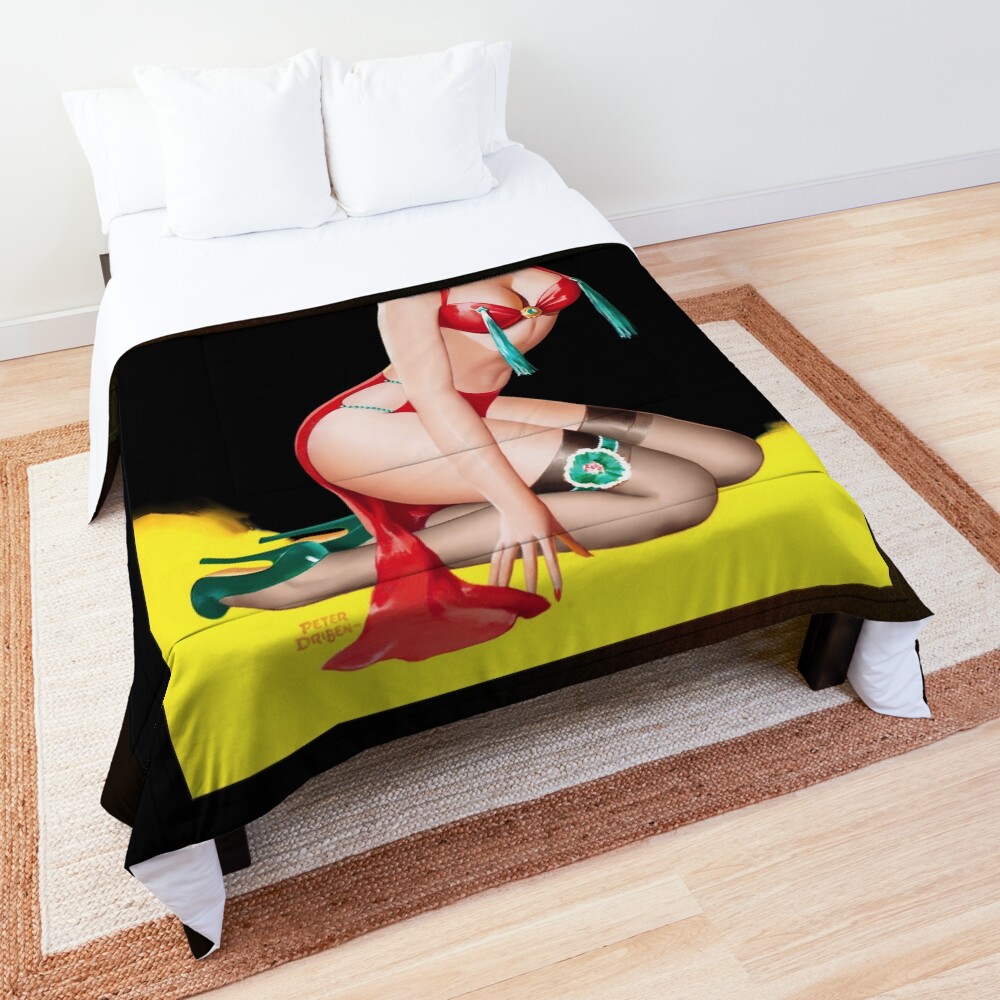
Yn ogystal, Mae Driben yn defnyddio cysgodion ac uchafbwyntiau mewn modd cynnil ond effeithiol. Mae'n ymddangos bod y ffynonellau golau yn y gwaith celf yn dod o'r blaen-chwith, taflu cysgodion tyner ar wyneb y wraig, ei chorff, a'i hamgylchoedd. Mae'r goleuo'n tynnu sylw at ei chromliniau ac yn pwysleisio ei hosgo deniadol. Mae graddiant llyfn y llawr melyn oddi tani yn gwella ymhellach yr ymdeimlad o ddyfnder a gofod, gwneud i ffigwr y fenyw ymddangos fel pe bai'n barod ar lwyfan, barod i ddal sylw llawn y gwyliwr.
Deunyddiau a Thechneg
Mae techneg Driben yn fanwl gywir ac wedi'i rheoli, gan arddangos ei sgil wrth rendro gweadau realistig a manylion cywrain. Mae'r defnydd o llyfn, mae trawiadau brwsh yn llifo yn rhoi golwg caboledig i'r paentiad, yn enwedig wrth ddarlunio croen a dillad y wraig. Mae'r defnydd o uchafbwyntiau meddal a pelydrol yn creu ansawdd bywyd, tra bod y cyfuniad cynnil o gysgodion yn ychwanegu dyfnder a ffurf.
Mae gwead llyfn croen y model yn cyferbynnu'n hyfryd â'r meddalach, arwynebau mwy tawel yr elfennau amgylchynol, megis y llawr melyn a'r cefndir du. Y gweadau cynnil a ddefnyddir yn y rhosyn, ei sodlau, ac mae'r rhuban gwyrddlas yn datgelu llygad Driben am fanylion, gan ddyrchafu’r hyn a allai fel arall fod yn ddelwedd syml yn waith soffistigedig sy’n apelio’n weledol.
Mae palet lliw Driben yn nodweddiadol o'r genre, gyda choch bywiog, gwyrddion, a phinc yn creu golygfa weledol drawiadol. Mae gwisg goch drawiadol y fenyw yn cyferbynnu â melyn meddal y llawr a'r cefndir tywyll, gan sicrhau ei bod yn parhau i fod yn ganolbwynt y darn. Mae acenion corhwyaid y rhuban o amgylch ei gwddf yn cynnig lliw adfywiol sy'n gwella'r ymdeimlad o gydbwysedd yn y cyfansoddiad.
Thema a Hwyliau
Mae thema “Rhosyn Sengl” yn siarad â’r thema ehangach o synhwyraidd a hudoliaeth sydd mor gyffredin yng nghelf pin-yp canol y ganrif. Cynlluniwyd y gweithiau hyn nid yn unig i ddal sylw’r gwyliwr ond hefyd i ennyn ymdeimlad o ffantasi a dihangfa.. Benyweidd-dra gorliwiedig y model, ei ystum awgrymiadol, ac mae'r mynegiant fflyrtio ar ei hwyneb i gyd yn pwyntio at y delfrydau o hudoliaeth a rhywioldeb a oedd yn gyffredin mewn diwylliant poblogaidd ar y pryd.
Mae naws y darn yn chwareus ond yn ddeniadol. Mae iaith corff y fenyw yn awgrymu hyder a gwahoddiad i fwynhau natur chwareus y ddelwedd, tra bod y rhosyn yn ei cheg yn ychwanegu mymryn o ramant a diniweidrwydd i'r ystum pryfoclyd arall. Mae'r dewisiadau lliw llachar a'r gweadau llyfn yn cyfleu ymdeimlad o optimistiaeth, llawenydd, a synwyrusrwydd, tra bod y cefndir lleiaf yn cyfeirio sylw'r gwyliwr yn gyfan gwbl at y model a'i atyniad.
Mae’r gwaith celf hwn yn adlewyrchu apêl yr arddull ‘pin-up’ fel dathliad o fenyweidd-dra a harddwch, gan grynhoi cyfnod pan oedd merched yn cael eu delfrydu fel symbolau o hudoliaeth, rhywioldeb, a gras. Mae'r model yn y paentiad hwn yn dod yn gynrychiolaeth o ddelfrydau diwylliannol y cyfnod amser - awen i'r artist a'r gynulleidfa..
Nghasgliad
“Rhosyn Sengl” gan Peter Driben yn enghraifft syfrdanol o gelf pin-yp vintage sy'n parhau i ddal dychymyg y gwyliwr gyda'i bortread beiddgar o atyniad benywaidd. Trwy ei fanwl fanwl, palet lliw bywiog, a chyfansoddiad medrus, mae'r gwaith celf yn wledd weledol ac yn gipolwg diwylliannol o ganol yr 20fed ganrif. Mae gallu Driben i gyflwyno ei destun gyda synwyrusrwydd a cheinder yn sicrhau bod y darn hwn yn cynrychioli hudoliaeth ac apêl y genre pin-yp yn barhaol..
Mae hwn yn atgynhyrchiad hen feistri celf ddigidol wedi'i ailfeistroli o ddelwedd parth cyhoeddus sydd ar gael fel a argraffu cynfas ar-lein.
Am Yr Artist
Gwybodaeth Isod O Wikipedia.org
Ganed Peter Driben yn Boston, ac astudiodd yn Ysgol Gelf Vesper George cyn symud i Baris yn 1925. Wrth gymryd dosbarthiadau yn y Sorbonne yn 1925, dechreuodd gyfres o luniadau pen-ac-inc hynod boblogaidd o sioe ferched y ddinas.
Ym mis Mawrth o 1934 Creodd Driben ei pin-up hysbys cyntaf sef clawr La Paree Stories; a chan 1935, roedd yn cynhyrchu cloriau ar gyfer Snappy, Pep, Nosweithiau Efrog Newydd, Bywyd Nos Ffrengig a Caprice.
Wrth i boblogrwydd Driben barhau i godi ar ddiwedd y tridegau creodd ragor o gloriau ar gyfer cyfnodolion eraill gan gynnwys Silk Stocking Stories, Ffilm Llawen-Go-Rownd a Hwyl Sgrin Go Iawn.
Ehangodd gyrfa Driben i hysbysebu pan symudodd i Efrog Newydd yn hwyr 1936. Yma creodd arddangosiadau ffenestr wedi'u torri'n marw tri dimensiwn gwreiddiol ar gyfer Philco Radios, Tywelion Bath Cannon, a Chwmni Pobi Weber.
Efallai mai ei waith enwocaf oedd y posteri gwreiddiol a gwaith celf cyhoeddusrwydd ar gyfer The Maltese Falcon. Roedd Peter Driben hefyd yn ffrind agos i'r cyhoeddwr Robert Harrison, ac yn 1941 cafodd gytundeb i gynhyrchu cloriau ar gyfer cylchgrawn newydd Harrison, Beauty Parade.
Oddi yno aeth Peter ymlaen i beintio cannoedd o gloriau ar gyfer y cyhoeddiad hwnnw ac ar gyfer y saith teitl arall roedd Harrison i'w lansio – fflyrt, Sibrwd, Syllu, Winc, Llygad, Giggles, a Joker.
Byddai Driben yn aml yn cyhoeddi cymaint â chwech neu saith o'i gloriau bob mis. Sefydlodd gwaith Driben i Harrison ef fel un o artistiaid pin-yp a hudoliaeth mwyaf cydnabyddedig a llwyddiannus America.. Ychydig cyn iddo ddechrau gweithio i Harrison, Priododd Driben yr arlunydd, actores a bardd, Louise Kirby.
Yn 1944 cynigiwyd y cyfle anarferol iddo, ar gyfer artist pin-up; hynny oedd i ddod yn gyfarwyddwr celf y New York Sun, swydd a gadwodd hyd 1946. Yn ystod y rhyfel, ysgogodd ei baentiad poblogaidd o filwyr Americanaidd yn codi'r faner yn Iwo Jima gryn dipyn o sylw gan y cyfryngau.
Yn 1956, Symudodd Driben a Louise i Miami Beach, lle treuliodd ei flynyddoedd ymddeol yn peintio portreadau (gan gynnwys un o Dwight D. Eisenhower) a gweithiau celfyddyd gain eraill, a drefnwyd yn arddangosfeydd llwyddianus gan ei wraig. Bu farw Driben yn 1968, Louise yn 1984.