

Eng eenzeg Rose: Eng Exploratioun vu Vintage Pin-up Art
Aféierung an d'Konschtwierk
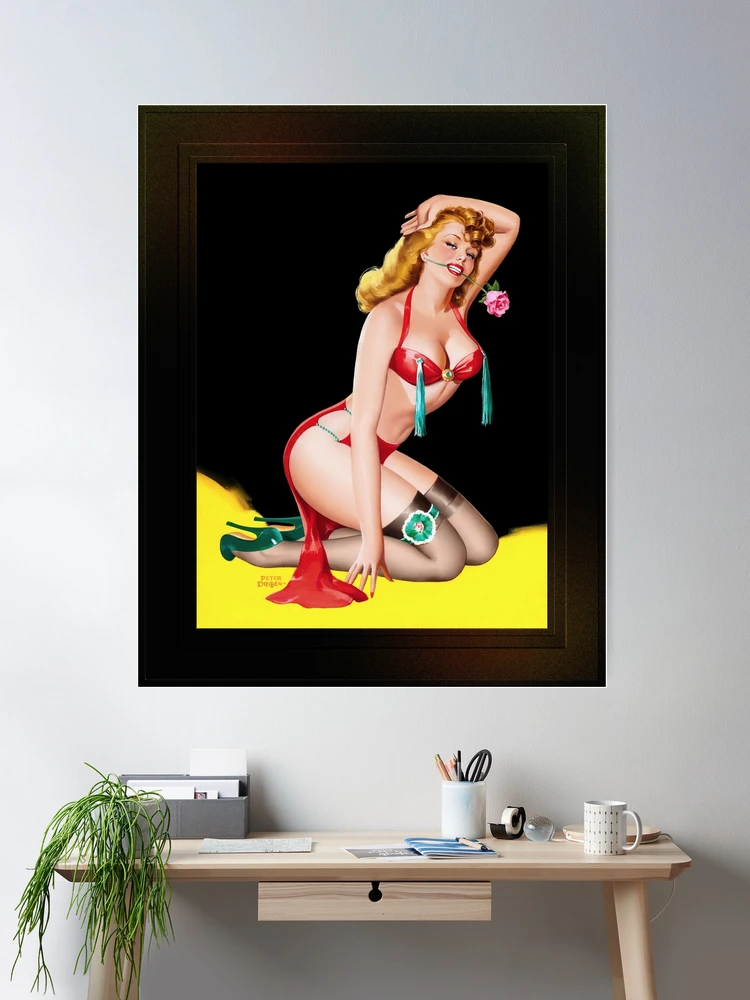
Peter Driben'S “Eng eenzeg Rose” ass e faszinéierend Stéck vun der Mëtt vum 20., e Stil, deen an den 1940er an 1950er Joren säin Héichpunkt erreecht huet. Driben (1903 – 1968), bekannt fir seng ikonesch Pin-up Girl Illustratiounen, oft Fraen an verführeresch duergestallt, spilleresch Posen, de Geescht vun der Ära méi suergfälteg a lieweg Aspekter encapsuléieren. Dëst Konschtwierk weist eng vu senge Marke süchteg Biller, fokusséiert op eng schéin jonk Fra, déi an engem opfälleg roude Outfit gekleet ass, hir flirtatious Pose weider verbessert duerch d'Inklusioun vun enger eenzeger Rous, déi delikat tëscht hire Lippen gehal gëtt.
Inhaltsverzeechnes
Haaptthemium: D'Pin-up Meedchen
Den zentrale Fokus vum Bild ass déi markant Fra mat Blond, glamourös Hoer styléiert a mëllen Wellen. Si ass verführeresch positionéiert an enger Knéi Haltung, hire Kierper liicht op d'Säit Wénkel gekäppt, mat engem Been um Knéi gebogen fir hir Kéiren ze ënnersträichen. Hire spillereschen Ausdrock - ënnersträicht vun engem subtile Laachen an der Rous an hirem Mond - vermëttelt e Gefill vu Vertrauen an Allure. D'Fra hir hell rout Kleedung, en offenbaren Bikini-ähnlechen Top a passenden Rock, kontrastéiert schéin mat hirer blasser Haut, weider hir Figur ënnersträichen. En türkisband ass ëm den Hals vun der Spëtzt gebonnen, en Touch vu Faarf a visuellen Interessi un d'Szen bäidréit.
Déi allgemeng Pose vum Model ass eng vu spilleresch Verteidegung, mat enger Hand hannert dem Kapp, wéi wann se op hir Kéiren an hir allgemeng Sensualitéit opmierksam maachen. D'Rousen, tëscht hire Lippen positionéiert, stellt eng Schicht vu Weiblechkeet a subtiler Romantik vir, e Symbol dacks mat Léift assoziéiert, Leidenschaft, a Schéinheets. Dësen einfachen awer effektiven Accessoire gëtt e visuellen a symbolesche Brennpunkt vum Konschtwierk, proposéiert Themen vum Wonsch, flirtéieren, an den zäitlosen Appel vun der weiblecher Form.
Objeten an Elementer am Konschtwierk
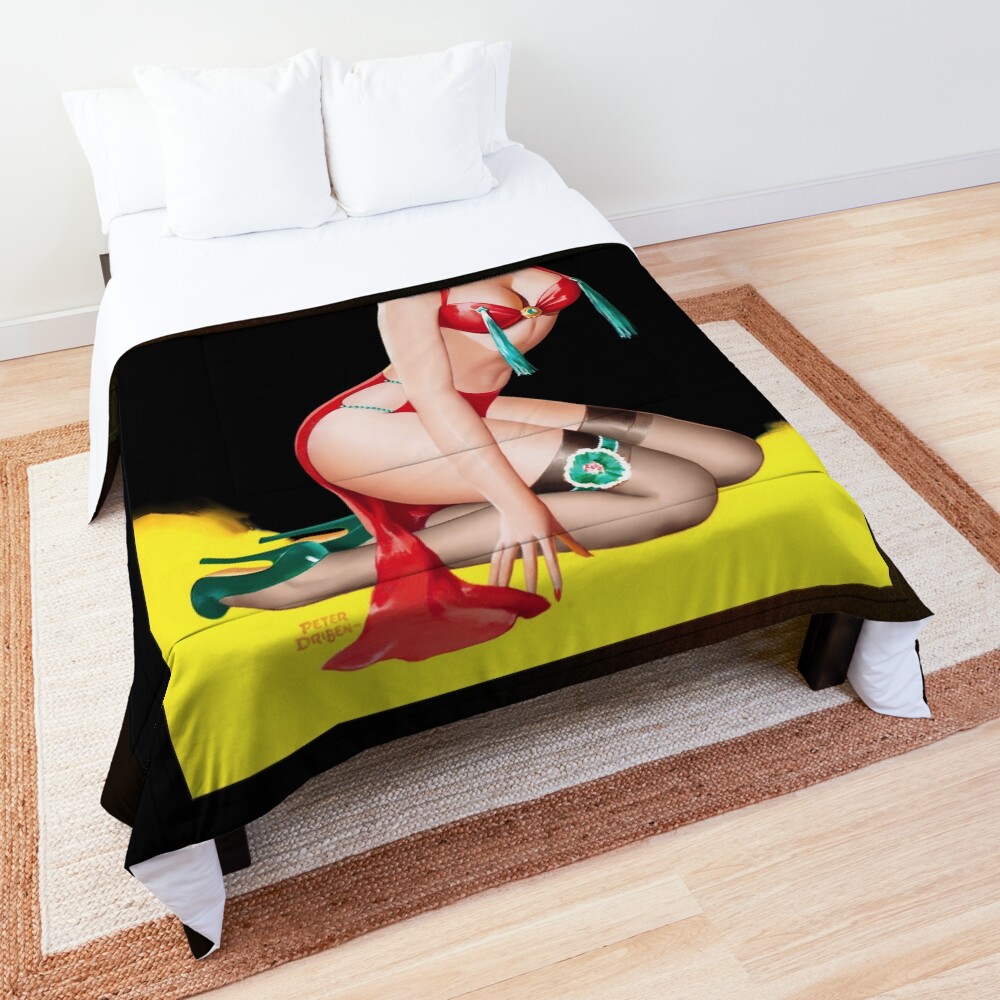
Ausser der zentraler Figur, d'Molerei enthält e puer aner Objeten déi d'Thema ergänzen an zu der Gesamtstëmmung vum Stéck bäidroen. Déi hell rout Fersen, déi si huet, fügen hir Verféierung un, eng fett Moudewahl déi mam Glamour a Stil vun den 1940er schwätzt. De Kënschtler huet dës Schong mat virsiichteg Suergfalt gemaach, suergen datt se d'Liicht op eng Manéier fänken, déi Dimensioun un d'Gesamtkompositioun bäidréit.
Den Hannergrond vum Stéck ass staark a minimalistesch, utilizing a dark backdrop that contrasts sharply with the model’s pale skin and bright clothing. This contrast is typical of Driben’s style, which often used contrasting tones to make the subject stand out. The absence of any significant background elements keeps the focus squarely on the woman, allowing her pose and facial expression to be the primary narrative devices in the composition.
Zousätzlech, Driben uses shadows and highlights in a subtle yet effective manner. The light sources in the artwork appear to come from the front-left, casting gentle shadows on the woman’s face, her body, and her surroundings. The lighting draws attention to her curves and emphasizes her seductive posture. The smooth gradient of the yellow floor beneath her further enhances the sense of depth and space, d'Gestalt vun der Fra ze erschéngen wéi wann se op enger Bühn steet, prett fir déi voll Opmierksamkeet vum Zuschauer z'erreechen.
Materialien an Technik
Dem Driben seng Technik ass präzis a kontrolléiert, seng Fäegkeet ze weisen fir realistesch Texturen a komplizéiert Detailer ze maachen. D'Benotzung vun glat, fléissend Pinselstécker gëtt dem Bild e poléierte Erscheinungsbild, besonnesch an der Duerstellung vun der Haut a Kleeder vun der Fra. D'Benotzung vu mëllen a stralen Highlights erstellt eng lieweg Qualitéit, wärend déi subtil Mëschung vu Schatten Tiefe a Form bäidréit.
Déi glat Textur vun der Haut vum Modell kontrastéiert schéin mat der mëller, méi gedämpften Flächen vun den Ëmgéigend Elementer, wéi de giele Buedem an de schwaarzen Hannergrond. Déi subtile Texturen déi an der Rous benotzt ginn, hir Fersen, an den türkisbänder verroden dem Driben säin Ae fir Detail, wat soss en einfacht Bild kéint zu engem sophistikéierten a visuell attraktive Wierk erhéigen.
Driben seng Faarfpalette ass typesch vum Genre, mat vibrant rouden, Greener, a pinks schafen eng verhaft visuell Spektakel. Déi markant roude Kleedung vun der Fra kontrastéiert géint déi mëll Giel vum Buedem an dem donkelen Hannergrond, garantéiert datt si de Brennpunkt vum Stéck bleift. D'Teal Akzenter vum Bändchen um Hals bidden en erfrëschende Faarfausbroch, deen d'Gefill vu Gläichgewiicht an der Kompositioun verbessert.
Thema a Stëmmung
D'Thema vun “Eng eenzeg Rose” schwätzt zum méi breet Thema vu Sensualitéit an Allur, dat sou verbreet ass an der Mëtt-Joerhonnert Pin-up Konscht. Dës Wierker goufen net nëmmen entwéckelt fir d'Opmierksamkeet vum Betrachter ze begeeschteren, awer och fir e Gefill vu Fantasie an Flucht z'erwächen.. Déi iwwerdriwwe Weiblechkeet vum Modell, hir suggestiv Pose, an de flirtateschen Ausdrock op hirem Gesiicht weisen all op d'Idealer vu Glamour a Sexualitéit déi an der populärer Kultur zu där Zäit verbreet waren.
D'Stëmmung vum Stéck ass spilleresch awer verführeresch. D'Kierpersprooch vun der Fra proposéiert souwuel Vertrauen an eng Invitatioun fir sech un déi spilleresch Natur vum Bild ze genéissen, während d'Ros an hirem Mond en Touch vu Romantik an Onschold un déi soss provokativ Pose bäidréit. Déi hell Faarfwahlen an déi glat Texturen vermëttelen e Gefill vun Optimismus, Freed, a Sensualitéit, während de minimalen Hannergrond d'Opmierksamkeet vum Betrachter ganz op de Modell an hir Allure riicht.
Dëst Konschtwierk reflektéiert den Appel vum Pin-up Stil als Feier vu Weiblechkeet a Schéinheet, eng Ära encapsuléieren wou Fraen als Symboler vum Glamour idealiséiert goufen, Sexualitéit, a Gnod. De Modell an dësem Bild gëtt eng Duerstellung vun de kulturellen Idealer vun der Zäitperiod - eng Muse fir souwuel de Kënschtler wéi och fir de Publikum.
Conclusioun
“Eng eenzeg Rose” vum Peter Driben ass e beandrockend Beispill vu vintage Pin-up Konscht déi weider d'Imaginatioun vum Betrachter erfaasst mat senger fetter Porträtéierung vu femininem Allure. Duerch seng virsiichteg Detail, vibrant Faarfpalette, a kompetent Kompositioun, d'Konschtwierk déngt souwuel als visuellt Fest wéi och als kulturell Schnappschëss vun der Mëtt vum 20. Joerhonnert. Dem Driben seng Fäegkeet säi Sujet mat Sensualitéit an Eleganz ze maachen suergt dofir datt dëst Stéck als dauerhafte Representatioun vum Glamour an Appel vum Pin-up Genre steet.
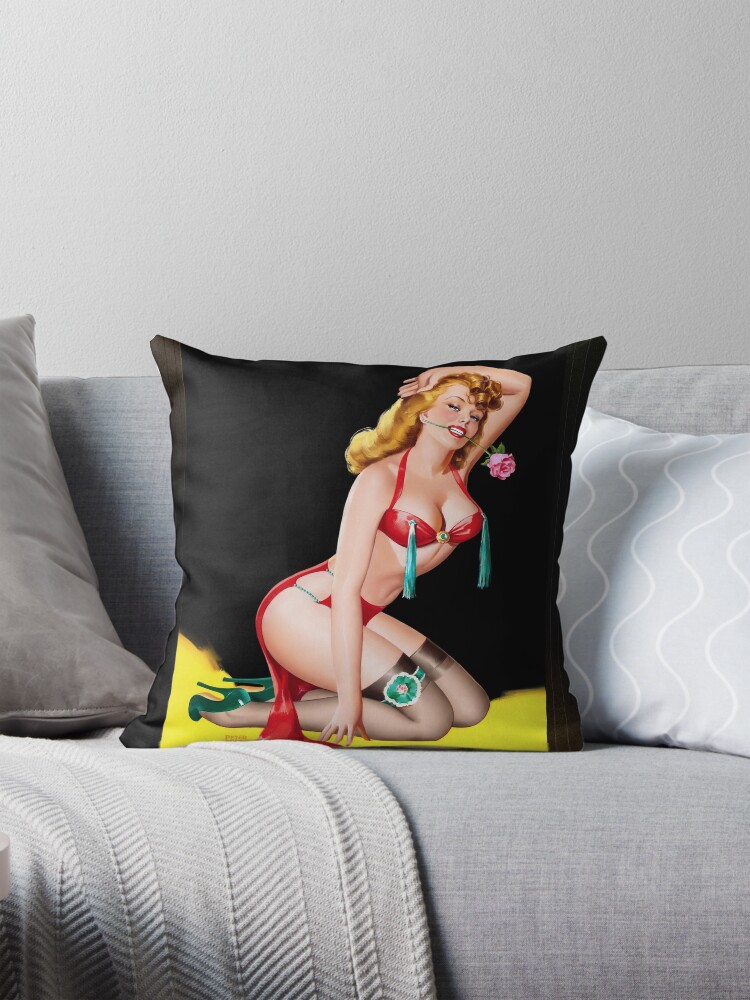
Dëst ass eng remastered digital Konscht al Master Reproduktioun vun engem Public Domain Bild dat als verfügbar ass Leinwandprint online.
Iwwer de Kënschtler
Info Ënnen Vun Wikipedia.org
De Peter Driben gouf zu Boston gebuer, an hien huet op der Vesper George Art School studéiert ier hien op Paräis geplënnert ass 1925. Wärend Coursen op der Sorbonne an 1925, hien huet eng Serie vun héich populär Pen-an-Tënt Zeechnungen vun der Stad Showgirls ugefaangen.
Am Mäerz vun 1934 Den Driben huet säin éischte bekannte Pin-up erstallt deen den Cover zu La Paree Stories war; an vum 1935, hien huet Coveren fir Snappy produzéiert, Pep, New York Nuechten, Franséisch Nuetsliewen a Caprice.
Wéi dem Driben seng Popularitéit an de spéiden Drëssegjärege weider eropgeet, huet hien méi Coveren fir aner Zäitschrëften erstallt, dorënner Silk Stocking Stories, Film Merry-Go-Round a Real Écran Spaass.
Dem Driben seng Carrière huet sech an d'Reklamm erweidert wéi hien spéit op New York geplënnert ass 1936. Hei huet hien originell dreidimensional gestuerwe Fënstere fir Philco Radios erstallt, Cannon Bath Handdicher, an der Weber Baking Company.
Vläicht säi bekanntste Wierk ass d'Original Plakater a Publizitéitskonscht fir The Maltese Falcon. De Peter Driben war och e gudde Frënd vum Verlag Robert Harrison, an an 1941 hie gouf vertraglech fir Coveren fir dem Harrison säin neie Magazin Beauty Parade ze produzéieren.
Vun do un huet de Peter Honnerte vun Deckele fir dës Verëffentlechung gemoolt a fir déi aner siwen Titelen, déi den Harrison lancéiere soll. – Flirt, Geflüstert, Kucken, Wink, Augeful, Giggles, an Joker.
Driben hätt dacks esou vill wéi sechs oder siwe vu senge Coveren all Mount publizéiert. Dem Driben seng Aarbecht fir den Harrison huet hien als ee vun den unerkannten an erfollegräichsten Pin-up a Glamour Kënschtler vun Amerika etabléiert. Just ier hien ugefaang fir Harrison ze schaffen, Driben bestuet de Kënschtler, Schauspillerin an Dichter, Louise Kirby.
An 1944 hie krut déi ongewéinlech Geleeënheet ugebueden, fir e Pin-up Kënschtler; dat sollt den Art Director vun der New York Sun ginn, e Post, deen hien behalen huet bis 1946. Während dem Krich, seng populär Molerei vun amerikaneschen Zaldoten, déi de Fändel op Iwo Jima erhéijen, huet eng bedeitend Quantitéit vu Medienopmierksamkeet ausgeléist.
An 1956, Driben a Louise sinn op Miami Beach geplënnert, wou hien seng Pensiounsjoer Portraite gemoolt huet (dorënner ee vun Dwight D. Eisenhower) an aner Konschtwierker, déi an erfollegräich Ausstellungen vu senger Fra organiséiert goufen. Driben ass gestuerwen 1968, Louise an 1984.