

A Storm on a Mediterranean Coast
A Storm on a Mediterranean Coast c1767 by French Painter Claude Joseph Vernet (1714 – 1789); ainmeil airson peantadh, tarraing agus gràbhaladh san stoidhle Neo-Chlasaigeach.
In this dramatic scene of a Mediterranean storm, Vernet has captured the harrowing moments of a group of shipwreck survivors who have managed to pull themselves onto the shore as their life boat is being pulled apart by the rough seas; and while a few watch on from a cliff as their ship is listing to the left and ready to go into a watery grave.
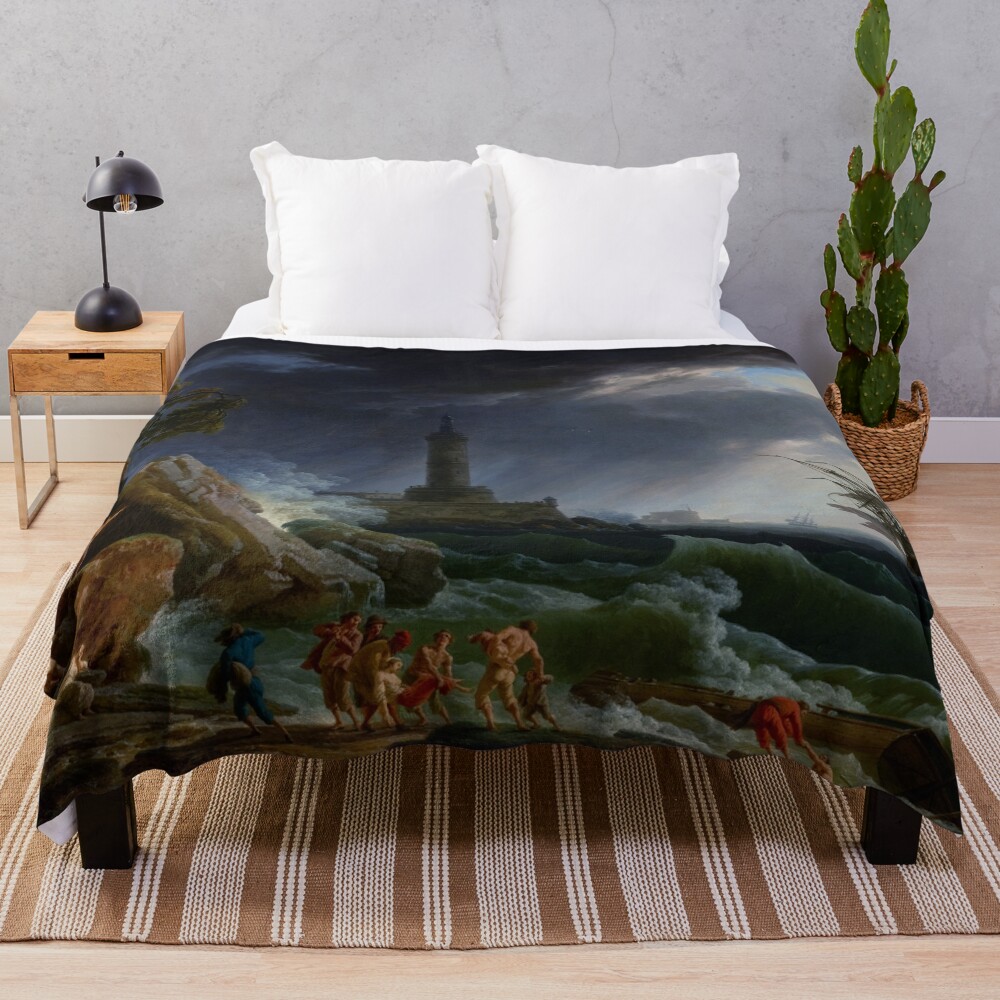
A Storm on a Mediterranean Coast is a retouched digital art reproduction of a public domain image that is available online as a clò-bhualadh canabhas air-loidhne.
Fiosrachadh gu h-ìosal a thàinig bho Wikipedia.org
Vernet was born in Avignon, and at the age of fourteen helped his father, Antoine Vernet (1689 – 1753), who was a skilled decorative painter, in the most important parts of his work.
Ann an 1734, Vernet left for Rome to study landscape designers and maritime painters, like French Baroque Painter, Dreachadair agus Etcher Claude Gellee ris an canar cuideachd Claude Lorrain (1600 – 1682); le mòran de na pìosan aig Vernet mar chuimhneachan air obair Lorrain.
Airson fichead bliadhna bha Vernet a 'fuireach anns an Ròimh, agus rinn iad seallaidhean de phuirt-mara, stoirmean, socair, gealaich, agus mucan-mara mòra; fàs gu sònraichte mòr-chòrdte am measg uaislean Sasannach, mòran dhiubh a bha air an Grand Tour (cleachdadh bhon 17mh agus 18mh linn de thuras traidiseanta tron Roinn Eòrpa, a chaidh a ghabhail os làimh le fir òga Eòrpach den chiad ìre (mu dheidhinn 21 bliadhna dh'aois) de dhòighean agus inbhe gu leòr mar as trice còmhla ri neach-gleidhidh).
Ann an 1753 Chaidh Vernet a thoirt air ais gu Paris; agus fhad 's a bha e ann, le ordugh rioghail, chuir e gu bàs an t-sreath de phuirt-mara na Frainge leis a bheil e nas eòlaiche. Ann an 1757, he painted a series of four paintings titled Four Times of the Day depicting, not surprisingly, four times of the day.
With a certain conventionality in design, proper to his day, Vernet allied the results of constant and honest observation of natural effects of atmosphere, which he rendered with unusual pictorial artistry.
Perhaps no painter of landscapes or sea-pieces has ever made the human figure so completely a part of the scene depicted or so important a factor in his design. In this respect he was heavily influenced by Giovanni Paolo Panini, whom he probably met and worked with in Rome.
Vernet’s work draws on natural themes, but in a way that is neither sentimental or emotive; as the overall effect of his style is wholly decorative. “Others may know better”, he said, with just pride, “ciamar a pheantadh an speur, an talamh, an cuan; chan eil fios aig duine nas fheàrr na mise mar a nì mi dealbh”.