

A Summertime Beauty
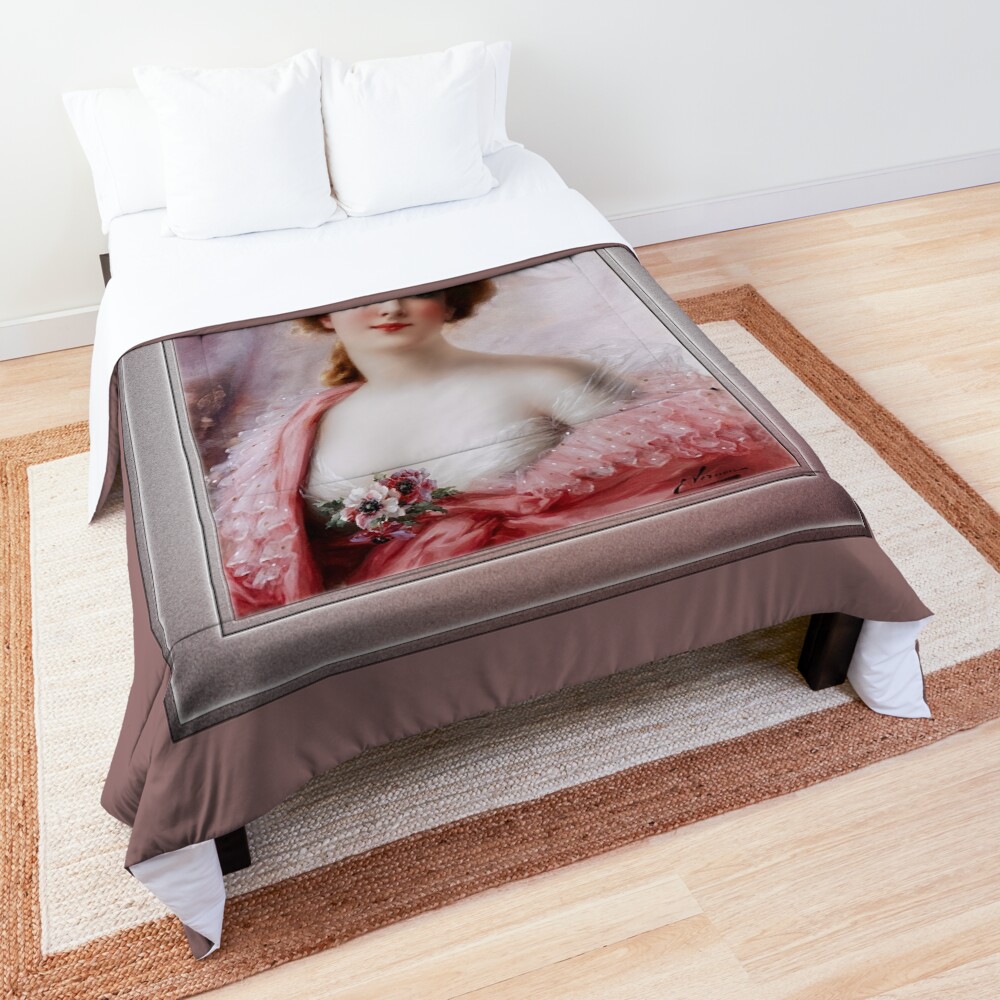
Emile Vernon, a renowned French artist (1872–1920), captured the essence of beauty and femininity in his 1910 masterpiece, A Summertime Beauty. The painting portrays a delicate young woman amidst a soft and vibrant floral composition. A close-up of the subject reveals an ethereal beauty, with her poised expression and serene demeanor invoking a sense of tranquility and elegance. The mood of the painting is undeniably one of grace, evoking nostalgia and a celebration of youth and the natural world.
Spis treści
Temat: A Portrait of Grace
The central focus of the painting is a beautiful young woman, presented in a portrait format. Her hair is styled in soft waves, adorned with a delicate floral wreath composed of pale pink and white blossoms. This floral motif enhances her purity and innocence, while also symbolizing the joys of summer. The woman gazes gently toward the viewer with an inviting yet subtle smile, exuding an air of serenity and confidence.
Her attire consists of a soft, pink gown, which flows gently around her form and is dotted with delicate white flowers. The gown’s sheer texture gives a sense of lightness and softness, as though it were spun from the finest, airy fabric. The combination of the pale pink hue of the gown with the soft colors of the flowers gives a sense of harmony with nature, aligning with the summer theme that is central to the piece.
Miękkie, rounded features of the woman’s face are expertly captured. Her cheeks are flushed with a natural rosy glow, complementing the flowers in her hair and the delicate floral arrangement on her gown. The artist has skillfully blended light and shadow to create a lifelike texture that conveys youth, health, and vitality. Her expression is one of quiet confidence, while the soft gaze toward the viewer seems both intimate and distant, as if she is contemplating the fleeting nature of beauty itself.
Composition and Use of Color
Emile Vernon’s use of color in A Summertime Beauty is notable for its softness and lightness. The pastel tones dominate the piece, with the pink hues of the subject’s gown and the soft colors of the flowers creating a harmonious balance that emphasizes both the subject’s form and the floral elements in the painting. The artist’s palette focuses on tender colors like soft pinks, upławy, and light greens, conveying a sense of calm and peace.
The light background adds a dreamy quality to the scene, with faint hints of mauve and pale lavender subtly enhancing the overall warmth of the composition. The soft hues of the background mirror the gentle presence of the subject, creating an atmospheric depth that feels almost like a dream. Vernon’s skillful blending and layering of the colors ensure that the entire painting remains cohesive, with the subject and the surrounding flowers seamlessly merging into one harmonious composition.
The texture of the piece is delicate, with the artist using soft brushstrokes to define the woman’s face, włosy, and gown. The use of smooth transitions between light and shadow gives a sense of volume and depth, particularly on the contours of her face and the fabric of her gown. The flowers adorning her hair and dress are rendered with exquisite detail, each petal painted with care, further enhancing the naturalistic quality of the painting.
Symbolism of the Floral Elements
In addition to portraying beauty, the flowers in A Summertime Beauty serve as a symbol of both youth and the ephemeral nature of life. The wreath in the woman’s hair and the flowers on her gown are rich in symbolism, often associated with purity, kobiecość, and the fleeting beauty of youth. The choice of pink and white blossoms might also signify grace and innocence, qualities that are often associated with the summer season, a time of flourishing life and vitality.
The flowers surrounding the subject are not merely ornamental; they tie the subject to the natural world, enhancing the theme of harmony between the woman and her environment. They emphasize the idea that beauty, like flowers, is temporary and fragile, blooming in the moment but fading with time. This contrast between the delicate flowers and the woman’s timeless beauty hints at the duality of human existence—youth is fleeting, but the elegance it embodies is eternal in art.
Mood and Theme of the Artwork
The overall mood of the painting is one of serene contemplation, capturing a fleeting moment of natural beauty. The woman’s gentle expression and the soft light that surrounds her evoke feelings of nostalgia for the innocence and vitality of youth. The choice of the summertime theme aligns with feelings of warmth, spokój, and the calm embrace of nature.
The painting encapsulates a sense of timelessness, as though the viewer is witnessing a moment suspended in time. Vernon’s ability to convey the delicate balance between youth and nature in his work highlights his mastery of capturing the beauty and fragility of life. The painting reflects a longing for the purity and simplicity of simpler times, and the soft color palette and calm expression reinforce the peaceful and idyllic tone that defines the piece.

Wniosek
A Summertime Beauty by Emile Vernon is a captivating portrayal of youthful grace, encapsulating a moment in time where beauty and nature converge. The artist’s exceptional technique, use of color, and symbolic incorporation of floral elements create a harmonious composition that invites the viewer to reflect on the delicate and fleeting nature of life. With its soft, pastelowe odcienie, serene expression, and elegant portrayal of femininity, the painting remains a testament to the timeless beauty that Emile Vernon so skillfully immortalized.
Jest to zremasterowana reprodukcja starych mistrzów sztuki cyfrowej obrazu należącego do domeny publicznej, która jest dostępna jako druk na płótnie online.
To dzieło sztuki cyfrowej, podobnie jak wszystkie dzieła sztuki, które można znaleźć na stronie internetowej Xzendor7, można kupić online w różnych formatach materiałów, w tym odbitki na płótnie, wydruki akrylowe, metalowe nadruki, druki na drewnie, wydruki w ramkach, plakaty, oraz jako zwinięte wydruki na płótnie w różnych rozmiarach od 12 cale do 72 cale w zależności od rozmiaru rzeczywistej grafiki i sklepu z drukiem na żądanie, w którym zdecydujesz się kupić sztukę.
Grafika jest również dostępna na szerokiej gamie odzieży męskiej i damskiej, kubki, torby, szaliki, notesy i czasopisma oraz wiele produktów do dekoracji wnętrz.
O Artystce
Informacje poniżej od Galeria I Jan
Émile Vernon był uczniem Szkoły Sztuk Pięknych w Tours, gdzie zdobył pierwszą nagrodę za rysowanie 1888; potem był mentorem Williama Bouguereau i Auguste'a Truphème.
Następnie w 1898 brał udział w wystawie sztuk pięknych i zdobniczych w Tours, a później w tym samym roku, na Wystawie Artystów Francuskich i regularnie wystawiał tam swoje prace z 1898 do 1913; prezentacja portretów, krajobrazy, sceny z Bretanii, bukiety martwej natury, które namalował akwarelą, a także postacie kobiece, która później stała się specjalnością.
Émile celował w swoich obrazach delikatnie oświetlonych, urocze figurki dzieci i eleganckich młodych kobiet, z którym często kojarzył zwierzaka, takiego jak kot, pies czy ptak, i przyozdabiał swoje wizerunki girlandami lub bukietami kwiatów, przez całą swoją karierę; ale był też bardzo wszechstronnym artystą, który potrafił malować z rygorem i siłą, jak w jego pracach portret Madame Vernon i Sous la Lampe (Pod lampą).