

Rozległy krajobraz rzeczny z wiatrakami, ok. 1848 r
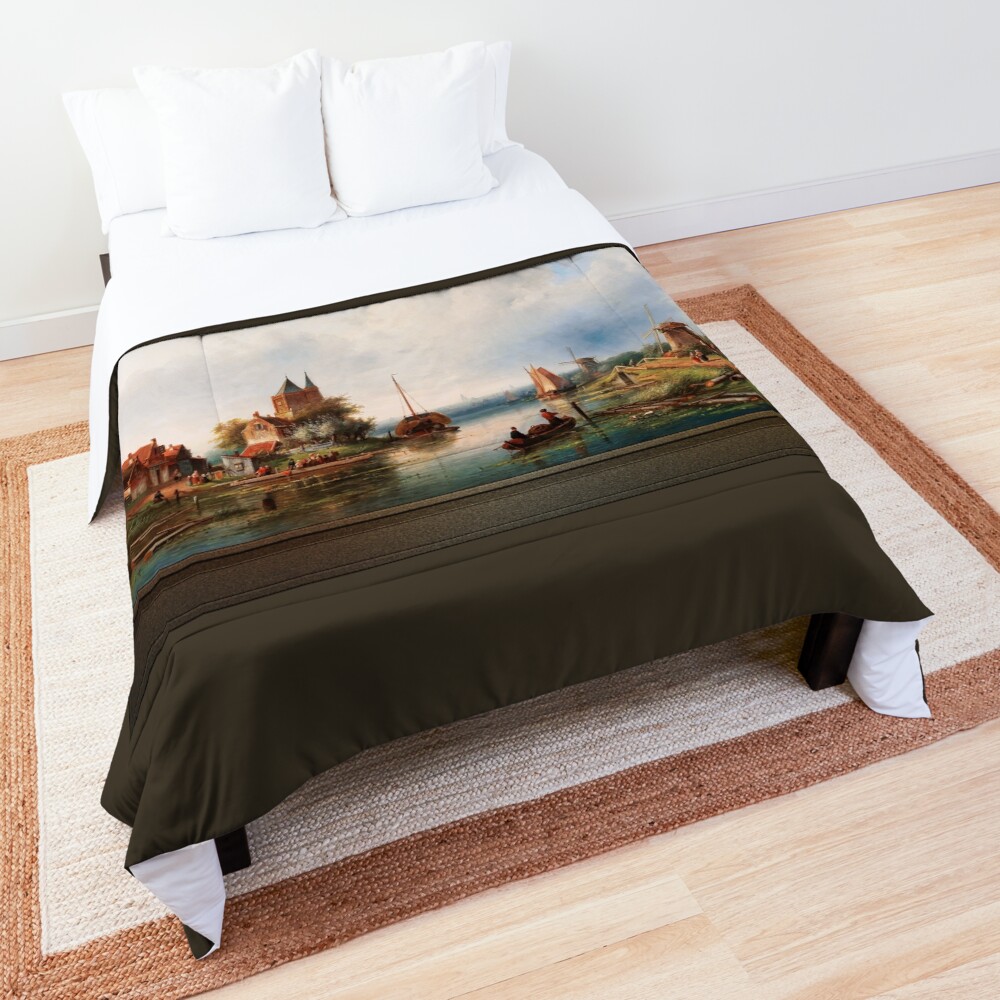
“Rozległy krajobraz rzeczny z wiatrakami,” stworzone wokół 1848 przez belgijskiego malarza Charlesa Leickerta (1816 – 1907), przedstawia spokojną i rozległą scenę rzeczną, typową dla twórczości artysty z połowy XIX wieku. Znany ze swoich sugestywnych krajobrazów, Leickert po mistrzowsku uchwycił piękno holenderskiej wsi, szczególnie podkreślając spokojne wody, bujna zieleń, i delikatny bieg codziennego życia. Obraz ten jest przykładem tradycji romantycznej i holenderskiego realizmu, ukazując harmonię natury z ingerencją człowieka.
Spis treści
Kompozycja i temat główny
Tematem przewodnim tego obrazu są naturalne elementy wody, grunt, oraz struktury stworzone przez człowieka, które współistnieją w tym środowisku. Szeroki, Odblaskowa rzeka dominuje w dolnej połowie kompozycji, z delikatnymi zmarszczkami, które odzwierciedlają kłębiące się chmury powyżej. Woda służy nie tylko jako dosłowne odbicie, ale także jako symboliczne połączenie między ziemią a niebem, wywołując poczucie pokojowego współistnienia. Wzdłuż brzegów rzeki, rozrzuconych jest szereg konstrukcji i wiatraków, rozmieszczone strategicznie, aby zwiększyć ogólne poczucie głębi i ruchu w obrazie.
Leickert użył jasnej palety, aby oddać naturalne piękno sceny. Umiejscowienie wiatraków i łodzi zwiększa poczucie perspektywy, z największym wiatrakiem umieszczonym po prawej stronie i coraz mniejszymi, rozproszonymi po lewej stronie. Ta równowaga została osiągnięta po mistrzowsku, z rozmieszczeniem wiatraków dodających element architektoniczny kontrastujący z organicznymi krzywiznami rzeki.
Przedmioty i figury
Na pierwszym planie, grupa postaci zajmuje się różnymi zajęciami nad wodą. Niektórzy gromadzą się wzdłuż brzegu rzeki, podczas gdy inne pływają po wodzie na małych łódkach, tworząc dynamiczną grę ruchu i bezruchu. Te liczby, choć stosunkowo niewielkie w porównaniu z krajobrazem, zapewniają istotny element ludzki, który zakotwicza rozległe i spokojne otoczenie. Ich interakcje ze środowiskiem ilustrują wpływ życia ludzkiego w skądinąd naturalnym otoczeniu.
Przedstawione łodzie są typowe dla tamtych czasów, z płaskim dnem dostosowanym do spokojnych wód rzeki. Na niektórych łodziach znajdują się figurki, podczas gdy inne są zadokowane wzdłuż brzegu, subtelnie podkreślając spokojne tempo życia w holenderskim krajobrazie rzecznym. Postacie wydają się być zaangażowane w codzienne czynności, być może zajmując się handlem lub rozrywką, osadzając w ten sposób widza w naturalnych rytmach epoki.
Teren i materiały
Teren na obrazie Leickerta jest szczegółowo oddany, z bujną zielenią brzegów rzek ostro kontrastującą z otwartym niebem. Trawa i drzewa są pomalowane z najdrobniejszymi szczegółami, ukazujący umiejętność artysty uchwycenia faktury krajobrazu. W średnim dystansie, lekko wzniesiony teren jest usiany wiatrakami, które wydają się wyrastać z równiny, ich żagle delikatnie targane przez wiatr. Same wiatraki są zbudowane z drewna i strzechy, indicative of their historical purpose to pump water or grind grain, providing insight into the cultural significance of such structures in the 19th century.
The distant horizon is filled with a mixture of grassy fields and soft rolling hills, leading the viewer’s eye towards a faint outline of a church tower and rooftops peeking through the trees. This hint of a small village suggests that this scene is not entirely remote but is part of a thriving rural community where both human life and nature coalesce harmoniously.
The sky in the painting is perhaps the most striking element, with a cloud-filled expanse that occupies a significant portion of the upper canvas. The clouds are soft, biały, and billowy, painted in a manner that suggests the clear, temperate weather typical of the region. This tranquil sky further enhances the painting’s overall serene atmosphere, evoking a sense of calm and nostalgia. The subtle gradations of blue and white in the sky contrast with the darker green and brown hues of the river and land, giving the piece a natural balance.
Styl, Temat, i Nastrój
Leickert’s work is representative of the Dutch Realist style, which focuses on naturalism, drobiazgowy szczegół, and the accurate portrayal of everyday life. The colors are warm and earthy, contributing to the piece’s peaceful and reflective mood. There is no sense of urgency in the scene; Zamiast, it exudes quietude, suggesting that life flows slowly and calmly, both for the people and the land they inhabit.
The themes of rural life and the interplay between nature and human activity are central to the piece. The inclusion of windmills, boats, and figures engaged in simple tasks speaks to an era where the natural landscape was integral to the livelihoods of the people. W tym obrazie, Leickert invites the viewer to step into a quiet world where time moves at its own pace, and the bustle of modern life is absent. The mood created is one of nostalgia for a simpler time, where the bond between people and their environment was strong and unbroken.
Leickert’s use of perspective and his careful attention to light and shadow also contribute to the atmospheric qualities of the work. The sweeping view of the river, coupled with the balanced placement of the windmills and figures, draws the viewer into a world where the landscape is as important as the people within it. This careful composition enhances the feeling of timelessness and tranquility that permeates the entire scene.
Wniosek
“Rozległy krajobraz rzeczny z wiatrakami” is an exemplary piece by Charles Leickert that encapsulates the beauty and serenity of 19th-century Dutch landscape painting. The balance of natural and manmade elements, along with the finely rendered details of the terrain and sky, creates a scene of peaceful coexistence. Liczby, boats, and windmills provide a sense of scale and humanity, reminding the viewer of the deep connection between people and nature. Leickert’s masterful technique and use of color serve to heighten the painting’s mood of tranquility, inviting the viewer to immerse themselves in the serene world of the past.
Jest to zremasterowana cyfrowa reprodukcja starych mistrzów obrazu z domeny publicznej, która jest dostępna jako druk na płótnie online.