

A Water Idyll: Exploring Enchantment in Hans Zatzka’s Romantic Vision
A Water Idyll by Hans Zatzka (1859-1945) a elwir hefyd yn P.. Ronsard, Pierre de Ronsard, neu H.. Llofnododd Zabateri ac ef lawer o'i weithiau fel Joseph Bernard, J.. Bernard, neu Bernard Zatzka i osgoi cosbau contractau brecio a oedd yn cyfyngu ar faint o waith y gallai ei werthu; was a celebrated Austrian painter known for his idyllic scenes of nymphs, tylwyth teg, and romantic landscapes, often imbued with a delicate sense of melancholy and enchantment.
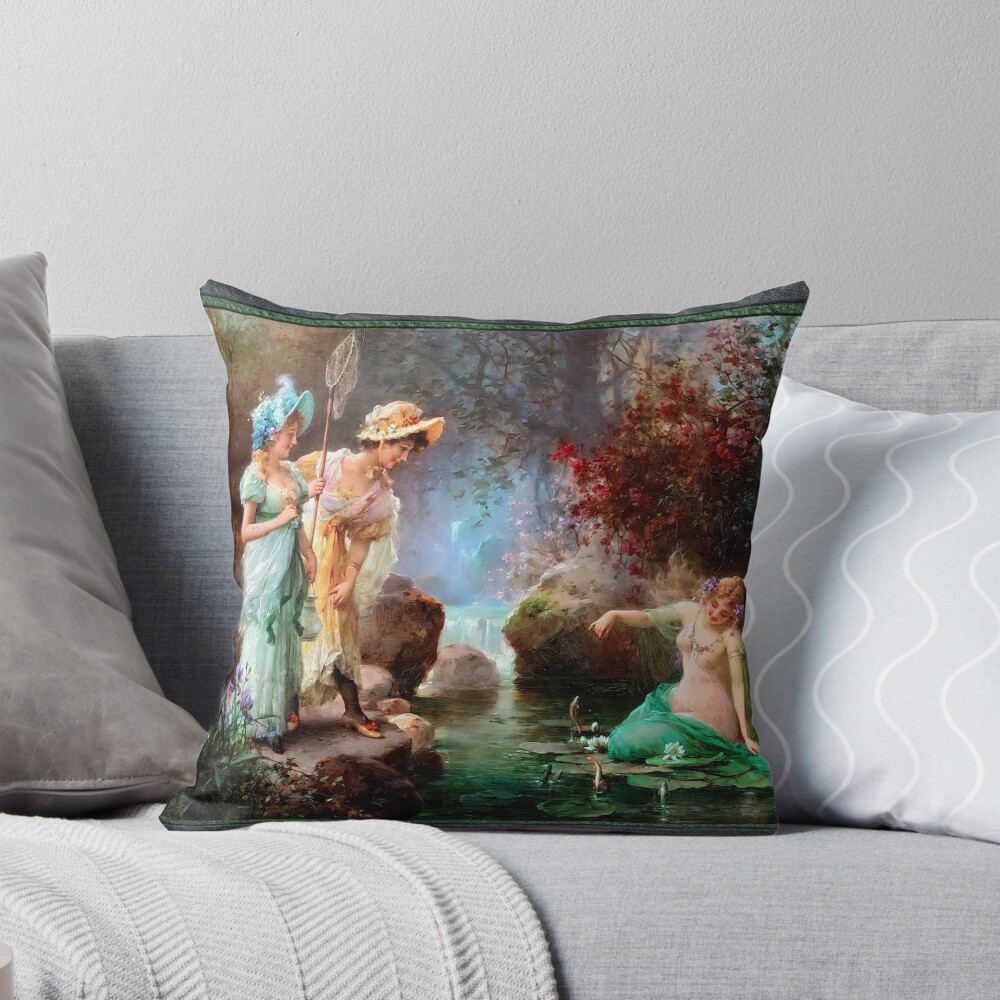
“A Water Idyll,” exemplifies this signature style, transporting the viewer to a secluded woodland pool where reality blurs with fantasy. The painting is not merely a depiction of nature; it’s an exploration of longing, arsylwi, and the allure of the unseen world. Zatzka’s meticulous attention to detail, combined with his mastery of light and color, creates a captivating atmosphere that invites contemplation.
Tabl Cynnwys
Cytgord Cyfansoddiadol & Narrative Suggestion
Mae'r cyfansoddiad wedi'i strwythuro'n ofalus o amgylch pwll canolog o ddŵr, gweithredu fel canolbwynt corfforol a throsiadol. Dwy ddynes ifanc, wedi'u gwisgo mewn gwisg ffasiynol o ddiwedd y 19eg ganrif, sefyll ar y banc, eu syllu ar ffigwr yn dod allan o'r dyfnderoedd - nymff neu wirod dŵr.
Mae lleoliad y ffigurau hyn yn creu triongl gweledol clir, tywys y llygad ar draws y cynfas a sefydlu tensiwn naratif rhwng y byd dynol a myth y chwedl. Mae'r cefndir yn drwchus o bobl gyda dail, creu ymdeimlad o ddyfnder a neilltuaeth, tra hefyd yn fframio'r gweithredu canolog. Mae rhaeadr fach yn rhaeadru i'r pwll, ychwanegu symudiad ac awgrym clywedol i'r olygfa.
Y Ffigurau: Observation & Enchantment
Mae'r ddwy fenyw wedi'u rendro â manylder rhyfeddol, eu mynegiant yn cyfleu cymysgedd o chwilfrydedd a rhyfeddod. Mae un yn dal rhwyd pili-pala, gan awgrymu mynd ar drywydd sbesimenau naturiol yn gynharach, tra bod y llall yn pwyso ymlaen ychydig, cododd ei llaw mewn ystum o ymholi tyner. Mae eu dillad - ffrogiau lliw golau gydag addurniadau cain - yn adlewyrchu ffasiwn y cyfnod ond hefyd yn cyfrannu at yr ymdeimlad cyffredinol o ysgafnder a gras.
Y nymff, yn rhannol o dan y dŵr yn y dŵr, yn cael ei darlunio gyda harddwch ethereal. Ei gwallt yn llifo, wedi'i addurno â blodau, yn ymdoddi'n ddi-dor â'r dail cyfagos. Mae ei ystum yn awgrymu eiliad o ymddangosiad, fel pe bai hi newydd godi o'r dyfnder neu ar fin dychwelyd o dan yr wyneb. Mae hi'n estyn ei llaw tuag at y merched ar y lan, creu cysylltiad cynnil rhwng y ddau fyd.
Light and Color: A Romantic Palette
Mae defnydd Zatzka o olau a lliw yn hanfodol i sefydlu naws y paentiad. Mae'r olygfa yn cael ei bath mewn meddal, golau gwasgaredig sy'n hidlo trwy'r coed, creu patrymau brith ar y dwr a'r dail. Tonau cynnes - aur, melynion, a llysiau gwyrdd – amlycaf yn y blaendir, tra bod blues a fioledau oerach yn cael eu defnyddio i ddarlunio cilfachau dyfnach y pwll a'r goedwig gefndir. Mae'r cyferbyniad hwn yn cyfoethogi'r ymdeimlad o ddyfnder ac yn creu awyrgylch o ddirgelwch. Mae'r artist yn cyflogi'n fedrus ciaroscuro, defnyddio cyferbyniadau dramatig rhwng golau a chysgod i amlygu elfennau allweddol a chreu ymdeimlad o ddrama. Mae'r palet cyffredinol yn nodweddiadol o Rhamantiaeth, gan bwysleisio emosiwn a phrofiad goddrychol dros realaeth gaeth.
Botanical Detail & Environmental Storytelling
Y tu hwnt i'r ffigurau, Mae paentiad Zatzka yn dangos dealltwriaeth drawiadol o fanylion botanegol. Mae gwahanol rywogaethau o flodau a dail yn cael eu darlunio'n gywir, ychwanegu at gyfoeth a dilysrwydd yr olygfa. Presenoldeb blodau gwyllt - irises, lili, a blodau cain eraill - yn atgyfnerthu'r lleoliad delfrydol ac yn awgrymu lle nad yw ymyrraeth ddynol yn ei gyffwrdd. Mae'r llystyfiant trwchus o amgylch y pwll yn creu ymdeimlad o amgáu, gan ynysu'r ffigurau ymhellach o'r byd y tu allan. Nid addurniadol yn unig yw'r sylw hwn i fanylion amgylcheddol; mae’n cyfrannu’n sylweddol at naratif cyffredinol y paentiad, gan awgrymu noddfa gudd lle mae natur a myth yn cydblethu.
Etifeddiaeth Artistig Zatzka & Apêl Ffantasi Rhamantaidd
“A Water Idyll” yn enghraifft o apêl barhaus Zatzka fel artist a ddaliodd y dychymyg gyda’i weledigaethau rhamantaidd. Mae ei baentiadau'n atseinio gyda gwylwyr yn ceisio dianc o'r byd, gan gynnig cipolwg ar fyd lle mae harddwch a swyngyfaredd yn teyrnasu ar y goruchaf. Roedd gwaith Zatzka yn hynod boblogaidd yn ystod ei oes, ac yn parhau i gael ei edmygu am ei sgil technegol, awyrgylch atgofus, a themâu oesol byd natur, ffantasi, a hiraeth dynol. Mae poblogrwydd parhaus y paentiad yn siarad â’r awydd cyffredinol am gysylltiad â rhywbeth y tu hwnt i’r cyffredin – dyhead bod Zatzka wedi’i ddal mor huawdl ar gynfas..
Bio artist yn deillio o Wikipedia.org
Weithiau gelwir Hans Zatzka yn P.. Ronsard, Pierre de Ronsard, neu H.. Batris, ac arwyddodd lawer o'i weithiau fel Joseph Bernard, J.. Bernard, neu Bernard Zatzka.
Pwrpas amrywiaeth eang o ffugenwau Zatzka oedd osgoi cosbau am dorri contractau a oedd yn cyfyngu ar faint o waith celf y gallai ei werthu..
Mae hyn wedi achosi i rai cronfeydd data celf gyfuno gwaith Zatzka o dan y ffugenw Joseph Bernard â’r cerflunydd Ffrengig â’r un enw.
Ganwyd Hans Zatzka ar 8 Mawrth 1859 yn Fienna. Gweithiwr adeiladu oedd ei dad Bartholomaüs, a'i fam oedd Marie Karpischek Zatzka.
Rhwng 1877 a 1882, astudiodd yn yr Academie des Beaux-Arts, dan Christian Griepenkerl, Carl Wurzinger, a Karl von Blas.
Llwyddodd Zatzka i ennill bywoliaeth trwy gynhyrchu ffresgoau ar gyfer eglwysi a sefydliadau eraill.
Yn 1885, Comisiynwyd Zatzka i greu ffresgo nenfwd The Naiad of Baden yn Kurhaus Baden.
Roedd llawer o weithiau Zatzka yn baentiadau crefyddol a darnau allor wedi'u cysegru i eglwysi amrywiol yn Awstria.
Fodd bynnag, mae'n fwy adnabyddus am ei ddarluniau o ferched, tylwyth teg, a golygfeydd rhyfeddol eraill.
Aml, byddai'n tynnu ysbrydoliaeth o weithiau Richard Wagner a chwedlau tylwyth teg y Brodyr Grimm.
Ar ddiwedd y 19eg ganrif a dechrau'r 20fed ganrif, tynnwyd ffotograffau o sawl darn gan Zatzka a'u gwneud yn gardiau post masnachol a chasgladwy.
Yn ystod y 1920au, Daeth arddull Zatzka yn addurn o ddewis ledled Ewrop. Yn ychwanegol, cynhaliodd y deng mlynedd ar hugain blaenorol atgyfodiad i Zatzka.