

נוף חורף עם פעילויות מסביב לכפר
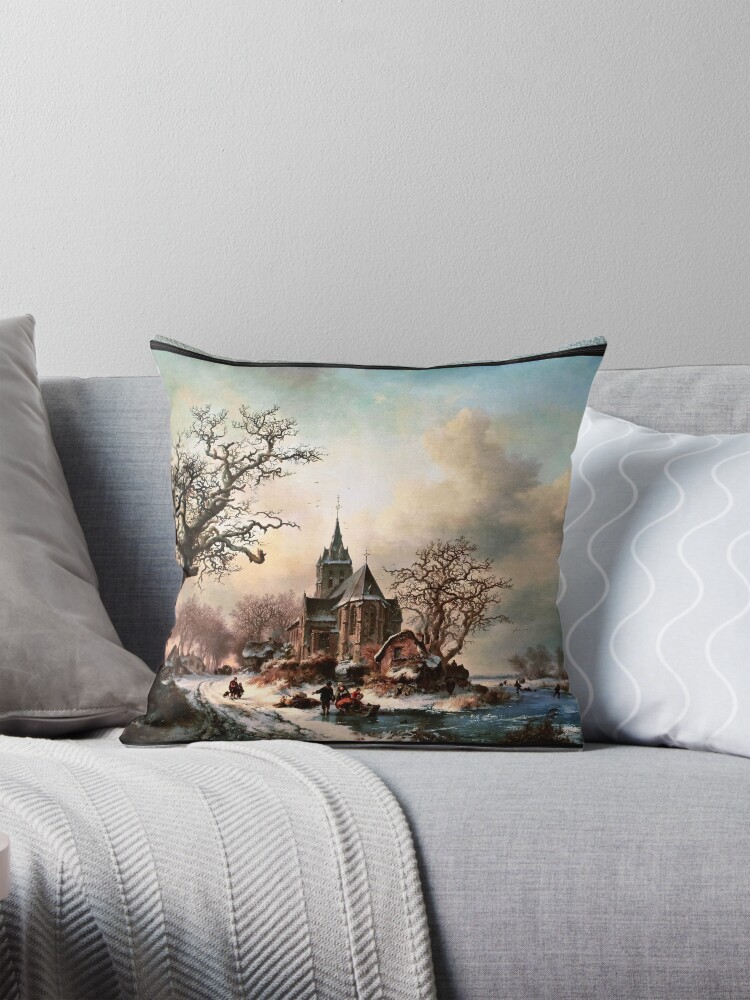
נוף חורף עם פעילויות מסביב לכפר ב-1857 על ידי הצייר ההולנדי הנודע מהמאה ה-19 פרדריק מרינוס קרוזמן (1816 – 1882), לוכדת סצנה מובהקת של החיים הכפריים בחודשי החורף. הציור מדגים את הסגנון הרומנטי, ידוע בדגש שלו על רגש, טֶבַע, והחיבור האנושי לסביבה. השימוש של קרוזמן באור, צֶבַע, ואלמנטים טבעיים משדרים תחושת שלווה, ובמקביל חוגגים את החיים הצנועים של תושבי הכפר כשהם עוסקים בפעילויות יומיומיות בתוך היופי הקשה של החורף. הקומפוזיציה מזמינה את הצופה לעולם מפורט ואטמוספרי, מציג את ההרמוניה בין האנושות לנוף שמסביב.
תוכן העניינים
Scene Overview and Composition
In this detailed נוף חורפי, the village stands at the heart of the composition, surrounded by gently rolling hills covered in a blanket of snow. The church steeple in the distance rises against a backdrop of soft, עננים מסתחררים, which suggests the cold yet peaceful atmosphere of a winter day. The building, likely the village church, is crafted with careful attention to architectural detail, indicative of the period’s devotion to realism. The figures below are shown in mid-action, capturing everyday life in the village as it unfolds amidst the snow.
The foreground features a snow-covered road that winds through the village. A cart, drawn by a horse, is being pulled along this road, with a couple of figures accompanying it. One man walks beside the cart, possibly helping to guide it along the snowy path, while another person, perhaps a woman, is seated atop the cart. This domestic activity, indicative of the season’s challenges, portrays the hardworking nature of rural life. באמצע הדרך, a group of people are seen walking along the path, bundled up in warm coats and hats, adding to the realistic portrayal of the village’s winter routine.
נושא ומצב רוח
The primary theme of the painting revolves around the human experience in nature, particularly during the winter season. Kruseman’s depiction of the villagers working and moving through the snow evokes a sense of stoic perseverance, characteristic of rural life in the 19th century. The snow-covered landscape, though cold and harsh, is not presented as an obstacle, but rather as an element with which the villagers co-exist in a peaceful harmony. This image of daily labor amidst a breathtaking winter environment invites contemplation on the resilience and fortitude of human life in the face of nature’s challenges.
The mood of the artwork is peaceful yet dynamic, with Kruseman balancing the stillness of the landscape with the movement of the figures. The serene winter setting, punctuated by the activity in the foreground, suggests both calm and industriousness. The light in the sky creates a soft glow, enhancing the peacefulness of the scene while also contributing a sense of the day’s fleeting passage. There is a delicate sense of quiet beauty, evoking the stillness and introspective mood typical of winter.
Details of the Village and Terrain
הכפר המתואר קטן אך ניתן לזיהוי, עם התמקדות ברורה באדריכלות הכפרית של אותה תקופה. הבניינים, חלקם עם גגות קש ואחרים עם חזיתות מובנות יותר, מסודרים בצורה המעידה על האופי ההדוק של הקהילה. הכנסייה, כבניין הגבוה ביותר בקומפוזיציה, משמש כמוקד הכפר, חיזוק תפקידו המרכזי בחיי היומיום ובתרגול הרוחני של התושבים.
השטח המקיף את הכפר נשלט על ידי שדות מכוסי שלג, עצים בעלי עלווה דלילה, וגבעות רחוקות. ענפי העצים חסרי העלים מתפתלים ומתעקלים ברוח, הוספת תחושת תנועה לסצנה הסטטית אחרת. The way the snow blankets the ground and the rooftops of the houses shows the depth of the season and the heaviness of the winter chill. Kruseman’s careful attention to the light and shadow cast on the snow provides a sense of depth and texture, highlighting the coldness of the day. There is an interplay between the earth and sky, with the colors in the sky transitioning from a soft pinkish hue near the horizon to a deeper blue above.
Material Use and Artistic Style
Kruseman’s choice of oil paints allows for a rich texture that brings life to the scene. The use of light and shadow is masterful, as it subtly draws attention to the reflective surfaces of the snow and the warmth of the figures against the cool background. The details in the clothing of the figures are finely rendered, showcasing the artist’s skill in capturing both the textures of fabric and the nuances of the human form. The distinct brushwork used in the trees, העננים, and the snow, conveys the feeling of motion, while maintaining the overall sense of stillness and calm that defines the scene.
The Romantic style is reflected in the composition’s emphasis on nature’s beauty and the connection between humanity and the landscape. The portrayal of the rural village and its people is both a celebration and a tribute to the past, evoking a sense of nostalgia and reverence for simple, agrarian life. There is an underlying celebration of both the quiet beauty of nature and the persistence of life through its seasons, particularly the harshness of winter.
מַסְקָנָה
ב נוף חורף עם פעילויות מסביב לכפר, Frederik Marinus Kruseman creates an evocative, timeless depiction of a winter scene that balances the serenity of the landscape with the industriousness of the people who inhabit it. Through his careful rendering of figures and environment, he presents a vision of life that, while rooted in the specific context of 19th-century rural Netherlands, transcends its time and place. The artist invites us to consider not just the cold and stillness of winter, but also the warmth of community, הַתמָדָה, and connection to the natural world. The painting is both a quiet reflection on the challenges of rural life and a celebration of the enduring beauty of the natural world in winter.
A Winter Landscape with Activities around a Village is a retouched digital art old masters reproduction of a public domain image.
יצירת אמנות דיגיטלית זו, כמו כל יצירות האמנות שניתן למצוא באתר Xzendor7 זמין לרכישה אונליין במגוון פורמטים חומריים כולל הדפסי קנבס, הדפסי אקריליק, הדפסי מתכת, הדפסי עץ, הדפסים ממוסגרים, עמוד הבית של Xzendor7, וכהדפסי קנבס מגולגלים במגוון גדלים מ 12 אינצ'ים ל 72 אינצ'ים בהתאם לגודל הגרפיקה בפועל ולחנות ההדפסה לפי דרישה ממנה תבחר לקנות את האמנות.
יצירות האמנות זמינות גם במגוון רחב של בגדי גברים ונשים, ספלים, טוטס, צעיפים, מחברות ויומנים ומוצרי עיצוב לבית רבים.
על האמן
מידע למטה נגזר Wikipedia.org
פרידריק קיבל את שיעורי הציור הראשונים שלו מצייר הדומם יאן ריקרס (1790 – 1858), שבאותה עת היה מנהל האקדמיה המלכותית לאמנויות באמסטרדם; ומי גם חילק את בן דודו ג'אן אדם[ בזמן שלמד בבית ספר מקצועי בהארלם מ 1832 ל 1833.
ב 1833 לאחר מכן החל ללמוד ציור עם צייר הולנדי, חָרָט, ליטוגרף, צבעי מים ומאייר ניקולאס יוהנס רוזנבו (1805 – 1880).
ואז פנימה 1835 הוא עבר ל- Het Gooi במרכז Nertherlands, שם למד לימודים מתקדמים אצל צייר הנוף ההולנדי יאן ואן ראבנסוואי (1789 – 1869); וכן למד תקופה קצרה אצל צייר נוף הולנדי וליטוגרף בארנד קורנליס קוקקוק. (1803 – 1862).
מאוחר יותר חזר להארלם ומשם לקלב שבצפון מערב גרמניה שם צייר נופים, לפני שחוזרים הביתה פנימה 1839.
ב 1841 הוא עבר לבריסל ונשאר שם עד 1852, פרט לתקופה קצרה של כמה חודשים כאשר נסע לפריז. ב 1852 הוא חזר הביתה להארלם ונשאר שם ארבע שנים, לאחר מכן נסע לבלגיה, שם הוא נשאר עד מותו 1882.