

Ung dama með rauðan aðdáanda
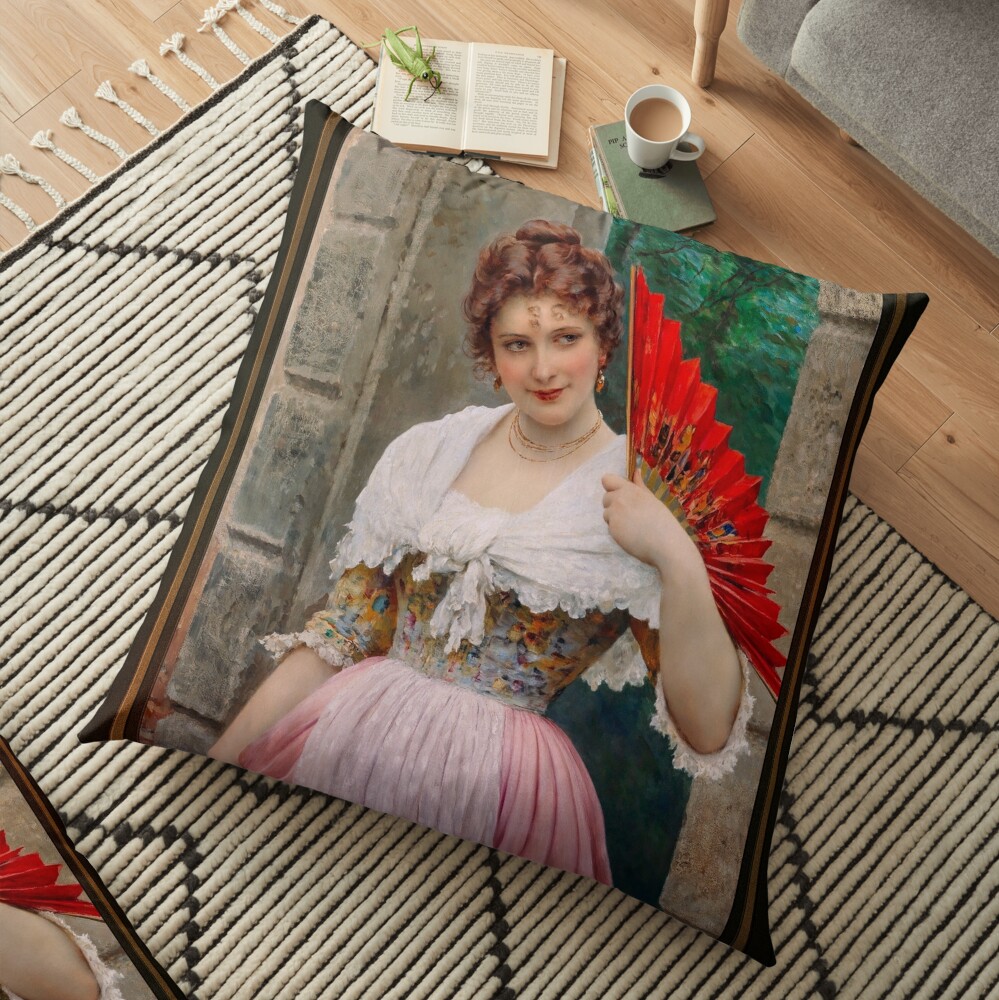
“Ung dama með rauðan aðdáanda,” búið til í 1897 by Italian painter Eugen von Blaas (1843–1931), is an exquisite example of the artist’s talent for capturing elegant scenes from daily life, steeped in the opulence of late 19th-century Europe. In this particular painting, Blaas conveys the sophisticated world of aristocratic women, emphasizing grace, fegurð, og fágun. The painting is not only a portrait of a young woman but also an embodiment of the fashion, attitudes, and natural beauty of its time.
Efnisyfirlit
Viðfangsefnið og samsetningin
At the center of the composition is a young woman, her delicate features framed by a soft cascade of light brown curls that hint at the youthful energy and warmth of the scene. She wears a gown that speaks to the fashionable styles of the late 19th century, with its high waistline, billowing skirt, and the intricate textile work that blends pastel hues of pink, lavender, og hvítur.
The woman’s posture is relaxed yet refined, holding a vibrant red fan that contrasts sharply with the muted tones of her attire and background. The fan serves as both an accessory and an integral visual element, drawing the viewer’s eye immediately. The vibrant red of the fan, with its delicate painted designs, contrasts beautifully with her attire, and its boldness contrasts with the soft elegance of her gown.
The artist captures the woman’s gaze with a sense of intimacy and intrigue. Augun hennar, framed by soft curls, look to the side with a knowing expression, as if caught in a moment of daydreaming or perhaps conversing with someone off to the left of the frame. This subtle connection between the viewer and the subject draws the audience into the narrative of the scene, inviting them to imagine the woman’s thoughts or the circumstances of her moment in time.
Bakgrunnur og umgjörð
Bakgrunnur af “Ung dama með rauðan aðdáanda” is a garden scene, visible through a stone archway. The earthy tones of the stonework and the lush green foliage beyond create a serene, almost idyllic atmosphere. The setting suggests an aristocratic outdoor space, perhaps a private garden or a terrace of a noble estate, offering a perfect setting for a leisurely afternoon. The contrast between the stone and the natural greenery serves as a metaphor for the blend of human sophistication and nature’s untainted beauty.
The setting enhances the sense of elegance, with the classical stonework surrounding the archway symbolizing tradition and permanence. The surrounding greenery, þó, offers a feeling of freshness and tranquility, reinforcing the timeless nature of the subject and her surroundings.
Efni, Tækni, og Stíll
The work is painted using oil paints, a medium that allows for rich textures, depth, and light play. Blaas uses a masterful technique to capture the details of the woman’s clothing, creating a lifelike quality that feels almost tangible. The texture of the fabric, especially the soft folds of the gown, is rendered with meticulous attention to light and shadow, bringing a sense of volume and movement to the fabric.
The use of color in this painting is particularly striking. The soft pastels of the woman’s gown evoke a feeling of calm and softness, while the red of the fan is a bold statement, adding vibrancy and intensity to the composition. Blaas’s attention to detail, from the soft blush of the woman’s cheeks to the intricate design of the fan, showcases his ability to transform the mundane into something beautiful and worthy of admiration.

Stemning og þema listaverksins
The mood of the painting is serene, Glæsilegur, and contemplative. The young lady’s posture and expression convey a sense of calm and quiet confidence. Umgjörðin, with its lush greenery and classical stonework, reinforces the notion of timeless beauty and aristocratic leisure. The fan, as an object, carries with it connotations of femininity, Charm, and social grace, as well as the more intimate aspect of personal comfort.
The theme of the painting revolves around the idealized representation of femininity during the late 19th century, a time when women were often seen as symbols of grace and decorum. Blaas captures the gentle beauty and poise of the woman, elevating her to an almost ethereal status. This type of portrayal was common in the art of the time, which sought to celebrate and idealize the lives of the upper classes, particularly women. The presence of nature in the background subtly reinforces the connection between the subject and her surroundings, suggesting that the young woman, while of aristocratic status, is still part of the natural world.
Niðurstaða
Eugen von Blaas’s “Ung dama með rauðan aðdáanda” encapsulates the charm and elegance of the late 19th century through both its subject and the artist’s technique. Samspil ljóssins, lit, and texture transforms an everyday moment into a celebration of beauty, fashion, og kvenleika. Í gegnum þetta verk, Blaas invites the viewer into a world of aristocratic leisure, where elegance is embodied in both the subject and her surroundings. The painting’s combination of soft, delicate details and the vibrant contrast of the fan captures the essence of an era defined by sophistication and artistic refinement.
Þetta er endurgerð stafræn list af gömlum meistara eftirgerð af mynd sem er í almenningseign sem er fáanleg sem strigaprentun á netinu.
Þessi stafræna listsköpun, eins og með öll listaverkin sem finna má á Xzendor7 vefsíðunni er hægt að kaupa á netinu í ýmsum efnissniðum þar á meðal strigaprentun, akrýl prentun, málmprentun, viðarprentanir, innrömmuð prentun, veggspjöld, og sem rúlluð strigaprentun í ýmsum stærðum frá 12 tommur til 72 tommur eftir stærð raunverulegu listaverksins og prentunarversluninni sem þú velur að kaupa listina frá.
Listaverkin eru einnig fáanleg á breitt úrval af herra- og kvenfatnaði, krúsar, töskur, trefla, minnisbækur og dagbækur og margar heimilisskreytingarvörur.
Listamaður Bio
Upplýsingar hér að neðan fengnar af Wikipedia.org
Hann fæddist í Albano, nálægt Róm, til týrólsks föður og ítalskrar móður. Karl faðir hans, líka málari, var kennari hans. Móðir hans, Agnesína Auda, var vel gefin rómversk kona. Fjölskyldan flutti til Feneyja þegar Karl varð prófessor við Feneyjaakademíuna. Hann málaði oft atriði í Feneyjum, en einnig portrett og trúarmálverk.
Meðal verka hans eru Brúðarformið í sakristíunni; Bingó í Campielo í Feneyjum; Sena af brúðum í skóla; og La Ninetta. Listfræðingurinn Luigi Chirtani, þegar málverkið var sýnt í Mostra Nazionale di Venezia, lýsti því sem fallegu, smjaðrandi, laglegur, strjúkt, hreinsað, slípaður, þvottakona í málverki eftir Mr. Blaas, uppáhalds portretthöfundur stórra feneyskra aðalsmanna, klæddur í gala satín, skínandi skartgripi, hárgreiðslur hinna ríku.
Litríkar og frekar leikrænar tímabilsmyndir hans af feneysku samfélagi, t.d. Á svölunum (1877; Einkasafn), voru talsvert öðruvísi miðað við viðkvæma pastellit og ætingu húsagarðanna, svalir og síki nútíma Feneyjar.
Eugene de Blaas’ málverk voru sýnd í Royal Academy, Myndlistarfélag, New Gallery og Arthur Tooth and Sons Gallery í London, og einnig í Walker Art Gallery í Liverpool