

赤いうちわのお嬢様
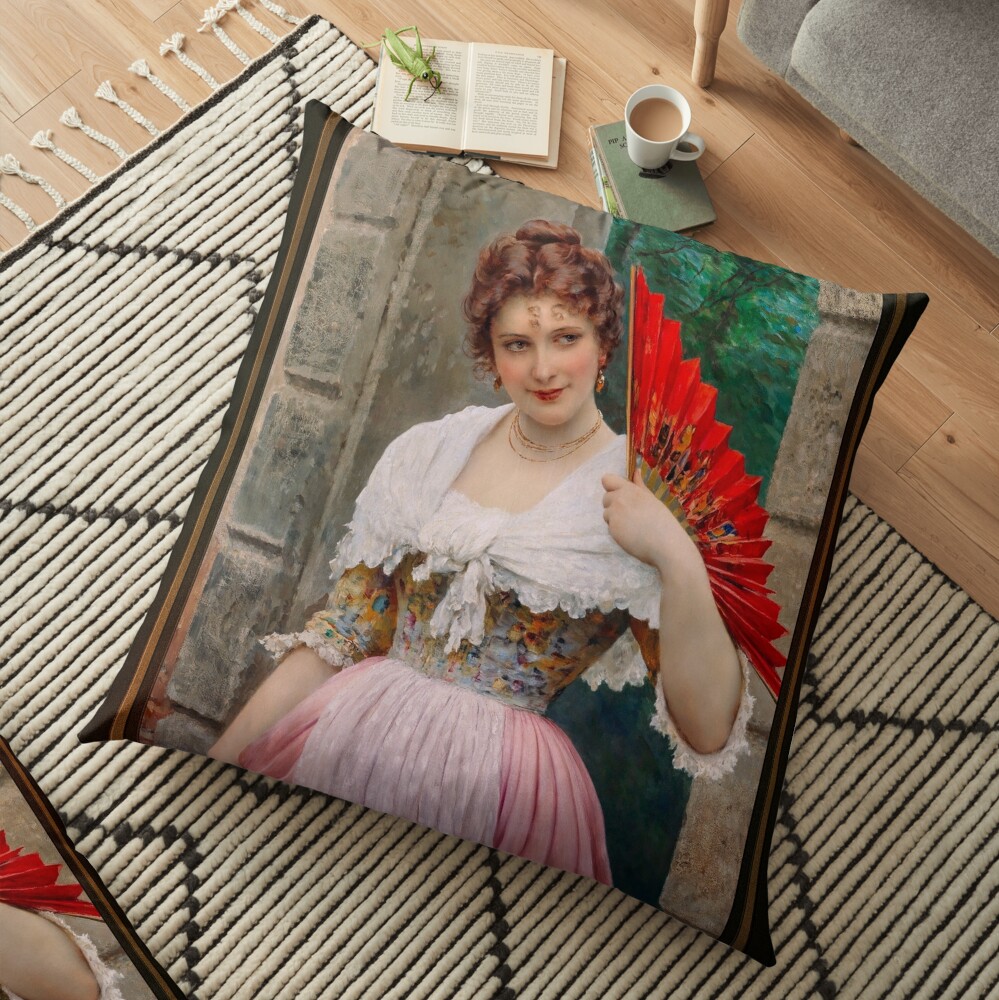
“赤いうちわのお嬢様,” に作成されました 1897 by Italian painter オイゲン・フォン・ブラース (1843–1931), is an exquisite example of the artist’s talent for capturing elegant scenes from daily life, steeped in the opulence of late 19th-century Europe. この特定の絵では, Blaas conveys the sophisticated world of aristocratic women, emphasizing grace, 美しさ, そして洗練. The painting is not only a portrait of a young woman but also an embodiment of the fashion, attitudes, and natural beauty of its time.
目次
主題と構成
At the center of the composition is a young woman, her delicate features framed by a soft cascade of light brown curls that hint at the youthful energy and warmth of the scene. She wears a gown that speaks to the fashionable styles of the late 19th century, with its high waistline, billowing skirt, and the intricate textile work that blends pastel hues of pink, lavender, そして白.
The woman’s posture is relaxed yet refined, holding a vibrant red fan that contrasts sharply with the muted tones of her attire and background. The fan serves as both an accessory and an integral visual element, drawing the viewer’s eye immediately. The vibrant red of the fan, with its delicate painted designs, contrasts beautifully with her attire, and its boldness contrasts with the soft elegance of her gown.
The artist captures the woman’s gaze with a sense of intimacy and intrigue. 彼女の目, ソフトカールに囲まれています, look to the side with a knowing expression, as if caught in a moment of daydreaming or perhaps conversing with someone off to the left of the frame. This subtle connection between the viewer and the subject draws the audience into the narrative of the scene, inviting them to imagine the woman’s thoughts or the circumstances of her moment in time.
背景と設定
の背景 “赤いうちわのお嬢様” is a garden scene, visible through a stone archway. The earthy tones of the stonework and the lush green foliage beyond create a serene, almost idyllic atmosphere. The setting suggests an aristocratic outdoor space, perhaps a private garden or a terrace of a noble estate, offering a perfect setting for a leisurely afternoon. The contrast between the stone and the natural greenery serves as a metaphor for the blend of human sophistication and nature’s untainted beauty.
The setting enhances the sense of elegance, with the classical stonework surrounding the archway symbolizing tradition and permanence. The surrounding greenery, しかしながら, offers a feeling of freshness and tranquility, reinforcing the timeless nature of the subject and her surroundings.
材料, テクニック, and Style
The work is painted using oil paints, a medium that allows for rich textures, depth, and light play. Blaas uses a masterful technique to capture the details of the woman’s clothing, creating a lifelike quality that feels almost tangible. 生地のテクスチャー, especially the soft folds of the gown, is rendered with meticulous attention to light and shadow, bringing a sense of volume and movement to the fabric.
The use of color in this painting is particularly striking. The soft pastels of the woman’s gown evoke a feeling of calm and softness, while the red of the fan is a bold statement, adding vibrancy and intensity to the composition. Blaas’s attention to detail, from the soft blush of the woman’s cheeks to the intricate design of the fan, showcases his ability to transform the mundane into something beautiful and worthy of admiration.

The Mood and Theme of the Artwork
絵の雰囲気も穏やかです, エレガント, and contemplative. The young lady’s posture and expression convey a sense of calm and quiet confidence. 設定, with its lush greenery and classical stonework, reinforces the notion of timeless beauty and aristocratic leisure. The fan, as an object, carries with it connotations of femininity, 魅力, and social grace, as well as the more intimate aspect of personal comfort.
The theme of the painting revolves around the idealized representation of femininity during the late 19th century, a time when women were often seen as symbols of grace and decorum. Blaas captures the gentle beauty and poise of the woman, elevating her to an almost ethereal status. This type of portrayal was common in the art of the time, which sought to celebrate and idealize the lives of the upper classes, particularly women. The presence of nature in the background subtly reinforces the connection between the subject and her surroundings, suggesting that the young woman, while of aristocratic status, is still part of the natural world.
結論
オイゲン・フォン・ブラースの “赤いうちわのお嬢様” encapsulates the charm and elegance of the late 19th century through both its subject and the artist’s technique. 光の相互作用, 色, and texture transforms an everyday moment into a celebration of beauty, ファッション, そして女性らしさ. この作品を通して, Blaas invites the viewer into a world of aristocratic leisure, where elegance is embodied in both the subject and her surroundings. The painting’s combination of soft, delicate details and the vibrant contrast of the fan captures the essence of an era defined by sophistication and artistic refinement.
これは、リマスターされたデジタルアートのオールドマスターであり、パブリックドメインの画像を複製したものです。 キャンバスプリントオンライン.
このデジタルアート作品は、, Xzendor7 Web サイトにあるすべてのアートワークと同様に、キャンバス プリントを含むさまざまな素材形式でオンラインで購入できます。, アクリルプリント, メタルプリント, 木版, 額入りプリント, ポスター, ロール状のキャンバス プリントとしてさまざまなサイズでご利用いただけます。 12 インチから 72 インチは、実際のアートワークのサイズと、アートを購入するために選択したオンデマンド プリント ショップによって異なります。.
このアートワークは、幅広いメンズおよびウィメンズのアパレルでも利用可能です, マグカップ, トートバッグ, スカーフ, ノートや日記帳、その他多くの室内装飾品.
アーティスト略歴
以下の情報から派生 Wikipedia.org
彼はアルバーノで生まれました, ローマの近く, チロリアンの父とイタリアの母に. 彼の父カール, 画家も, 彼の先生でした. 彼の母親, アグネシナアウダ, 裕福なローマの女性でした. カールがヴェネツィアアカデミーの教授になったとき、家族はヴェネツィアに引っ越しました. 彼はしばしばヴェネツィアのシーンを描いた, だけでなく、肖像画や宗教画.
彼の作品の中には、聖具室の婚姻形態があります; ヴェネツィアのカンピエロのビンゴ; 学校での人形劇; とラニネッタ. 美術評論家のルイージ・チルタニ, 絵画がヴェネツィアのモストラナツィオナーレディで展示されたとき, それを美しいと表現した, お世辞, かわいい, 愛撫, 掃除した, 磨かれた, 氏による絵画のlaundress. 膀胱, 偉大なベネチアの貴族のお気に入りの肖像画家, ガラサテンに身を包んだ, 輝く宝石, 金持ちの髪型.
ヴェネツィア社会の彼のカラフルでかなり劇場的な時代のイメージ, 例えば. バルコニーで (1877; プライベートコレクション), 繊細なパステルや中庭のエッチングとはかなり異なっていました, モダンなヴェネツィアのバルコニーと運河.
オイゲン・デ・ブラース’ 絵画は王立アカデミーに展示されました, 美術協会, ロンドンの新しいギャラリーとアーサートゥースアンドサンズギャラリー, リバプールのウォーカーアートギャラリーでも