

Eng jonk Dame mat engem roude Fan
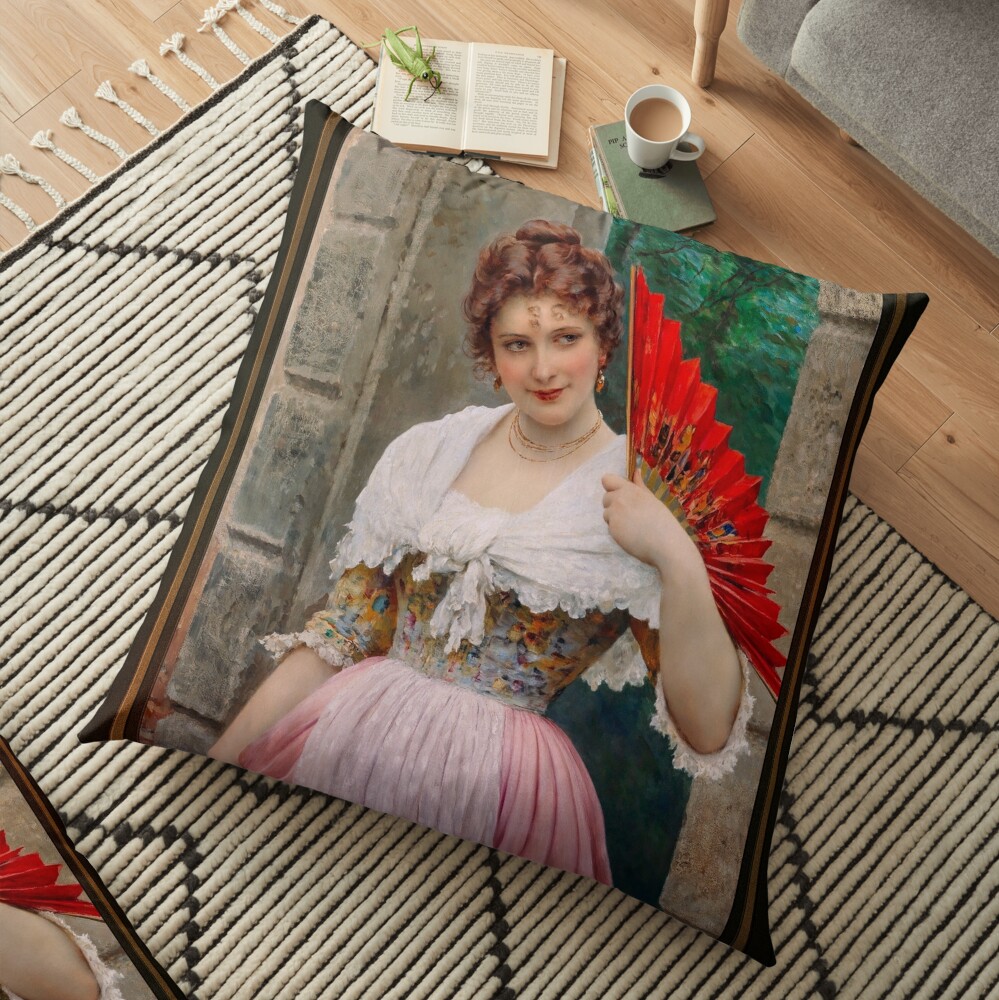
“Eng jonk Dame mat engem roude Fan,” erstallt an 1897 by Italian painter Eugen von Blaas (1843–1931), is an exquisite example of the artist’s talent for capturing elegant scenes from daily life, steeped in the opulence of late 19th-century Europe. An dësem spezielle Bild, Blaas conveys the sophisticated world of aristocratic women, emphasizing grace, Schéinheet, an Verfeinerung. The painting is not only a portrait of a young woman but also an embodiment of the fashion, attitudes, and natural beauty of its time.
Inhaltsverzeechnes
D'Thema a Kompositioun
At the center of the composition is a young woman, her delicate features framed by a soft cascade of light brown curls that hint at the youthful energy and warmth of the scene. She wears a gown that speaks to the fashionable styles of the late 19th century, with its high waistline, billowing skirt, and the intricate textile work that blends pastel hues of pink, lavender, a Wäissen.
The woman’s posture is relaxed yet refined, holding a vibrant red fan that contrasts sharply with the muted tones of her attire and background. The fan serves as both an accessory and an integral visual element, drawing the viewer’s eye immediately. The vibrant red of the fan, with its delicate painted designs, contrasts beautifully with her attire, and its boldness contrasts with the soft elegance of her gown.
The artist captures the woman’s gaze with a sense of intimacy and intrigue. Hir Ae, framed by soft curls, look to the side with a knowing expression, as if caught in a moment of daydreaming or perhaps conversing with someone off to the left of the frame. This subtle connection between the viewer and the subject draws the audience into the narrative of the scene, inviting them to imagine the woman’s thoughts or the circumstances of her moment in time.
Den Hannergrond an Astellung
Den Hannergrond vun “Eng jonk Dame mat engem roude Fan” is a garden scene, visible through a stone archway. The earthy tones of the stonework and the lush green foliage beyond create a serene, almost idyllic atmosphere. The setting suggests an aristocratic outdoor space, perhaps a private garden or a terrace of a noble estate, offering a perfect setting for a leisurely afternoon. The contrast between the stone and the natural greenery serves as a metaphor for the blend of human sophistication and nature’s untainted beauty.
The setting enhances the sense of elegance, with the classical stonework surrounding the archway symbolizing tradition and permanence. The surrounding greenery, awer, offers a feeling of freshness and tranquility, reinforcing the timeless nature of the subject and her surroundings.
Material, Techniken, an Stil
The work is painted using oil paints, a medium that allows for rich textures, depth, and light play. Blaas uses a masterful technique to capture the details of the woman’s clothing, creating a lifelike quality that feels almost tangible. The texture of the fabric, especially the soft folds of the gown, is rendered with meticulous attention to light and shadow, bringing a sense of volume and movement to the fabric.
The use of color in this painting is particularly striking. The soft pastels of the woman’s gown evoke a feeling of calm and softness, while the red of the fan is a bold statement, adding vibrancy and intensity to the composition. Blaas’s attention to detail, from the soft blush of the woman’s cheeks to the intricate design of the fan, showcases his ability to transform the mundane into something beautiful and worthy of admiration.

D'Stëmmung an d'Thema vum Konschtwierk
D'Stëmmung vum Bild ass roueg, elegant, and contemplative. The young lady’s posture and expression convey a sense of calm and quiet confidence. De Kader, with its lush greenery and classical stonework, reinforces the notion of timeless beauty and aristocratic leisure. De Fan, as an object, carries with it connotations of femininity, Charm gehir, and social grace, as well as the more intimate aspect of personal comfort.
The theme of the painting revolves around the idealized representation of femininity during the late 19th century, a time when women were often seen as symbols of grace and decorum. Blaas captures the gentle beauty and poise of the woman, elevating her to an almost ethereal status. This type of portrayal was common in the art of the time, which sought to celebrate and idealize the lives of the upper classes, particularly women. The presence of nature in the background subtly reinforces the connection between the subject and her surroundings, suggesting that the young woman, while of aristocratic status, is still part of the natural world.
Conclusioun
Eugen von Blaas’s “Eng jonk Dame mat engem roude Fan” encapsulates the charm and elegance of the late 19th century through both its subject and the artist’s technique. D'Zesummespill vum Liicht, Faarf, and texture transforms an everyday moment into a celebration of beauty, Moud, a Weiblechkeet. Duerch dëst Stéck, Blaas invites the viewer into a world of aristocratic leisure, where elegance is embodied in both the subject and her surroundings. The painting’s combination of soft, delicate details and the vibrant contrast of the fan captures the essence of an era defined by sophistication and artistic refinement.
Dëst ass eng remastered digital Konscht al Master Reproduktioun vun engem Public Domain Bild dat als verfügbar ass Leinwandprint online.
Dës digital Konscht Kreatioun, wéi mat all de Konschtwierker, déi op der Xzendor7 Websäit fonnt kënne ginn, ass online a verschiddene Materialformater ze kafen, dorënner Canvas Prints, acryl Prints, Metallofdréck, Holzdrécker, cadréiert Printen, Plakater, a wéi gewalzt Canvas Printen a ville Gréissten vun 12 Zoll zu 72 Zoll ofhängeg vun der Gréisst vum aktuellen Konschtwierk an dem Print-on-Demande Buttek vun deem Dir gewielt hutt d'Konscht ze kafen.
D'Konschtwierk ass och op eng breet Palette vu Männer- a Fraekleedung verfügbar, Becher, totes, Schal, Notizbicher an Zäitschrëften a vill Heemdekoratiounsprodukter.
Kënschtler Bio
Info drënner ofgeleet vun Wikipedia.org
Hie gouf zu Albano gebuer, bei Roum, zu engem Tiroler Papp an italienescher Mamm. Säi Papp Karl, och moler, war säi Schoulmeeschter. Seng Mamm, Agnesina Auda, war eng räich réimesch Fra. D'Famill ass op Venedeg geplënnert wéi de Karl Professer op der Akademie vu Venedeg gouf. Hien huet dacks Szenen zu Venedeg gemoolt, awer och Portraiten a reliéis Biller.
Zu senge Wierker sinn d'Hochzäitsform an der Sakristei; Bingo zu Campielo zu Venedeg; Eng Zeen vu Marionetten an enger Schoul; an La Ninetta. De Konschtkritiker Luigi Chirtani, wéi d'Bild an der Mostra Nazionale di Venezia ausgestallt gouf, beschriwwen et als Schéin, verflaacht, flott, geklappt, gebotzt, ausgeräiften, Wäscherin an engem Bild vum Mr. Blase, de Liiblingsportraitist vu grousse venetianeschen Aristokraten, an Gala Satin gekleet, blénkeg Bijouen, Frisuren vun de Räichen.
Seng faarweg an éischter theatralesch Period Biller vun der venetianescher Gesellschaft, z.B. Um Balkon (1877; Privat Kollektioun), ware ganz anescht am Verglach zu delikate Pastell an Ätze vun den Haff, Balkon a Kanäl vum modernen Venedeg.
Eugène de Blaas’ Biller goufen an der Royal Academy ausgestallt, Fine Art Society, New Gallery an Arthur Tooth and Sons Gallery zu London, an och an der Walker Art Gallery zu Liverpool