

Барышня с красным веером
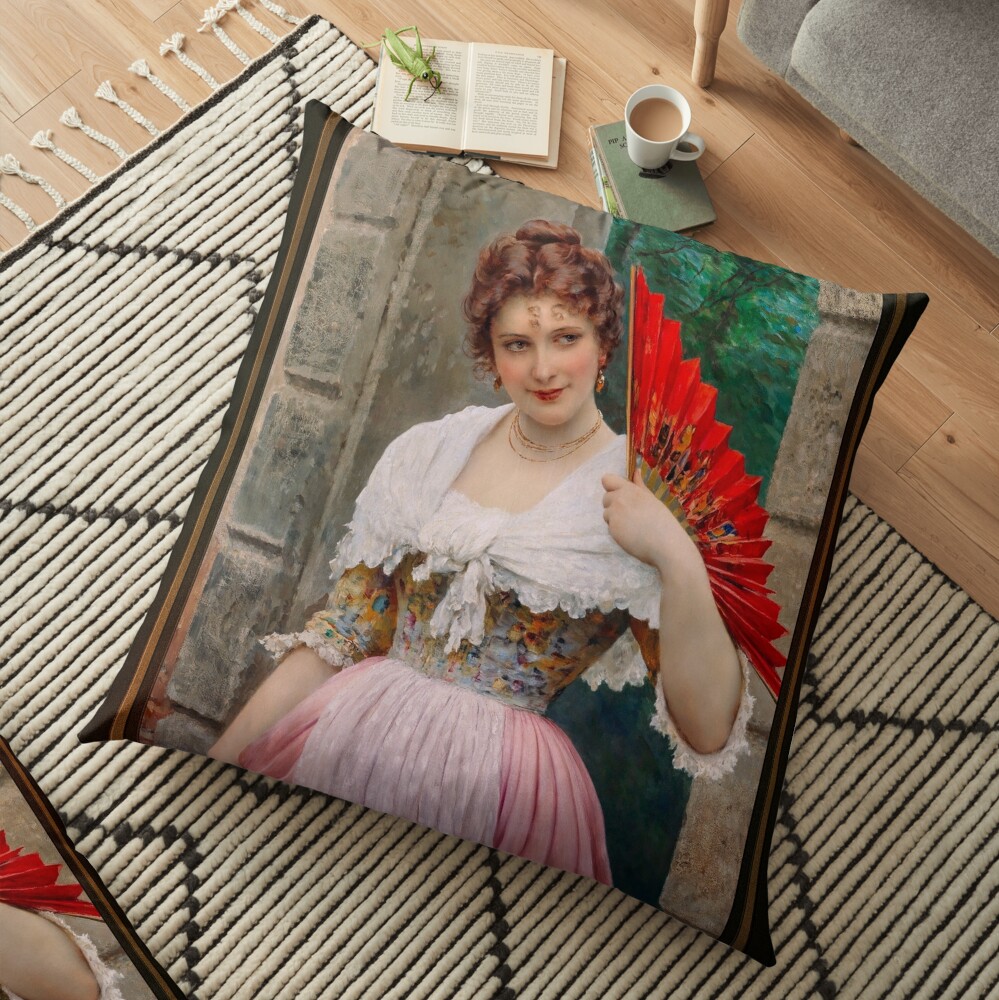
“Барышня с красным веером,” создано в 1897 by Italian painter портретист (1843–1931), is an exquisite example of the artist’s talent for capturing elegant scenes from daily life, steeped in the opulence of late 19th-century Europe. В этой конкретной картине, Blaas conveys the sophisticated world of aristocratic women, emphasizing grace, Красота, и уточнение. The painting is not only a portrait of a young woman but also an embodiment of the fashion, attitudes, and natural beauty of its time.
Оглавление
Тема и композиция
At the center of the composition is a young woman, her delicate features framed by a soft cascade of light brown curls that hint at the youthful energy and warmth of the scene. She wears a gown that speaks to the fashionable styles of the late 19th century, with its high waistline, billowing skirt, and the intricate textile work that blends pastel hues of pink, lavender, и белый.
The woman’s posture is relaxed yet refined, holding a vibrant red fan that contrasts sharply with the muted tones of her attire and background. The fan serves as both an accessory and an integral visual element, drawing the viewer’s eye immediately. The vibrant red of the fan, with its delicate painted designs, contrasts beautifully with her attire, and its boldness contrasts with the soft elegance of her gown.
The artist captures the woman’s gaze with a sense of intimacy and intrigue. Ее глаза, framed by soft curls, look to the side with a knowing expression, as if caught in a moment of daydreaming or perhaps conversing with someone off to the left of the frame. This subtle connection between the viewer and the subject draws the audience into the narrative of the scene, inviting them to imagine the woman’s thoughts or the circumstances of her moment in time.
Фон и настройка
Фон “Барышня с красным веером” is a garden scene, visible through a stone archway. The earthy tones of the stonework and the lush green foliage beyond create a serene, almost idyllic atmosphere. The setting suggests an aristocratic outdoor space, perhaps a private garden or a terrace of a noble estate, offering a perfect setting for a leisurely afternoon. The contrast between the stone and the natural greenery serves as a metaphor for the blend of human sophistication and nature’s untainted beauty.
The setting enhances the sense of elegance, with the classical stonework surrounding the archway symbolizing tradition and permanence. The surrounding greenery, тем не мение, offers a feeling of freshness and tranquility, reinforcing the timeless nature of the subject and her surroundings.
Материалы, Техники, и стиль
The work is painted using oil paints, a medium that allows for rich textures, depth, and light play. Blaas uses a masterful technique to capture the details of the woman’s clothing, creating a lifelike quality that feels almost tangible. The texture of the fabric, especially the soft folds of the gown, is rendered with meticulous attention to light and shadow, bringing a sense of volume and movement to the fabric.
The use of color in this painting is particularly striking. The soft pastels of the woman’s gown evoke a feeling of calm and softness, while the red of the fan is a bold statement, adding vibrancy and intensity to the composition. Blaas’s attention to detail, from the soft blush of the woman’s cheeks to the intricate design of the fan, showcases his ability to transform the mundane into something beautiful and worthy of admiration.

The Mood and Theme of the Artwork
Настроение картины спокойное., элегантный, и созерцательный. The young lady’s posture and expression convey a sense of calm and quiet confidence. Настройка, with its lush greenery and classical stonework, reinforces the notion of timeless beauty and aristocratic leisure. The fan, as an object, carries with it connotations of femininity, очарование, and social grace, as well as the more intimate aspect of personal comfort.
The theme of the painting revolves around the idealized representation of femininity during the late 19th century, a time when women were often seen as symbols of grace and decorum. Blaas captures the gentle beauty and poise of the woman, elevating her to an almost ethereal status. This type of portrayal was common in the art of the time, which sought to celebrate and idealize the lives of the upper classes, particularly women. The presence of nature in the background subtly reinforces the connection between the subject and her surroundings, suggesting that the young woman, while of aristocratic status, is still part of the natural world.
Заключение
Eugen von Blaas’s “Барышня с красным веером” encapsulates the charm and elegance of the late 19th century through both its subject and the artist’s technique. Взаимодействие света, цвет, and texture transforms an everyday moment into a celebration of beauty, мода, и женственность. Через этот кусок, Blaas invites the viewer into a world of aristocratic leisure, where elegance is embodied in both the subject and her surroundings. The painting’s combination of soft, delicate details and the vibrant contrast of the fan captures the essence of an era defined by sophistication and artistic refinement.
Это обновленная цифровая репродукция старых мастеров изображения, являющегося общественным достоянием, которое доступно в качестве Все эти ремастерированные изображения старых мастеров цифрового искусства, являющиеся общественным достоянием, доступны как.
Это творение цифрового искусства, как и все произведения искусства, которые можно найти на веб-сайте Xzendor7, они доступны для покупки в Интернете в различных форматах материалов, включая отпечатки на холсте., акриловые принты, металлические отпечатки, гравюры на дереве, отпечатки в рамке, плакаты, и в виде рулонных отпечатков на холсте различных размеров от 12 дюймов до 72 дюймов в зависимости от размера фактического произведения искусства и магазина печати по запросу, в котором вы решили купить произведение искусства..
Эти изображения также доступны на широком ассортименте мужской и женской одежды., кружки, сумки, шарфы, блокноты и журналы, а также многие товары для домашнего декора..
Биография художника
Информация ниже получена из Wikipedia.org
Он родился в Альбано, недалеко от Рима, Тирольскому отцу и итальянской матери. Его отец Карл, также художник, был его учителем. Его мать, Агнесина Ауда, была зажиточной римской женщиной. Семья переехала в Венецию, когда Карл стал профессором Венецианской академии.. Он часто рисовал сцены в Венеции, но также портреты и религиозные картины.
Среди его работ «Брачная форма в ризнице».; Бинго в Кампьело в Венеции; Кукольная сцена в школе; и Ла Нинетта. Искусствовед Луиджи Чиртани, когда картина была выставлена на Mostra Nazionale di Venezia, описал это как Красивое, лестный, красивая, ласковый, очищенный, отполированный, прачка на картине мистера. мочевой пузырь, любимый портретист великих венецианских аристократов, одетые в парадные атласы, сияющие украшения, прически богатых.
Его красочные и довольно театральные образы периода венецианского общества, например. На балконе (1877; Частная коллекция), были совсем другими по сравнению с нежной пастелью и гравюрами дворов, балкон и каналы современной Венеции.
Юджин де Блаас’ картины были выставлены в Королевской академии, Общество изящных искусств, Новая галерея и галерея Артура Зуба и сыновей в Лондоне, а также в Художественной галерее Уокера в Ливерпуле.