

Uma jovem em traje renascentista
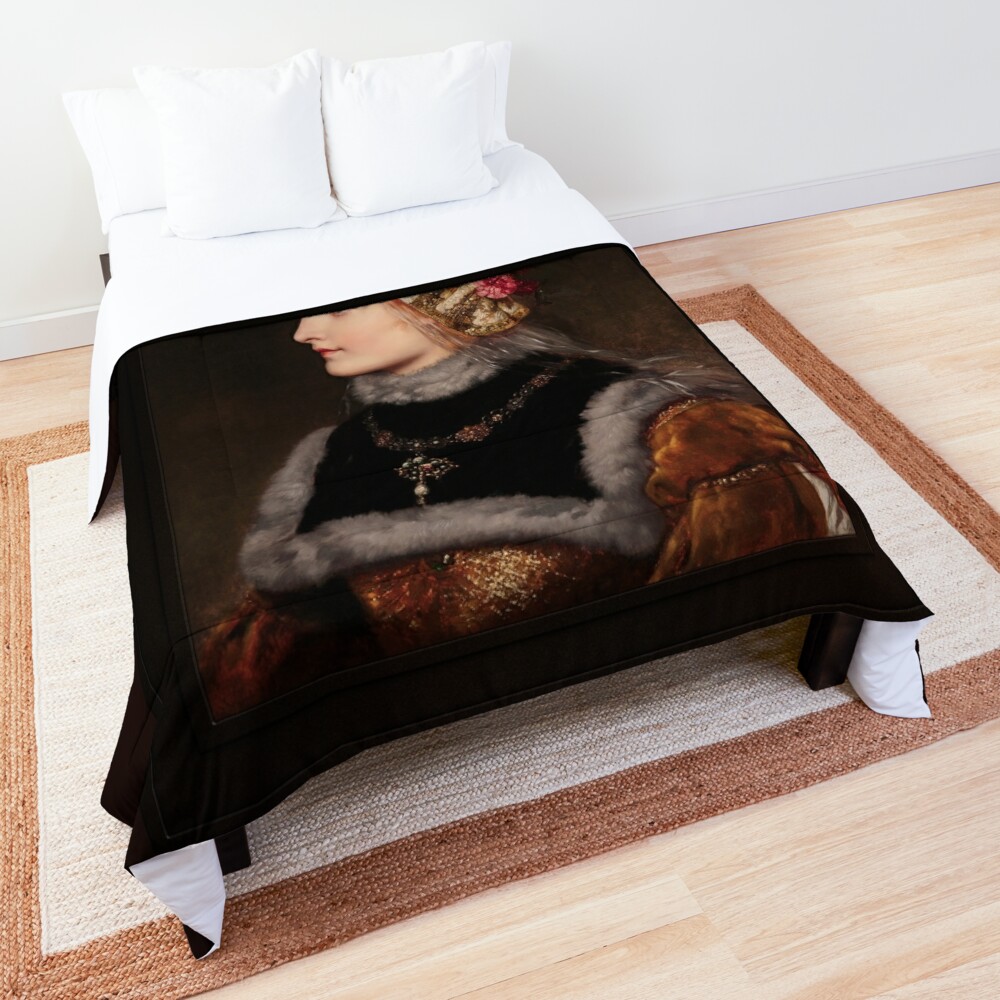
A pintura Uma jovem em traje renascentista c. 1879 por Wilhelm Menzler (1846 – 1926) captura a essência de uma época histórica opulenta através do retrato de uma jovem adornada com um resplandecente traje renascentista. Menzler, um habilidoso artista alemão conhecido por sua atenção aos detalhes e domínio de temas históricos, mergulha o espectador em uma cena do Renascimento, misturando sutilmente a elegância do passado com o romantismo do século XIX de sua época. Esta peça requintada convida o espectador a apreciar não apenas o traje e as características do modelo, mas também o senso de nobreza e graça que transcende o tempo..
Índice
O assunto principal
The central figure in this artwork is a young woman whose face exudes quiet confidence and grace. Her youthful yet dignified expression speaks to the sophisticated demeanor expected of women in Renaissance society. She is depicted in profile, gazing slightly to the left, with an air of serenity and contemplation that is characteristic of retrato from this era. Her soft features are rendered with a gentle precision, which gives the painting a lifelike quality, capturing both her physical beauty and an emotional depth that suggests she is more than a mere representation of a fashionable woman from history.
The young woman’s long, golden-brown hair, partly visible beneath her ornate headpiece, flows in soft waves that add a natural element to the portrait, contrasting with the structured details of her costume. Her facial features are delicately painted with a subtle shading technique, contributing to the realistic rendering of her visage. The high quality of Menzler’s work is evident in the fine detailing of the skin tones, bringing forth an almost photographic clarity that showcases the artist’s ability to blend realism with romantic idealization.
The Costume
The woman’s Renaissance attire is perhaps the most striking element of this portrait. O vestido dela, constructed from luxurious fabrics, includes rich textures of velvet and silk. The golden hues of her gown, enhanced by intricate patterns, shimmer as if caught in a soft light, reinforcing the notion of aristocracy and wealth. The bodice is decorated with jewels and ornate trimmings that are indicative of the nobility during the Renaissance, a period where fashion was an important means of social expression. The gown’s deep neckline is partially concealed by a black, fur-lined collar, which further enhances the sophistication of the piece.
A particularly notable aspect of her attire is the exquisite headdress, a feature that takes center stage in the portrait. The headpiece, richly embroidered in gold and cream tones, is accentuated by a flower tucked on the side. The way Menzler has rendered the texture of the fabric—highlighting the gleam of the silk and the delicate folds—demonstrates his mastery in capturing the materials of the period. The structure of the headpiece, with its angular lines, reflects the fashions of the late Renaissance, a stark contrast to the natural softness of the woman’s hair, creating a harmonious yet structured aesthetic.
O pano de fundo e o cenário
The background of the painting is dark and muted, serving to place all focus on the subject while also lending an air of mystery to the composition. O profundo, shadowy tones behind the woman allow the opulence of her gown and the delicate features of her face to shine. The lack of any distinct or busy background elements suggests that the subject is not tied to any specific setting, instead embodying the broader ideals of Renaissance aristocracy. The softness of the background also contrasts with the sharpness and precision of the woman’s detailed costume and the flawless rendering of her face, further emphasizing the subject’s elegance and importance.
The absence of other objects or figures in the painting allows for an undistracted focus on the woman’s attire and facial expression, elevating her presence as a symbol of the Renaissance era’s ideals of beauty and grace. The dark background, with its subtly graduated hues, also adds a sense of depth, which enhances the lifelike quality of the portrait.
Materiais e Técnica
Wilhelm Menzler’s technique reflects the academic tradition of the 19th century, focusing on precision, naturalism, and attention to detail. O uso de tintas a óleo pelo artista traz riqueza e profundidade ao retrato, com a textura do tecido e as transições sutis de luz capturadas com muito cuidado. A suave mistura de cores no tom de pele da mulher contrasta com as linhas mais definidas do vestido e dos acessórios, fazendo-os parecer quase tangíveis. A pincelada é fina e controlada, aumentando o realismo do tema sem sacrificar a qualidade pictórica que define o trabalho de Menzler.
A gola forrada de pele, as dobras do seu vestido, e as jóias que captam a luz foram cuidadosamente renderizadas, demonstrando a experiência de Menzler em criar a ilusão de profundidade e volume. O sombreamento ao redor dos contornos do rosto e pescoço da mulher aumenta ainda mais o efeito naturalista, while the jewel-like details in her attire are placed with careful precision, allowing them to sparkle in the dim lighting of the portrait. The attention to detail in the rendering of the fabric textures, such as the velvet of the gown and the shimmering gold of the headdress—reflects a high level of craftsmanship and an understanding of the way light interacts with different materials.
Xzendor7 Photo Retouching Video Of A Young Woman In Renaissance Costume by Wilhelm Menzler
Tema e humor
The mood of the painting is one of serenity, nobility, and introspection. The woman is captured in a moment of quiet dignity, embodying the values of elegance and poise that were central to Renaissance ideals. The subtle grace with which she carries herself suggests a person of high social standing, perhaps a noblewoman or courtier, who is both aware of her status and yet remains humble in her expression. O escuro, almost somber background contrasts with the warmth of the woman’s attire, creating a sense of timelessness.
The work also evokes a sense of romance, as Menzler brings the viewer into a world of historical opulence and refinement, a world that, while no longer accessible in the 19th century, remains immortalized through art. The combination of realism and idealization in the portrayal of the woman’s face, costume, and presence evokes a nostalgia for the past, blending historical accuracy with the artist’s personal vision of an idealized, graceful era.
Conclusão
Uma jovem em traje renascentista by Wilhelm Menzler stands as a stunning example of late 19th-century portraiture. A atenção meticulosa do artista aos detalhes, particularly in the rendering of fabrics and jewels, brings to life a young woman from the Renaissance, her beauty and dignity captured in a timeless moment. Through his work, Menzler not only honors the grandeur of the Renaissance period but also breathes new life into it, offering viewers a glimpse of the elegance, moda, and ideals that defined an era long past.
Esta é uma reprodução remasterizada de arte digital de antigos mestres de uma imagem de domínio público que está disponível como um impressão em tela on-line.