

Aanbidding der Koningen (Culto dei Re) c1620
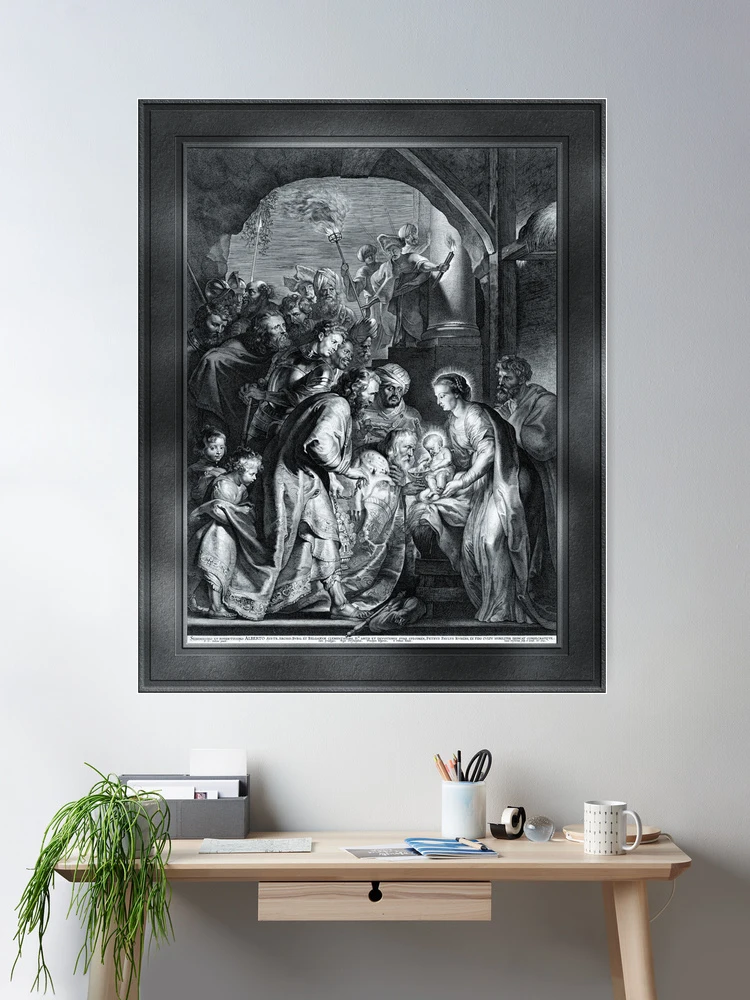
L'opera intitolata Aanbidding der Koningen (Culto dei Re), creato intorno 1620 by Flemish engraver Lucas Vorsterman I (1595 – 1675), after the iconic painting by Peter Paul Rubens (1577 – 1640), stands as a remarkable testament to the high Baroque style of the early 17th century. In this engraving, Vorsterman captured the grandeur and opulence of Rubens’ original work, emphasizing the sacredness of the scene with his finely detailed rendering. Rubens, renowned for his mastery in both painting and composition, had an immense influence on the artistic environment of his time, and Vorsterman’s engraving is an extraordinary reflection of that influence.
Sommario
Argomento principale: The Adoration of the Kings
The central theme of this religious artwork revolves around the biblical story of the Adoration of the Kings, a significant moment in Christian tradition commemorating the visit of the three Magi to the infant Jesus in Bethlehem. This event, often referred to as the Epiphany, is depicted in the engraving with an immense sense of reverence and awe.
The three kings, dressed in resplendent attire, kneel before the newborn Christ, offering their gifts of gold, frankincense, and myrrh. Each king is uniquely styled to represent different regions: the African king, wearing a crown and robes adorned with rich, dettagli intricati, the Asian king, similarly dressed with luxurious fabrics, and the European king, attired in royal armor and cloak. The grandeur of their garments serves as a reflection of their high status and the importance of their tribute.
At the center of the composition, the Virgin Mary, dressed in a simple yet elegant gown, gently holds the infant Jesus. Il bambino, surrounded by a radiant light, gazes upwards with serene innocence, while Mary’s expression radiates maternal devotion and peace. Beside her stands Saint Joseph, whose gaze, though gentle, is stern with a quiet strength as he oversees the holy moment.
Sfondo e impostazione
The setting of the scene is a humble, yet majestic, stable, illuminated by soft light emanating from a distant source, which could either represent the divine presence or the natural glow of the star that guided the Magi to the birthplace. The stable is rustic, with wooden beams and a simple thatched roof, suggesting the earthly nature of the scene, yet the figures and their attire elevate the sacredness of the humble setting.
Sullo sfondo, a few additional figures, including shepherds and angels, are scattered. These figures further emphasize the holiness of the event, underscoring the narrative of the Son of God being born to both commoners and royalty. Some figures, like the angel to the left, hold up a torch or a light source, guiding the way for the visitors, while others kneel in prayerful adoration.
Materiali e medi
The engraving is executed with remarkable skill, showcasing Vorsterman’s deft use of line and shading to create depth and texture. The work is executed in black and white, with an intricate play of light and shadow that brings the figures to life. Vorsterman’s engraving technique, which involves using fine lines and cross-hatching to convey tonal variations, allows for the scene to emerge with a heightened sense of realism. The precise detailing in the figures’ faces, capi di abbigliamento, and the surrounding environment gives the viewer the sense of being transported into the historical moment.
Rubens’ original oil painting, which served as the inspiration for this engraving, was itself known for its rich color palette and emotional intensity. Vorsterman, tuttavia, chose to translate that emotional power into a more restrained and formal medium, focusing instead on the clarity and delicacy of the engraving’s fine details. The result is a piece that captures both the grandeur of Rubens’ vision and the more somber, introspective qualities of the religious narrative.
Stile e umore
The engraving reflects the Baroque style in its use of dramatic contrasts of light and shadow, the sense of movement in the figures, and the overall grandeur of the scene. While Baroque art is often associated with emotional intensity, this engraving emphasizes the reverence and humility of the moment, creating a meditative atmosphere. The three kings, with their elaborate garments, gesture toward the Christ child with a profound sense of adoration and submission. The royal figures, although dressed in magnificent attire, are shown to be at the service of the divine, demonstrating the humility and devotion central to the Christian message.
The figures of the Magi and their offerings suggest not only material wealth but also a deep spiritual reverence for the infant Jesus. The contrast between the kings’ regal clothing and the simplicity of the stable and its inhabitants further emphasizes the divine nature of Christ’s birth, elevating the moment to something both universal and sacred. This duality of opulence and humility is one of the hallmarks of Baroque religious art, which sought to inspire awe while encouraging reflection on the themes of faith, divinità, and human submission to a higher power.
Oggetti e simbolismo
The most important objects in the composition are the gifts offered by the kings—gold, frankincense, and myrrh—each of which carries profound symbolism. Gold represents Christ’s kingship, frankincense his divinity, and myrrh his future suffering and death. These gifts are not only tokens of respect but also foreshadow the life and sacrifice of Christ. Inoltre, the light that illuminates the scene is symbolic of divine revelation, guiding the kings and all who observe the scene toward the realization of Christ’s divine nature.
The presence of the shepherds and angels in the background further emphasizes the spiritual significance of the event. I pastori, often representing the humble and faithful, stand in contrast to the regal kings, underscoring the universality of Christ’s birth. The angels, with their light-bearing torches, further suggest the divine presence, reinforcing the notion of Christ as the Light of the World.
Conclusione
Insomma, Aanbidding der Koningen (Culto dei Re) is a masterful depiction of the Nativity story, executed with grace, reverence, and intricate detail. Through Vorsterman’s expert engraving, the emotional and spiritual significance of Rubens’ original painting is preserved, offering a visual meditation on the themes of kingship, divinità, and sacrifice. The rich iconography, fine details, and careful composition invite the viewer to not only witness the adoration of Christ but to also reflect on the deeper spiritual meanings that underlie the momentous occasion.
Questa è una riproduzione ritoccata di arte digitale dei vecchi maestri di un'immagine di pubblico dominio.
La biografia dell'artista è derivata da Wikipedia.org
Lucas Vorsterman I noto anche come Lucas Vorsterman il Vecchio era un incisore olandese del periodo barocco nato a Zaltbommel, Paesi Bassi.
Si crede che circa 1618 che Vorsterman si unì al laboratorio di Peter Paul Rubens (1577 – 1640); e da 1619 e 1621 fu l'unico incisore di Rubens; poiché Rubens aveva intrapreso un'impresa di stampa per incidere alcuni dei suoi dipinti notevoli.
Ma in 1621 tra i due uomini sorse una seria disputa, che si ritiene sia incentrato su chi possiede i diritti d'autore sulle stampe che Vorsterman aveva inciso e che erano basate sulle opere di Ruben.
La controversia era abbastanza grave che gli avvocati di Ruben hanno presentato una petizione alle autorità per un ordine di protezione, che fu concesso e che pose fine al rapporto di lavoro tra i due uomini.
Nel 1624 Vorsterman si recò in Inghilterra e continuò il suo lavoro di incisione grazie al patrocinio dei reali e della nobiltà; ritorno ad Anversa, i Paesi Bassi nel 1630 come uno degli incisori selezionati da Anthony van Dyck (1599 – 1641) per incidere placcato per la sua iconografia, eseguendo ventidue delle ottanta tavole originali.
Man mano che Vorsterman cresceva, perse la vista, vivere in povertà e cavarsela con il sostegno della Corporazione di San Luca di Anversa, fino alla sua morte in 1675.