

Abadia en ruïnes al camp de València c1838
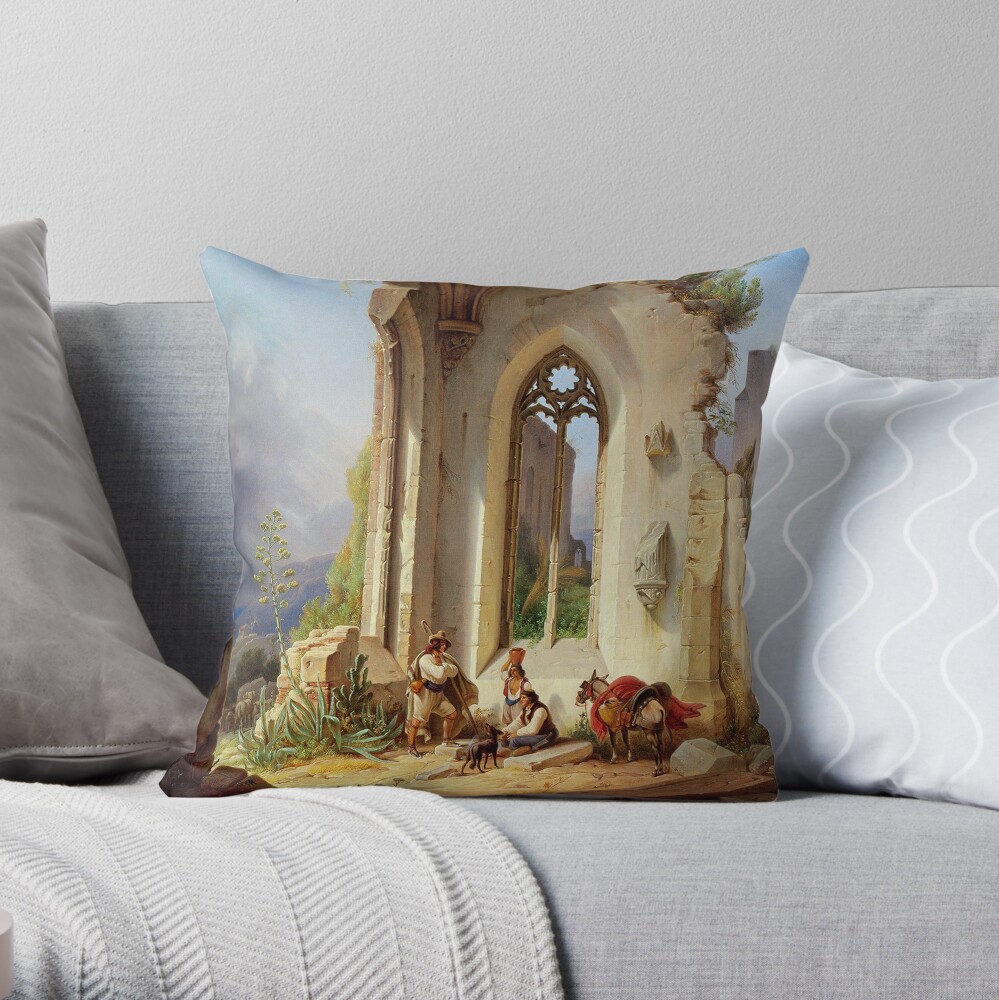
L'obra d'art “Abadia en ruïnes al camp de València,” creat a 1838 del pintor alemany Wilhelm Gail (1804 – 1890), presenta una representació romàntica d'una antiga abadia situada enmig del pintoresc i tranquil paisatge de València. A través de la lent del moviment romàntic, que va florir arreu d'Europa a finals del segle XVIII i principis del XIX, Wilhelm Gail captura la profunda interacció entre la natura i les restes de la civilització humana. Aquesta pintura convida l'espectador a contemplar els temes de la decadència, el pas del temps, i la persistència de la natura malgrat les estructures ruïnoses deixades enrere.
Taula de continguts
El tema principal: L'abadia en ruïnes
El punt central de la pintura és el gran, abadia encara en ruïnes, els arcs alts i les finestres trencades fa temps que han deixat de servir el seu propòsit religiós o comunitari original.. Les ruïnes de l'abadia són el testimoni d'un passat que ara és inaccessible, la seva estructura abans prístina ara s'esfondra lentament a causa dels estralls del temps.
El gòtic ornamentat arquitectònica els detalls encara són visibles, mostrant talles de pedra finament executades que insinuen l'antiga glòria de l'abadia. Natura, malgrat això, ha començat a recuperar el que abans va ser un símbol de la creació humana. Arbres, arbustos, i les vinyes ara s'enganxen a les parets de l'abadia, emphasizing the inevitable decline of even the most monumental constructions in the face of nature’s inexorable growth.
El terreny i el paisatge
The surrounding terrain of the painting is a vast, open landscape that extends far beyond the ruins, typical of the Spanish countryside in the Valencia region. The dry, rolling hills stretch into the distance, suggesting the expansive, arid environment that dominated the region. The subtle gradients of earth tones in the soil convey the heat of the region, typical of the Mediterranean climate.
En primer pla, there are patches of grass and wild vegetation that provide a stark contrast to the stonework of the abbey. The land seems to carry an air of quiet desolation, though it is not completely devoid of life. A few animals can be seen in the scene, including a donkey and a small dog, both of which seem to be part of the human presence in the scene.
The figures of men, positioned near the abbey’s remnants, are integral to the scene, offering a human scale to the ruins and reminding the viewer of the fragile relationship between man and the environment.
Les figures humanes i la vida quotidiana
En primer pla, three men are depicted, seemingly engaged in a moment of rest after traveling through the countryside. Two of the men are seated on the ground, with one of them tending to the small dog, while the third man stands nearby, leaning on a staff. Each of these figures wears traditional attire of the time, including loose-fitting shirts, wide-brimmed hats, and leather boots, fitting the rural, everyday life of the period.
Their connection to the land is emphasized by their humble presence, and their peaceful interaction with the natural world adds to the timeless feeling of the artwork. En el fons, a pack donkey, laden with supplies, is tethered near the ruins. This subtle inclusion of animals and the mundane act of rest reflects the theme of human perseverance in a world marked by the passage of time and change.
Llum, Humor, i Atmosfera
Wilhelm Gail’s careful handling of light and shadow brings a deep sense of realism to the painting, while also evoking an emotional atmosphere. The interplay of sunlight and shadows within the ruins highlights the texture of the stone, creating a three-dimensional quality that draws the viewer’s attention to the faded beauty of the architecture.
A soft light filters in from the left, illuminating the fragments of the once-glorious structure, mentre que els turons llunyans estan banyats per una boira, resplendor daurat. L'ambient de l'escena és ombrívol, encara pacífica, amb el brillant, cel obert que ofereix una sensació de serenitat. L'atmosfera creada pels elements naturals, combinat amb la cruesa de les ruïnes de l'abadia, indueix un sentiment contemplatiu sobre la naturalesa transitòria de l'assoliment humà i el poder de la natura per aguantar.
Simbolisme i temes romàntics
Com passa amb moltes obres de l'època romàntica, “Abadia en ruïnes al camp de València” expressa la fascinació romàntica per la natura, el sublim, i la impermanència de les creacions humanes. L'abadia abandonada simbolitza el pas del temps, la decadència de l'autoritat religiosa i institucional, i la decadència inevitable de les estructures fetes per l'home.
Natura, com es veu a les vinyes i el fullatge envaint, es representa com una força que no es pot controlar, recuperant el que abans era seu. Les figures dels homes, encara que humà, sembla insignificant en comparació amb la immensitat del paisatge, fent èmfasi en el tema de la fragilitat humana davant el temps i la natura.
Estil i Tècniques Artístiques
La pintura s'adhereix a l'estil del romanticisme, un moviment que posava èmfasi en l'emoció, individualisme, i la bellesa de la natura. L'atenció meticulosa de Wilhelm Gail als detalls i l'ús de la llum i l'ombra transmeten la influència dels pintors romàntics alemanys, que sovint representava paisatges naturals i ruïnes d'una manera dramàtica.
El seu hàbil maneig de les ruïnes, combinat amb la il·luminació gairebé etèria, dóna vida a l'escena, fent-lo alhora una instantània històrica i una meditació atemporal sobre la decadència i la renovació. La pinzellada detallada de les textures de la pedra i la vegetació proporciona una sensació de realisme augmentada, drawing attention to the natural beauty of the ruins and their surrounding environment.
Conclusió
“Abadia en ruïnes al camp de València c1838” by Wilhelm Gail is a masterful example of the Romantic style, combining natural beauty, historical contemplation, and profound symbolism. The depiction of an ancient, crumbling abbey set against the sprawling Spanish landscape invites viewers to reflect on the transient nature of human endeavors, the inevitability of decay, and the quiet persistence of nature.
Through the artist’s careful use of light, detall, i composició, the painting not only captures the physical ruins of the abbey but also evokes a deeper, more emotional understanding of time’s passage and the natural forces that shape our world.
Es tracta d'una reproducció retocada d'art digital antic d'una imatge de domini públic que es pot comprar en línia com a impressió de tela enrotllada.
Artist Bio Information Is Derived From Wikipedia.org
Wilhelm was the son of an electoral gallery supervisor, and in accordance with his father’s wishes after finishing high school, began studying architecture at the Academy of Fine Arts in Munich, Alemanya; but would later devote himself to painting.
After Wilhelm completed his studies at the academy, he took further lessons in the studio of his brother-in-law, the painter German Painter Peter von Hess and during this time, created a number of landscapes which he depicted the fauna and customs of his homeland.
En 1825 Wilhelm traveled to Italy at the invitation of Baron von Malzen, the royal Bavarian chargé d’affaires at the Sardinian court; while there he created several architectural images and genre pieces that were published as lithographs under the titles Monuments romains dans les états de sardaigne and Scènes populaires de Genova.
Upon his return to Munich, Wilhelm created numerous paintings of building from memory from his journey’s; which included the ancient aqueduct in the Campagna and the cloister courtyard in Viterbo, which were well accepted by the public, quickly making him a popular painter.
En 1830 Wilhelm again left Germany, and this time took a trip to Paris, France to study; but after the outbreak of the July Revolution he left and went to Chartres; and from there would take other trips to Italy and Spain to further increase is artistic knowledge and skill.
En 1854, Wilhelm was appointed as chief plenipotentiary and soon afterwards to the cabinet council of the Bavarian Duke Nikolaus von Leuchtenberg.