

Alexander Lord Loughborough c1800
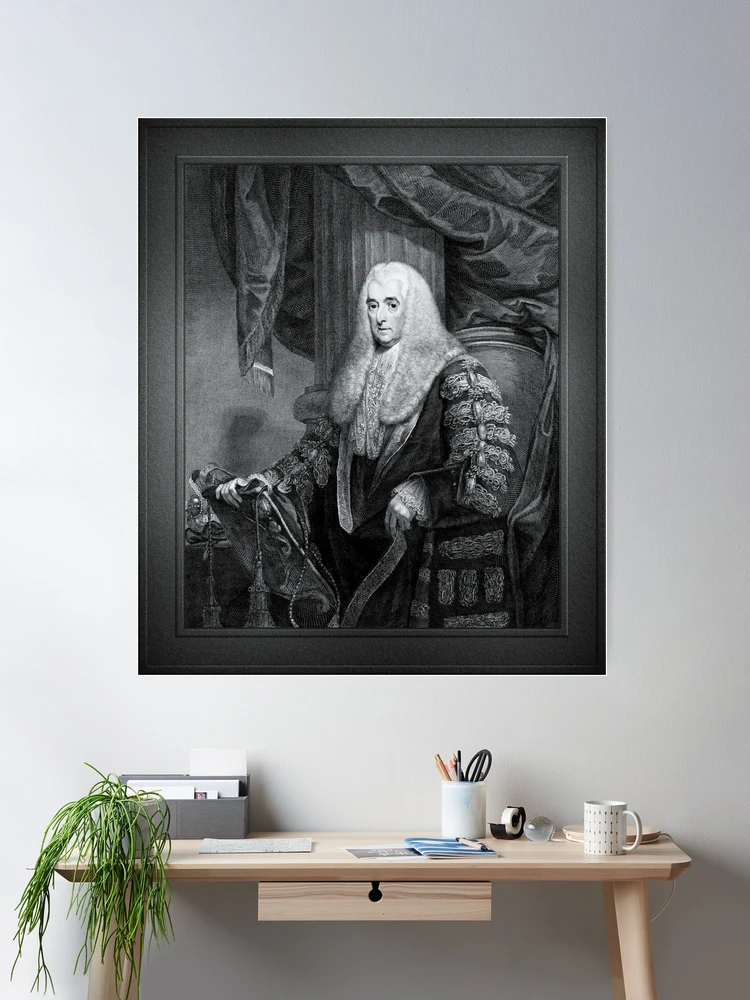
Teos nimeltä “Alexander Lord Loughborough c1800” was created by the esteemed Florentine engraver Francesco Bartolozzi (1727 – 1815); sekä taidemaalari, kuninkaallisen akatemian perustajajäsen ja tunnettu värikynän kaiverrusmenetelmän popularisoinnista. This fine engraving portrays Alexander Wedderburn 1st Earl of Rosslyn, PC, KC (1733 – 1805); a Scottish lawyer and politician who served in the House of Commons from 1761 että 1780, and who was raised to the peerage as Baron Loughborough; as well as serving as Lord High Chancellor of Great Britain from 1793 että 1801.
Lord Alexander Loughborough, an influential figure of the 18th century, dressed in elaborate judicial attire, showcasing the refinement and authority of the era. The image is a detailed depiction of the subject’s dignified posture and lavish robes, which were common among prominent figures of the time.
Sisällysluettelo
Pääaihe ja hahmot
The central figure of this engraving is Lord Alexander Loughborough, whose distinguished presence commands the viewer’s attention. Lord Loughborough, a British nobleman, is captured sitting in a grand, somewhat solemn pose, dressed in an ornate judicial robe, indicative of his high rank. The fine details in his attire, from the lace cuffs to the richly textured fabric of his robes, underscore his status in society and the era’s appreciation for elaborate fashion and decorum. His countenance, stern yet reflective, is etched in remarkable detail, enhancing the gravitas of his character as a man of power, äly, and wisdom.
The engraving emphasizes Loughborough’s sense of dignity, with his thoughtful expression paired with his poised stance. His finely carved wig, typical of high-ranking figures during the late 18th century, is a characteristic feature in the work, showcasing both style and the societal norms of the time. It is clear that Bartolozzi sought not only to capture the likeness of his subject but to convey the noble and authoritative qualities that defined Lord Loughborough.
Esineet ja symboliikka
While the main focus remains on Lord Loughborough, there are several objects present in the artwork that contribute to its overall theme of high social standing and judicial power. The chair on which he rests is elegantly detailed, with its ornate carving and flowing lines, a representation of the grandeur associated with nobility. The backdrop, consisting of heavy curtains, further suggests an aura of privacy and exclusivity, perhaps referencing the closed doors of power in which Loughborough operated.
The artist carefully arranges the composition so that every detail of Lord Loughborough’s attire and environment reflects his elevated position within British society. The presence of a scepter-like object near the subject’s hand, while subtle, alludes to the authority and leadership of Loughborough, suggesting his involvement in governance or law. Such items were often used to symbolize control, äly, and legal jurisdiction, enhancing the prestige of the figure depicted.
Maasto ja tausta
The background of the engraving is minimal yet effective. The heavy drapes in the background, carved into the frame, create a soft sense of depth while not detracting from the main figure. This subtle backdrop allows the viewer to focus on Lord Loughborough’s persona and attire, without unnecessary distractions. The use of shadow in the background adds dimension and weight to the composition, giving the piece a sense of groundedness, which contrasts with the elevated social standing of the subject.
Though no natural terrain or outdoor environment is directly shown, the sense of grandeur is derived from the interior setting suggested by the draped curtains and luxurious textures. This formal, indoor scene was typical of official portraits during the era, where subjects were depicted in settings that emphasized their status, often within the walls of their own estates or in carefully curated settings.
Materiaalit ja tekniikka
Francesco Bartolozzi was renowned for his skill in engraving, particularly in the delicate art of stipple engraving. This work showcases his mastery of light and shade, which he achieved through the use of tiny dots and fine lines. The use of stipple engraving gives the image a remarkable texture, allowing Bartolozzi to convey both the soft fabric of Loughborough’s robes and the hard, stately contours of his chair and surroundings with equal precision. The cross-hatching and careful shading add depth and dimension, giving the figure a lifelike presence.
The engraving is executed in black and white, a common practice of the time. The contrast between light and dark tones accentuates the detailing in the subject’s facial features and attire, as well as the fabric’s texture. The overall tonal variation also adds to the somber and dignified mood of the piece, with deep shadows enhancing the sense of weightiness and authority surrounding Lord Loughborough.
Tyyli, Teema, ja mieliala
The engraving follows the stylistic conventions of 18th-century portraiture, where the subject is often idealized and their social position is emphasized. This particular engraving, kuitenkin, is not just a portrayal of a nobleman; it is an exploration of status, dignity, and the intellectual gravitas of the time. Taiteilija, Bartolozzi, was a master of capturing the essence of his subjects, and this work is a testament to his ability to elevate a simple portrait into something that speaks to the power and authority held by the figure.
The mood of the artwork is formal and introspective. There is a quiet reverence to the way Lord Loughborough is presented, a mood that likely reflects his own demeanor and the respect that he commanded. Hienot yksityiskohdat, the soft light, and the overall composition of the work give it a solemn yet serene atmosphere, characteristic of portraits intended for public and private admiration during the period.
Johtopäätös
“Alexander Lord Loughborough c1800” by Francesco Bartolozzi is a profound example of 18th-century engraving, one that speaks to both the technical brilliance of Bartolozzi and the esteemed position of the subject. Through meticulous detail and subtle use of light and shadow, the engraving not only captures the likeness of Lord Loughborough but also conveys the societal values and attitudes of the time. The engraving’s elegant execution and its focus on the noble and judicial aspects of Loughborough’s life reflect the enduring tradition of portraiture as a means of immortalizing those who shaped history.
To his right is a cloth covered table that seems to have a crown resting on it.
Tämä on remasteroitu digitaalisen taiteen vanhojen mestareiden kopio julkisessa käytössä olevasta kuvasta, joka on saatavilla a kanvastulostus verkossa.
Taiteilijabio
Alla olevat tiedot ovat peräisin Wikipedia.org
Bartolozzi syntyi Firenzessä, ja kuten tuolloin oli tapana, ajateltiin, että hän seuraa isänsä jalanjälkiä ja hänestä tulee kulta- ja hopeaseppä.
Tämä kuitenkin muuttuisi, koska nuori Bartolozzi osoitti suurta taitoa ja makua suunnittelussa; Tämän seurauksena hänet asetettiin kahden firenzeläisen taiteilijan valvontaan, mukaan lukien italialainen taidemaalari Ignazio Hugford (1703 – 1778) ja italialainen rokokoo -tyylinen maalari Giovanni Domenico Ferretti (1692 – 1768) joka opetti häntä maalaamaan.
Kolmen vuoden taidekoulutuksen jälkeen, hän meni Venetsiaan opiskelemaan kaiverrusta; ja työskenteli kuusi vuotta saksalaisen kaivertajan ja valmistelijan Joseph Wagnerin palveluksessa (1706 – 1780), kaivertaja ja printtimyyjä, ennen oman työpajan perustamista.
Ensimmäinen Venetsiassa valmistettu Bartolozzi-kaiverrus oli italialaisen barokkiajan taidemaalari Marco Riccin tyylisiä levyjä. (1676 – 1730) ja Giacomo Francesco Zuccarelli (1702 – 1788) myöhään barokki- tai rokokoo -aikainen maisemamaalari.
Sitten sisään 1762 Bartolozzi muutti Roomaan lyhyeksi ajaksi, jossa hän valmisti kaiverrukset, jotka edustivat italialaisen barokkimaalari Domenichinon Grottaferratan freskoja (Domenico Zampieri 1581 – 1641) kuvaavat Pyhän Niluksen elämää.
Tuo kaiverrusjoukko ja hänen etsaukset vanhan mestarin teoksista, alkoi kiinnittää yleisön huomiota kaikkialla Euroopassa; ja sisään 1763 hän tapasi Richard Daltonin (1715 – 1791), valmistelija, kaivertaja ja Englannin kuninkaallinen kirjastonhoitaja, joka matkusti Italiassa etsimään hankintoja kuningas George III -taidekokoelmasta.
Dalton tarjosi hänelle nimityksen kaivertajaksi kuninkaalle; jonka Bartolozzi hyväksyi ja lähti Lontooseen vuonna 1764; missä hän asui 42 vuotta.
Lontoossa ollessaan hän tuotti suuren määrän kaiverruksia, johon kuului Clytie italialaisen maalarin Annibale Carraccin jälkeen (1560 – 1609), ja Neitsyt ja lapsi, italialaisen barokkimaalarin Carlo Dolcin jälkeen (1616/7 – 1686).
Suuri osa niistä on italialaisen maalarin Giovanni Battista Ciprianin teoksista (1727 – 1785) ja brittiläinen taidemaalari Angelica Kauffman (1741 – 1807). Bartolozzi antoi myös useita levyjä Boydellin Shakespearen galleriaan.