

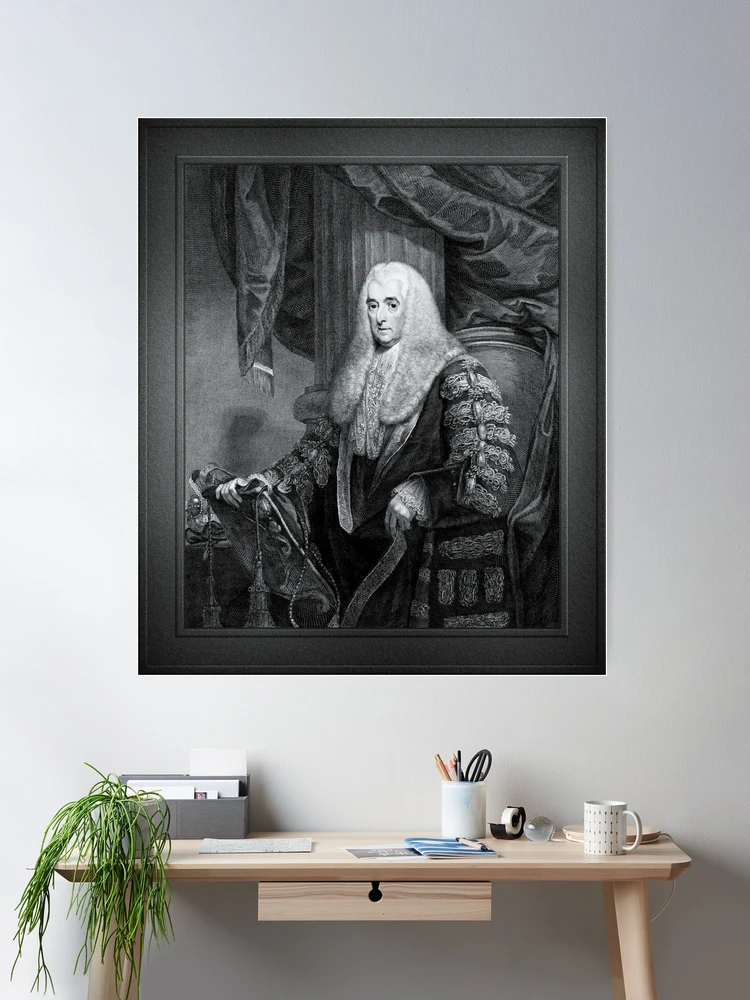
Alexander Lord Loughborough c1800
D'Artwierk mam Titel “Alexander Lord Loughborough c1800” gouf vum geschätzte florentineschen Graveur erstallt Francesco Bartolozzi (1727 – 1815); wéi och e Moler, e Grënnungsmember vun der Royal Academy a bekannt fir d'Kriibsmethod vun der Gravur ze populariséieren. Dës fein Gravur portraitéiert den Alexander Wedderburn 1. Earl of Rosslyn, PC, KC (1733 – 1805); e schottesche Affekot a Politiker, deen am House of Commons vun 1761 an 1780, an deen an de Peerage als Baron Loughborough opgewuess ass; souwéi Déngscht als Lord High Kanzlerin vu Groussbritannien aus 1793 an 1801.
Lord Alexander Loughborough, eng aflossräich Figur vum 18. Joerhonnert, an uerdentleche geriichtleche Kleedung gekleet, d'Verfeinerung an d'Autoritéit vun der Ära ze weisen. D'Bild ass eng detailléiert Ofbildung vun der würdeger Haltung vum Thema an der iwwerflësseger Kleeder, déi allgemeng ënner prominente Figuren vun der Zäit waren.
Inhaltsverzeechnes
Main Sujet an Zuelen
Déi zentral Figur vun dëser Gravur ass den Lord Alexander Loughborough, deem seng ënnerscheet Präsenz d'Opmierksamkeet vum Betrachter beherrscht. Här Loughborough, e briteschen Adel, ass ageholl an engem Grand sëtzt, e bësse feierlech Pose, an engem dekoréierte Geriichtsmantel gekleet, indikativ vu sengem héije Rang. Déi fein Detailer a sengem Kleed, vun de Spëtzemanschetten bis zum räich texturéierte Stoff vu senge Kleeder, ënnersträicht säi Status an der Gesellschaft an d'Unerkennung vun der Ära fir ausgeglach Moud an Dekorum. Säi Gesiicht, streng awer reflektiv, ass a bemierkenswäert Detail geprägt, d'Gravita vu sengem Charakter als e Mann vu Muecht ze verbesseren, intellekt, a Wäisheet.
D'Gravatioun betount dem Loughborough säi Sënn vun Dignitéit, mat sengem Duerchduechte Ausdrock gepaart mat senger geprägter Haltung. Seng fein geschnëtzt Perücke, typesch fir héich-Ranking Zuelen am spéiden 18. Joerhonnert, ass eng charakteristesch Feature am Wierk, souwuel Stil wéi och déi gesellschaftlech Normen vun der Zäit ze weisen. Et ass kloer datt de Bartolozzi versicht net nëmmen d'Ähnlechkeet vu sengem Thema z'erreechen, mee déi nobel an autoritär Qualitéiten ze vermëttelen, déi den Lord Loughborough definéiert hunn..
Objeten a Symbolismus
Wärend den Haaptfokus op Lord Loughborough bleift, et gi verschidde Objete präsent am Konschtwierk, déi zu hirem Gesamtthema vun héije soziale Stand a geriichtlecher Muecht bäidroen. De Stull op deem hien riicht ass elegant detailléiert, mat sengen dekoréierten Schnëtt a fléissende Linnen, eng Duerstellung vun der Grandeur verbonnen mat Adel. Den Kuliss, besteet aus schwéier Riddoen, further suggests an aura of privacy and exclusivity, perhaps referencing the closed doors of power in which Loughborough operated.
The artist carefully arranges the composition so that every detail of Lord Loughborough’s attire and environment reflects his elevated position within British society. The presence of a scepter-like object near the subject’s hand, iwwerdeems subtile, alludes to the authority and leadership of Loughborough, suggesting his involvement in governance or law. Such items were often used to symbolize control, intellekt, and legal jurisdiction, enhancing the prestige of the figure depicted.
Terrain an Hannergrond
The background of the engraving is minimal yet effective. The heavy drapes in the background, carved into the frame, create a soft sense of depth while not detracting from the main figure. Dës subtile Kuliss erlaabt dem Betrachter sech op dem Lord Loughborough seng Perséinlechkeet a Kleedung ze fokusséieren, ouni onnéideg Oflenkungen. D'Benotzung vu Schatten am Hannergrond füügt Dimensioun a Gewiicht un d'Kompositioun, d'Stéck e Gefill vu Buedem ze ginn, wat am Géigesaz zum héije soziale Stand vum Thema ass.
Och wann keen natierlechen Terrain oder Outdoor-Ëmfeld direkt ugewise gëtt, d'Gefill vun der Grandeur ass ofgeleet vum Interieurëmfeld suggeréiert vun de draperéierte Gardinen a luxuriéise Texturen. Dës formell, Indoor Szen war typesch vun offiziellen Portraite während der Ära, wou Themen an Astellungen duergestallt goufen, déi hire Status ënnersträichen, dacks bannent de Mauere vun hiren eegene Estates oder a virsiichteg curated Astellungen.
Materialien an Technik
De Francesco Bartolozzi war bekannt fir seng Fäegkeet an der Gravure, Besonnesch an der delikater Konscht vum Stippelgravéieren. Dëst Wierk weist seng Meeschterschaft vu Liicht a Schiet, déi hien duerch d'Benotzung vu klenge Punkten a feine Linnen erreecht huet. D'Benotzung vu Stippelgravéierung gëtt dem Bild eng bemierkenswäert Textur, erlaabt de Bartolozzi souwuel de mëllen Stoff vun de Loughborough Kleeder ze vermëttelen wéi och déi haart, statesch Konturen vu sengem Stull an Ëmgéigend mat gläicher Präzisioun. D'Cross-hatching a virsiichteg Schatten addéieren Tiefe an Dimensioun, gëtt der Figur eng lieweg Präsenz.
D'Gravatioun ass schwaarz a wäiss ausgefouert, eng gemeinsam Praxis vun der Zäit. De Kontrast tëscht hellen an donkelen Téin accentuéiert d'Detailer an de Gesiichtsmerkmale an d'Kleedung vum Thema, wéi och d'Textur vum Stoff. Déi allgemeng tonal Variatioun füügt och zu der somberer a würdeger Stëmmung vum Stéck, mat déiwe Schatten, déi d'Gefill vu Gewiicht an Autoritéit ronderëm den Lord Loughborough verbesseren.
Stil, Thema, a Stëmmung
D'Gravatioun follegt de stilistesche Konventioune vun der Portrait vum 18. Joerhonnert, wou d'Thema dacks idealiséiert gëtt an hir sozial Positioun betount gëtt. Dës speziell Gravur, awer, ass net nëmmen eng Porträtatioun vun engem Adel; et ass eng Exploratioun vum Status, Dignitéit, an déi intellektuell Gravitas vun der Zäit. De Kënschtler, Bartolozzi, war e Meeschter fir d'Essenz vu senge Sujete festzehalen, an dëst Wierk ass en Testament vu senger Fäegkeet fir en einfachen Portrait zu eppes z'erhéijen, wat mat der Kraaft an der Autoritéit vun der Figur schwätzt.
D'Stëmmung vum Konschtwierk ass formell an introspektiv. There is a quiet reverence to the way Lord Loughborough is presented, a mood that likely reflects his own demeanor and the respect that he commanded. Déi fein Detailer, déi mëll Luucht, and the overall composition of the work give it a solemn yet serene atmosphere, characteristic of portraits intended for public and private admiration during the period.
Conclusioun
“Alexander Lord Loughborough c1800” by Francesco Bartolozzi is a profound example of 18th-century engraving, one that speaks to both the technical brilliance of Bartolozzi and the esteemed position of the subject. Through meticulous detail and subtle use of light and shadow, the engraving not only captures the likeness of Lord Loughborough but also conveys the societal values and attitudes of the time. Déi elegant Ausféierung vun der Gravur a säi Fokus op déi nobel a geriichtlech Aspekter vum Loughborough sengem Liewen reflektéieren déi dauerhaft Traditioun vu Portraiten als Mëttel fir déi, déi d'Geschicht geformt hunn, veréiwegt..
Zu senger rietser Säit ass en mat Stoff gedeckten Dësch, dee schéngt eng Kroun drop ze hunn.
Dëst ass eng remastered digital Konscht al Master Reproduktioun vun engem Public Domain Bild dat als verfügbar ass Leinwandprint online.
Kënschtler Bio
Info drënner ofgeleet vun Wikipedia.org
De Bartolozzi gouf zu Florenz gebuer, a wéi de Brauch vun der Zäit war, et gouf geduecht, datt hien a sengem Papp säi Schrëtt géif goen an e Gold- a Sëlwerschmidt ginn.
Dëst wäert awer änneren well de jonke Bartolozzi vill Fäegkeet a Goût am Design gewisen huet; als Resultat gouf hien also ënner der Opsiicht vun zwee florentinesche Kënschtler gesat, dorënner den italienesche Moler Ignazio Hugford (1703 – 1778) an italienesche Rokoko-Stil Moler Giovanni Domenico Ferretti (1692 – 1768) deen him am Molerei geléiert huet.
No dräi Joer Konschtausbildung, hien ass op Venedeg gaangen fir Gravuren ze studéieren; a sechs Joer fir den däitsche Graveur an Zeechner Joseph Wagner geschafft (1706 – 1780), en Graveur an Dréckerhändler, ier hien säin eegenen Atelier opbaut.
Déi éischt Gravure Bartolozzi produzéiert zu Venedeg waren Placke am Stil vum italienesche Barock Period Moler Marco Ricci (1676 – 1730) an Giacomo Francesco Zuccarelli (1702 – 1788) e Spéitbarock oder Rokoko Period Landschaftsmaler.
Den Émile Vernon war e Student an der Fine Arts School zu Tours, wou hien den éischte Präis fir Zeechnen gewonnen huet 1762 De Bartolozzi ass fir eng kuerz Zäit op Roum geplënnert, wou hien e Set vun Gravuren ofgeschloss huet, déi Fresken zu Grottaferrata vum italienesche Barockmoler Domenichino representéieren (Domenico Zampieri 1581 – 1641) d'Liewen vum St Nilus duerstellt.
Dee Set vun Gravuren a seng Ätzunge vun alen Meeschterwierker, ugefaang ëffentlech Opmierksamkeet uechter Europa ze zéien; an an 1763 hien begéint Richard Dalton (1715 – 1791), Zeechner, Graveur an den englesche Royal Librarian deen an Italien ënnerwee war op der Sich no Acquisitioune fir King George III Konschtkollektioun.
Den Dalton huet him e Rendez-vous als Graveur zum Kinnek ugebueden; déi Bartolozzi akzeptéiert a lénks fir London an 1764; wou hie gelieft fir 42 Joer.
Während senger Zäit zu London huet hien eng grouss Zuel vu Gravuren produzéiert, déi och Clytie nom italienesche Moler Annibale Carracci (1560 – 1609), a vun der Jongfra a Kand, nom italienesche Barockmoler Carlo Dolci (1616/7 – 1686).
E groussen Deel vun hinnen ass aus de Wierker vum italienesche Moler Giovanni Battista Cipriani (1727 – 1785) a britesch Molerin Angelica Kauffman (1741 – 1807). De Bartolozzi huet och e puer Platen zu Boydell's Shakespeare Gallery bäigedroen.