

Alegoria muzyki
Alegoria muzyki, Music Of The Lyre c1898 by Czech Painter Alphonse Mucha (1860 – 1939); a także znakomity ilustrator i grafik, który był główną siłą w okresie secesji; znany ze swojej stylizowanej, ozdobne i dekoracyjne plakaty teatralne.

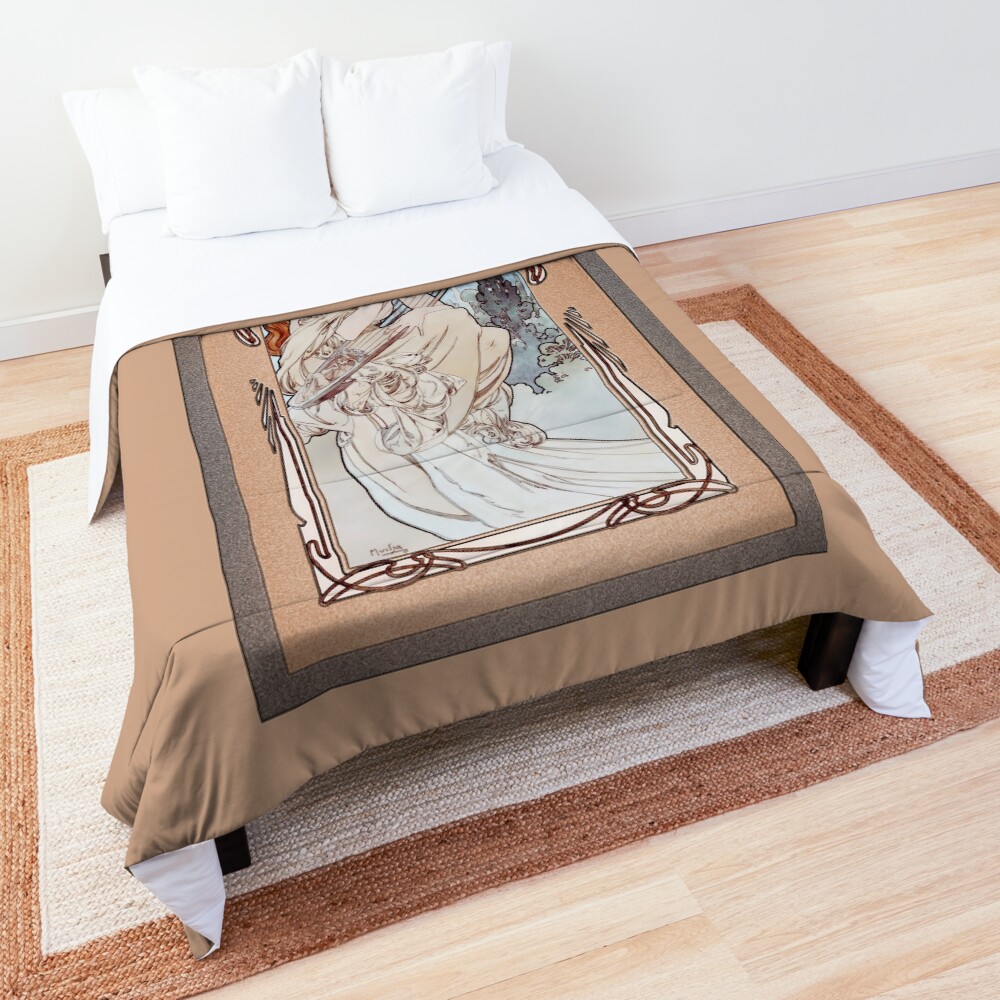
This is a beautiful illustration of a young redhead sitting in a forest in deep contemplation with a bright star shinning in the heavens behind her; with its rays of light pointing in all directions, illuminating the trees below and the night sky.
The young lady is wearing a tiara over her flowing hair, and as a long gown that is hanging from her waist down to the ground, with part of it draped over her right upper arm as it blends into the bush outline on the ground.
She has a large decorative lyre resting on the side of her right thigh, that she is holding onto with her left hand at its mid-section, with her right elbow resting on the frame of the lyre and her right hand slightly touching the upper frame of the musical instrument as her face leans against her right hand.
Jest to retuszowana reprodukcja starych mistrzów sztuki cyfrowej obrazu domeny publicznej, która jest dostępna do zakupu online jako zrolowany obraz na płótnie.
Informacje poniżej od Wikipedia.org
Alfons Maria Mucha Lipiec 24, 1860 – lipiec 14, 1939), był znany na całym świecie jako Alphonse Mucha. Był wybitnym czeskim malarzem, ilustrator i grafik, mieszkający w Paryżu w okresie secesji, i jest najbardziej znany ze swoich wyraźnie stylizowanych i dekoracyjnych plakatów teatralnych, szczególnie te Sarah Bernhardt.
Tworzył ilustracje, reklamy, panele dekoracyjne, i projekty, który stał się jednym z najbardziej znanych obrazów tego okresu.
W drugiej części swojej kariery, w wieku 43, wrócił do ojczyzny Czech i Moraw w Austrii i poświęcił się namalowaniu serii dwudziestu monumentalnych płócien znanych jako Epopeja słowiańska, przedstawiający historię wszystkich narodów słowiańskich świata, które namalował między 1912 i 1926.
W 1928, w 10. rocznicę niepodległości Czechosłowacji, przedstawił serię narodowi czeskiemu. Uważał to za swoje najważniejsze dzieło. Jest teraz na wystawie w Pradze.