

Allégorie de la Peinture
Allégorie de la Peinture (Allegory of Painting) c1765 by French Painter François Boucher (1703 – 1770); cunnisciutu ancu com'è disegnatore, incisore è decoratore in u stile rococò francese, that was well known for his lavish mythological, motivi allegorici ed erotici ed era il pittore di corte di Luigi XV e il favorito della marchesa di Pompadour..
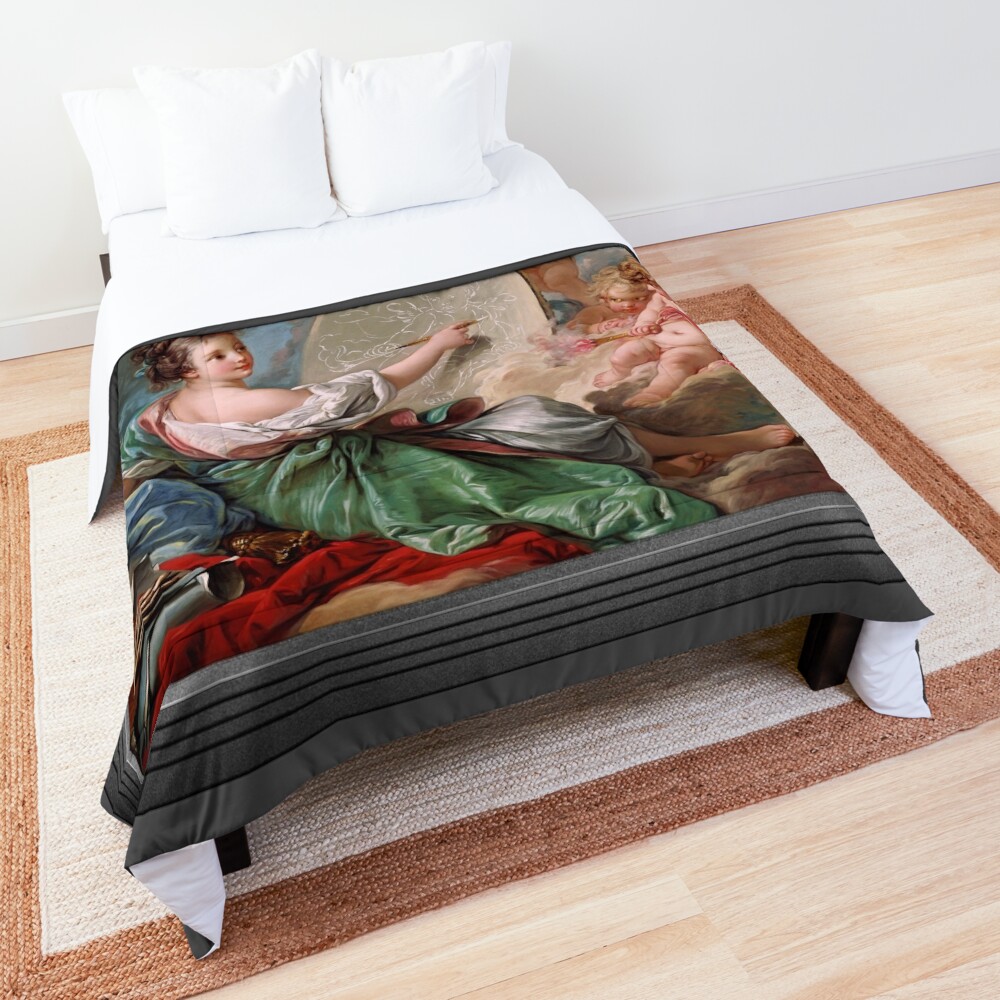
Though a year apart in there creation Allégorie de la Peinture is considered to be a companion piece to Allégorie de la Musique, as it is similar in many respects starting with the figures floating in the sky atop of large clouds, with a young lady and putti as the main elements in the scene.
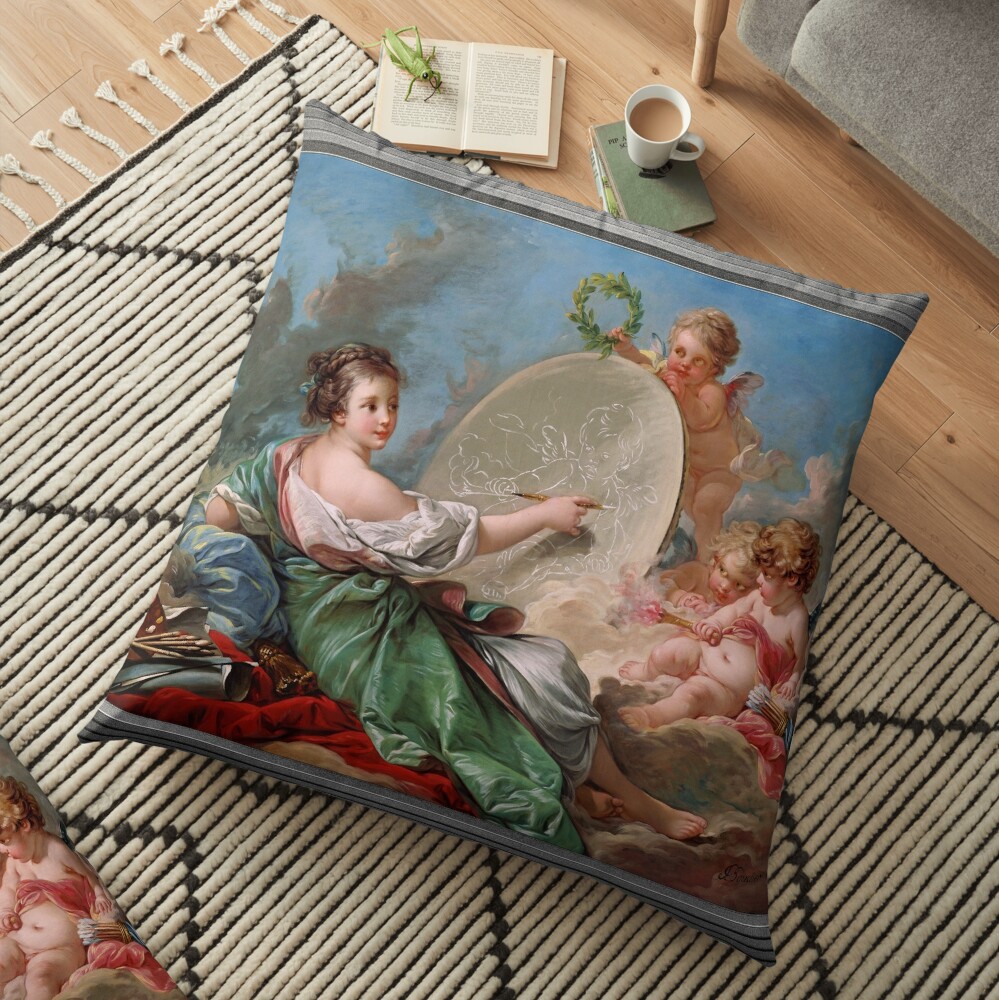
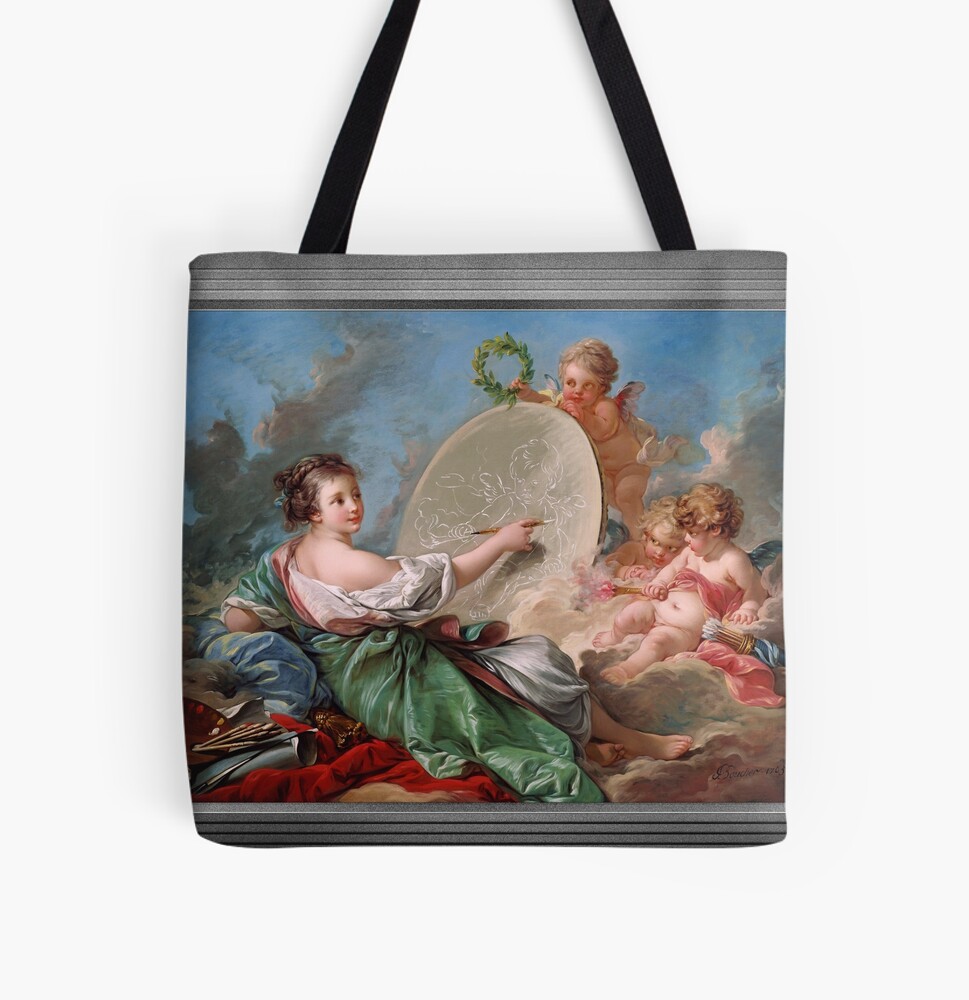
As the name of the artwork suggest, this scene interprets the meaning of painting by showing an attractive young woman reclining on a bundle of cloth, painting in white an outline of the winged putti that is posing for her on a round canvas.
This canvas is being held up by another putti that is holding a laurel leaf wreath in its right hand; while yet another putti looks on, by poking his head out from behind the round canvas by the right side of the posing putti, that is holding a flaming torch in its right hand sitting by a gold and blue silk quiver filled with arrows.
Behind the young lady we can see a rolled canvas, a painters palette with paint on it and a collection of six paint brushes.
Allégorie de la Peinture is a remastered digital art old masters reproduction of a public domain image that is available as a stampa d'arte in linea.
Info sottu Derivatu da Wikipedia.org
Nativu di Parigi, Boucher era u figliolu di un pittore pocu cunnisciutu Nicolas Boucher, chì li dete a so prima furmazione artistica. À l'età di diciassette anni, un dipintu di Boucher era ammiratu da u pittore François Lemoyne. Lemoyne dopu hà numinatu Boucher cum'è u so apprendista, ma dopu solu trè mesi, andò à travaglià pè l'incisore Jean-François Cars.
In 1720, vincìu l'élite Grand Prix de Rome per a pittura, ma ùn hà pigliatu l'oppurtunità di studià in Italia finu à cinque anni dopu, per via di prublemi finanziarii à l'Accademia Reale di Pittura è Scultura.[1] Al suo ritorno dai suoi studi in Italia fu ammesso alla rifondata Académie de peinture et de sculpture on 24 Nuvembre 1731. U so pezzu di ricezione (pezza di ricezione) era u so Rinaldu è Armida di 1734.
Boucher sposò Marie-Jeanne Buzeau in 1733. A coppia avia trè figlioli inseme. Boucher hè diventatu un membru di a facultà in 1734 è a so carriera s'accelerà da questu puntu chì hè statu prumuvutu Prufessore dopu Rettore di l'Accademia, diventendu ispettore à a Royal Gobelins Manufactory è infine Premier Peintre du Roi (Primu Pittore di u Re) in 1765. Ritrattu di Marie-Louise O'Murphy c. 1752
Boucher hè mortu 30 Maghju 1770 in a so Parigi natale. U so nome, cù quellu di a so patrona Madame de Pompadour, era diventatu sinonimu di u stilu rococò francese, guidà i fratelli Goncourt à scrive: “Boucher hè unu di quelli omi chì rapprisentanu u gustu di un seculu, qui s'expriment, personificà è incarna.”
Boucher hè famosu per dì chì a natura hè “troppu verde è pocu illuminatu” (troppu verde è mal illuminatu).
Boucher era assuciatu cù l'incisore di pietre preziose Jacques Guay, à qui il a enseigné à dessiner. Il a également encadré le peintre moravo-austriaque Martin Ferdinand Quadal ainsi que le peintre néoclassique Jacques-Louis David en 1767.[4] Più tardi, Boucher hà fattu una serie di disegni di l'opere di Guay chì Madame de Pompadour hà poi incisu è distribuitu cum'è un voluminu bellu rilegatu à i cortigiani favuriti.