

Allegory Of Spring
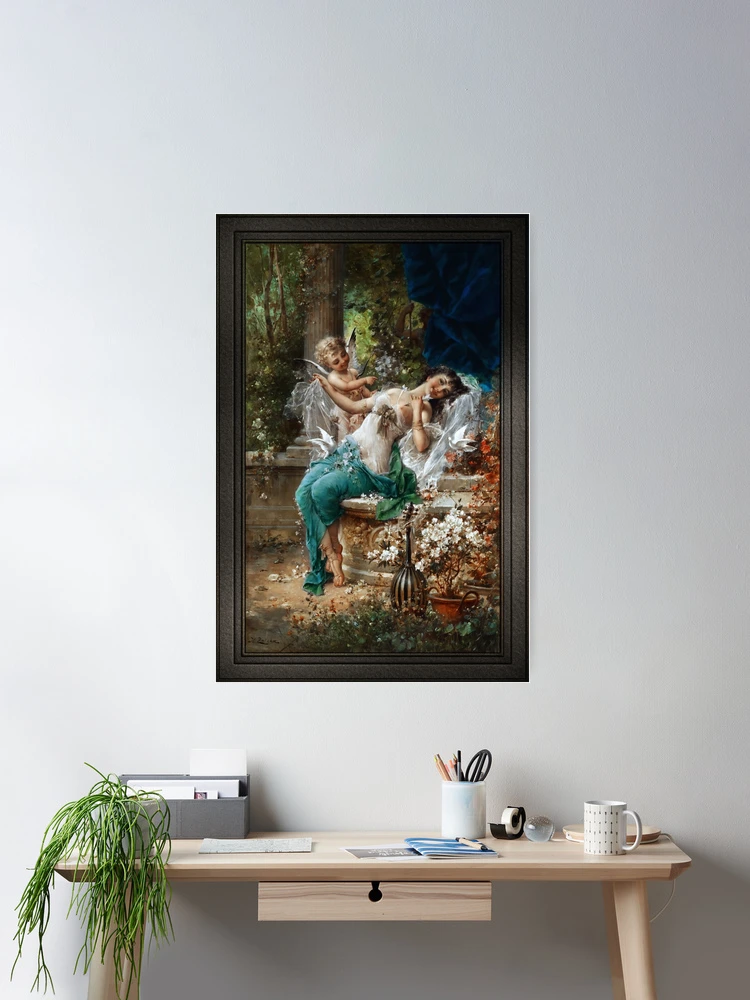
Artelanean Allegory of Spring, created by Austrian painter Hans Zatzka (1859 – 1945), the viewer is immersed in an enchanting narrative that captures the essence of rebirth and renewal, themes intimately connected to the arrival of spring. The piece exudes a timeless beauty, showcasing Zatzka’s unique ability to blend classical allegorical imagery with a romantic, almost ethereal atmosphere. His use of intricate detail and harmonious composition invites the viewer to experience not just a scene, but an emotional journey that mirrors the subtle transitions of nature as it awakens.
Edukien taula
Gai nagusia eta osaera
At the center of Allegory of Spring, Zatzka places a reclining female figure, her form embodying the very essence of spring itself. She is a symbol of nature’s fertility and rejuvenation, with her pale skin glowing in the soft, dappled light that seems to emanate from the surrounding flora. Dressed in a delicate, translucent gown, the figure rests on a stone bench, her posture one of relaxed elegance. Bere soinekoa, a vibrant turquoise, flows like the fresh waters of a spring stream, contrasting beautifully with the rich greenery that encircles her.
The woman’s facial expression is serene, almost languid, as if in a deep connection with the earth and the changing season. Ilea, dark and lustrous, cascades in soft waves, while a veil of gossamer fabric encircles her head, reinforcing the sense of fragility and divine grace. The figure’s right hand rests casually on her chest, and her left hand delicately touches her lips, a gesture that suggests contemplation or a connection to the surrounding environment.
Above and around her, several playful cherubs or winged children flutter, embodying the spirit of youth and joy that is commonly associated with the arrival of spring. One cherub is pictured behind the woman, its mischievous expression and gentle touch hinting at a sense of playful intimacy. These youthful figures further amplify the idea of spring as a time of lightheartedness, bizitasuna, and playful creation.
The Background and Terrain
The backdrop of Allegory of Spring is a lush, verdant garden, brimming with blooming flowers and dense foliage. The setting appears almost enchanted, bathed in soft light and softening shadows, which enhance the ethereal quality of the scene. Zatzka employs a soft focus on the trees and foliage, making them blend harmoniously with the rest of the composition. This sense of blurred distinction between figure and background underscores the interconnection between the human form and nature.
The stone bench upon which the woman rests is adorned with creeping vines and flowers, suggesting the harmonious relationship between the figures and the surrounding plant life. The depiction of flowers, bereziki, is quite detailed, with blossoms appearing in various stages of bloom, symbolizing the gradual unfolding of spring. The use of soft pastels in the flowers and the more muted tones of the stone bench contrasts beautifully with the vibrant greens of the foliage and the turquoise gown of the central figure.
In the far background, one can catch glimpses of columns, suggesting an ancient, almost mythological setting. The classical architectural elements, such as the pillars and the draped curtains behind them, invoke a sense of timelessness, further grounding the scene in the realm of allegory. The use of natural light filtering through the surrounding trees adds a magical quality to the scene, enhancing the feeling of an idyllic, tranquil moment suspended in time.
Symbolism and Allegory
Zatzka’s Allegory of Spring is rich in symbolism, particularly in its portrayal of the central female figure and the surrounding cherubs. Emakumea, as a personification of spring, represents the life-giving energy of the season, as well as the natural cycles of growth and regeneration. Bere soinekoa, which resembles flowing water, is symbolic of the rejuvenating forces of spring rains that nourish the earth.
The cherubs, commonly seen in works of the Renaissance and Baroque periods, symbolize purity, maite izan, and innocence. In this context, they also serve as representations of the joy and vitality that spring brings. The image of the playful childlike figures conveys the idea of innocence and new beginnings, reinforcing the theme of rebirth inherent in the season.
The flowers and plant life further underscore the theme of regeneration, with the blooms symbolizing growth, new beginnings, and the awakening of the natural world after the long dormancy of winter. The inclusion of birds, flying or perched nearby, alludes to the freedom and joy that nature offers as it reawakens.
Zatzka’s use of light also carries symbolic weight. Biguna, warm glow that illuminates the central figure evokes a sense of divine light or the touch of the gods, highlighting the sacredness of nature’s cyclical rhythms. The play of shadow and light on the figure and her surroundings creates a dreamlike quality, inviting the viewer to contemplate the spiritual renewal that spring represents.
Aldartea eta Giroa
Koadroaren aldartea lasaitasunarena da, leuntasuna, and timeless beauty. Zatzka masterfully evokes a sense of calm, the serene expression of the central figure and the delicate playfulness of the cherubs infusing the scene with a feeling of gentle joy. Oparoa, verdant garden, with its blooming flowers and bright greenery, exudes the hopefulness and vitality of spring. There is a quiet, almost meditative quality to the scene, suggesting that the moment captured is one of deep reflection, berritzea, and connection with the earth.
The overall atmosphere of the painting is also one of romance and nostalgia. The soft color palette, along with the idealized, classical figures, creates a sense of longing for a world that is pure, innocent, and in harmony with nature. It is a world in which beauty, peace, and renewal are constant, a place where the soul can rest and rejuvenate, much like the earth itself during the arrival of spring.
Bukaera
Hans Zatzka’s Allegory of Spring is a stunning example of late 19th and early 20th-century Romanticism, blending classical allegorical themes with a deep appreciation for the beauty of the natural world. The painting’s rich symbolism, xehetasun korapilatsua, and ethereal atmosphere invite viewers into a world of gentle rebirth and renewal, making it a timeless tribute to the magic of spring. Argiaren erabilera adituaren bidez, kolorea, eta konposizioa, Zatzka captures the essence of the season, creating an artwork that continues to resonate with audiences as a celebration of nature’s eternal cycles.
Domeinu publikoko irudi baten erreprodukzioa da arte digitaleko maisu zaharren erreprodukzioa mihise inprimatu sarean.
Bio artista honetatik eratorria Wikipedia.org
Hans Zatzka batzuetan p gisa ezagutzen zen. Gunaldi, Pierre de Ronsonard, edo h. Yabateri, eta bere lan asko sinatu zituen Joseph Bernard bezala, Kin. Bernard, edo Bernard Zatzka.
Zatzka-ren pseudonimo ugarien xedea da saltzen zuen artelan kopurua mugatu zuen kontratuak hausteko zigorrak ekiditea.
Horrek Arte datu base batzuk eragin ditu Zatzka-ren lana Joseph Bernard pseudonimoaren azpian, izen bereko eskultore frantziarrarekin.
Hans Zatzka jaio zen 8 martxoa 1859 Vienan. Bere aita Bartholomaüs eraikuntza langilea zen, eta bere ama Marie Karpischek Zatzka zen.
-En artean 1877 eta 1882, Academie des Beaux-Arts-en ikasi zuen, Christian Griepenkerl azpian, Carl Wurzinger, eta Karl von maskuria.
Zatzka elizak eta beste erakunde batzuentzako freskoen ekoizpenaren bidez bizitzeko aukera izan zuen.
In 1885, Zatzka Kurhaus Baden-eko Baden-eko Naisen sabaia sortzeko agindua eman zitzaion.
Zatzka-ren lan asko Pintura erlijiosoak eta Austriako hainbat elizei eskainitako aldareko piezak ziren.
Alabaina, Ezagutzen du emakumeen margolanengatik, maitagarriak, eta beste eszena fantastikoak.
Maiz, Richard Wagnerren eta Grimm-en maitagarrien ipuinetatik inspiratuko zuen.
Mendearen 19an eta XX, Zatzka-ren hainbat pieza argazki komertzial eta bilgarri bihurtu ziren.
1920ko hamarkadan, Zatzka estiloa Europan zehar aukeratutako dekorazioa bihurtu zen. Gainera, Aurreko hogeita hamar urteak berpiztea izan zuen Zatzka-rentzat.