

Allégorie du printemps
Dans l'œuvre d'art Allegory of Spring, created by Austrian painter Hans Zatzka (1859 – 1945), the viewer is immersed in an enchanting narrative that captures the essence of rebirth and renewal, themes intimately connected to the arrival of spring. The piece exudes a timeless beauty, showcasing Zatzka’s unique ability to blend classical allegorical imagery with a romantic, almost ethereal atmosphere. His use of intricate detail and harmonious composition invites the viewer to experience not just a scene, but an emotional journey that mirrors the subtle transitions of nature as it awakens.
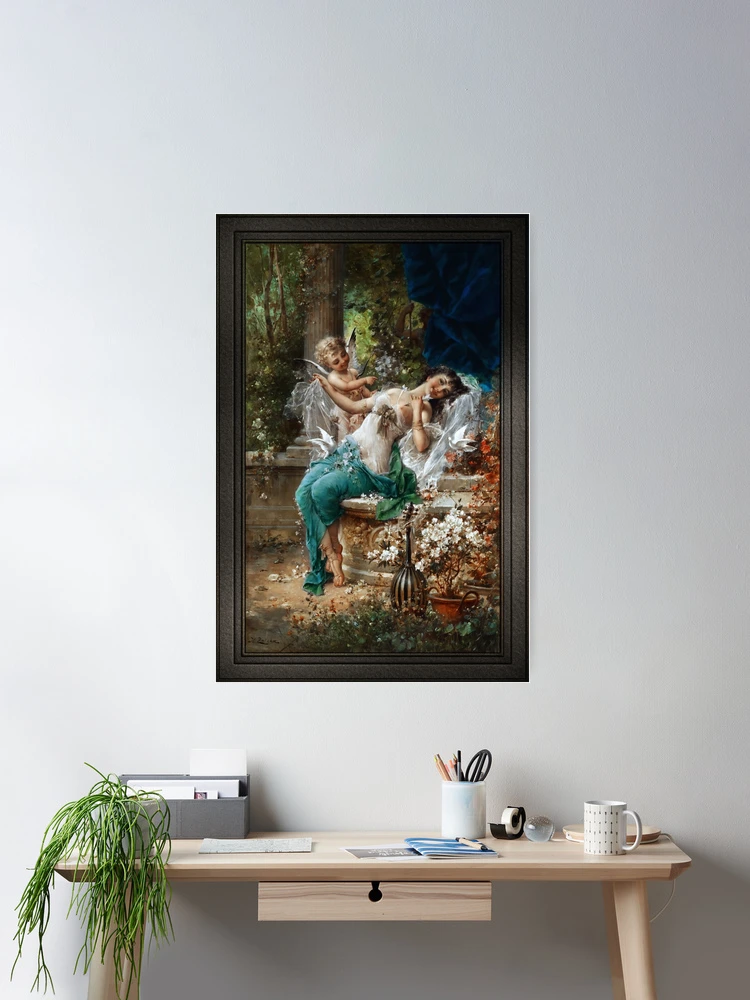
Table des matières
Sujet principal et composition
Au centre de Allegory of Spring, Zatzka places a reclining female figure, her form embodying the very essence of spring itself. She is a symbol of nature’s fertility and rejuvenation, with her pale skin glowing in the soft, dappled light that seems to emanate from the surrounding flora. Dressed in a delicate, translucent gown, the figure rests on a stone bench, her posture one of relaxed elegance. Sa robe, a vibrant turquoise, flows like the fresh waters of a spring stream, contrasting beautifully with the rich greenery that encircles her.
The woman’s facial expression is serene, almost languid, as if in a deep connection with the earth and the changing season. Ses cheveux, dark and lustrous, cascades in soft waves, while a veil of gossamer fabric encircles her head, reinforcing the sense of fragility and divine grace. The figure’s right hand rests casually on her chest, and her left hand delicately touches her lips, a gesture that suggests contemplation or a connection to the surrounding environment.
Above and around her, several playful cherubs or winged children flutter, embodying the spirit of youth and joy that is commonly associated with the arrival of spring. One cherub is pictured behind the woman, its mischievous expression and gentle touch hinting at a sense of playful intimacy. These youthful figures further amplify the idea of spring as a time of lightheartedness, vitalité, and playful creation.
The Background and Terrain
La toile de fond de Allegory of Spring is a lush, verdant garden, brimming with blooming flowers and dense foliage. The setting appears almost enchanted, bathed in soft light and softening shadows, which enhance the ethereal quality of the scene. Zatzka employs a soft focus on the trees and foliage, making them blend harmoniously with the rest of the composition. This sense of blurred distinction between figure and background underscores the interconnection between the human form and nature.
The stone bench upon which the woman rests is adorned with creeping vines and flowers, suggesting the harmonious relationship between the figures and the surrounding plant life. The depiction of flowers, en particulier, is quite detailed, with blossoms appearing in various stages of bloom, symbolizing the gradual unfolding of spring. The use of soft pastels in the flowers and the more muted tones of the stone bench contrasts beautifully with the vibrant greens of the foliage and the turquoise gown of the central figure.
In the far background, one can catch glimpses of columns, suggesting an ancient, almost mythological setting. The classical architectural elements, such as the pillars and the draped curtains behind them, invoke a sense of timelessness, further grounding the scene in the realm of allegory. The use of natural light filtering through the surrounding trees adds a magical quality to the scene, enhancing the feeling of an idyllic, tranquil moment suspended in time.
Symbolisme et allégorie
Zatzka’s Allegory of Spring est riche en symbolisme, particularly in its portrayal of the central female figure and the surrounding cherubs. La femme, as a personification of spring, represents the life-giving energy of the season, as well as the natural cycles of growth and regeneration. Sa robe, which resembles flowing water, is symbolic of the rejuvenating forces of spring rains that nourish the earth.
The cherubs, commonly seen in works of the Renaissance and Baroque periods, symbolize purity, l'amour, et l'innocence. In this context, they also serve as representations of the joy and vitality that spring brings. The image of the playful childlike figures conveys the idea of innocence and new beginnings, reinforcing the theme of rebirth inherent in the season.
The flowers and plant life further underscore the theme of regeneration, with the blooms symbolizing growth, new beginnings, and the awakening of the natural world after the long dormancy of winter. The inclusion of birds, flying or perched nearby, alludes to the freedom and joy that nature offers as it reawakens.
Zatzka’s use of light also carries symbolic weight. Le doux, warm glow that illuminates the central figure evokes a sense of divine light or the touch of the gods, highlighting the sacredness of nature’s cyclical rhythms. The play of shadow and light on the figure and her surroundings creates a dreamlike quality, inviting the viewer to contemplate the spiritual renewal that spring represents.
Humeur et atmosphère
The mood of the painting is one of tranquility, softness, et une beauté intemporelle. Zatzka masterfully evokes a sense of calm, the serene expression of the central figure and the delicate playfulness of the cherubs infusing the scene with a feeling of gentle joy. Le luxuriant, verdant garden, with its blooming flowers and bright greenery, exudes the hopefulness and vitality of spring. There is a quiet, almost meditative quality to the scene, suggesting that the moment captured is one of deep reflection, renouvellement, and connection with the earth.
The overall atmosphere of the painting is also one of romance and nostalgia. The soft color palette, along with the idealized, classical figures, creates a sense of longing for a world that is pure, innocent, and in harmony with nature. It is a world in which beauty, paix, and renewal are constant, a place where the soul can rest and rejuvenate, much like the earth itself during the arrival of spring.
Conclusion
Hans Zatzka’s Allegory of Spring is a stunning example of late 19th and early 20th-century Romanticism, blending classical allegorical themes with a deep appreciation for the beauty of the natural world. The painting’s rich symbolism, détail complexe, and ethereal atmosphere invite viewers into a world of gentle rebirth and renewal, making it a timeless tribute to the magic of spring. Grâce à son utilisation experte de la lumière, Couleur, et composition, Zatzka captures the essence of the season, creating an artwork that continues to resonate with audiences as a celebration of nature’s eternal cycles.
Les Monuments de Paris par Hubert Robert impression sur toile.
Biographie de l'artiste dérivée de Wikipedia.org
Hans Zatzka parfois connu sous le nom de P. Ronsard, Pierre de Ronsard, ou H. Piles, et a signé plusieurs de ses œuvres comme Joseph Bernard, J. Bernard, ou Bernard Zatzka.
Le but de la vaste gamme de pseudonymes de Zatzka était d'éviter les pénalités de rupture de contrat qui limitaient la quantité d'œuvres d'art qu'il pouvait vendre..
Cela a amené certaines bases de données d'art à confondre l'œuvre de Zatzka sous le pseudonyme de Joseph Bernard avec le sculpteur français du même nom..
Hans Zatzka est né le 8 Mars 1859 à Vienne. Son père Bartholomaüs était ouvrier du bâtiment, et sa mère était Marie Karpischek Zatzka.
Entre 1877 et 1882, il a étudié à l'Académie des Beaux-Arts, sous Christian Griepenkerl, Carl Würzinger, et Karl von Blaas.
Zatzka a pu gagner sa vie grâce à la production de fresques pour les églises et autres institutions.
Dans 1885, Zatzka a été chargé de créer la fresque au plafond La Naïade de Baden au Kurhaus Baden.
De nombreuses œuvres de Zatzka étaient des peintures religieuses et des retables dédiés à diverses églises en Autriche.
pourtant, il est plus connu pour ses peintures de femmes, fées, et autres scènes fantastiques.
Souvent, il s'inspirera des œuvres de Richard Wagner et des contes de fées des frères Grimm.
À la fin du 19e et au début du 20e siècle, plusieurs pièces de Zatzka ont été photographiées et transformées en cartes postales commerciales et à collectionner.
Au cours des années 1920, Le style de Zatzka est devenu le décor de choix dans toute l'Europe. en plus, les trente années précédentes ont connu une résurgence pour Zatzka.