

Allegory of the Marriage of Emperor Ferdinand II and Eleanor Gonzaga
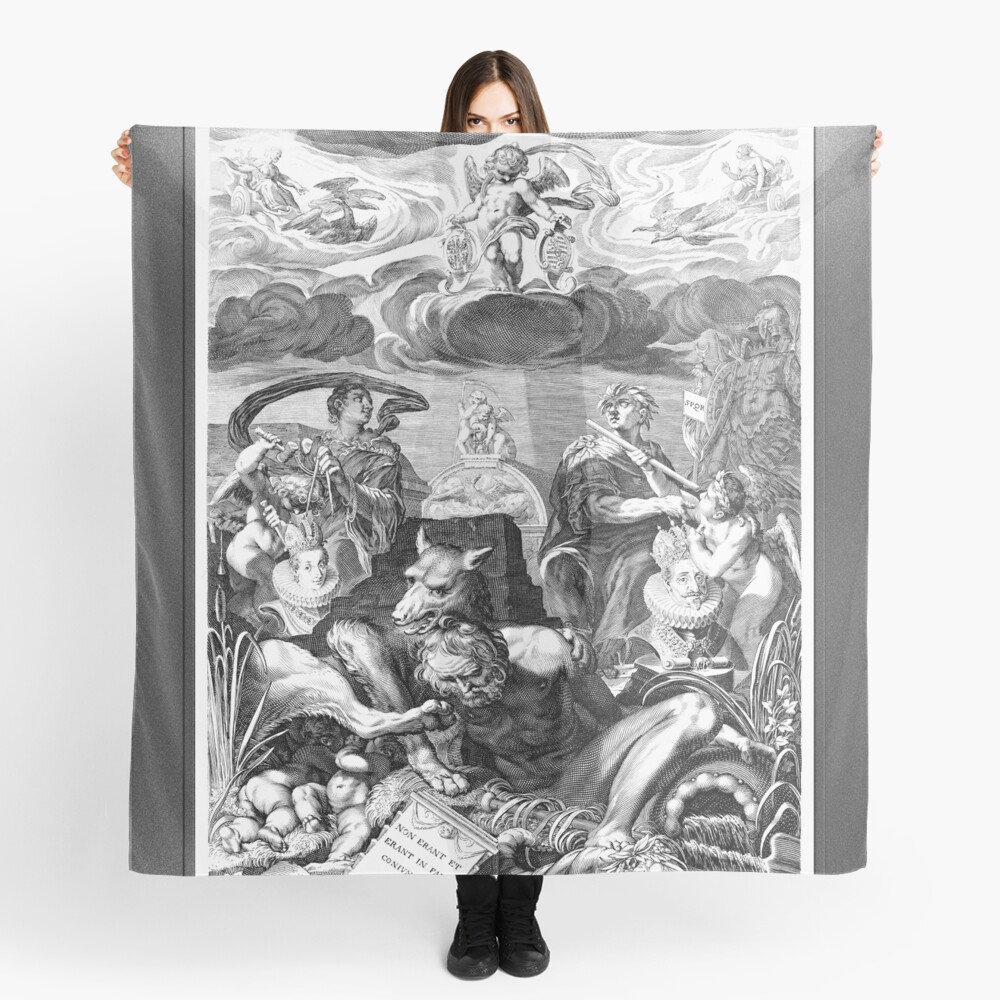
The artwork you’ve shared is titled “Allegory of the Marriage of Emperor Ferdinand II and Eleanor Gonzaga” and was created by Flemish engraver Aegidius Sadeler II (1570 – 1629). It features a complex and intricate depiction of the union between Emperor Ferdinand II of the Holy Roman Empire and Eleanor Gonzaga, incorporating allegorical themes, detailed symbolism, and a Baroque-era visual style.
Sealladh farsaing air an Obair-ealain
An gràbhaladh seo, produced by Aegidius Sadeler II; who was the imperial engraver of Rudolf II, Matthias agus Ferdinand II, illustrates a grand and multi-layered allegory centered around the marriage of Emperor Ferdinand II and Eleanor Gonzaga. The scene is filled with rich symbolism, combining human figures, mythological elements, and imperial motifs, all contributing to the deeper narrative of political alliance, Cumhachd, and divine favor.
Clàr-innse
Prìomh chuspair agus sgrìobhadh
At the heart of the gràbhaladh, the imperial couple, Ferdinand II and Eleanor Gonzaga, are represented symbolically, though their actual likenesses are not the focus. An àite sin, the figures surrounding them embody the virtues and divine forces that celebrate their marriage and its significance. On the left, the personification of the earth and fertility is depicted, with abundant crops, a strong symbol of the fertile union between the two rulers. Air an làimh dheis, the divine realm is portrayed with angels, emphasizing the spiritual blessings bestowed upon the marriage.
Figures and Symbolism
The engraver has skillfully arranged the figures to guide the viewer’s eye across the narrative. Ri aghaidh na deilbh, we see a muscular man with the head of a beast, a likely reference to the untamed forces that the imperial couple must tame and govern. Surrounding this figure are various allegorical representations, including gods and virtues, further enhancing the theme of the emperor and empress’ reign over both the earthly and divine realms.
The angel in the center of the composition holds a symbol of divine justice, perhaps reflecting the emperor’s role as a ruler blessed by heaven to uphold law and order. The celestial figures, with their flowing robes and dynamic poses, evoke the grandeur and divine right associated with the imperial family, while the serene and composed figures below ground symbolize stability, sìth, and the benefits of imperial rule.
Talamh agus cùl-raon
The engraving features a dramatic backdrop that splits the celestial and earthly realms. Gu h-àrd, a tumultuous sky filled with swirling clouds suggests the power of the heavens, while below, the more grounded elements, such as the earthy foliage and rich textures, represent the earthly realm. The contrast between the divine and terrestrial realms is amplified by the figures’ positions, with celestial beings floating above and earthly symbols being firmly planted below.
The top portion of the artwork contains several figures of angels who convey movement, bringing a sense of divine purpose to the scene. One of the angels, holding a scroll, likely symbolizes the heavenly mandate that supports the marriage of the emperor and his empress. The angel is framed by clouds, ag àrdachadh tuilleadh nàdur ethereal agus eile saoghal na rìoghachd dhiadhaidh.
Stuthan agus innleachd
Mar ghràbhaladh, is e meatailt no fiodh an stuth as fheàrr leat, agus tha am pròiseas a’ toirt a-steach gràbhaladh toinnte gus loidhnichean agus inneach fìnealta a chruthachadh a bheir seachad mion-fhiosrachadh mu na figearan agus an sgrìobhadh. Tha obair Aegidius Sadeler II ainmeil airson a dheagh obair-ciùird agus an aire mhionaideach gu mion-fhiosrachadh. Bidh na loidhnichean biorach agus eadar-dhealachaidhean eadar solas is dubhar a’ cur doimhneachd agus inneach ris an ìomhaigh, ga thoirt a-steach le mothachadh air tomhas-lìonaidh agus gluasad. Tha sruthadh rèidh an aodaich agus anatomy mionaideach nan cruthan daonna a’ nochdadh sgil Sadeler ann a bhith ag ath-aithris figear an duine gu mionaideach..
Tha cleachdadh chiaroscuro - an eadar-dhealachadh eadar solas is dorcha - a’ cur ris a’ bhuaidh dhrùidhteach, adding a heightened sense of realism while maintaining the idealized forms typical of the Baroque period. This technique draws the viewer’s focus to the central allegorical figures, which are bathed in light, while the background remains in darker tones, creating a sense of depth and focus.
Stoidhle, Cuspair, agus Mood
The style of this engraving is clearly Baroque, evident in the dramatic use of light, intense emotion, and the complex, layered composition. The figures are dynamic, full of energy, and rendered with exaggerated realism, reflecting the grandeur of the Baroque period. The figures’ gestures and expressions convey the heightened emotional intensity that characterizes much of the Baroque art, making the scene not just a depiction of a marriage but a celebration of divine power, òrdugh, and the emperor’s role as both a ruler and a divine figure.
The theme of this engraving is centered around the union of Ferdinand II and Eleanor Gonzaga, viewed through an allegorical lens. The marriage is not just a political alliance but a sacred bond that brings divine and earthly blessings. The marriage is framed as a cosmic event, linking the rulers to the heavens and nature. The celestial figures serve as intermediaries between the emperor and the divine, emphasizing the sanctity and importance of the union.
The mood of the artwork is serious and grand, reflecting the monumental nature of imperial power and divine favor. There is a sense of celebration, but also a recognition of the weight of the responsibility that comes with ruling. The figures of angels and gods seem to be both celebrating and overseeing the marriage, indicating that the rulers are under divine protection but also subject to heavenly scrutiny.
Co-dhùnadh
Ann an suim, an “Allegory of the Marriage of Emperor Ferdinand II and Eleanor Gonzaga” by Aegidius Sadeler II is a masterful engraving that combines allegory, samhlachadh, and Baroque artistry to convey the significance of the royal marriage. Through dynamic composition, mion-fhiosrachadh iom-fhillte, and profound symbolism, Sadeler invites viewers to reflect on the spiritual and political ramifications of this union. The artwork is a testament to the power and divine mandate of the ruling couple and to the complex relationship between earthly sovereignty and divine will.
Is e seo ath-riochdachadh seann mhaighstirean ealain didseatach ath-leasaichte de ìomhaigh raon poblach a tha ri fhaighinn mar a clò-bhualadh canabhas air-loidhne.
Neach-ealain bi a thàinig bho Wikipedia.org
Aegidius was part of the Sadeler family, B’ iad sin an fheadhainn as motha agus is dòcha an fheadhainn a bu shoirbheachail de na gràbhalairean Flemish aig deireadh an t-16mh agus an t-17mh linn a thàinig gu bhith na phrìomh luchd-dèanamh clò-bhualaidh ann an ceann a tuath na Roinn Eòrpa; mar neach-ealain agus foillsichearan.
B’ e mac Emanuel de Sayeleer a bh’ ann agus mac peathar Aegidius I, Jan I aig Raphael Sadeler; agus chaidh a thrèanadh le bràthair athar Jan I; a bhith na bhall de Chomann Antwerp of St. Lucas a-steach 1589.
Bha e ag obair ann am Munich, A’ Ghearmailt bho timcheall air 1590 gu 1593, an uair sin anns an Ròimh, às an Eadailt 1593 gu 1594 agus an uairsin air ais gu Munich bho 1594 – 1597.
Ann an 1597 ghluais e gu Prague, Poblachd nan Seiceach far an do chuir e roimhe tuineachadh agus thàinig e gu bhith na ghràbhalaiche ìmpireil do Rudolf II (1552 – 1612); agus rinn iad dealbhan de na h-uaislean cho math ri gràbhalaidhean de obair-ealain bho Bartholomeus Spranger (1546 – 1611), Roelant Savery (1576 – 1639), Hans Achain (1552 – 1615), Giuseppe Arcimboldo (1527 – 1593), agus deilbheadh le Giambologna (1529 – 1608) agus Adriaen de Vries (1556 – 1626).
After the passing of Rudolf II, he would serve as the imperial engraver under both Emperors Matthias (1557 – 1619) and Ferdinand II (1578 – 1637).