

Winter II In White Gown
“Winter II In White Gown” is a renowned piece created by Alphonse Maria Mucha in the year 1899. Molta (1860 – 1939) was a celebrated Czech artist known for his distinctive style that exemplified the Art Nouveau movement, which flourished during the late 19th and early 20th centuries. This artwork is a prime example of his ability to merge intricate design with symbolic representation, capturing the essence of the changing seasons while highlighting the elegance of his female subjects. The piece illustrates the personification of winter, one of a series of four seasonal representations, where the artist emphasizes the beauty and the austere elegance of the cold season.
Taula de continguts
Tema i composició
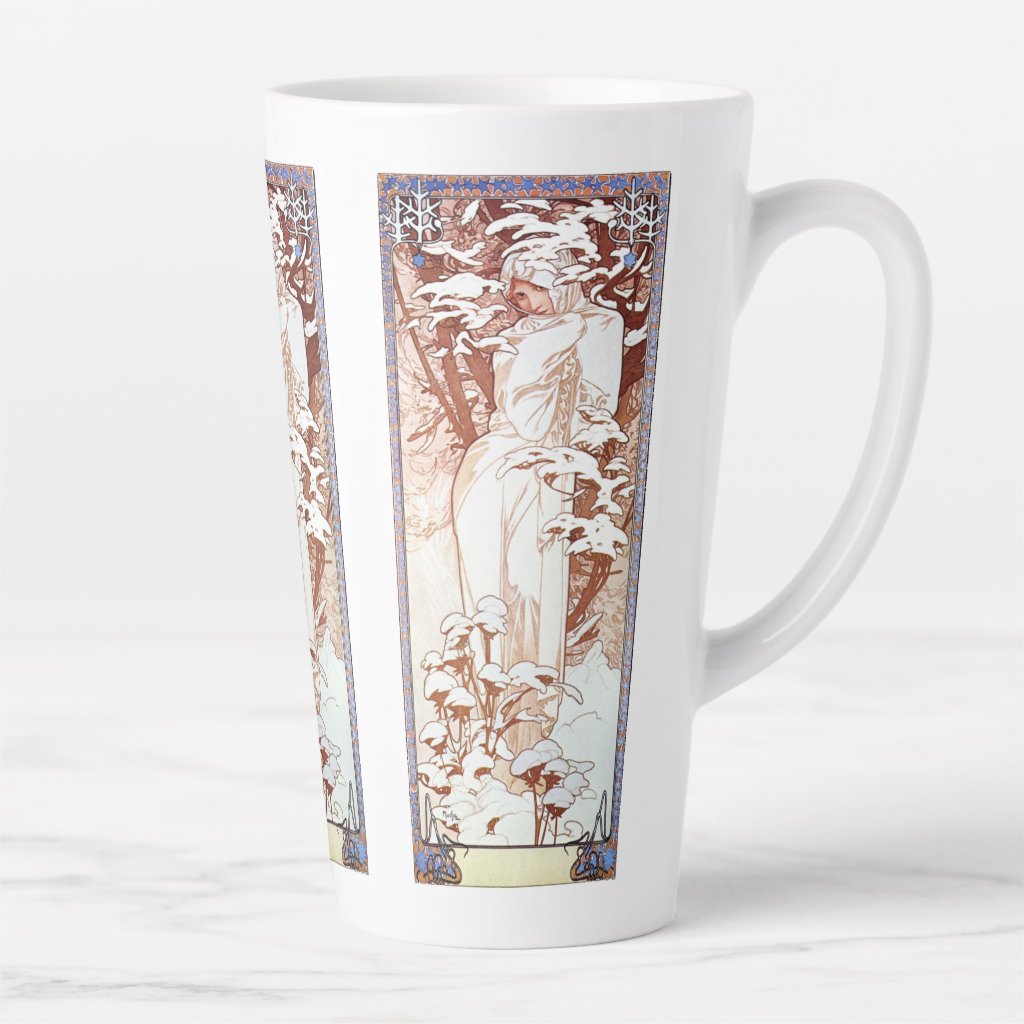
Al cor de “Hivern II In White Gown” lies a serene woman, a figure embodying the essence of winter. La dona porta un vestit blanc fluït, una peça que reflecteix la puresa i la fredor de la neu de l'hivern. Ella es troba entre un marc de formes orgàniques intricades, la seva expressió serena irradia una calma tranquil·la que és típica de la representació de Mucha de les dones a la natura. La seva mirada és suau, dirigida lleugerament cap amunt, suggerint la contemplació o la qualitat meditativa sovint associada als mesos d'hivern.
Els trets de la figura són delicats i idealitzats, però forts en la seva senzillesa. El seu cos està lleugerament girat, accentuant les corbes gràcils de la seva figura mentre s'aixeca entre els flocs de neu que cauen suaument i, línies corbes d'arbres i plantes congelades. Els arbres del fons semblen nus, les seves branques carregades de neu, contribuint a la quietud de la temporada. These organic motifs—branches, snowflakes, and flowers—flow throughout the composition, creating a harmonious balance between the figure and the natural world.
The woman’s white gown is a key focal point of the piece, the fabric flowing freely, its folds undulating in the wind. The gown not only adds to her ethereal quality but also symbolizes the purity and freshness of winter. The delicate nature of the garment contrasts with the starkness of the environment, emphasizing her relationship with the season, one of calm but also of strength. Snowflakes float delicately around her, further accentuating her connection with winter’s beauty and quiet force.
Objectes i terreny
The background of the piece is a mixture of pale brown and soft ivory tones, with elements that suggest the barren landscapes of winter. The barren trees stand as silhouettes, their limbs reaching out as if in silent reverence to the figure they surround. The snow rests gently upon the branches, creating a dreamlike effect where the figure and her environment seem to merge into one unified whole.
The ground surrounding the figure is covered in snow, the white powder softening the lines of the terrain. Scattered around the base of the figure are plants and flowers, many of which are also covered in snow, their forms slightly obscured but still visible beneath the ice. The natural world in Mucha’s work always appears symbolic, with each element carefully chosen to complement the overarching theme. Aquí, the presence of snow-covered flowers suggests a delicate beauty that thrives even in the harshest of conditions, mirroring the character of the woman herself—graceful, strong, and resilient in the face of adversity.
Estil i temes
“Winter II In White Gown” és un exemple per excel·lència de l'estil modernista de Mucha. The flowing lines, detalls complexos, and the use of soft, muted color tones are all hallmarks of the movement, which sought to break away from the rigid, industrial forms of the 19th century. The figures in Mucha’s works are often depicted in an almost ethereal manner, suspended between the natural and supernatural worlds, I aquesta peça no és una excepció.
The central theme of the work is the representation of winter, not merely as a season but as a personified force of nature. Mucha imbues the figure with qualities that elevate her beyond mere representation—she becomes a symbol of winter’s elegance, its quiet strength, and its endurance. Aquest enfocament simbòlic de les estacions reflecteix la tendència més àmplia de l'Art Nouveau de venerar i elevar la natura i la bellesa natural., així com la connexió orgànica entre els éssers humans i el món que els envolta.
L'atenció acurada de Mucha als detalls és evident en tots els aspectes de la pintura, des del treball de línia fina a la vora fins a la delicada representació dels flocs de neu. El seu tractament del tema també és profundament romàntic, capturant la intersecció de la bellesa, natura, i feminitat. La paleta de colors, sobretot suau, tons terra apagats amb esquitxades de blau i blanc, afegeix la sensació de quietud i reflexió, convidant l'espectador a contemplar la bellesa de l'estació i la connexió tranquil·la de la dona amb ella.
L'estat d'ànim de l'obra d'art és de quietud i introspecció. La figura, though portrayed in a flowing gown, does not appear to be caught in a moment of motion. En canvi, she seems to be standing still, lost in thought as snow gently falls around her. This serene quietness is the essence of winter itself, on el temps sembla alentir-se, and the world is blanketed in calm.
Materials i Tècniques
Mucha’s use of lithography was key in producing the vibrancy and detail in this work. His technical mastery allowed him to create fine lines and delicate patterns that are a trademark of his style. The artwork’s detailed border, featuring stylized snowflakes and geometric designs, frames the central image, drawing the viewer’s eye toward the figure while providing an intricate context that enhances the overall composition. The muted color palette, dominated by soft browns, marfil, and touches of blue, reflects the wintry landscape and adds to the piece’s tranquil, serene mood.
The snowflakes are meticulously rendered, each one unique and carefully placed, underscoring Mucha’s dedication to natural detail and symbolism. The overall balance between the figure, the natural environment, and the borders suggests a harmonious unity between humanity and nature—a recurring theme in Mucha’s work.
Conclusió
“Winter II In White Gown” by Alphonse Maria Mucha is a stunning embodiment of the Art Nouveau movement, blending the grace of the female form with the beauty of nature. Through his use of intricate details, línies fluides, and a soft color palette, Mucha captures the quiet majesty of winter while elevating it to a realm of symbolic elegance. This piece serves not only as a visual representation of the season but also as a meditation on the natural world’s beauty, força, and delicate endurance.
Artista Bio
Informació a continuació de Wikipedia.org
Alfons Maria Mucha July 24, 1860 – Juliol 14, 1939), va ser conegut internacionalment com Alphonse Mucha. Va ser un destacat pintor txec, il·lustrador i artista gràfic, vivint a París durant el període Art Nouveau, i és més conegut pels seus cartells teatrals ben estilitzats i decoratius, particularment les de Sarah Bernhardt.
Va produir il·lustracions, publicitat, panells decoratius, i dissenys, que es va convertir en una de les imatges més conegudes de l'època.
A la segona part de la seva carrera, a l'edat de 43, va tornar a la seva terra natal de la regió de Bohèmia-Moràvia, a Àustria, i es va dedicar a pintar una sèrie de vint teles monumentals conegudes com L'èpica eslava, que representa la història de tots els pobles eslaus del món, que va pintar entre 1912 i 1926.
En 1928, en el desè aniversari de la independència de Txecoslovàquia, va presentar la sèrie a la nació txeca. La va considerar la seva obra més important. Ara s’exhibeix a Praga.
Aquesta creació d'art digital, com amb totes les obres d'art que es poden trobar al lloc web de Xzendor7, es poden comprar en línia en una varietat de formats de material, incloses impressions de llenç, impressions acríliques, estampes de metall, estampes de fusta, impressions emmarcades, cartells, i com impressions de llenços enrotllats en una varietat de mides de 12 polzades a 72 polzades depenent de la mida de l'obra d'art real i de la botiga d'impressió sota demanda on trieu comprar l'art.
L'obra d'art també està disponible en una àmplia gamma de roba d'home i dona, tasses, bosses, mocadors, quaderns i revistes i molts productes de decoració de la llar.